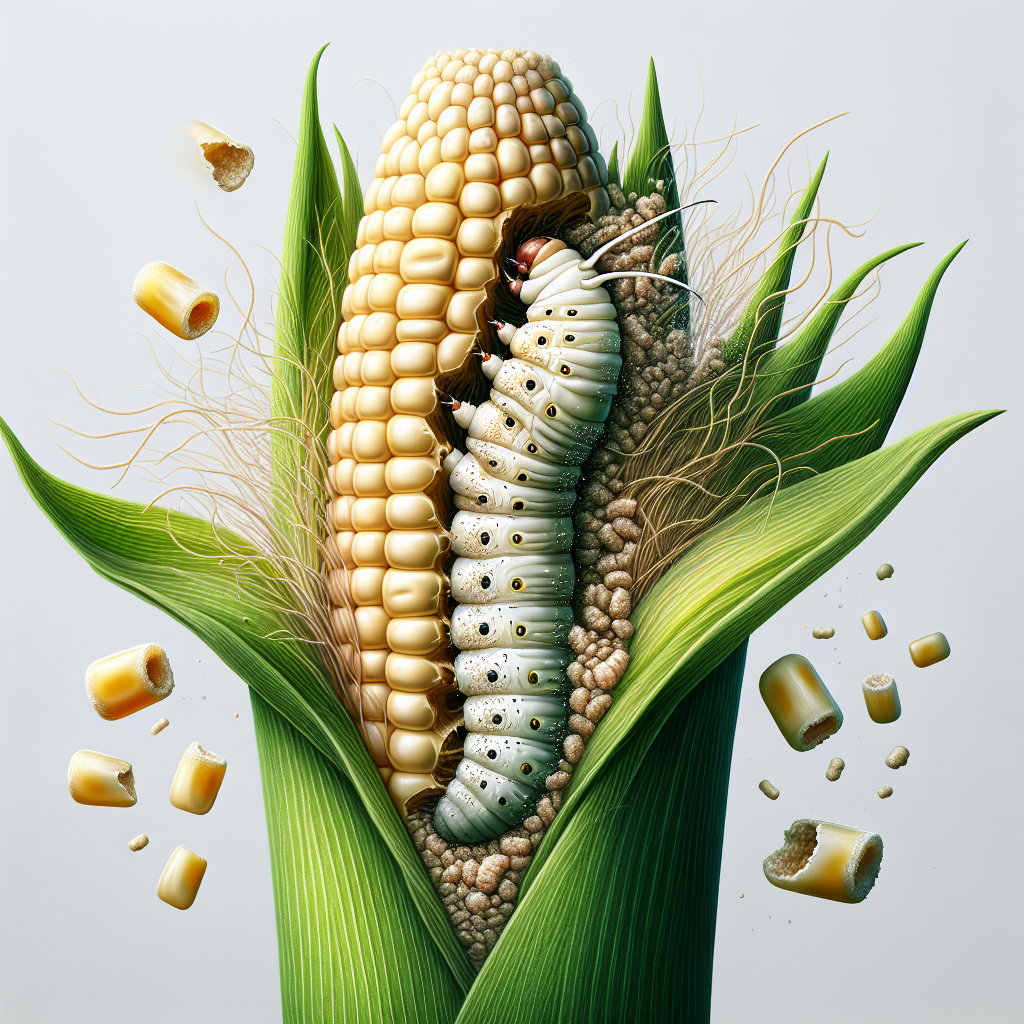
Introduction to Borers
Borers represent one of the most insidious pests in agriculture, encompassing a diverse group of insect larvae from families like Pyralidae, Crambidae, and Sesiidae that bore into plant tissues. These pests attack over 200 crop species globally, leading to billions in annual losses by disrupting vascular systems, introducing pathogens, and weakening structural integrity. Unlike surface feeders, borers operate internally, making early detection challenging and control complex. Common types include European Corn Borer (Ostrinia nubilalis), Squash Vine Borer (Melittia cucurbitae), peach tree borers (Synanthedon exitiosa), and sugarcane borers (Diatraea saccharalis). Their damage manifests as galleries filled with frass (insect waste), gummosis in trees, and sudden plant collapse. This definitive guide equips farmers, horticulturists, and growers with diagnostic tools, lifecycle knowledge, organic treatments, and prevention strategies to mitigate borer threats effectively. Understanding borers is crucial for sustainable farming, as unchecked infestations can devastate orchards, fields, and vines, reducing yields by up to 50% in severe cases.
Identifying Symptoms & Damage
Diagnosing borer activity requires keen observation of subtle initial signs progressing to overt destruction. Early symptoms include small entry holes (1-3 mm diameter) on stems, trunks, or fruits, often surrounded by frass resembling sawdust or coarse pellets. Wilting of upper leaves or branches, despite adequate watering, signals vascular blockage from tunneling. In woody plants like apple trees, gummosis—a sticky sap exudate—oozes from wounds, sometimes discolored red or brown. Affected stems may show longitudinal cracks or swelling at the base, indicative of larval galleries.
Advanced damage varies by host: in corn, broken stalks at nodes lead to lodging; in squash and pumpkins, vines collapse with sawdust at stem bases; fruit borers cause internal browning and rot in crops like tomatoes and peppers. Listen for scraping sounds inside stems during evening hours, or probe suspicious holes with a flexible wire to detect live larvae. Differentiate from similar issues like root-knot nematodes or fungal blights by dissecting stems—borer tunnels are clean-cut with live white-to-pink larvae (1-25 mm long), unlike rot's mushy decay. Use a hand lens to spot adult exit holes or egg masses (flat, yellow-white clusters). Regular scouting, especially post-rain or at dusk, is essential; damage often peaks in mid-summer when larvae are active.
Lifecycle and Progression of Borers
Borer lifecycles typically span 1-2 years, with 1-3 generations annually depending on species and climate. Adults are moths or clearwing flies (resembling wasps) emerging in spring/summer from overwintering pupae in plant debris. Females lay 100-500 eggs on tender tissues; eggs hatch in 3-14 days into tiny larvae that bore immediately, feeding on cambium and pith. Larvae grow through 5-7 instars over 4-8 weeks, pupating in cocoons within galleries before adult emergence. Overwintering occurs as mature larvae or pupae in soil or plant crowns.
Progression aligns with crop phenology: first-generation attacks young shoots, second targets fruits/stems. For European Corn Borer, eggs appear on undersides of leaves 2-3 weeks post-planting, larvae moving to whorls then stalks. Squash vine borers oviposit at soil line, larvae ascending vines. Monitor with pheromone traps to time interventions. Lifecycle interruptions via sanitation disrupt populations effectively. See Spring Pest Patrol: Organic AI Strategies to Shield Your Crops from Common Invaders for predictive timing tools.
Environmental Triggers & Risk Factors
Borers thrive in warm, humid conditions (20-30°C, 60-80% RH), with peaks after mild winters reducing natural mortality. Stressed plants—drought, nutrient imbalance, or mechanical injury—are prime targets, as weakened defenses facilitate egg-laying. Monocultures amplify outbreaks; fields near overwintering sites (weedy borders) face higher pressure. Soil type matters: heavy clays retain pupae, while poor drainage fosters secondary rots. Climate change extends generations in temperate zones, overlapping with crop vulnerability windows. Companion pests like aphids vector viruses, compounding damage. Risk assessment involves historical infestation maps, degree-day models (base 10°C), and scouting thresholds (1-5% stems infested triggers action).
Organic Control & Treatment Plans
Organic management integrates cultural, biological, and mechanical tactics for 70-90% control without synthetics. Cultural: Remove and destroy infested plant parts weekly; deep plow post-harvest buries pupae. Rotate crops (2-3 years) away from hosts. Biological: Deploy Trichogramma wasps (egg parasitoids, release 50,000/ha weekly for 4 weeks) and Bacillus thuringiensis (Bt) kurstaki sprays (targeting young larvae, 1-2L/ha, evenings). Beneficial nematodes (Steinernema carpocapsae) drench entry holes (10^6/plant). Mechanical: Wrap trunks with burlap/tanglefoot bands; probe galleries with wire/flushing (soapy water, 10% vinegar). Neem oil (0.5-2%) or spinosad (OMRI-approved, 0.2-0.5L/ha) as last resort, timed via traps.
Integrated Plan: Scout weekly; threshold 10% infestation. Week 1: Sanitation + traps. Week 2-4: Bt/neem + parasitoids. Monitor efficacy via dissection. Success stories show 85% reduction in corn via Bt + rotation.
Preventing Borers in the Future
Prevention emphasizes resilience: select resistant varieties (e.g., Bt-corn hybrids, borer-tolerant squash). Plant early-maturing cultivars to evade peak egg-lay. Maintain vigor with balanced NPK (avoid excess N), mulch for moisture. Intercrop with repellents like marigold or thyme; border traps reduce migrants 50%. Destroy volunteers/weeds hosting borers. Winter sanitation: chop/flame debris. Pheromone mating disruption (dispensers, 400/ha) confuses adults. Long-term: diversify farms, foster predators (birds, bats). Annual audits prevent reinfestation.
Crops Most Affected by Borers
Borers plague staples and specialties: Corn (stalk/ear borers, 20-30% loss); squash/pumpkin (vine borers, vine collapse); tomato (fruit borers); tree fruits like apple, peach (trunk borers); sugarcane (top borers); rice (stem-borers); mango (shoot borers). Vegetables (eggplant, bell pepper), legumes (soybeans, pod borers), and ornamentals suffer too. Tropicals like banana, avocado face corm/stem attacks. Prioritize high-value crops in IPM plans.