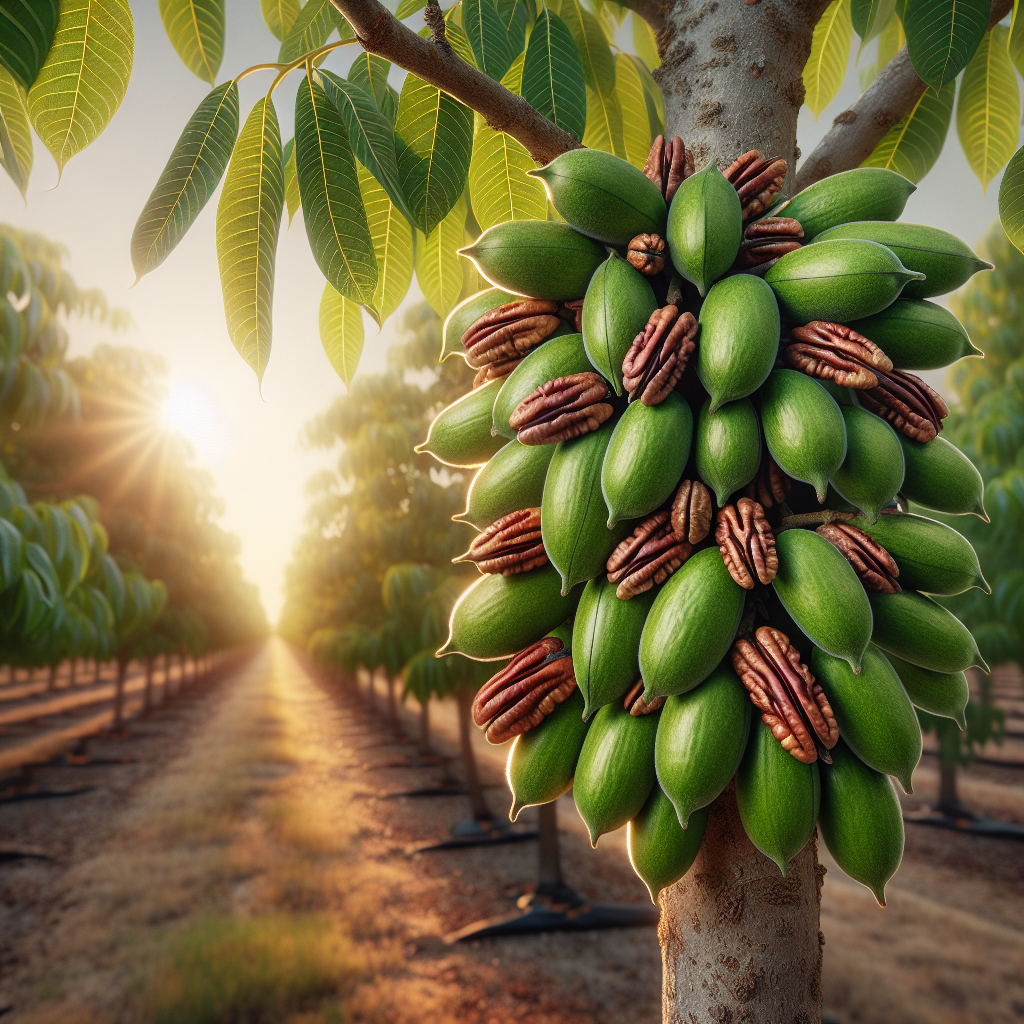
Introduction to Desirable Pecan
Developed in the southeastern United States and long regarded as one of the benchmark commercial pecan cultivars, this variety became popular because it combines impressive nut size, bright kernel appearance, and excellent eating quality. It is especially valued in fresh-shell and gift trade markets, where visual appeal matters almost as much as flavor.
For serious orchardists, however, Desirable is not a beginner's pecan. It is a cultivar with real strengths and equally real management challenges. Trees are vigorous, often productive under proper pollination, and capable of producing premium nuts, but they are highly susceptible to pecan scab in wet, humid climates. In practice, that means site selection, airflow, sanitation, and disease strategy determine whether Desirable performs like an elite orchard cultivar or a frustrating liability.
This is a grafted cultivar of the species Pecan, native to North America and adapted to regions with long hot summers and sufficient winter chilling. If you are selecting Desirable, the decision should be based on market goals, local disease pressure, irrigation capacity, and availability of compatible pollinizers rather than nut quality alone. For broader orchard floor and fertility concepts, see soil health strategies.
Botanical Profile of Desirable Pecan
Desirable belongs to the walnut family, Juglandaceae, and is a deciduous, monoecious nut tree. Like other pecans, it bears separate male catkins and female flowers on the same tree, but the timing of pollen shed and stigma receptivity is not perfectly synchronized. Desirable is generally classified as a protandrous, or Type I, pecan cultivar, meaning pollen is shed before female flowers on the same tree are fully receptive. Because of this, orchard performance improves significantly when compatible Type II pollinizers are planted nearby.
Trees are vigorous and upright to spreading with age, eventually reaching 70-100 feet if left unmanaged, though orchard trees are often maintained within a more practical height range through training and selective pruning. The canopy becomes broad and dense over time, which has major implications for light penetration, fungicide coverage, and humidity retention inside the crown.
Leaves are alternate, pinnately compound, typically with 9-17 lanceolate leaflets. The foliage is lush and attractive, but dense vegetative growth can become excessive under high nitrogen regimes. That matters because overly vigorous shoots are more disease-prone and may delay stable cropping balance.
Nut characteristics are the main reason the cultivar achieved fame. Desirable typically produces large, elongated nuts with a relatively thin shell and high kernel percentage under favorable conditions. Kernels are bright golden to light tan when properly matured and dried, with plump halves and an appealing texture. Kernel fill, however, is strongly affected by late-season water availability, crop load, and leaf health. Under drought, heavy crop stress, zinc deficiency, or severe foliar disease, kernel shrivel and poor packing quality can appear.
One important bearing characteristic is the tendency toward alternate bearing if trees are overcropped one year and inadequately supported with nutrition and water. In practical terms, a huge crop in one season can reduce return bloom and nut set the following year unless orchard inputs are carefully managed.
Soil, pH, and Climate Requirements for Desirable Pecan
This cultivar performs best in deep, well-drained alluvial or loamy soils with substantial rooting depth. A minimum effective soil depth of 5-6 feet is ideal because pecans develop extensive root systems and respond poorly to compacted layers, shallow hardpans, or chronically saturated subsoil. While mature trees can tolerate short dry periods better than many fruit crops, high-quality nut fill depends on consistent moisture throughout the growing season.
Target soil pH is 6.0-7.0, with 6.2-6.8 often the sweet spot for nutrient availability. Desirable can survive outside that range, but production and micronutrient uptake become less efficient. In alkaline soils above pH 7.3, zinc, iron, and manganese deficiencies become more common. Zinc is especially important in pecans; deficiency often shows as small, narrow, chlorotic leaves, shortened internodes, and a rosetted appearance on new growth.
Drainage is non-negotiable. If water stands for more than 24-48 hours after heavy rain, root stress becomes likely. Young trees in saturated soil may show yellowing foliage, stunted flushes, marginal leaf scorch, and eventually dieback. Desirable should not be planted in heavy clay depressions unless raised berms, subsurface drainage, or significant site modification are used.
Climatically, this variety is best suited to warm temperate to subtropical regions with long frost-free growing seasons, hot summers, and enough winter chilling to ensure normal dormancy release. It generally performs well in USDA zones 6b-9, though the best commercial production is usually in pecan regions with 180-220 or more frost-free days.
Summer heat is beneficial for nut development, but humidity creates a major caveat: Desirable is highly vulnerable to pecan scab. In arid or semi-arid production regions with irrigation and low summer rainfall, the cultivar can be excellent. In humid southeastern climates with frequent rain, dew, and dense orchard canopies, scab pressure can be severe enough to make the cultivar difficult without an intensive spray program.
Late spring frosts can damage pistillate flowers and reduce crop set. Early autumn freezes can interfere with shuck opening and kernel maturation in marginal climates. Wind exposure also matters: pecans are large trees, and strong winds can break young limbs, distort central leader development, and increase transplant stress.
Step-by-Step Planting & Propagation
Commercially and for serious home orchards, Desirable should be established as a grafted tree from a reputable nursery rather than grown from seed. Seedling pecans do not come true to type, and nut quality, bearing age, and disease performance will vary widely. Grafted nursery trees typically begin meaningful bearing earlier and preserve the known characteristics of the cultivar.
Select the site carefully. Choose full sun with at least 8 hours of direct light daily. Avoid frost pockets, low wet ground, and places where adjacent woodland will shade the canopy or reduce air movement.
Test the soil before planting. Sample the topsoil and subsoil if possible. Measure pH, phosphorus, potassium, calcium, magnesium, organic matter, and micronutrients. Correct pH well ahead of planting. If the site is acidic below pH 5.8, lime may be needed months in advance.
Plan spacing around the mature tree, not the nursery tree. Traditional orchard spacing may range from 35 x 35 feet to 50 x 50 feet depending on management style, soil vigor, and whether long-term thinning is planned. In home landscapes, keep trees far from foundations, septic fields, and overhead lines.
Include pollinizers. Because Desirable is Type I, plant compatible Type II pecan cultivars within effective pollen distance. Pollinizer placement every third to fourth tree row in commercial plantings is common, though local flowering overlap charts should guide the exact pairing.
Plant during dormancy. Bare-root trees are best planted from late fall through early spring while dormant, provided the soil is workable and not waterlogged. Container trees can be planted in spring, but avoid peak summer heat unless irrigation is excellent.
Prepare a proper planting hole. Dig a hole wide enough to spread roots naturally, usually 2-3 times the root spread, but no deeper than the original root collar. Planting too deep is a common failure point. The graft union should remain above the soil line.
Trim damaged roots only. Do not excessively shorten healthy roots. Straighten circling roots on container plants.
Backfill with native soil. Avoid creating a soft, amended pocket that discourages roots from moving outward. Light compost incorporation across the broader planting zone is acceptable, but not as a dense fill inside the hole.
Water in thoroughly. Apply enough water to settle soil around roots. For a new tree, that often means 5-10 gallons immediately after planting, followed by repeated deep irrigation during establishment.
Stake only if necessary. In windy sites, use flexible ties and remove supports once the trunk stabilizes.
Mulch correctly. Apply 2-4 inches of organic mulch in a wide ring, keeping it 4-6 inches away from the trunk. Mulch moderates soil temperature, suppresses weeds, and improves moisture retention.
Propagation beyond nursery purchase is usually done by whip grafting, bark grafting, or budding onto pecan seedling rootstocks. Topworking established trees is possible, but success depends on timing, scion wood quality, and post-graft moisture management. For most growers, buying certified grafted stock is far more reliable than attempting amateur propagation.
Care & Maintenance regimes for Desirable Pecan
Water management is the backbone of quality production. Newly planted trees need consistently moist but not saturated soil. As a working rule, the root zone should remain evenly moist to about 12-18 inches deep during establishment. If soil squeezed in the hand forms a weak ball that breaks apart with light pressure, moisture is usually adequate. If it is powdery and cannot hold shape, the root zone is too dry. If it stays slick, shiny, and sticky with a sour smell, it is too wet.
Young trees often require 10-20 gallons per irrigation once or twice weekly depending on temperature, wind, and soil type. Sandy soils may need smaller, more frequent irrigations. Mature bearing trees can require substantial water, especially from nut sizing through kernel fill. In hot weather, orchards often target roughly 1.5-2 inches of water per week from rainfall plus irrigation, with demand increasing on light soils and during heavy crop years.
Water stress signs include leaflet folding, premature leaf drop, reduced shoot extension, poorly filled kernels, and shucks that cling tightly at maturity. Overwatering signs include yellow leaves, poor vigor despite wet soil, blackened feeder roots, and chronic disease pressure.
Fertilization should be guided by soil and leaf analysis, not guesswork. Nitrogen drives canopy growth and crop potential, but excess nitrogen can worsen scab susceptibility by creating lush, tender tissue. Young non-bearing trees may receive split spring applications of nitrogen at modest rates to encourage structural growth. Bearing trees typically need annual nitrogen, plus attention to phosphorus, potassium, sulfur, zinc, and sometimes boron.
Zinc nutrition is critical in pecans. Foliar zinc sprays are commonly used during spring flush, especially on soils where uptake is poor. Multiple low-dose applications are usually more effective than a single heavy spray. Typical deficiency symptoms are small leaves, interveinal chlorosis on young tissue, rosetting, and shortened shoots.
Training should begin early. In the first years, establish a strong central leader and well-spaced scaffold limbs with wide crotch angles. Remove competing leaders and narrow-angled branches that may split later under crop weight or wind. Mature pruning is usually conservative: remove dead, broken, rubbing, and severely crowded wood while preserving enough openness for light and spray penetration. Avoid excessive winter topping that stimulates chaotic regrowth.
Weed control is especially important for the first 3-5 years. Grass competition around the trunk can severely slow establishment by intercepting water and nitrogen. Maintain a weed-free strip or mulched circle extending several feet beyond the young canopy.
Crop regulation in heavily bearing years may involve nutrition and irrigation adjustments rather than direct thinning, since hand thinning pecans is rarely practical. The goal is to keep leaves healthy after harvest, avoid severe nutrient depletion, and maintain return bloom.
Pests, Diseases & Organic Management
The defining disease issue for Desirable is pecan scab, caused by Venturia effusa. This fungal disease attacks leaves, shoots, and especially developing nuts. Symptoms begin as olive-black, velvety lesions that expand and can coalesce. On nuts, infections may crack the shuck, reduce nut size, stop kernel development, and make the crop unmarketable. In wet springs and summers, unmanaged scab can devastate Desirable.
Organic management of scab is difficult with this cultivar, especially in humid climates. The best non-synthetic measures are site selection, wider spacing, aggressive sanitation, pruning for airflow, avoiding excess nitrogen, and keeping the orchard floor free of dense, humidity-trapping vegetation immediately under the canopy. In low-humidity areas, these cultural tactics may be enough to reduce pressure to acceptable levels. In high-pressure regions, Desirable is often not the best choice for fully organic production.
Other diseases include powdery mildew, downy spot, vein spot, liver spot, anthracnose, and shuck dieback complexes. Many of these are worsened by canopy shade, poor airflow, and prolonged leaf wetness.
Key insect pests include pecan nut casebearer, aphids, hickory shuckworm, stink bugs, weevils in some regions, and mites. aphids can cause yellowing, honeydew deposition, and sooty mold; black pecan aphid feeding often creates angular chlorotic lesions between veins. Stink bug feeding may cause kernel dark spots and quality losses.
Organic and low-input approaches include:
- Dormant sanitation, including removal of mummified nuts and diseased debris where practical.
- Encouraging beneficial insects with orchard-edge habitat and flowering support plants such as Clover, Yarrow, and Thyme.
- Monitoring catkins, foliage, and nut clusters weekly during active growth.
- Using kaolin clay on small-scale plantings to deter some insect feeding.
- Applying horticultural oils or insecticidal soaps only when label-compatible with temperature conditions and beneficial insect protection.
- Reducing dust and drought stress, both of which can worsen mite outbreaks.
Birds and squirrels can also take a meaningful percentage of the crop as nuts mature. On small plantings, rapid harvest is often the best defense.
Harvesting, Curing & Optimal Storage
Desirable is harvested when shucks split fully and nuts begin dropping naturally, usually in autumn. Do not rely only on calendar date; maturity depends on climate, crop load, and season length. A mature nut will have a fully developed kernel, a properly browned shell, and shucks that open cleanly rather than clinging tightly.
For best quality, harvest promptly and repeatedly rather than letting nuts sit on wet ground. Nuts left in damp leaf litter can stain, mold, or absorb moisture. Commercial growers often use trunk shakers and sweepers; home growers can hand gather every 2-3 days during peak drop.
After harvest, remove remaining shuck material and sort out lightweight, insect-damaged, moldy, or poorly filled nuts. Good pecans should feel solid for their size. If cracked samples show rubbery or pale kernels, drying is incomplete.
Curing is essentially controlled drying. Spread nuts in a single layer in a warm, shaded, well-ventilated area, ideally with forced air if humidity is high. The goal is to reduce kernel moisture to about 4.5-5% for long storage while avoiding excessive heat that damages flavor oils. In practical on-farm terms, pecans are usually sufficiently dried when kernels snap rather than bend and shelling quality improves noticeably.
Storage conditions have a major effect on rancidity because pecan kernels are rich in unsaturated oils. In-shell pecans keep best in cool, dry conditions with low humidity. Shelled kernels should be refrigerated or frozen in airtight packaging. At room temperature, flavor decline can occur within weeks to a few months depending on heat exposure. In refrigeration, shelled pecans can often hold quality for 6-9 months; frozen, significantly longer.
Companion Planting for Desirable Pecan
Companion planting around established pecan trees should be approached as orchard-floor management rather than crowded intercropping. Mature pecans cast dense shade, produce heavy root competition, and release juglone-related compounds at levels that can stress sensitive plants. The most useful companions are durable, low-growing, beneficial species that improve soil structure, support pollinators and predators, and tolerate periodic shade and root competition.
Clover is among the best companions because it suppresses erosion, contributes biologically fixed nitrogen, and supports beneficial insects when allowed to flower strategically. It is especially useful in row middles or outer dripline zones rather than immediately against young trunks.
Yarrow is valuable in orchard borders and sunny breaks because its umbels attract parasitoid wasps, hoverflies, and predatory insects that help regulate soft-bodied pests. It also tolerates lean soils and does not create aggressive woody competition.
Thyme can function well in smaller home orchards or near tree rows where low-growing aromatic groundcover is desired. It helps occupy bare soil, attracts pollinators when blooming, and generally does not compete as aggressively as tall grasses.
Avoid thirsty annual vegetables directly under the canopy. Pecan roots are dominant feeders, and the shade pattern shifts as trees mature. If intercropping young orchards, use shallow-rooted, low-disease annuals only during the early years before canopy closure, then transition toward permanent living covers and managed alley species.
For Desirable specifically, companion planning should prioritize airflow and reduced humidity. Do not allow lush understory growth to create a stagnant, damp microclimate under a scab-susceptible canopy.