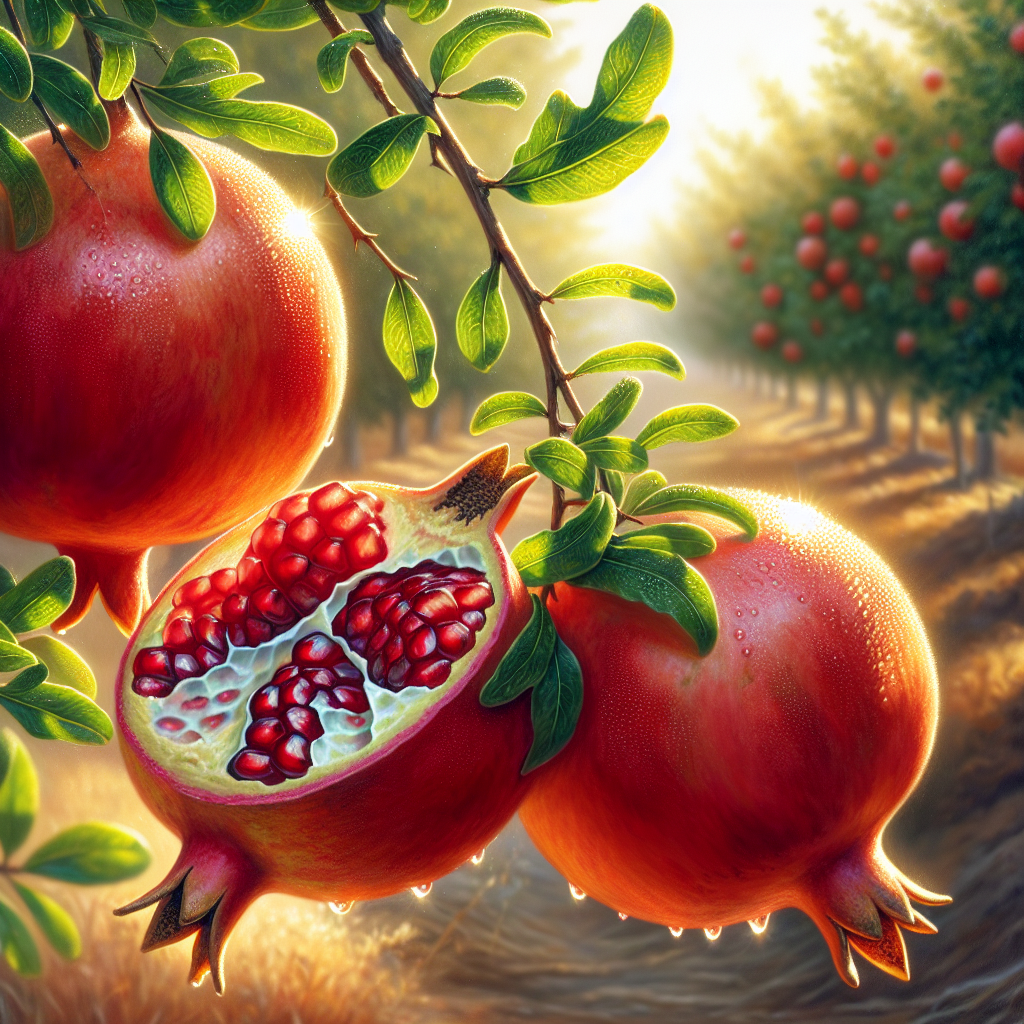
Introduction to Pomegranate
Pomegranates have been cultivated for over 4,000 years, originating in the region spanning modern-day Iran to the Himalayas, with ancient records in Egyptian tombs and Mesopotamian texts praising their symbolic fertility and vitality. Today, 'Wonderful' remains the dominant commercial cultivar in the U.S., prized for its large, deep-red fruits with tart-sweet arils rich in antioxidAnts like punicalagins. This deciduous shrub or small tree can yield 20-50 fruits per mature plant annually, adapting well to containers or landscapes, but demands precise management of water stress for optimal flower induction and fruit quality.
Botanical Profile of Pomegranate
Punica granatum belongs to the Lythraceae family, characterized by glossy, opposite leaves, showy orange-red flowers with crinkled petals, and leathery berries called pomegranates. Botanically, the fruit is a berry with a tough outer rind enclosing hundreds of juicy arils (seed coats) surrounding hard seeds; cultivars vary from sweet 'Angel Red' to acidic 'Sweet'. PlAnts exhibit a woody base with thorny branches, growing 10-20 feet tall, and are semi-deciduous in cooler zones, entering dormancy with leaf drop. Hermaphroditic flowers self-pollinate efficiently, though bees boost yields; parthenocarpic types like 'Parfianka' produce seedless fruit. Root systems are shallow yet extensive, aiding drought tolerance but increasing windfall risk.
Soil, pH, and Climate Requirements for Pomegranate
Pomegranates excel in well-draining sandy loam or loamy sand soils with 15-20% organic matter to prevent root rot, maintaining a pH of 5.5-7.5—test annually, amending acidic soils with dolomite lime (2-4 lbs/100 sq ft) and alkaline with sulfur (1-2 lbs/100 sq ft). Avoid heavy clay, which retains moisture above 30% field capacity, causing fungal issues. Optimal climates feature USDA zones 8-11 with 200-300 chill hours for flower bud differentiation; they tolerate 10-115°F but drop fruit below 20°F or above 110°F prolonged. Require 1,200-1,800 annual chill hours in marginal areas; full sun (8+ hours) is essential, with humidity under 60% to minimize fungal pressure. For subtropical growers, Hass Avocado shares similar drought tolerance—see our guide for crossover strategies.
Step-by-Step Planting & Propagation
- Select Cuttings or Saplings: Choose 12-18 inch hardwood cuttings from disease-free 'Wonderful' or 'Eversweet' in late winter, or 2-3 year grafted saplings for vigor. Dip basal ends in 0.1% IBA rooting hormone.
- Prepare Site: Dig 2x2x2 ft holes, mixing native soil with 30% compost and 2 oz superphosphate. Space 10-15 ft apart for trees, 5 ft for bushes.
- Planting: Set root crown 1-2 inches above soil line in early spring (soil >55°F); water deeply (5 gal/plant) post-planting. Mulch 3-4 inches with wood chips, keeping 6 inches from trunk.
- Propagation Nuances: Air-layer branches in summer for 80% success—girdle 1-inch stem, apply hormone, wrap sphagnum moss. Seed propagation yields variable offspring; stratify at 40°F for 30 days. For container starts, use 5-gal pots with cactus mix, root-pruning every 2 years.
- Initial Care: Irrigate weekly to 18-inch depth until established (1 year), targeting 70-80% field capacity.
Care & Maintenance regimes for Pomegranate
Watering: Deep water every 7-10 days (1 inch/week) during bloom/fruit set, allowing top 6 inches to dry between—use tensiometer at 20-30 centibars suction. Overwatering signs include yellowing leaves, root rot (soft black roots); underwatering shows wilting, cracked fruit rind. Mature trees endure 60-day droughts. Fertilization: Apply 10-10-10 NPK (1 lb/tree/year, split 3x) in Feb, May, Aug; increase N to 0.5 lb post-harvest for vegetative growth. Foliar spray micronutrients (Zn, Fe at 0.5%) if chlorosis appears—soil test every 2 years. Pruning: Annually in dormancy, remove suckers, water sprouts, and inward branches for 40-50% light penetration. Thin fruit to 6-inch spacing at pea-size for larger arils; train to vase shape. Winter Protection: In zone 7, mulch roots 12 inches deep, wrap trunks with burlap against <15°F freezes. Check Soil Health Mastery for long-term fertility tips applicable here.
Pests, Diseases & Organic Management
Pests: Mealybugs cluster on branches—hose off or apply neem oil (2% weekly); Ants farm them, so use Tanglefoot barriers. Fruit borers (Anarsia lineatella) tunnel rinds—BTK sprays at petal fall. Scale insects: dormant oil in winter. Diseases: Bacterial blight (Xanthomonas) causes twig dieback—prune 12 inches below lesions, copper spray (1 gal/100 gal water). Alternaria fruit rot thrives >80% humidity—ensure airflow, harvest promptly. Heart rot from boron deficiency: soil drench 1 lb borax/acre. Organic IPM: Introduce ladybugs for Aphids, reflective mulches for Thrips. Rotate copper hydroxide with Bacillus subtilis for blights; monitor with sticky traps (5/acre). Sanitation: remove mummies to break fungal cycles.
Harvesting, Curing & Optimal Storage
Harvest when rind shifts to full color and 3-5% soluble solids (use refractometer); tap fruit—metallic sound indicates ripeness. Cut with pruners, leaving 1/2 inch stem to prevent rot; yield peaks years 3-15. For arils, score rind, submerge in cool water to separate (95% recovery). Cure in shade 3-5 days at 55-65°F, 85% RH to even ripening. Store whole fruit at 32-41°F, 90-95% RH for 2-4 months (loses 1% weight/month); arils last 7-10 days refrigerated. Commercial dehydration: 110°F for 18-24 hours. Process juice via cold-press for highest punicalagin retention.
Companion Planting for Pomegranate
Pair with basil (Ocimum basilicum) to repel Aphids and attract pollinators; marigolds deter nematodes via alpha-terthienyl. Legumes like chickpeas fix nitrogen, benefiting shallow pomegranate roots—space 4-6 ft away. Avoid nightshades (tomatoes, potatoes) due to shared Verticillium wilt risk. Underplant with low-growing comfrey for mulch and potassium mining. In polycultures, figs enhance biodiversity without competing for water; see our Fall Companion Planting Guide for seasonal pairings. Benefits include 15-20% pest reduction and improved soil structure.