Introduction to Botryosphaeria cankers
Botryosphaeria cankers represent one of the most widespread and destructive fungal diseases affecting woody plants in agricultural settings worldwide. Caused primarily by species within the Botryosphaeriaceae family, such as Botryosphaeria dothidea and Neofusicoccum parvum, these pathogens produce sunken, discolored cankers on branches, trunks, and stems that girdle vascular tissues, disrupting water and nutrient flow. This leads to wilting, dieback, and eventual plant death if unmanaged.
Farmers and orchard managers often encounter Botryosphaeria cankers in stressed trees, where symptoms mimic other issues like root rot or environmental damage. The disease's opportunistic nature means it exploits wounds from pruning, mechanical injury, or drought stress, making it a persistent threat in perennial crops. Economic losses can be severe, with yield reductions up to 50% in affected orchards, particularly in subtropical and temperate regions. Understanding this disease is crucial for sustainable agriculture, as it affects both commercial operations and small farms. For more on optimizing farm management, check this insightful blog post on timing interventions.
Early detection through vigilant scouting and prompt cultural interventions can save entire plantings. This guide equips growers with professional-grade diagnostic tools, lifecycle insights, organic treatments, and prevention tactics tailored for real-world application.
Identifying Symptoms & Damage
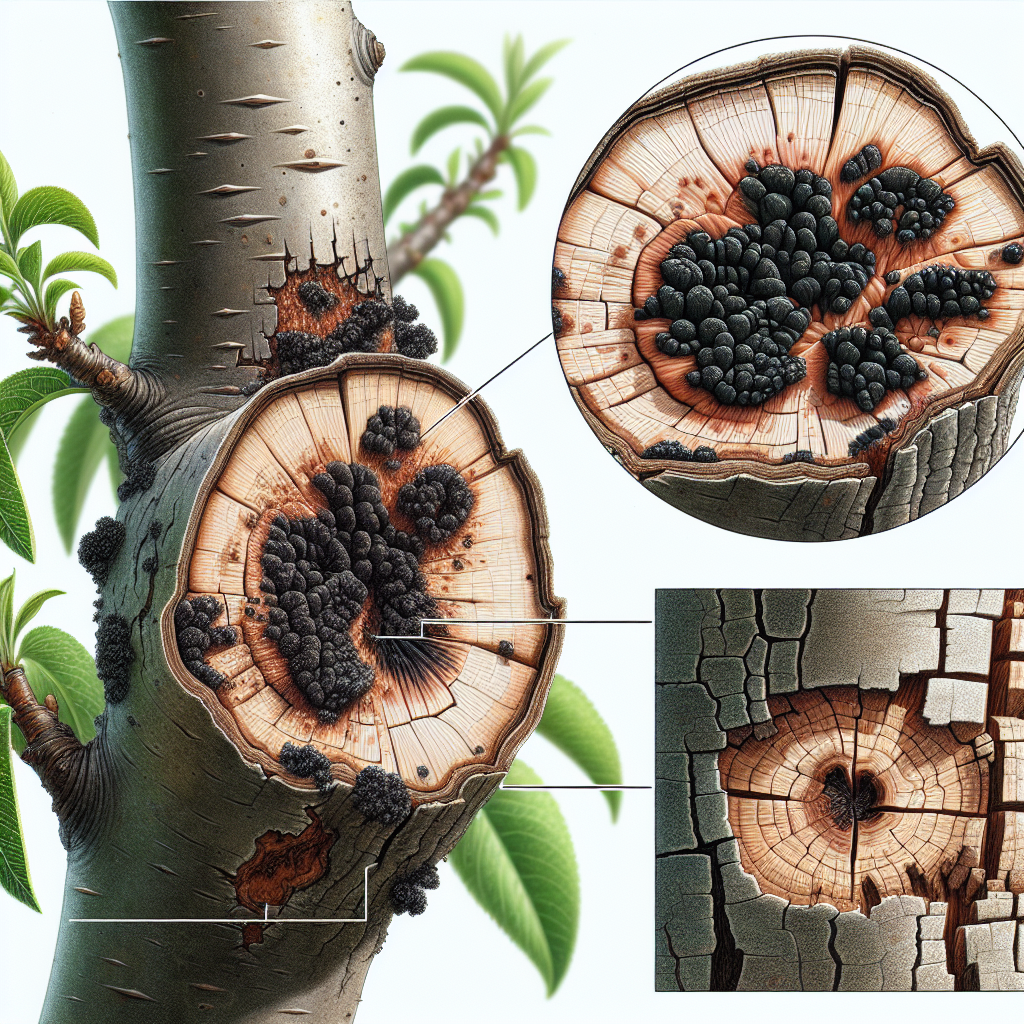
Accurate identification of Botryosphaeria cankers hinges on recognizing distinctive symptoms that progress from subtle to severe. Initial signs appear as small, sunken lesions on twigs or branches, often with a reddish-brown to dark brown discoloration under the bark. As the canker expands, it develops a characteristic cracked, irregular margin with dark, sunken bark that may ooze black pycnidia—fruiting bodies releasing conidia in wet conditions.
Cut into affected tissue to reveal the diagnostic zonate pattern: dark brown infected wood bordered by a narrow tan zone and healthy light-colored xylem. Leaves proximal to the canker wilt and turn yellow, leading to shoot dieback from the tip downward. In advanced stages, entire branches or scaffolds die, with copious black fruiting bodies dotting the surface. On trunks, cankers girdle the base, causing basal shoots or suckers as the plant compensates.
Damage varies by host: in fruit trees, it causes blossom blight and fruit rot; in vines, cordon dieback. Differentiate from Phytophthora by the absence of oomycete-like gum and presence of pycnidia. Symptoms worsen post-drought or freeze, often coinciding with powdery mildew outbreaks. Use a hand lens to spot 1-2mm black pycnidia and confirm via lab culture on potato dextrose agar, where white mycelium turns dark olive.
Scout during spring growth flush and post-harvest. Economic thresholds: remove branches with >20% girdling. Yield impacts include 30-70% fruit drop in stone fruits and reduced cane vigor in berries.
Lifecycle and Progression of Botryosphaeria cankers
Botryosphaeria spp. exhibit a complex polycyclic lifecycle adapted to perennial hosts. The fungus overwinters as pycnidia in dead bark or as latent infections in healthy xylem. Primary inoculum disperses via rain-splashed conidia (5-20μm, hyaline to brown) during wet springs, entering through wounds or lenticels. Infection occurs optimally at 20-30°C with free water on tissues for 6-24 hours.
Latent periods last 3-12 months, with symptoms manifesting under stress. Secondary cycles produce conidia repeatedly during rain events, spreading within canopies. Ascospores from pseudothecia (erumpent black stromata) provide long-distance dispersal via wind. In warm climates, multiple generations occur annually, amplifying epidemics.
Progression: Year 1 - latent infection; Year 2 - small cankers; Year 3+ - girdling and dieback. Systemic spread via xylem, but no true vascular wilt. High humidity (>80%) and temperatures 25°C trigger sporulation. Lifecycle aligns with host phenology: pruning wounds in winter/dormancy are prime entry points, with rapid expansion during summer flush.
Environmental Triggers & Risk Factors
Botryosphaeria thrives as a stress opportunist, not a primary pathogen. Key triggers include drought stress reducing host vigor, wounding from improper pruning or machinery, and freeze injury cracking bark. High nitrogen fertilization promotes succulent growth susceptible to infection, while poor drainage fosters root decline, indirectly aiding canker expansion.
Soil pH extremes (below 5.5 or above 7.5) and compacted soils exacerbate issues. Overhead irrigation splashes inoculum, creating microclimates for infection. Climate change intensifies risks with erratic rainfall and heatwaves. Susceptible varieties like young grafts or dwarf rootstocks face higher incidence.
Risk mapping: Orchards with >20% canopy closure and poor airflow rank high. Monitor via weather stations for leaf wetness hours >10/day during bud break.
Organic Control & Treatment Plans
Organic management emphasizes cultural practices over curative sprays, as no fungicides fully eradicate established cankers. Prune affected branches 10-15cm below visible symptoms during dry periods (summer/fall), sterilizing tools with 10% bleach between cuts. Destroy prunings by chipping or burning to eliminate inoculum sources.
Enhance tree vigor with balanced nutrition: apply compost teas rich in mycorrhizae and Trichoderma spp. biostimulants. Mulch bases with 10cm wood chips to retain moisture and suppress weeds, avoiding trunk contact to prevent collar rot. Introduce beneficial antagonists like Bacillus subtilis via foliar sprays (OMRI-approved strains) at 7-14 day intervals during high-risk periods.
Stress mitigation: Drip irrigate to maintain soil moisture without wetting foliage. Use silicon amendments (potassium silicate) to bolster cell walls. For severe infections, trunk injections of phosphites provide systemic resistance. Integrated plans: Scout weekly, prune rigorously, and apply biofungicides preemptively. Success rates: 70-90% control in young orchards with vigilant IPM.
Treatment timeline: Dormant pruning (Jan-Feb), spring biofungicide (Mar-May), summer stress management (Jun-Aug), fall cleanup (Sep-Oct).
Preventing Botryosphaeria cankers in the Future
Prevention hinges on resilient agroecosystems. Select resistant rootstocks and scions: e.g., avoid susceptible clones in Hass Avocado plantings. Site properly with well-drained soils, full sun, and 20% windbreaks using Thyme or Yarrow for airflow.
Prune judiciously: thin canopies to 30% light penetration, avoiding winter wounds. Time irrigation to mornings, minimizing leaf wetness. Soil test annually, amending with lime or sulfur for optimal pH. Cover crops like clover suppress splash dispersal.
Quarantine new stock; heat-treat cuttings at 50°C for 30min. Monitor with sticky traps for early inoculum detection. Long-term: Diversify plantings and rotate resistant varieties. These strategies reduce incidence by 80% in managed orchards.
Crops Most Affected by Botryosphaeria cankers
Botryosphaeria cankers plague diverse woody perennials, with stone fruits topping vulnerability lists. Peach and Plum suffer branch dieback and gummosis, losing 40% yields. Grapes experience cordon cankers, crippling vineyards. Avocado, especially Fuerte Avocado, faces trunk cankers post-drought. Apple, Pear, and Cherry show shoot blight and fruit rot.
Nuts like Pecan and Almond report twig dieback; Olive trunk lesions. Berries including Blueberry, Raspberry, and Blackberry get cane cankers. Tropicals such as Mango, Citrus (Orange), and Fig are impacted. Ornamentals and landscape trees amplify reservoirs. Global reports confirm 100+ hosts, underscoring broad threat.