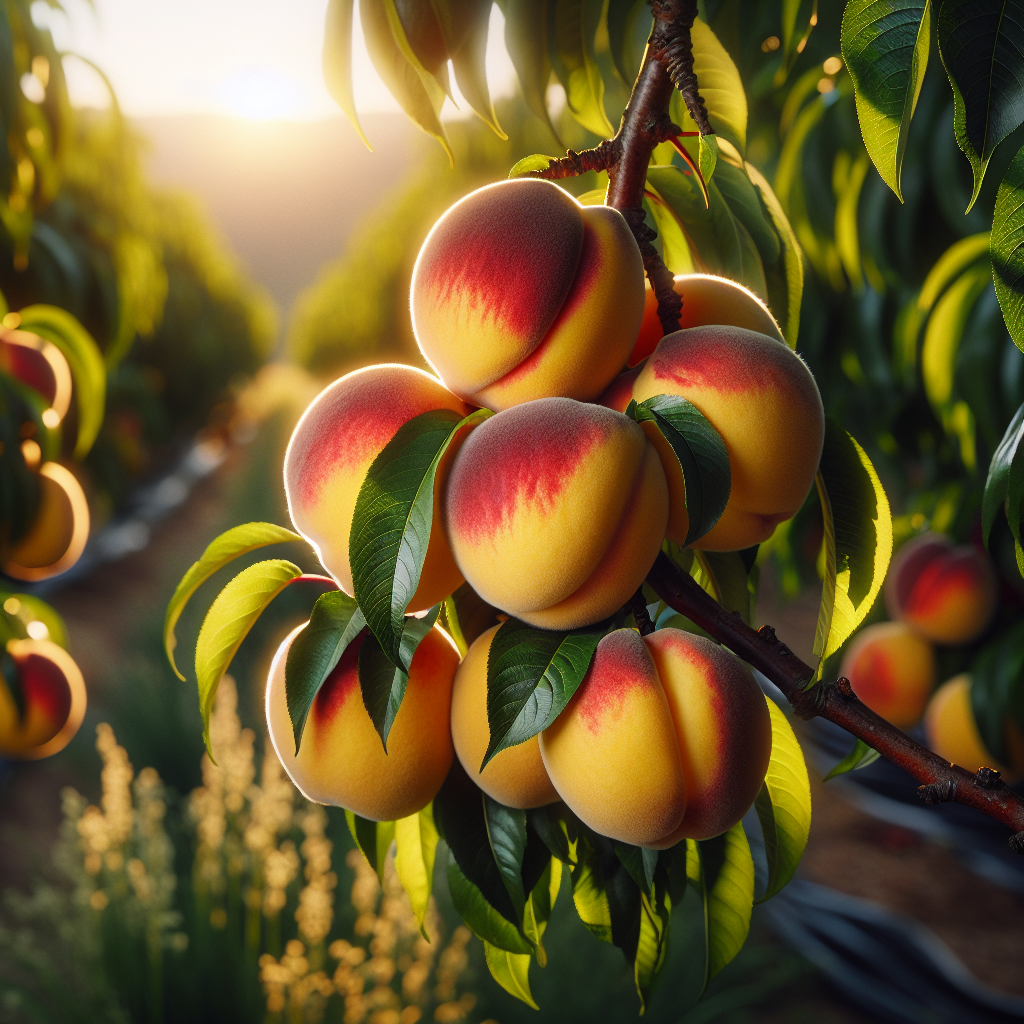
Introduction to Elberta Peach
Developed in Georgia in the 1870s and introduced commercially by Samuel H. Rumph, this heirloom peach became a defining American orchard variety for fresh markets, home orchards, and processing. It is especially valued for large, firm, yellow-fleshed fruit with a sweet, balanced flavor and a true freestone pit when fully ripe, making it easier to slice, can, dry, or eat out of hand.
The tree is vigorous, productive, and widely adapted, but like most peaches it is not a low-maintenance crop. Success depends on getting several fundamentals right at the same time: winter chill accumulation, annual pruning, fruit thinning, disease prevention, and precise water management. In climates where spring frosts are common or humidity drives fungal pressure, growers must be proactive rather than reactive. For foundational orchard comparisons, see our Peach guide.
Elberta generally ripens in mid- to late summer, often later than many standard home-orchard cultivars, though exact timing varies by region, rootstock, elevation, and heat accumulation. Fruit is typically medium-large to large, with yellow skin overlaid by a crimson blush on the sun-exposed side. Flesh is yellow, juicy, aromatic, and moderately firm when picked at mature-ripe stage, which helps it hold up better than softer dessert peaches during handling.
Botanical Profile of Elberta Peach
This cultivar belongs to the rose family, Rosaceae, and the species Prunus persica. It is a deciduous stone fruit with a naturally rounded canopy and rapid annual shoot growth under fertile conditions. Most nursery trees are sold grafted onto selected rootstocks rather than grown on their own roots, because rootstocks influence vigor, anchorage, soil adaptation, disease tolerance, and ultimate tree size.
Botanically, Elberta is a yellow-fleshed freestone peach. “Freestone” means the flesh separates cleanly from the pit when fully mature, unlike clingstone peaches where the flesh adheres tightly. This trait is particularly desirable for processing and home kitchen use. Blossoms are typically pink, showy, and borne on one-year-old wood, meaning the current season's crop potential is established on shoots produced the previous year. That is why improper pruning can directly reduce yield.
Trees on standard rootstock commonly reach 15 to 25 feet tall and wide if left unpruned, though orchard management usually maintains them at 8 to 14 feet for easier thinning, spraying, and harvest. Leaves are lanceolate, finely serrated, and bright to medium green during active growth. Flowering usually occurs in early to mid-spring, depending on local heat accumulation. The cultivar is generally considered self-fertile, so a second peach tree is not strictly required for fruit set, though pollinator activity still significantly improves consistency.
Typical chill requirement is often cited around 800 chilling hours, though real-world performance depends on how chill is measured and whether warm interruptions reduce effective accumulation. This makes Elberta best suited to temperate climates with definite winter dormancy rather than mild-winter subtropical zones. In insufficient-chill areas, flowering and leaf-out may be erratic, buds may open unevenly, and fruit set can be poor.
Soil, pH, and Climate Requirements for Elberta Peach
This variety performs best in deep, well-drained sandy loam or loam with good internal drainage and moderate water-holding capacity. Peach roots are highly sensitive to saturated soil and low oxygen. If water stands after rain for more than 24 hours, root stress and crown problems become much more likely. In practical terms, ideal soil should crumble easily in the hand, allow roots to penetrate without compaction, and drain a filled planting hole within a few hours rather than remaining soupy.
Target soil pH is 6.0 to 6.8, with the sweet spot often around 6.2 to 6.5. Slightly acidic soil improves nutrient availability, especially micronutrients such as iron and manganese. At pH above about 7.2, iron chlorosis can appear as yellow leaves with green veins, especially in calcareous soils. At very low pH, aluminum toxicity and nutrient imbalance can reduce vigor. A pre-plant laboratory soil test is strongly recommended; adjust pH several months before planting rather than after the tree is established.
The site should receive at least 8 hours of direct sun, with all-day sun preferred. Light drives sugar production, color development, flower bud initiation, and disease suppression through faster canopy drying. Avoid frost pockets, valley bottoms where cold air settles, and areas exposed to strong desiccating winds. A gentle slope with good air drainage is ideal because it can reduce frost injury during bloom.
Elberta is best suited to USDA Zones roughly 5 through 9, though local success depends less on zone label and more on winter chill, late frost frequency, and summer disease pressure. Winter cold must be sufficient to satisfy dormancy, but severe subzero events can damage flower buds, young wood, or scaffold crotches. During bloom, temperatures below about 28°F (-2.2°C) can kill open blossoms, while swollen buds are somewhat more tolerant.
Moisture management is especially important. The root zone should remain evenly moist but never anaerobic. In practical orchard terms, aim for soil moisture in the upper root zone that feels cool and slightly damp at 4 to 8 inches deep, not sticky and not powder-dry. If squeezed soil forms a weak ball that breaks apart easily, moisture is often near acceptable. Signs of chronic overwatering include pale leaves, weak shoot growth despite adequate fertility, sour-smelling soil, gummosis near the crown, and fruit with diluted flavor. Underwatering is more likely to show as dull foliage, reduced terminal growth, small fruit, premature fruit drop, and split pits or reduced sugar accumulation under heat stress.
Step-by-Step Planting & Propagation
Start with a certified disease-free, grafted bare-root or container tree from a reputable nursery. Bare-root trees are usually preferred for spring planting because they establish quickly and often develop better root architecture than pot-bound container stock. Select a tree with a healthy graft union, no trunk wounds, no oozing gum, and several evenly spaced lateral branches if available.
Plant in late winter to early spring while dormant, after the soil is workable but before buds fully break. In milder regions, late fall to winter planting can also work if the soil drains well and severe freezes are uncommon. Space standard trees about 18 to 20 feet apart, semi-dwarf forms 12 to 16 feet apart, and maintain sufficient row spacing for sunlight and airflow.
To plant:
- Remove grass and weeds in at least a 3-foot diameter circle. Turf competition is one of the most underestimated causes of slow young tree establishment.
- Dig a broad hole 2 to 3 times the width of the root system but no deeper than the roots require. The goal is lateral root expansion, not a deep pit that settles later.
- Inspect roots and prune only broken or dead portions. Do not heavily shorten healthy roots.
- Position the tree so the graft union remains 2 to 3 inches above final soil grade. Planting too deeply can encourage scion rooting and crown disease.
- Backfill with native soil, not rich compost blends. Over-amending the hole can create a bathtub effect and discourage roots from moving outward.
- Water thoroughly to settle soil and eliminate air pockets.
- Head the tree back at planting to about 26 to 34 inches if it is a whip, or prune to establish 3 to 4 future scaffold branches if feathered.
- Apply 2 to 4 inches of mulch over the root zone, keeping it 4 to 6 inches away from the trunk.
Propagation from seed is not recommended if you want true Elberta characteristics. Seedlings segregate genetically and will not reliably reproduce the cultivar. Commercial and serious orchard propagation is done by budding or grafting onto rootstocks. T-budding in summer is common in nursery production. Rootstock choice matters: some improve nematode resistance, some reduce vigor, and some tolerate lighter or heavier soils better.
If wildlife pressure is high, install trunk guards against rabbits and voles, and fence young trees against deer browsing. Newly planted trees benefit from staking only if the site is windy or the root system is unstable; overly rigid staking can weaken trunk development.
Care & Maintenance regimes for Elberta Peach
Training and pruning are central to peach production. The open-center or vase system is the standard for Elberta because it improves light penetration, fruit color, spray coverage, and scaffold strength. In the first 2 to 3 years, select 3 to 4 scaffold limbs spaced evenly around the trunk with wide crotch angles, and remove competing upright shoots. Maintain an open middle so sunlight reaches the lower fruiting wood.
Mature peach trees fruit on one-year-old shoots, so annual pruning is not optional. Remove dead, diseased, broken, crossing, and overly vigorous upright water sprouts. Thin crowded fruiting wood so productive shoots are well distributed throughout the canopy. A neglected peach tree quickly becomes too dense, fruits at the branch tips, and produces small, low-quality peaches.
Fertilization should be based on soil and leaf analysis, but general practice for young trees is modest nitrogen to support establishment without creating lush, disease-prone growth. Excess nitrogen can worsen Bacterial spot susceptibility, delay hardening before winter, and reduce fruit quality. Apply nitrogen in early spring, not late summer. Mature bearing trees often respond well to split nutrient management, with nitrogen adjusted according to shoot growth. As a broad benchmark, 10 to 18 inches of annual shoot extension on bearing wood is often acceptable; much more may indicate excess vigor, while very short growth may reflect low fertility, crop overload, poor water status, or root issues.
Irrigation should be deep and targeted. Young trees may need 5 to 10 gallons per watering 1 to 3 times weekly depending on soil texture and weather. Mature trees often require the equivalent of 1 to 1.5 inches of water per week during active growth, rising during fruit swell and hot dry periods. Drip irrigation is strongly preferred because it keeps foliage dry and reduces disease pressure. The most critical watering periods are post-bloom fruit set, final fruit swell, and the weeks after harvest when the tree is building reserves and next year's flower buds.
Fruit thinning is essential for Elberta. If the tree sets heavily and fruit are left clustered, you will get smaller peaches, broken limbs, and reduced return bloom the following year. Thin when fruit are about 0.75 to 1 inch in diameter, usually 30 to 45 days after bloom. Leave one fruit every 6 to 8 inches along a shoot. This feels drastic, but it is one of the most important interventions for large, flavorful peaches.
Weed control should keep at least a 3- to 4-foot vegetation-free strip around the trunk. Avoid cultivation deep enough to damage shallow feeder roots. Mulch conserves moisture, moderates soil temperature, and gradually improves structure, but thick mulch piled against the trunk encourages rodents and disease.
In climates with strong sun and hot afternoons, southwest trunk exposure on young trees can occasionally cause sunscald. White latex paint diluted 1:1 with water and applied to the lower trunk can help reflect heat.
For broader fertility and ground-cover strategies in orchards, useful concepts are outlined in soil health strategies.
Pests, Diseases & Organic Management
Peach trees are vulnerable to a wide pest and disease complex, and Elberta is no exception. The key to organic or low-spray success is sanitation, canopy management, regular scouting, and precise timing.
Peach leaf curl, caused by Taphrina deformans, is one of the most recognizable diseases. Leaves emerge puckered, thickened, distorted, and often red or yellow. Once symptoms appear in spring, treatment is ineffective for that season. Prevention depends on dormant applications, typically copper or lime sulfur where permitted, applied after leaf drop and/or before bud swell. Dry-season timing matters more than repeated in-season spraying.
Brown rot is often the most economically important fruit disease, especially in humid weather near harvest. Blossoms may blight, twigs may canker, and fruit can rot rapidly with tan-gray spore masses. Good airflow, removal of mummies, prompt harvest, and avoiding fruit injury are crucial. Fruit touching each other or packed in dense canopies are more vulnerable.
Bacterial spot can cause angular leaf lesions, twig injury, and pitted fruit. It is worse on susceptible varieties under warm, wet, windy conditions and excessive nitrogen. Avoid overhead irrigation, maintain balanced nutrition, and choose cleaner sites with airflow.
Common insect pests include Peach tree borer, lesser Peach tree borer, Oriental fruit moth, Plum curculio, Scale insects, Aphids, Stink bugs, and Japanese beetles in some regions. Peach tree borer larvae tunnel at or just below the soil line, causing gumming mixed with frass. Keep the trunk base exposed for inspection, avoid mulch against the bark, and use beneficial nematodes or approved trunk treatments where appropriate. Plum curculio causes crescent-shaped egg-laying scars and fruit drop, while Oriental fruit moth damages shoots and fruit.
Organic management principles include:
- Sanitation: remove dropped fruit, mummified fruit, prunings, and dead wood.
- Dormant sprays: apply according to local disease history and label guidance.
- Trunk monitoring: inspect the crown area several times per season for gum and frass.
- Kaolin clay or other approved barriers: useful against certain insect pests when timed correctly.
- Sticky traps and pheromone traps: helpful for monitoring moth flight and spray timing.
- Beneficial habitat: flowering companions near but not competing with the root zone can support natural enemies.
- Netting or bagging: practical in small plantings to reduce insect and bird injury.
Always scout systematically. Check new shoot tips, undersides of leaves, fruit clusters, trunk bases, and fallen fruit weekly during active season. Early intervention is dramatically more effective than rescue treatment after populations build.
Harvesting, Curing & Optimal Storage
Harvest maturity for Elberta depends on background color, firmness, aroma, and ease of separation from the stem rather than red blush alone. Blush is influenced by sun exposure and can appear before the fruit is fully mature. Look for a shift in background color from greenish to golden yellow, a pronounced peach aroma, and slight softening at the suture and shoulders.
For fresh market use, harvest when fruit are mature but still firm enough to handle without bruising. For home use and maximum flavor, allow a little more softening on the tree, provided pest pressure and weather are manageable. Pick by lifting and gently twisting; ripe peaches should separate without tearing spur tissue. Do not pull straight down.
Elberta does not require curing in the same sense as onions or sweet potatoes. However, harvested fruit benefits from careful field handling and prompt cooling. Keep picked peaches shaded immediately. Fruit left in sun-heated bins can soften unevenly, lose aroma, and become more susceptible to Brown rot.
For short-term ripening, hold fruit at room temperature in a single layer until it reaches desired softness. For storage, refrigerate at about 31 to 32°F (-0.5 to 0°C) with 90 to 95% relative humidity. Under ideal cold storage, peaches may keep for around 1 to 2 weeks, though flavor is usually best when consumed sooner. Avoid storing bruised or cracked fruit with sound fruit, as decay spreads quickly.
If fruit are slightly underripe, ripen them at 65 to 75°F (18 to 24°C). Paper bags can concentrate ethylene and speed ripening, but monitor closely to avoid over-softening. Fully ripe peaches are delicate and should be handled minimally. For processing, Elberta is especially suited to canning, freezing slices, jam, chutney, cobblers, and dehydration because the flesh is flavorful and separates cleanly from the pit.
Companion Planting for Elberta Peach
The most useful companions around a peach tree are those that improve pollinator presence, attract beneficial insects, suppress weeds, or occupy the orchard floor without competing aggressively with the shallow feeder root zone. Keep all companions outside a small trunk-free zone so bark stays dry and pest inspection remains easy.
Thyme works well as a low-growing aromatic border in sunny, well-drained orchard soils. It attracts pollinators when in bloom, tolerates lean conditions, and does not usually create dense, humid growth around the trunk if kept back from the base.
Yarrow is valuable for drawing predatory wasps, hoverflies, and other beneficial insects. Its deep-rooting habit can also help improve soil structure in some systems, though it should be managed so it does not crowd irrigation emitters or young trees.
Clover is one of the best orchard floor companions when managed as a mowed living mulch in alleyways or outside the immediate root competition zone. It can contribute nitrogen biologically, protect soil from erosion, and support pollinators. Keep it short during bloom and harvest to reduce rodent habitat near trunks.
Garlic is often planted in small orchard guilds because its pungent foliage may help discourage some pests at a local scale, and it occupies little vertical space. It is most useful in home orchards rather than commercial blocks, where easier mowing and trunk access are priorities.
Avoid heavy-feeding annual vegetables directly under the canopy, especially those that need frequent cultivation or irrigation. Companion planting should support the tree's biology, not complicate orchard sanitation, airflow, or harvest operations.