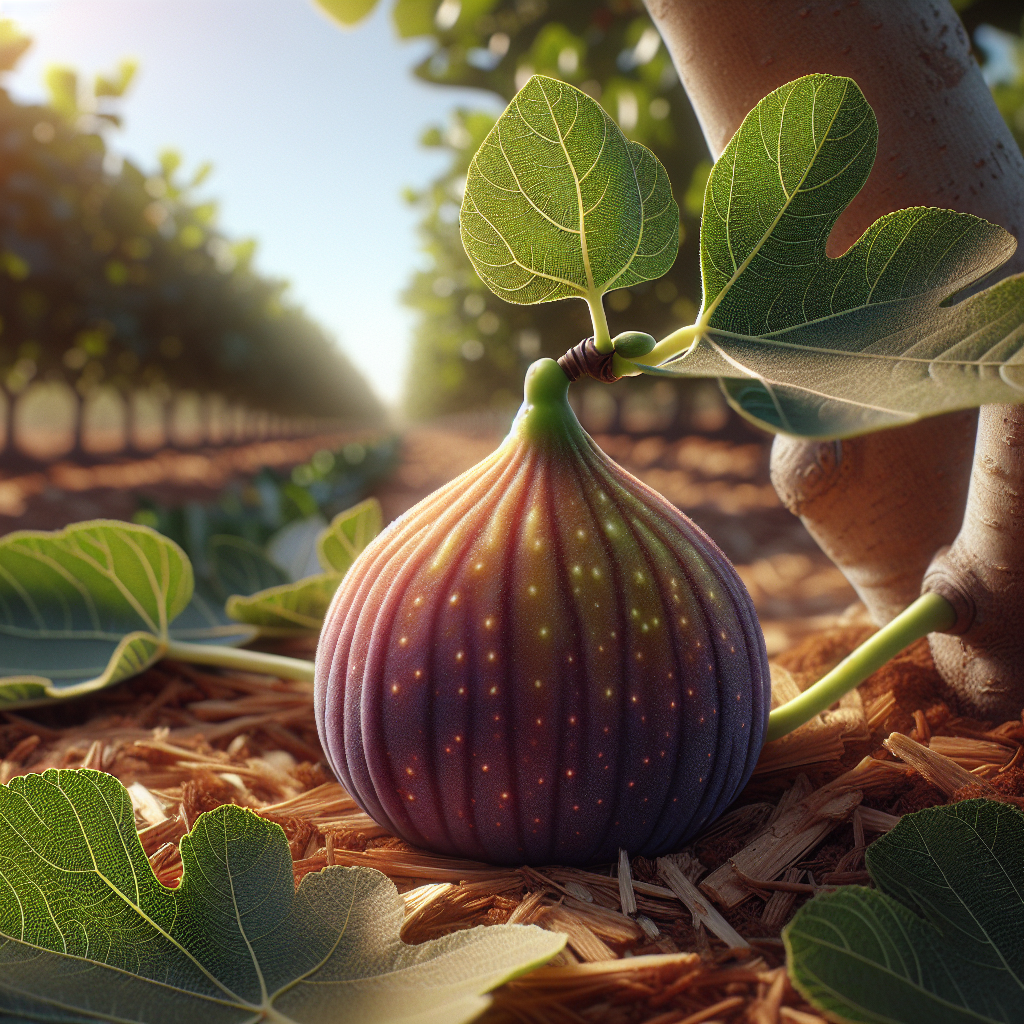
Introduction to Brown Turkey Fig
A classic common fig cultivar, this variety has earned a reputation for being forgiving, productive, and well suited to both backyard gardens and small commercial plantings. Brown Turkey is believed to have Mediterranean roots, though the name has been applied historically to several closely related strains in Europe and North America, which explains why fruit size, skin tone, and cold tolerance can vary somewhat by source nursery and region.
In practical terms, growers choose it because it performs where fussier figs fail. The tree often bears a light breba crop on overwintered wood followed by a heavier main crop on current-season growth, especially in climates with long warm summers. Fruits are typically medium-sized with bronze-brown to purplish skin and a pink to amber-red interior, mildly sweet flavor, and a texture that holds up well for fresh eating, drying, preserves, and farm-market sales. If you want a fig that balances vigor, resilience, and consistent yields, Brown Turkey is one of the safest choices among Fig types.
Botanical Profile of Brown Turkey Fig
This cultivar belongs to the mulberry family, Moraceae, and the species Ficus carica. It is classified as a common fig, meaning it does not require pollination by fig wasps to set edible fruit. That trait is agriculturally important because it allows dependable fruiting far outside the Mediterranean and western Asian zones where the fig-wasp relationship naturally occurs.
Growth habit is typically multi-stemmed if left untrained, though it can also be developed into a single-trunk small tree. Mature height usually ranges from 10 to 25 feet depending on pruning style, root restriction, climate, and soil fertility. In containers or under annual hard pruning, plants may remain 6 to 10 feet tall. Leaves are large, rough-textured, and deeply lobed, usually with 3 to 5 lobes. The canopy is broad, somewhat spreading, and capable of casting dense shade once established.
The root system is vigorous, wide-ranging, and opportunistic. Brown Turkey can tolerate lean soils better than many fruit trees, but its roots will exploit cracks, drains, and irrigated garden beds if planted too close. Give at least 15 to 20 feet of distance from foundations, septic lines, or masonry walls unless roots are intentionally restricted.
Fruiting biology matters when pruning. Breba figs form on older wood that survived the winter, while the main crop forms on new season shoots. In colder regions where top growth dies back, the breba crop may be lost, but the main crop can still be substantial if the growing season is long enough. Compared with dark, richer figs such as Mission Fig, Brown Turkey is often considered less intensely flavored but more adaptable and reliable across variable climates.
Soil, pH, and Climate Requirements for Brown Turkey Fig
This variety thrives best in well-drained loam or sandy loam with moderate organic matter and a soil pH of 6.0 to 7.5. It tolerates slightly alkaline ground better than many fruit crops, but performance drops in highly calcareous soils where micronutrient lockout, especially iron chlorosis, can cause yellowing leaves with green veins. If soil pH rises above about 7.8, monitor new growth closely for chlorosis and correct with chelated iron drenches or elemental sulfur where appropriate.
Drainage is more important than richness. Brown Turkey can grow in relatively poor soils, but it performs poorly in waterlogged conditions. A good target is soil that holds moisture evenly yet drains enough that a hand-squeezed sample feels damp and cohesive rather than slick, sticky, or anaerobic. After heavy irrigation, water should infiltrate within a few hours, not remain ponded at the root zone the next day. Chronic saturation commonly leads to root stress, fruit splitting, reduced sugar accumulation, and greater susceptibility to fungal decline.
Ideal climate is warm temperate to subtropical, with full sun and a long frost-free period for best main-crop ripening. Brown Turkey generally performs in USDA zones 7 to 10, though winter protection is often needed in the colder end of that range. Established wood can tolerate short freezes, but severe cold may kill stems to the ground. The roots often survive and resprout, which is one reason this cultivar remains popular in marginal fig regions.
For best fruit quality, aim for at least 8 hours of direct sun. In climates with cool summers, choose a south-facing wall, reflected heat site, or wind-sheltered slope. In extremely hot inland regions above about 100°F (38°C), afternoon heat can stress shallow-rooted young trees, so deep mulch and steady soil moisture become critical.
Brown Turkey is moderately drought tolerant once established, but drought tolerance should not be confused with optimum production. Under prolonged dryness, the tree may survive well but produce fewer, smaller, less juicy figs. During active fruit swell, ideal soil moisture is consistently moderate: not dust dry below the mulch and not muddy. A practical field test is to check soil 4 to 6 inches deep. If it feels barely cool and crumbly, water soon; if it feels distinctly moist and forms a soft ball that breaks apart easily, moisture is good; if it smears and stays compacted, it is too wet.
Step-by-Step Planting & Propagation
Start with a healthy, disease-free nursery tree or a rooted cutting. Container-grown plants establish fastest because figs transplant readily while dormant or just before spring growth begins. The best planting window is early spring after severe frost risk has passed, though mild-winter regions can also plant in autumn.
Select the site carefully. Choose full sun, strong air circulation, and soil that drains well. Avoid low frost pockets and avoid placing the tree where summer irrigation from lawns keeps the root zone constantly wet.
Prepare the ground modestly, not excessively. Dig a hole about twice as wide as the root ball but no deeper than the root mass itself. Figs settle poorly when planted too deep. Keep the crown at or slightly above finished soil grade in heavy soils.
Amend only if needed. In very sandy soil, incorporate finished compost at 10 to 20% by volume to improve moisture retention. In clay soils, do not create a bathtub of rich amendment surrounded by dense clay; instead, broaden the planting area and consider a low berm or raised mound 8 to 12 inches high.
Plant and water in thoroughly. Backfill firmly enough to remove major air pockets, then irrigate slowly until the entire root zone is wetted. Apply 2 to 4 inches of mulch, keeping it 3 to 4 inches away from the trunk to reduce collar rot and rodent hiding.
Head back only if necessary. If the nursery tree is tall and unbranched, cut back to 24 to 36 inches to encourage a low, accessible framework. If already well branched, remove only damaged or weak shoots.
Spacing depends on management style. For open-grown backyard specimens, allow 15 to 25 feet between trees. For intensive pruning systems, 10 to 12 feet can work, especially if maintaining shrub form for easier winter protection.
Propagation is usually by hardwood cuttings. Take pencil-thick dormant wood 6 to 10 inches long from healthy one-year shoots. Make a flat cut at the base just below a node and a slanted cut at the top to preserve orientation. Root in a free-draining medium such as 50% perlite and 50% coco coir or peat, keeping the medium lightly moist but never soggy. Bottom heat around 70 to 75°F improves rooting. Cuttings usually root in several weeks and are best potted on before field planting.
Air layering also works well for preserving a known strain. Grafting is uncommon because figs root so easily on their own.
For broader orchard floor planning and understory management, the principles in this soil health guide are particularly useful when integrating mulch, cover, and moisture management.
Care & Maintenance regimes for Brown Turkey Fig
The first two years determine long-term structure and resilience. During establishment, irrigate deeply rather than frequently. A newly planted tree in warm weather often needs 5 to 10 gallons once or twice weekly in loam, more often in sand, and less often in clay. The goal is to wet the root zone deeply, then allow the upper inch or two of soil to begin drying before the next irrigation.
Overwatering symptoms are easy to confuse with drought. Leaves may yellow, drop prematurely, and fruit may split or taste diluted. Soil remains wet for days, and the base may smell sour. Drought stress, by contrast, usually shows as leaf droop during the hottest part of day that may partially recover by evening, smaller fruit, tough skin, and premature fruit drop when stress becomes severe.
Once established, a mature in-ground tree may require surprisingly little water in humid or moderately rainy climates. However, for premium fruit size and sweetness, supply steady moisture from leaf-out through fruit sizing. Reduce irrigation slightly as fruits finish ripening to minimize splitting and improve concentration, but do not allow sharp swings from drought to saturation.
Fertilization should be restrained. Excess nitrogen causes rank shoot growth, delayed ripening, winter tenderness, and bland fruit. If annual shoot extension is already 12 to 18 inches on mature trees, additional nitrogen is often unnecessary. In low-fertility soils, apply a light spring feeding such as composted manure or a balanced organic fertilizer, keeping total actual nitrogen modest. Young trees may benefit from small split applications in spring and early summer, but stop nitrogen by midsummer in cooler climates so wood can harden before frost.
Pruning depends on climate. In warm regions, train to an open vase or low scaffold tree with 3 to 5 main arms. Remove crossing wood, weak interior shoots, and excessively crowded fruiting branches during dormancy. In cold regions, many growers use a multi-stem bush system because if winter kills top growth, replacement shoots arise readily from the base.
Because the main crop forms on new wood, moderate pruning can stimulate productive shoots. Severe annual pruning, though, may reduce breba production and create overly vigorous vegetative growth. The best balance is selective thinning plus heading only where needed to keep height manageable.
Container culture is very possible with Brown Turkey. Use a large pot, ideally 15 to 25 gallons minimum, with a gritty, fast-draining medium. Container figs dry quickly in midsummer and may need water daily in hot conditions. Repot or root-prune every 2 to 3 years to maintain vigor without allowing the plant to become root-bound to the point of chronic wilting.
Winter protection is essential in marginal climates. Wrap stems with breathable insulation, mound mulch around the base, or bend and bury flexible canes in traditional cold-region fig culture. Even where tops die back, protecting the crown and root zone can preserve the plant.
Pests, Diseases & Organic Management
Brown Turkey is comparatively resilient, but no fig is problem-free. The most common issues are less about lethal disease and more about fruit quality loss, root stress, and opportunistic pests.
Fig rust is a common fungal problem in humid climates. It appears as yellow spots on upper leaf surfaces with rusty pustules underneath, leading to premature defoliation late in season. Good air flow, sanitation, and avoiding overhead irrigation help considerably. Remove fallen diseased leaves. Organic copper sprays may suppress severe outbreaks if applied preventively and in compliance with local guidance.
Leaf spot and Anthracnose can also affect foliage and fruit, especially in dense canopies with poor air movement. Prune to open the canopy and avoid excessive nitrogen that creates lush, vulnerable growth.
Root rot is the major hidden threat in poorly drained soils. Symptoms include weak growth, yellowing, branch dieback, and decline despite watering. Prevention is the only reliable strategy: excellent drainage, raised planting where needed, and careful irrigation discipline.
Nematodes can reduce vigor in sandy soils, particularly in warm regions. Building soil organic matter, mulching heavily, and using suppressive companion groundcovers can help moderate pressure. Healthy figs often outgrow mild infestations better than stressed ones.
Birds, squirrels, raccoons, ants, and yellowjackets frequently attack ripening fruit. Since figs ripen soft and sugar-rich, harvest timing is your best defense. Pick daily as fruit softens. Bird netting and trunk baffles can reduce losses. Ants often exploit fruit already split or bird-damaged; managing cracking and harvesting promptly reduces secondary infestations.
Scale insects, Mealybugs, and Spider mites occasionally colonize branches or leaf undersides. Dormant oil during the leafless season can suppress scale. In-season insecticidal soap may help with Mealybugs and mites if coverage is thorough and temperatures are not excessively hot during application.
Mosaic virus occurs in figs worldwide and can cause mottled leaves, distortion, and reduced vigor. Many infected trees still crop adequately, but propagation material should always come from healthy, reputable stock. Clean tools between plants when taking cuttings or pruning.
Organic management works best as a system: moderate fertility, excellent drainage, open canopy, mulch that protects soil but not the trunk, sanitation, and rapid harvest of ripe fruit.
Harvesting, Curing & Optimal Storage
Figs do not continue improving once picked immature, so harvest timing is critical. Brown Turkey fruit is ready when the neck bends, the fruit softens noticeably, skin color deepens to bronze-brown or purplish tones depending on strain, and a small droplet of nectar may appear at the eye. A ripe fig often hangs downward and feels heavy for its size.
Do not judge by color alone. Many near-ripe figs color before sugars fully develop. Wait for softness and slight collapse at the shoulders. Fruit harvested too early will taste flat, starchy, or watery.
Harvest gently by lifting and twisting or clipping with short stem attached. Pick in the cool morning for best handling quality. Wear gloves if sensitive to fig latex, as sap from stems and leaves can irritate skin.
Brown Turkey is best for local fresh use because ripe figs are highly perishable. At room temperature, fully ripe fruit may last only 1 to 2 days. Under refrigeration at about 32 to 36°F with high relative humidity, sound fruit may hold for 5 to 7 days, though texture softens quickly. Store in shallow single layers to prevent crushing.
For drying, choose fully ripe but not split fruit. Halve larger figs for uniform dehydration. Dry at low temperatures until pliable but not sticky-wet in the center. Properly dried fruit should have no free moisture when pressed and should be conditioned in jars for a week, shaking daily to detect hidden moisture before long-term storage.
For preserves, Brown Turkey is especially good because it balances sweetness with mild acidity and has a tender skin. Fruit that is too soft for market can still be excellent for jam, compote, roasting, or fermentation.
Companion Planting for Brown Turkey Fig
The most useful companions are species that stabilize soil, attract beneficial insects, and avoid direct competition at the trunk. Keep all companions at least 12 to 18 inches away from the base of young trees so the crown remains dry and rodent habitat is reduced.
Thyme is one of the best understory herbs for fig plantings. It tolerates dry conditions, forms a low living mulch, suppresses some weed pressure, and attracts pollinators and beneficial insects when flowering. Because it stays low, it does not block air movement around the lower canopy.
Clover is valuable in wider orchard alleys or beyond the immediate trunk zone. It helps protect soil, adds nitrogen biologically, and improves infiltration when managed by mowing before it becomes too competitive. In dry climates, keep clover farther from young trees unless irrigation is sufficient for both.
Yarrow is excellent along borders or between trees where insectary function is desired. Its umbels attract parasitic wasps, hoverflies, and predatory insects that help regulate soft-bodied pests. It is also notably drought tolerant once established.
Nasturtium can be used as a seasonal companion in small gardens, especially where aphid diversion and pollinator support are desired. It is less useful in very dry orchards unless supplemental irrigation is available, but in mixed edible landscapes it adds biodiversity around the planting.
Avoid aggressive, thirsty companions directly in the fig root zone, especially large annual vegetables that demand constant summer water. A fig prefers deep, occasional irrigation with drying cycles near the surface, while many shallow-rooted vegetables prefer more frequent watering. The best companion strategy is a lightly managed herb and flower understory with mulch, not a crowded polyculture pressed against the trunk.