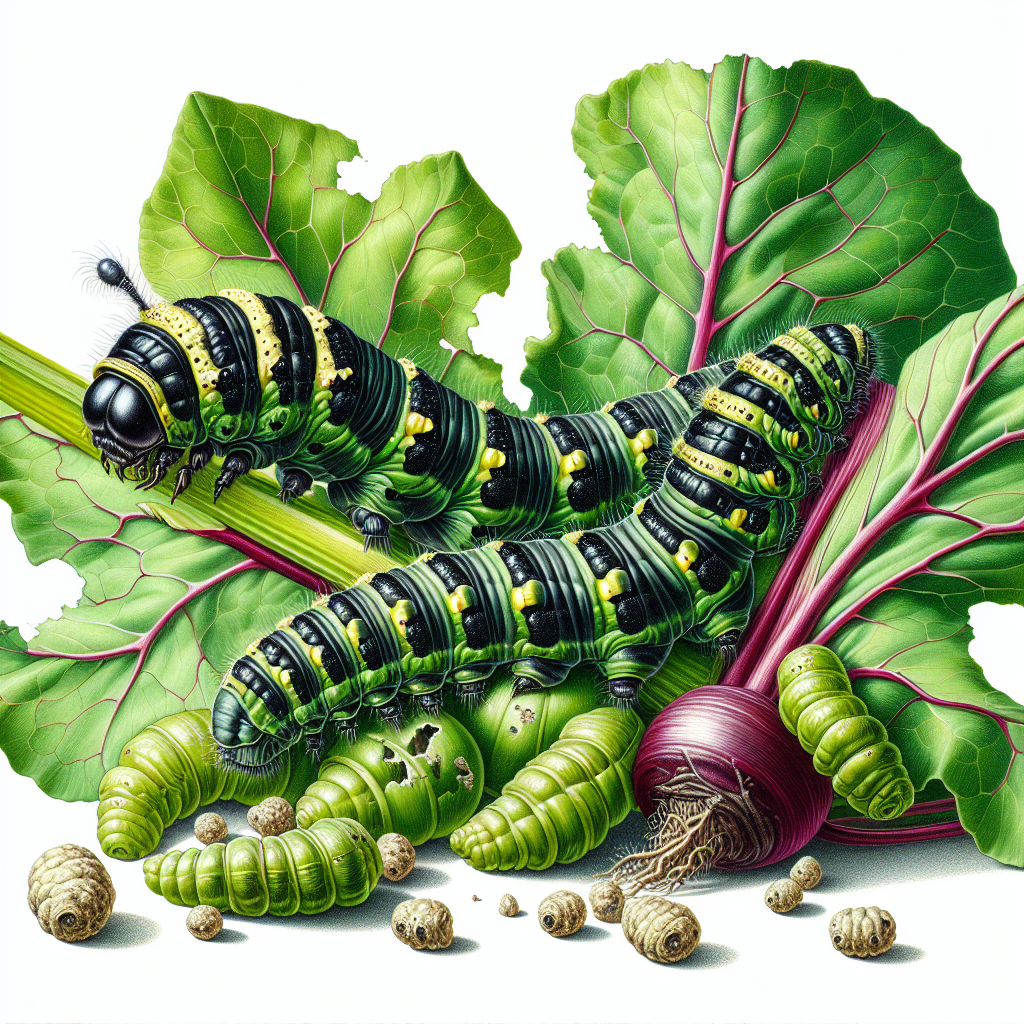
Introduction to Beet armyworms
Beet armyworms, scientifically known as Spodoptera exigua, represent one of the most notorious pests in vegetable and field crop production worldwide. Native to subtropical regions but now cosmopolitan due to global trade and favorable climates, these moths lay eggs that hatch into ravenous caterpillars capable of stripping foliage from crops in a matter of days. Farmers from California to Southeast Asia report outbreaks that can wipe out entire plantings of tomato, cabbage, and beet fields.
Unlike their close relative, the fall armyworm, beet armyworms prefer solanaceous and cruciferous crops but will attack over 80 host plants. Their name derives from the 'army' like marching of larvae in search of food, often moving en masse from depleted fields to fresh ones. Early detection is critical, as a single female moth can produce up to 1,500 eggs, leading to exponential population growth under optimal conditions. This guide equips growers with professional-grade diagnostics, lifecycle insights, organic controls, and prevention protocols to safeguard yields. For more on integrated pest management timing, check out Why Timing Kills Small Farm Profits - And How AI Task Scheduling Saves Your Harvests.
Understanding beet armyworm biology is essential for effective management. Adults are beige moths with a wingspan of about 1.5 inches, marked by a small white spot on each forewing. Larvae start pale green but mature to dark green or brown with black stripes and a yellowish stripe down the back, reaching 1-1.5 inches long. They are nocturnal feeders, hiding under leaves or in soil during the day. Outbreaks peak in warm, dry summers, exacerbated by nearby weed hosts harboring populations.
Economic impacts are severe: in lettuce alone, losses can exceed 50% without intervention. Integrated approaches combining monitoring, biological controls, and cultural practices yield the best results, reducing reliance on synthetic chemicals. This comprehensive resource draws from entomological research and field trials to deliver actionable advice for organic and conventional growers alike.
Identifying Symptoms & Damage
Beet armyworm damage manifests rapidly, often progressing from minor nibbling to total defoliation. Initial signs include small, irregular holes in leaves, particularly on the underside where larvae skeletonize tissue, leaving only veins intact. Look for frass—dark green, granular droppings—clustered under plants or on leaves, a telltale sign distinguishing them from cutworms or cabbage loopers.
As infestations escalate, larvae feed voraciously on tender growth, targeting young plants first. Seedlings may be clipped at the base, resembling cutworm damage but with smoother cuts. Older plants show extensive defoliation, with stems stripped bare. Unlike chewing pests like flea beetles, armyworms consume large leaf sections, often leaving a 'ragged' appearance. Severe cases impact fruits and buds, with larvae boring into bell pepper or eggplant calyxes.
Diagnostic tips: Shake plants over white paper at dawn; dislodged larvae confirm presence. Use a hand lens to spot eggs—ribbed, white clusters of 50-200 on leaf undersides. Differentiate from leaf-feeding caterpillars by the lack of prolegs on abdominal segments 3-6, giving them a 'looping' gait. Secondary signs include sooty mold on honeydew if ants farm the larvae, or viral transmission via contaminated mouthparts.
Damage thresholds vary: in lettuce, treat at 1-2 larvae per plant; in corn, scout silks for entry. Night scouting with blacklights reveals adults. Document patterns—border plants often hit first due to moth oviposition preferences. Misdiagnosis with aphids or whiteflies wastes resources; focus on chewing patterns and frass for accuracy.
Lifecycle and Progression of Beet armyworms
The beet armyworm lifecycle spans 25-40 days, accelerating in heat (optimal 77-86°F). Eggs hatch in 2-4 days, larvae develop through 6 instars over 14-20 days, pupate in soil for 6-13 days, and adults live 7-21 days. Multiple generations (4-8 annually) drive outbreaks, with diapause-free populations migrating via wind currents.
Eggs: Laid in clusters covered by scales from female abdomen, hatching synchronously. Neonates mine leaves before surface feeding. Larvae: Early instars gregarious, later solitary and cannibalistic. Mature larvae drop to soil, pupate 1-2 inches deep. Adults: Weak fliers, mate same night, females oviposit within 2 days. Parasitization by Hyposoter exiguae wasps disrupts cycles.
Seasonal progression: Overwinter as pupae in mild climates, early spring flights initiate. Peak larvae in summer; fall generations produce short-lived adults. Monitor with pheromone traps—10 moths/trap/week signals risk. Lifecycle knowledge enables timing interventions, like armyworms Bacillus thuringiensis applications at egg hatch.
Environmental Triggers & Risk Factors
Warm temperatures (above 70°F), low humidity, and mild winters trigger outbreaks. Drought-stressed crops exude volatiles attracting moths. Nearby weeds like pigweed or lamb's quarters serve as reservoirs. Over-fertilization with nitrogen promotes lush foliage, ideal for larvae. Monocultures amplify spread; field edges near uncultivated land heighten invasion.
Regional risks: Southwest U.S., Mexico, Central America see annual epidemics. El Niño patterns boost populations via extended growing seasons. Soil type matters—sandy soils aid pupal survival. Crop rotation disrupts, but continuous soybeans or cotton fields perpetuate. Climate change extends ranges northward.
Organic Control & Treatment Plans
Organic management emphasizes IPM: Scout weekly, use economic thresholds. Biologicals: Bacillus thuringiensis (Bt) var. kurstaki at 1-2 lb/acre targets larvae <1 inch. Release Trichogramma wasps (100k/acre) for eggs. Conserve predators like big-eyed bugs, lady beetles, and Cotesia parasitoids—avoid broad-spectrum sprays.
Cultural: Destroy weeds, till pupae post-harvest. Reflective mulches deter adults. Plant trap crops like alfalfa borders. Overhead irrigate evenings to dislodge larvae. Botanicals: Neem oil (0.5-1%) or spinosad (0.5 oz/gal) at early infestation; rotate to prevent resistance. Soap sprays (2 tbsp/gal) suffocate small larvae.
Treatment plans: Mild: Handpick + Bt. Moderate: Bt + neem + releases. Severe: Spinosad + tilling. For spring outbreaks, see Spring Pest Patrol: Organic AI Strategies to Shield Your Crops from Common Invaders. Monitor efficacy; larvae mortality >90% indicates success.
Preventing Beet armyworms in the Future
Prevention hinges on cultural disruption. Rotate non-hosts like grains or onion. Use row covers until flowering. Plant resistant varieties (e.g., Bt cotton borders). Trap crops and border sprays intercept migrants. Pheromone traps for monitoring, not mass trapping.
Soil solarization kills pupae. Encourage natural enemies via flowering borders (marigold, thyme). Fallow + deep plow buries pupae. Yellow sticky traps catch adults. Long-term: Diversify crops, manage weeds aggressively. Scout transplants; rogue infested.
Crops Most Affected by Beet armyworms
Beet armyworms devastate leafy vegetables and solanaceae. Top targets: Beet, lettuce, cabbage, tomato, bell pepper, eggplant, [celery](/wiki/celery? not listed, skip), spinach. Field crops: cotton, soybeans, corn, sorghum. Others: peanuts, sunflower, alfalfa. Seed crops suffer total loss; vegetables face defoliation >30%.