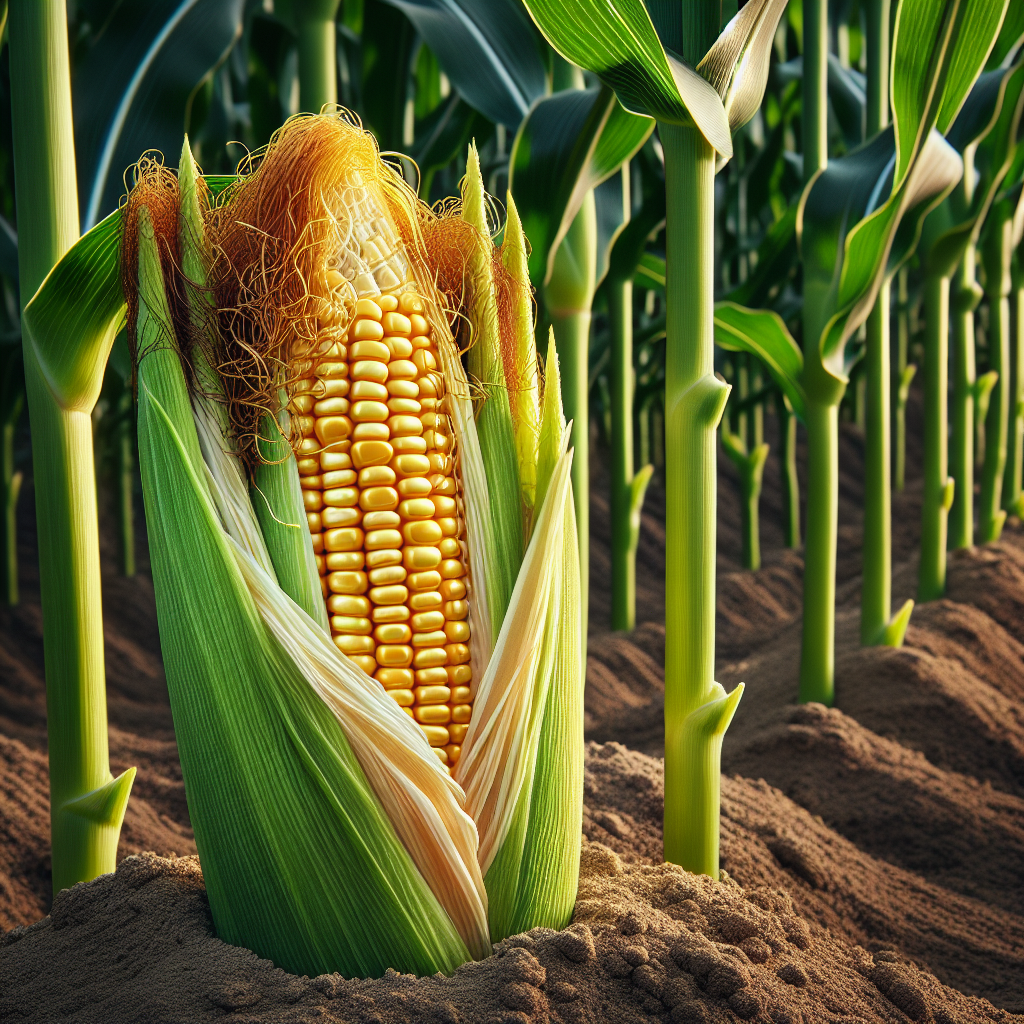
Introduction to Popcorn (Orville Redenbacher)
A classic popping corn cultivar is grown not for sweet immature ears, but for hard, fully mature kernels with a dense, glassy endosperm and a tight pericarp that traps internal moisture until heat causes explosive expansion. That biological trait is what separates popcorn from sweet corn and most dent or flour corns. The Orville Redenbacher name is strongly associated with high-quality popcorn breeding and premium popping performance, emphasizing kernel uniformity, high expansion, and a lighter, more tender finished product.
For growers, the key lesson is that high eating quality begins in the field. Pollination failures create partially filled ears; excess nitrogen can encourage lush but weak growth; late harvest in wet weather can invite ear molds; and over-drying can reduce popping volume. Anyone familiar with general Corn production will recognize the crop’s broad agronomic framework, but popcorn demands tighter control of isolation, drying, and storage than standard grain corn.
Historically, popcorn is one of the oldest forms of maize used by people in the Americas, with archaeological evidence showing popping types were cultivated long before modern hybrid breeding. Modern commercial popcorn lines refined those ancient traits into plants that combine sturdier agronomy with a high proportion of kernels capable of popping into large, attractive flakes. In practical terms, this means growers should think of the crop as both a field grain and a specialty food product, because the quality standard is not simply yield per acre but the percentage of kernels that pop well and taste good.
Botanical Profile of Popcorn (Orville Redenbacher)
This crop belongs to the grass family, Poaceae, and is classified botanically as Zea mays var. everta. Like all maize, it is a warm-season annual with a fibrous root system, an upright culm-like stem, broad linear leaves, a terminal male inflorescence called the tassel, and female inflorescences that develop into ears along the stalk. Pollination is wind-driven: pollen from the tassel falls onto fresh silks, and each silk corresponds to a single kernel on the cob.
Popcorn differs structurally from dent corn because its kernels have a very hard, vitreous outer endosperm with limited soft starch. That hard endosperm, combined with a strong hull, allows pressure to build as internal water converts to steam. At roughly 180–190°C during popping, the kernel ruptures and the starch gelatinizes and expands. Kernel moisture at popping is critical; too little and expansion is poor, too much and the flakes become chewy or burst unevenly.
Orville Redenbacher-type popcorn is generally selected for strong popping expansion, relatively uniform ear set, and kernels that dry down well if the season is long enough. Depending on the specific seed lot or hybrid expression, plants commonly reach around 5 to 8 feet tall, with 1 to 2 productive ears per plant under good fertility and spacing. Ear size is usually smaller and more compact than fresh-market sweet corn, and kernels are often yellow to golden in commercial strains. Days to maturity typically range from about 95 to 120 days from sowing, depending on heat accumulation, latitude, and weather.
Because maize is monoecious and wind-pollinated, isolation is one of the most important botanical realities for growers. Cross-pollination with sweet corn, dent corn, or ornamental flint types can alter kernel characteristics in the next generation and reduce uniformity if you save seed. Even for a single-season edible crop, poor pollination from inadequate block planting can lower kernel fill and decrease marketable yield.
Soil, pH, and Climate Requirements for Popcorn (Orville Redenbacher)
This crop performs best in full sun, with at least 8 hours of direct light and ideally more during peak summer growth. It is not shade tolerant and loses vigor quickly if grown near trees, fences, or taller crops that reduce morning and midday light.
Soil should be deep, well-drained, and moderately fertile, with strong water-holding capacity but no prolonged saturation. The best texture is a silt loam, sandy loam enriched with organic matter, or fertile loam with good tilth. Heavy clay can work if well structured and drained, but crusting soils are a disadvantage because maize seedlings are not especially strong at breaking through compacted surfaces. Avoid shallow, stony soils where drought stress arrives suddenly during tasseling and grain fill.
The ideal soil pH is 6.0 to 6.8, though the crop can still grow in roughly 5.8 to 7.2 if fertility is balanced. Below pH 5.8, phosphorus availability often declines and aluminum or manganese toxicity may begin to stress roots in some soils. Above 7.2, micronutrients such as zinc may become less available, leading to pale striping on younger leaves. A pre-plant soil test is strongly recommended. As a general professional target, organic matter above 3% supports more stable moisture and nutrient release.
Temperature is central to success. Seed germinates best when soil temperatures are consistently above 16°C (60°F), and emergence is faster and more uniform at 18 to 24°C (64 to 75°F). Cold, wet soil delays emergence, encourages seed rot, and causes uneven stands. During vegetative growth, the crop thrives at daytime temperatures of 24 to 30°C (75 to 86°F). Heat above 35°C (95°F), especially when combined with drought at tasseling, can reduce pollen viability and silk receptivity, sharply lowering kernel set.
Moisture demand rises as plants move from knee-high growth into tasseling and ear fill. Total seasonal water needs are commonly around 450 to 650 mm (18 to 26 inches), though this varies with soil type and evaporative demand. The most critical window is from roughly two weeks before tassel emergence through three weeks after silking. During this period, maintain soil moisture near 60 to 80% of field capacity in the root zone. In practical garden terms, the top 2 to 3 inches should not be powder-dry, and the soil 4 to 8 inches down should feel cool and evenly moist, not sticky or soupy. Overwatering signs include yellowing lower leaves despite wet soil, slow growth, root lodging after wind, sour odor in poorly drained beds, and increased incidence of seedling blight or stalk disease.
Wind exposure matters too. Moderate airflow reduces some foliar disease pressure, but highly exposed sites can cause lodging, especially with excessive nitrogen. Choose a location sheltered from extreme storm winds if possible.
Step-by-Step Planting & Propagation
Propagation is by seed. Direct sowing is strongly preferred because maize resents root disturbance and transplants often lag behind direct-seeded plants. Start by preparing a weed-free seedbed with fine surface tilth and a firm subsurface. If compost is used, incorporate well-finished compost before planting rather than placing raw organic matter in the furrow.
- Wait until all frost danger has passed and soil at planting depth is consistently at least 16°C (60°F).
- Mark out a block rather than a single long row. A minimum of 4 short rows improves wind pollination. Larger square or rectangular blocks are better.
- Sow seeds 1 to 1.5 inches deep in medium soils. In sandy soils or hot drying conditions, plant up to 2 inches deep. In cold heavy soils, stay nearer 1 inch.
- Space seeds 8 to 12 inches apart within rows.
- Space rows 24 to 36 inches apart depending on fertility, irrigation, and access for cultivation.
- Thin to the final spacing after establishment if germination is dense.
For home-scale blocks, 10 to 16 inches between plants and 30 inches between rows is a reliable balance between airflow and pollination. Tighter spacing can increase competition for water and nutrients, causing small ears if fertility is not excellent. Wider spacing can produce larger plants but may waste space and reduce pollination density.
Isolation is essential. If another corn type is nearby and flowering at the same time, cross-pollination is likely. To preserve popping quality and seed purity, separate by distance, time, or both. A professional isolation target is 250 to 300 meters or more from other corn, though smaller growers often rely on staggering planting dates by at least 2 to 3 weeks so pollen shed does not overlap.
Starter fertility can be useful in cool soils, especially phosphorus and zinc where deficient. Avoid placing concentrated fertilizer directly in contact with the seed, which may cause burn. If side-dressing, do it when plants are about 12 to 18 inches tall and again just before rapid stem elongation if needed.
For growers refining overall fertility practices, this soil health article is relevant background reading.
Care & Maintenance regimes for Popcorn (Orville Redenbacher)
Uniform establishment sets the ceiling for final yield. Inspect stands 7 to 14 days after sowing. Gaps reduce pollination efficiency, especially in small plantings, so re-sow missing spots early if soil is still warm enough.
Nitrogen management should be balanced, not excessive. Popcorn typically needs moderate to high nitrogen, but less indulgence than many growers give sweet corn. Too much nitrogen can produce tall, lush plants with delayed maturity, weaker stalks, and softer tissues that invite lodging and disease. A general field target might be in the range of 80 to 150 lb N/acre depending on soil reserves, organic matter, and expected yield. For garden production, a practical approach is to incorporate compost plus a measured, balanced fertilizer at planting and then side-dress with nitrogen when plants are 12 to 18 inches tall. If lower leaves are uniformly pale green before tasseling, mild nitrogen deficiency may be developing. If plants are excessively dark green and succulent with delayed ear maturity, nitrogen may be too high.
Water deeply rather than shallowly. Young seedlings need consistent surface moisture for the top 1 to 2 inches until roots extend, but once established, irrigate to moisten the root zone 6 to 12 inches deep. On loams, this often means about 1 to 1.5 inches of water per week, more in hot windy conditions and less in cool or humid weather. During silking, moisture stress causes silks to dry prematurely and leads to missing kernels on the ear tip or scattered blank spots. Water stress symptoms include leaf rolling by mid-morning, dull gray-green foliage, and delayed silk emergence. If leaves only curl slightly in extreme afternoon heat but recover by evening, this may be normal. Persistent rolling from morning onward signals true deficit stress.
Mulching can help in small plantings once soil has warmed. A light organic mulch reduces evaporation and suppresses weeds, but keep it a few inches away from the stalk base to avoid crown moisture buildup and rodent harboring. In larger systems, mechanical cultivation between rows when weeds are small is effective. Do not cultivate deeply once brace roots begin forming, because shallow feeder roots are easily damaged.
Because maize is wind-pollinated, hand pollination can improve kernel fill in very small blocks. Shake tassels gently during dry mid-morning conditions when pollen is shedding, or collect pollen in a container and dust it onto fresh silks over several days.
Lodging prevention depends on balanced fertility, proper spacing, and not allowing soil to become alternately waterlogged and drought-hard. If plants begin to lean, hilling a little soil around the lower stalk can support brace root formation.
Pests, Diseases & Organic Management
Seedcorn maggot, Cutworms, Wireworms, and Birds can damage emergence. Use warm soil for planting, avoid burying fresh manure before sowing, and protect newly planted blocks with row covers until plants are established if bird pressure is severe. Remove row covers before tasseling so pollination is not blocked.
Common chewing pests include Corn earworm, Fall armyworm, and European corn borer depending on region. Earworm often enters through the silk channel and feeds near ear tips. Armyworms shred leaves and may attack whorls. Borers tunnel in stalks and ears, weakening plants and increasing disease entry points. Organic management relies on regular scouting, destruction of infested residues after harvest, encouragement of beneficial insects, and timely use of Bt products where permitted and appropriate. Applying mineral oil with Bt to silk channels is a traditional small-scale earworm tactic, though labor-intensive.
Sap-feeders such as Aphids may colonize tassels and leaves, especially in dry weather. Small infestations rarely justify action, but heavy honeydew buildup can interfere with plant health and attract Sooty mold. Strong water sprays, conservation of lady beetles and lacewings, and avoiding excess nitrogen all help.
Raccoons, Deer, and Rodents can be major non-insect threats. Raccoons in particular target ears close to maturity. Fencing, electric deterrents, and harvest timing are often more effective than reactive measures.
Disease pressure rises in dense, humid plantings. Important problems include Common rust, Northern corn leaf blight, Smut, Seedling blights, Stalk rots, and Ear rots caused by fungi such as Fusarium or Aspergillus. Organic prevention begins with rotation: do not grow maize in the same ground repeatedly if disease pressure has been high. Rotate at least 2 to 3 years with unrelated crops where possible. Good airflow, residue management, balanced potassium, and avoiding overhead irrigation late in the day reduce infection pressure.
Ear rots are especially important in popcorn because moldy kernels ruin both food quality and popping performance. Warning signs include discolored kernels, white to pink fungal growth, premature husk bleaching, and ears that feel lighter than expected due to poor fill. Harvest promptly once kernels are mature and begin drying, particularly after wet late-season weather.
Interplanting with beneficial flowering plants and legumes can support biological balance. Soybeans are sometimes used nearby in rotations or mixed farm systems for nitrogen economy and landscape diversity, though they should not crowd the corn block itself.
Harvesting, Curing & Optimal Storage
The harvest goal is physiologically mature kernels that are dry enough for safe curing but not so over-dried that popping quality suffers. Leave ears on the stalk until husks are dry and papery and kernels are hard, glossy, and resist denting with a fingernail. Black layer formation at the kernel base signals physiological maturity, though this may be difficult to inspect on small harvests without shelling sample ears.
For most growers, ears are harvested when field moisture has dropped significantly but before prolonged wet weather causes mold, bird damage, or lodging. If ears are mature but conditions are turning wet, harvest slightly earlier and finish drying under cover. Pick only well-filled, disease-free ears for storage and especially for seed saving.
Curing is where popcorn quality is made or lost. Hang ears in mesh bags or spread them in a single layer in a warm, dry, well-ventilated area out of direct rain and strong sun. Ideal curing air is roughly 15 to 24°C (59 to 75°F) with low to moderate humidity and continuous airflow. Avoid overheating, which can crack kernels, and avoid sealed containers during early drying.
Target kernel moisture for best popping is usually around 13.5 to 14.5%. Below about 12.5%, many lots show reduced expansion and more unpopped kernels. Above about 15%, storage safety declines and popped corn may be tough. If you do not have a grain moisture meter, test by shelling a small sample after curing and popping it. Poor expansion with very hard, brittle kernels may indicate over-drying; in that case, place the shelled kernels in a sealed container with a very small moisture source, such as a barely damp paper towel separated from direct contact, for a few days, then retest. If kernels smell musty or pop chewy, moisture is too high and more drying is needed.
After curing, shell kernels carefully to avoid cracking the pericarp. Hand shelling or low-impact shellers are best for preserving popping quality. Store in airtight containers once the correct moisture level is reached. Food-grade buckets, glass jars, or sealed bins work well. Keep in a cool, dark place, ideally below 15°C (59°F) for long-term storage, with stable humidity and no insect access. Under good conditions, popcorn can remain viable and usable for a year or longer, though popping quality is best when moisture remains steady.
Companion Planting for Popcorn (Orville Redenbacher)
The most useful companions are those that either support the soil, suppress weeds without shading the corn excessively, or attract beneficial insects while tolerating similar summer conditions. Traditional intercropping systems often pair maize with climbing beans and sprawling squash, though spacing must be adjusted so the popcorn block still receives full light and air movement. In smaller home plots, this can be highly effective if managed deliberately rather than allowed to become tangled.
Peas are not a classic hot-season intercrop at peak summer, but they can be valuable in shoulder seasons or as a preceding nitrogen-contributing crop before sowing popcorn. More traditional in-season companions include Pumpkin, which shades soil and reduces weed pressure, and Clover used as a living mulch or off-season cover to protect structure and feed soil biology. If using a living mulch, manage it so young corn is not outcompeted during establishment.
For direct companion use, keep vigorous vines out of the center of the corn block until stalks are well established. Plant squash or pumpkin along block edges rather than between every row unless spacing is wide. If using beans, choose less aggressive climbing types and monitor that they do not pull down stalks in windy sites. Aromatic insectary plants at margins can also improve pollinator and predator presence without interfering with wind pollination.
The core principle is simple: companions should support the popcorn crop’s light capture, root access, and pollination, not compromise them. In commercial-style plantings, rotation and cover cropping are usually more reliable than dense mixed intercropping. In gardens, however, carefully chosen companions can reduce weeding, conserve moisture, and create a more resilient planting system.