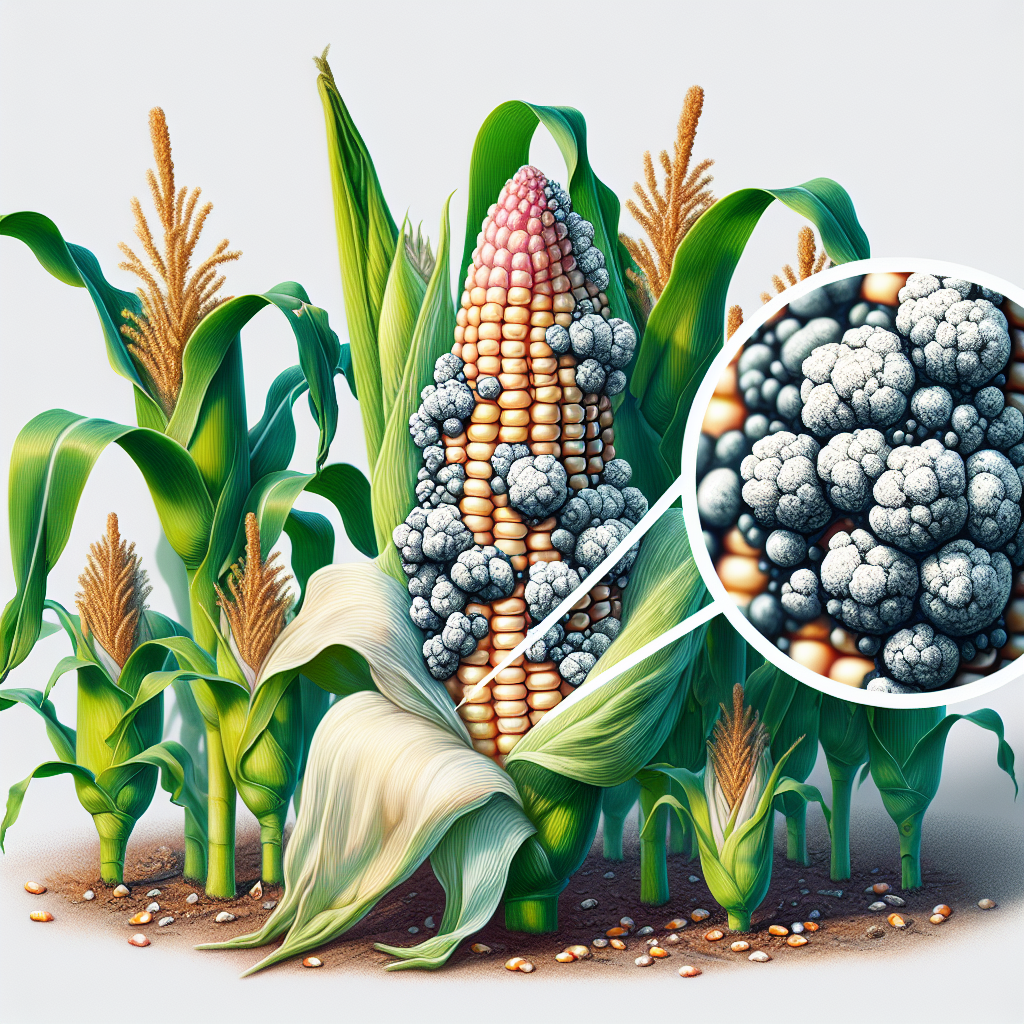
Introduction to Smut
Smut diseases represent one of the most destructive fungal pathogens in global agriculture, particularly targeting cereal grains and grasses. Caused primarily by basidiomycete fungi in the order Ustilaginales, smuts infect plants systemically, replacing healthy tissues with masses of teliospores—dark, powdery structures that give the disease its name. Unlike many foliar diseases, smuts often strike at reproductive structures like ears, heads, or tassels, rendering harvests unusable.
First documented in ancient texts, smuts have plagued farmers for millennia, with corn smut (Ustilago maydis) even gaining culinary fame in Mexico as 'huitlacoche.' However, for most growers, smuts mean devastation: yield losses can exceed 80% in severe epidemics. This guide provides professional-grade diagnostics, lifecycle insights, organic management, and prevention strategies tailored for small farms and commercial operations. Understanding smut's biology is key to turning vulnerability into resilience, especially in warming climates that favor spore dispersal.
Globally, smuts cost billions annually. In the U.S. alone, common bunt of wheat once wiped out entire regions before resistant cultivars emerged. Today, with monoculture expansion and climate shifts, vigilance is essential. Early detection prevents spore clouds from contaminating fields, equipment, and neighboring crops.
Identifying Symptoms & Damage
Smut symptoms vary by species and host but share hallmarks: black, sooty spore masses erupting from plant parts. Accurate diagnosis hinges on timing, location, and texture.
Early Signs: Small galls or swellings appear on leaves, stems, or inflorescences. In corn, tumors form on ears, tassels, or stalks weeks after silking. Wheat loose smut shows replaced heads at boot stage—heads emerge as green but soon rupture into black powder. Covered smuts (e.g., common bunt) produce fishy-smelling grain that breaks into spores at harvest.
Advanced Symptoms: Mature galls split open, releasing billions of teliospores. Infected rice panicles become sterile, covered in velvety black powder. Sorghum head smut encases entire heads in thin membranes that burst dramatically. Damage includes shriveled grains, dwarfed plants, and secondary infections like root rot.
Yield Impact: Partial infections reduce grain weight by 20-50%; total replacement means 100% loss per head. Spores persist in soil and seed, amplifying spread. Differentiate from ergot (hardened sclerotia) or rusts (red pustules)—smut spores are dry, powdery, and germinate in water.
Field scouting: Check 100 plants per acre at flowering. Crush galls for microscopic confirmation: teliospores are spherical, 5-20μm, thick-walled. Economic thresholds: 1-5% infection warrants action.
Lifecycle and Progression of Smut
Smut fungi follow a dikaryotic lifecycle optimized for survival and dispersal. Teliospores overwinter in soil, crop residue, or seed, germinating in spring via meiosis to produce basidiospores (sporidia) that require water films for infection.
Infection Phase: Sporidia germinate on seedling shoots or roots, forming hyphae that penetrate via wounds or natural openings. Systemic colonization occurs, with dikaryotic mycelium spreading to meristems. Incubation lasts 2-8 weeks, symptomless until flowering.
Sporulation Phase: At anthesis, mycelium hypertrophies host tissue into galls. Meiosis produces teliospores within 7-14 days. Wind, rain, or machinery disperses spores up to 10km. In covered smuts, spores mix with grain, spreading via seed.
Progression Timeline:
- Seedling: 0-30 days post-emergence.
- Vegetative: Mycelium multiplies undetected.
- Reproductive: Galls form, spores release.
Perennial smuts (e.g., flag smut) persist in ratoon crops. High humidity (80-100%) and temperatures (20-30°C) accelerate cycles. One gram of spores (millions) can infect acres.
Environmental Triggers & Risk Factors
Smuts thrive in cool, moist conditions mimicking temperate outbreaks. Optimal: 15-25°C daytime, high night humidity, free water on tissues >8 hours.
Key Triggers:
- Excessive nitrogen promotes succulent growth.
- Poor drainage retains spores.
- Crop rotation <2 years builds inoculum.
- Acid soils (pH <6) favor Ustilago.
Risk Factors: Susceptible varieties like older wheat cultivars. Seedborne infection from untreated lots. Volunteer plants harbor mycelium. Climate change extends wet springs, boosting epidemics in tropics.
Regional hotspots: U.S. Corn Belt (humid summers), Indian rice paddies (monsoons), Australian sorghum (irrigation). Assess risk via weather data: >10 rainy days pre-flowering signals danger.
Organic Control & Treatment Plans
Organic management integrates sanitation, biology, and resistance. No cure for systemics—focus on suppression.
Seed Treatment: Hot water (52°C, 10-20min) or solarization kills surface spores without chemicals. Biofungicides like Trichoderma viride (10g/kg seed) antagonize germination.
Cultural Controls:
- Deep plow residue to bury spores.
- Rotate with non-hosts (e.g., legumes).
- Balanced fertility: Avoid N excess.
- Timely planting dodges peak sporulation.
Biological Agents: Bacillus subtilis sprays (5kg/ha) inhibit sporidia. Compost teas boost plant immunity. Companion planting with marigold suppresses soil inoculum.
Treatment Protocol:
- Rogue infected plants pre-sporulation.
- Apply biofungicide at boot stage.
- Flail chop residue post-harvest.
For Spring Pest Patrol: Organic AI Strategies to Shield Your Crops from Common Invaders, integrate monitoring. Success rates: 70-90% reduction with compliance.
Preventing Smut in the Future
Prevention trumps reaction. Core strategy: certified smut-free seed (0% tolerance). Plant resistant hybrids—e.g., wheat with Sr genes, corn lines immune to U. maydis.
Integrated Plan:
- Scout weekly April-July.
- Crop rotation: 3+ years.
- Soil solarization: Clear plastic 4-6 weeks summer.
- Windbreaks reduce spore drift.
- Post-harvest: Till + green manure.
Long-term: Breed locally adapted varieties. Monitor via traps (Petri dishes with agar). Threshold: Destroy fields >10% infection. Economic ROI: Prevention saves $200-500/ac vs. losses.
Crops Most Affected by Smut
Cereals dominate smut hosts due to monoculture and seed systems.
- Corn: Common smut (corn smut)—galls on all parts.
- Wheat: Loose/covered smuts, bunt—head replacement.
- Rice: False loose smut—panicle sterility.
- Sorghum: Head/Grain smuts—covered heads.
- Barley/Oats: Covered/loose smuts.
Others: Pearl millet, sugarcane. In Soil Health Mastery: 5 Proven Strategies for Small Farms to Build Fertile Ground Without Breaking the Bank, enhance resilience. Grasses like bermudagrass suffer perennial infection. Global impact: 5-20% annual losses in staples.