Definitive Diagnostic and Management Guide for Ear Rots
Introduction to Ear Rots
Ear rots represent one of the most economically devastating diseases in grain production, particularly in corn crops where they target the developing ears, leading to widespread kernel infection and mycotoxin contamination. These fungal diseases, caused primarily by species in the Fusarium, Gibberella, Penicillium, and Aspergillus genera, thrive under specific post-silking conditions, resulting in discolored, molded grains that are unsuitable for feed, food, or processing. Globally, ear rots cause annual losses exceeding $1 billion in the U.S. alone, with Fusarium ear rot being the most prevalent, producing fumonisins that pose serious risks to livestock and human health.
Understanding ear rots is crucial for farmers growing field corn, sweet corn like Sweet Corn (Honey Select), or specialty varieties such as Glass Gem Corn. Symptoms often appear late in the season, making prevention the cornerstone of integrated management. This guide provides professional-grade diagnostics, lifecycle insights, organic treatments, and prevention strategies to safeguard yields and grain quality. Early detection through scouting and environmental monitoring can reduce infection rates by up to 50%, preserving market value and farm profitability. For small farms battling weather variability, tools like hyper-local forecasting can predict high-risk periods—check out Why 80% of Small Farms Battle Weather Disasters - And How Hyper-Local AI Forecasts Can Save Your Harvest.
Identifying Symptoms & Damage
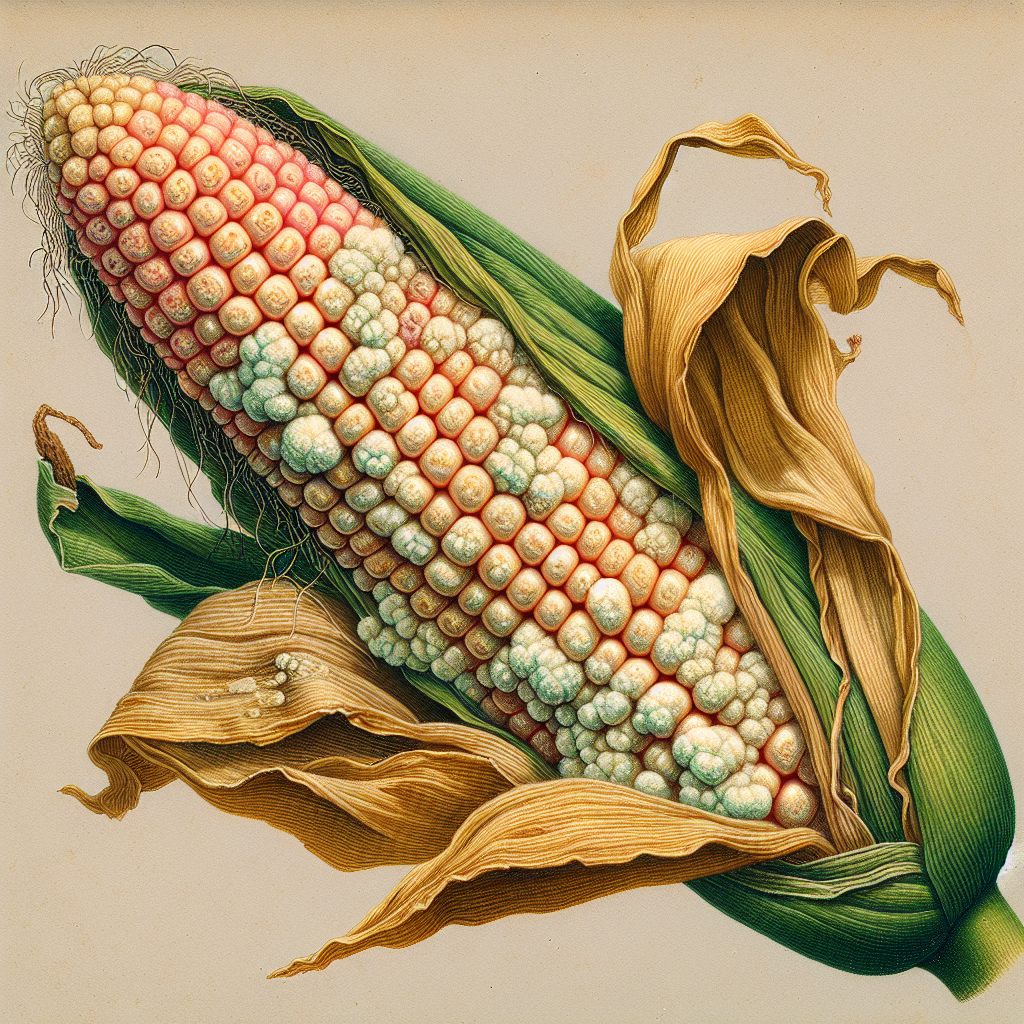
Accurate diagnosis begins with visual scouting during the dent stage through harvest. Fusarium ear rot, the most common form, presents as white or pinkish mold starting at the ear tip, progressing unevenly down the cob. Kernels appear shriveled, tan to salmon-colored, with a characteristic cottony mycelium under husks. In contrast, Gibberella ear rot (caused by Gibberella zeae) shows reddish-pink mold uniformly covering the ear from the tip, often accompanied by a sweet, musty odor.
Aspergillus ear rot features olive-green or yellow-green mold, thriving in hot, dry conditions and producing aflatoxins. Penicillium ear rot displays blue-green mold on kernels, common in storage but originating in the field under cool, wet harvest delays. Damage includes 20-80% yield loss per ear, weight shrinkage, and mycotoxin levels exceeding FDA limits (e.g., 4 ppm fumonisins for human food). Secondary symptoms include Corn Earworm damage creating entry points, bird feeding scars, or husk splits exposing silk channels.
To confirm, peel back husks on 20-50 plants per field edge and row interior. Use blacklight for fluorescence (Fusarium) or send samples for lab analysis via ELISA for mycotoxins. Differentiate from corn smut (galls) or Northern Corn Leaf Blight (foliar only). Infected ears reduce test weight below 54 lb/bu, leading to dockage and rejection at elevators.
Lifecycle and Progression of Ear Rots
Ear rot pathogens overwinter as chlamydospores, mycelium, or stromata in crop residue, soil, or alternate hosts like wheat and sorghum. Fusarium verticillioides and F. proliferatum produce conidia on debris, splashing or wind-dispersed to silks during pollination. Infection occurs via silk channels 7-21 days post-silking, with optimal spread at 77-86°F and 90-100% humidity inside husks.
Progression: Initial colonization is symptomless, but under stress (drought, high plant density), fungi advance to kernels, producing mycotoxins by physiological maturity. Gibberella zeae requires prolonged wetness (>72 hours at 70°F) for perithecia formation on residue, releasing ascospores during rain. Aspergillus flavus infects drought-stressed plants, colonizing from ear tip inward. Harvest delays exacerbate secondary invasion by storage molds like Penicillium.
Lifecycle completes in 4-6 weeks, with spores surviving 2-3 years in no-till fields. Crop rotation disrupts this cycle, reducing inoculum by 70%. Monitor with spore traps or weather models tracking heat units post-silking.
Environmental Triggers & Risk Factors
Ear rots explode under specific conditions: high humidity (>85% RH) and temperatures 75-90°F during R3-R5 stages, combined with drought stress reducing husk coverage. Continuous corn, high plant populations (>34,000/acre), and narrow rows increase humidity microclimates. Poor hybrid choice—susceptible to root and stalk rots—weakens plants, promoting ear infection via vascular spread.
Insect damage from European Corn Borer or Fall Armyworm creates wounds, while birds or raccoons open husks. Nitrogen excess delays maturity, extending susceptibility windows. Fields with >20% residue cover from prior corn host higher inoculum. Regional risks peak in the Midwest U.S. during August fog belts or southern droughts favoring aflatoxins.
Organic Control & Treatment Plans
Organic management emphasizes cultural and biological tactics, avoiding synthetics. Select hybrids with tight husks and rapid dry-down (e.g., 70% of new lines show partial resistance). Scout weekly post-silking, removing 10-20% infected ears to curb spread. Apply organic biocontrols like Bacillus subtilis or Trichoderma viride to silks at VT stage, reducing Fusarium by 30-50% in trials.
Enhance plant health with balanced fertility: 1.2 lb N/bu goal, avoiding excess. Use cover crops like clover post-harvest to suppress residue. At harvest, dry to <15% moisture immediately, sorting out molded grain. For storage, aerate to 40°F, using diatomaceous earth against secondary insects like sap beetles. Bacillus thuringiensis targets earworms organically. Integrate with companion planting near field edges using marigold for nematode suppression linked to stalk rots.
Step-by-step plan: 1) Hybrid selection; 2) Crop rotation (2-3 years non-host); 3) Timely planting; 4) Silk applications; 5) Harvest at 20-25% moisture; 6) Rapid drying. Yields recover 15-25% with these practices.
Preventing Ear Rots in the Future
Long-term prevention hinges on integrated pest management (IPM). Rotate with soybeans or alfalfa to break pathogen cycles, reducing inoculum 60-80%. Plant resistant hybrids certified by seed companies, monitoring for Fusarium ratings. Maintain populations at 28,000-32,000/acre with 30-inch rows for airflow.
Apply split-N fertility, irrigate evenly to avoid stress. Scout insects aggressively, using pheromones for earworm monitoring. Harvest promptly, prioritizing fields with >10% tip-back. Tillage buries residue, speeding decomposition. Test grain for mycotoxins annually, blending low-risk lots. Future breeding focuses on CRISPR-edited toxin resistance. Track via field history apps for predictive analytics.
Crops Most Affected by Ear Rots
Ear rots predominantly strike corn (Zea mays), impacting field, sweet, popcorn, and flint varieties like Dent Corn (Yellow Dent) and Flint Corn (Indian Corn). Fusarium species affect grains globally, with U.S. Corn Belt losses at 10-20% annually. Related crops include sorghum (grain head rots), wheat (head scab akin to Gibberella), and barley (similar Fusarium issues). Minor occurrences in millet and rice ears under tropical conditions. Hybrids like Peaches and Cream Sweet Corn require vigilant management.