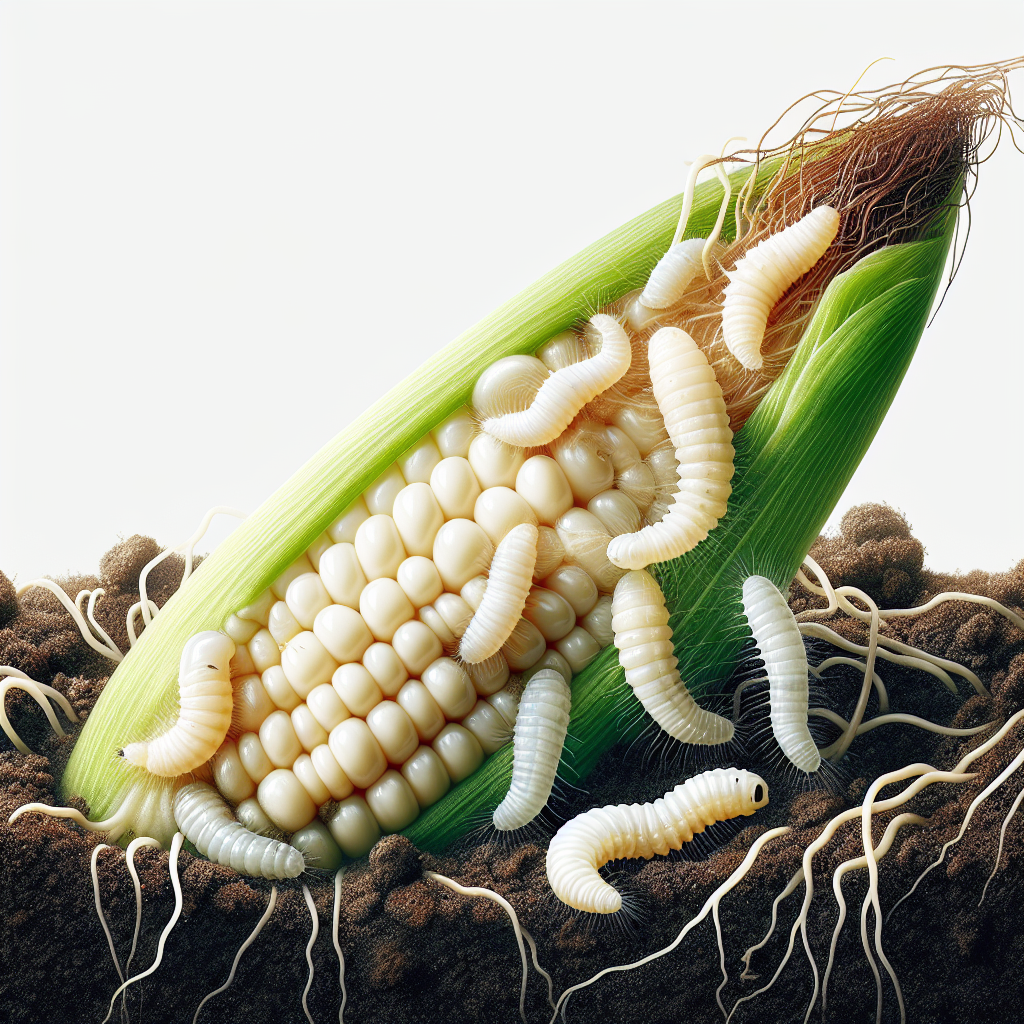
Introduction to Seedcorn Maggot
Seedcorn maggots (Hylemya platura), also known as bean seed maggots or onion root maggots in some contexts, represent one of the most destructive early-season pests in temperate agriculture. These small, white legless larvae of the cabbage root fly family (Anthomyiidae) inflict maximum damage during cool, moist germination periods when crops like corn, soybeans, and peas are most vulnerable. Farmers often discover entire fields reduced to sparse stands after maggots devour seeds before they can emerge, leading to replanting costs and yield losses up to 100% in severe cases.
Understanding seedcorn maggot biology is crucial for diagnosis and control. Adults are small gray flies resembling houseflies but smaller (5-7 mm long), laying eggs in soil near decaying organic matter or freshly tilled fields. Larvae, reaching 8-10 mm, feed voraciously on seed contents and root tissues, leaving behind blackened, shriveled remains. This guide provides comprehensive diagnostic tools, lifecycle insights, risk assessment, organic management strategies, and prevention tactics tailored for small farms and commercial operations. By integrating these practices, growers can minimize losses and protect seedling establishment. For more on early pest threats, check this Spring Pest Patrol blog post.
Identifying Symptoms & Damage
Diagnosing seedcorn maggot infestations requires keen observation during the first 10-14 days post-planting, especially in no-till or reduced-till systems. Primary symptoms include missing plants or 'skips' in rows, where seeds fail to emerge. Excavate affected areas to reveal the telltale signs: seeds honeycombed with tunnels, filled with white maggots, and coated in brown frass. Surviving seedlings appear stunted with blackened, rotting roots and hypocotyls, often wilting or yellowing above ground.
Damage severity correlates with larval density; 5-10 maggots per seed can destroy it entirely. Secondary symptoms mimic damping-off or seedling rots, but maggot presence confirms the culprit—cut open stems to spot the creamy larvae or reddish-brown puparia in soil. In potato fields, damage extends to tubers, creating shallow feeding galleries. Monitor using yellow sticky traps for adults or dig bait stations (decaying vegetation) to assess larval numbers. Differentiate from wireworms (hard, golden larvae) or cutworms (nocturnal surface feeders) by seedcorn maggots' soft bodies and strict soil habitation.
Lifecycle and Progression of Seedcorn Maggot
Seedcorn maggots complete 3-5 generations per year in temperate regions, with overlapping cycles driven by temperature. Adults overwinter as pupae 2-5 inches deep in soil, emerging in early spring (soil temps 50-60°F) when forage crops like clover or alfalfa decompose. Females lay 200-350 eggs singly or in clusters near seeds or organic debris, hatching in 2-4 days at 70°F.
Larvae have three instars, feeding for 10-20 days before pupating in soil. The entire cycle spans 21-40 days, accelerating in summer. Peak damage occurs in the first generation, targeting cool-season crops like spinach or beets. Second and third generations hit late-planted corn or late beans. Adults live 4-6 weeks, dispersing up to 1 mile but preferring weedy field edges. Understanding this progression allows timed planting to evade peak egg-laying.
Environmental Triggers & Risk Factors
Cool (45-65°F), wet soils post-tillage trigger massive outbreaks, as females seek moist, organic-rich microsites for oviposition. No-till fields with surface residue from wheat or cover crops like clover amplify risks, providing pupation sites and cues. Early planting (before soil warms to 70°F) exposes seeds during peak adult flight. Manure applications or green chop from legumes signal 'decaying host' to gravid flies.
High-risk zones include the Midwest, Northeast US, and northern Europe with continental climates. Acidic soils (pH <6.0) and compacted fields exacerbate damage by slowing seedling growth. Crop rotation failures, especially continuous corn-soybeans, build pupal banks. Scout weather data: prolonged overcast springs with >1 inch weekly rain spike populations 10-fold. For hyper-local forecasts, integrate farm management tools.
Organic Control & Treatment Plans
Organic management emphasizes prevention but includes curative options. Upon confirmation, avoid broad-spectrum insecticides favoring IPM. Cultural Controls: Delay planting until soil >70°F; use transplants for high-value crops. Treat seed with hot water (122°F for 20 min) or biologicals like Beauveria bassiana.
Biological Agents: Apply entomopathogenic nematodes (Steinernema feltiae) at 500,000/acre post-planting; irrigate into moist soil. Bacillus thuringiensis (Bt) var. israelensis targets larvae. Physical Barriers: Row covers (Agribon AG-19) exclude adults during emergence. Trap Crops: Plant yellow mustard or buckwheat borders to lure females.
Treatment Timeline: Scout weekly; at 1 adult/trap/10 ft row, intervene. For active infestations, drench with spinosad (Entrust, 0.2 oz/gal) or pyrethrins, repeating in 7 days. Yellow sticky traps (1/10 acres) monitor and reduce adults. Rotate with non-hosts like squash. Success rates exceed 80% with integrated approaches.
Preventing Seedcorn Maggot in the Future
Long-term prevention hinges on breaking the lifecycle. Implement 2-3 year rotations avoiding host crops (corn, legumes, alliums). Tillage buries pupae >4 inches, exposing them to predators. Destroy residues promptly; avoid fall manure on future seedbeds. Plant certified, treated seed; use pelleting with clays to deter oviposition.
Enhance soil health with cover crops like rye or sudangrass, but terminate 3 weeks pre-plant. Time planting post-fly emergence using degree-day models (base 43°F, 300 DD to flight). Border tillage or flaming reduces edge populations. Encourage predators: ground beetles, rove beetles via mulch. For detailed soil strategies, see Soil Health Mastery. Annual scouting and records refine predictions.
Crops Most Affected by Seedcorn Maggot
Seedcorn maggots attack 40+ species, prioritizing germinating seeds high in proteins/carbs. Primary hosts: corn (especially sweet varieties like Peaches and Cream), soybeans, peas, beans (snap, lima), onion, cabbage. Moderate risks: potato, beet, radish, turnip, lettuce.
Tolerant crops: cereals like wheat, grasses. Damage peaks on minimally tilled fields with legume history. In sweet corn, losses hit 20-50%; in snap beans, near-total stand failure. Diversify rotations to mitigate.