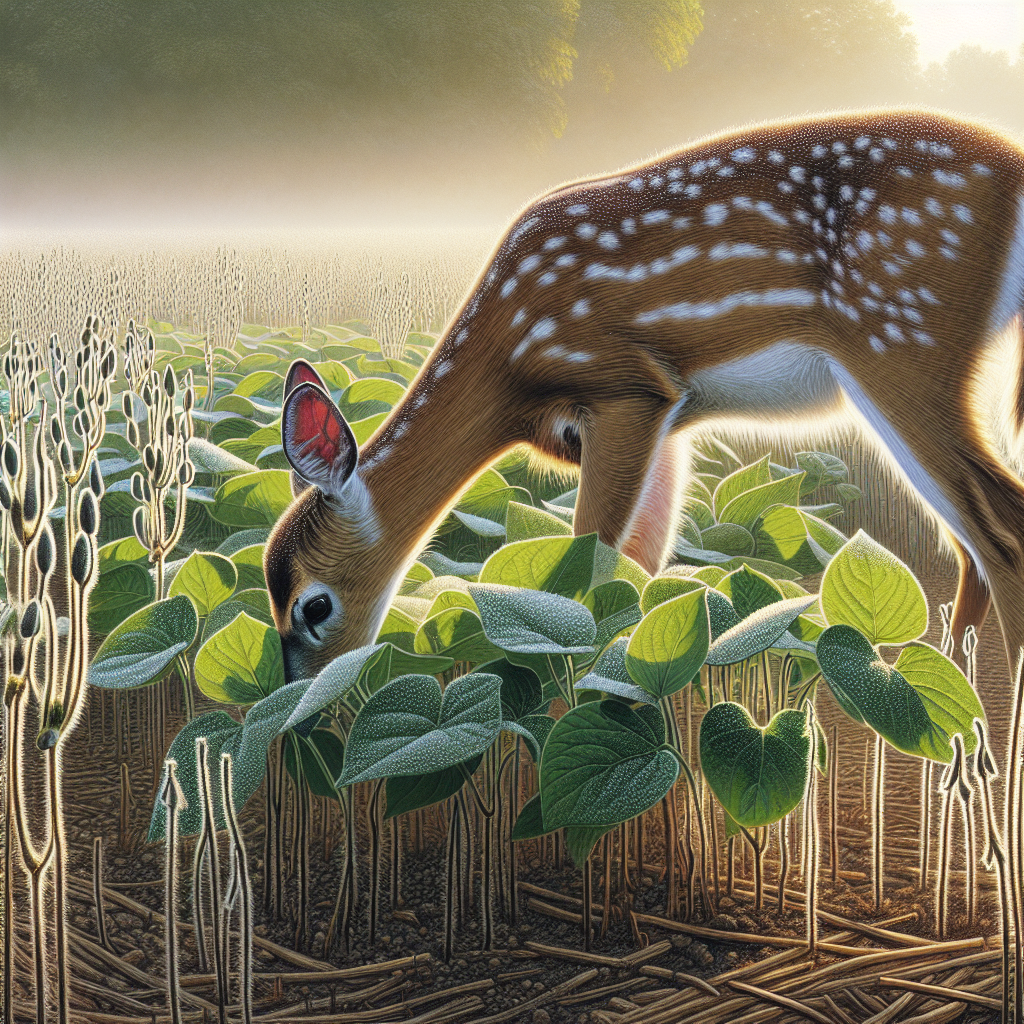
Introduction to deer
Deer, primarily species from the family Cervidae such as white-tailed deer (Odocoileus virginianus) and mule deer (Odocoileus hemionus), represent one of the most persistent vertebrate pests in modern agriculture. These large herbivores can devastate crops, orchards, and landscapes, consuming vast quantities of vegetation nightly. In the United States alone, deer-related agricultural damage exceeds $1 billion annually, affecting everything from apple orchards to vegetable fields. As suburban expansion pushes deer populations into farmland, growers face increasing pressure to implement non-lethal, humane management strategies. This guide provides professional-grade diagnostics, lifecycle insights, and organic control methods tailored for small to medium-scale operations. Understanding deer behavior—crepuscular feeding patterns, keen senses, and herd dynamics—is crucial for effective deterrence. Unlike insect pests like aphids, deer require area-wide approaches considering their mobility and intelligence. Successful management integrates prevention, repellents, and exclusion, often reducing damage by 80-90% when applied consistently.
Identifying Symptoms & Damage
Deer damage is unmistakable once identified, featuring clean, slanting cuts on stems and branches rather than ragged tears from rodents or insects. Look for browsed foliage with jagged edges 2-6 feet above ground, as deer rarely stretch higher unless on hind legs. Twig snapping leaves 1/4- to 1-inch diameter stems cleanly severed at 45-degree angles, distinguishing from rabbit nips (smaller, cleaner cuts). Fruit and pod removal shows complete stripping of soybeans, peas, or berries, often leaving bare stalks. Rubbing damage from antler velvet removal scars tree bark 2-4 feet high, especially on young saplings, creating girdling wounds vulnerable to root rot. Fecal pellets (dark, cylindrical, 1/2-inch long) and hoof prints (2-3 inches long, cloven) confirm presence. In orchards, expect defoliation of low-hanging branches on peach or cherry trees, reducing yields by up to 50%. Nighttime raids target tender growth, so inspect fields at dawn. Differentiate from rabbits by height and cut angle, or squirrels by lack of chew marks. Early detection via trail cameras prevents escalation.
Lifecycle and Progression of deer
Deer exhibit a year-round lifecycle synchronized with seasons, influencing feeding intensity. Breeding season (rut) peaks October-November, when bucks aggressively rub trees and strip bark, peaking damage. Fawning occurs May-June; does with newborns intensify browsing near cover. Summer growth phase sees peak herbivory on lush crops like corn and lettuce. Winter starvation drives desperate feeding on bark and evergreens. Populations cycle every 3-5 years with boom-bust patterns tied to predator absence and mild winters. A single doe produces 1-3 fawns annually, reaching maturity in 1.5 years. Feeding progression starts with scouting (light browsing), escalates to heavy grazing during food scarcity, and includes selective feeding on high-protein crops. Herds of 5-20 coordinate via alarm signals, learning to avoid ineffective deterrents within days. Track progression by pellet counts: 20-50/day per deer indicates light pressure; 100+ signals infestation. Unlike insects with larval stages, deer's continuous lifecycle demands persistent management. Spring Pest Patrol: Organic AI Strategies to Shield Your Crops from Common Invaders offers tech-aided monitoring tips.
Environmental Triggers & Risk Factors
Deer pressure surges with habitat loss from development, funneling animals onto farms. Mast failure (acorn/oak crop shortfalls) every 2-7 years triggers crop raids. Mild winters boost survival rates, inflating populations 20-50%. Overgrown field edges provide cover, inviting incursions; clear 30-foot buffers. Monocultures like vast soybean fields attract hordes lacking natural forage. Water sources near crops amplify visits. Hunting pressure absence on adjacent lands sustains numbers. Risk peaks dusk/dawn (80% activity), worsened by full moons enhancing visibility. Urban proximity habituates deer to humans, ignoring mild deterrents. Droughts force reliance on irrigated fields. Assess risk via deer density indices: >20 deer/sq mile demands aggressive prevention. Companion issues like raccoons compound damage. Soil types matter—fertile loams support denser populations nearby.
Organic Control & Treatment Plans
Organic deer management prioritizes exclusion, repellents, and diversion. Fencing is gold standard: 8-foot woven wire (2-inch mesh bottom, 4-inch top) blocks 95% entry; add angled outriggers for jumpers. Electric fencing (5-7 strands, 4-6kV) costs less, shocking without harm. Repellents rotate types: egg-based (e.g., Deer Away) for putrescent odors; capsaicin (hot sauce mixes) for taste; soap bars hung in trees. Apply weekly, post-rain. Plant diversity: Interplant deer-resistant herbs like thyme or yarrow with crops. Diversion plantings: sacrificial clover plots 100 feet from valuables. Motion-activated devices: sprinklers, lights, or radios deter via surprise (alternate weekly). Guard animals: dogs, llamas patrol effectively. Chemical-free hazing: propane cannons, pyrotechnics condition fear. Integrated plans: fence + repellents + diversion yield 90% success. Monitor with trail cams; adjust for habituation. Avoid poisons—illegal and ecologically disruptive. For orchards, trunk wraps prevent rubbing.
Preventing deer in the Future
Long-term prevention builds resilient systems. Habitat modification: mow edges, thin woods to reduce cover. Population management: support regulated hunting, doe harvests. Crop selection: favor resistant varieties—fuzzy leaves (e.g., some squash), aromatics. Timing adjustments: plant late-maturing corn varieties avoiding peak fawning. Perimeter plantings: thorny blackberry hedges deter naturally. Community coordination: area-wide fencing shares costs. Install double fencing (inner 4ft, outer 8ft, 10ft apart) for persistent herds. Soil health focus: Soil Health Mastery: 5 Proven Strategies for Small Farms to Build Fertile Ground Without Breaking the Bank enhances resilience indirectly. Annual audits: pellet grids, camera traps predict incursions. Educate neighbors—single weak points fail all. Tech integration: AI motion alerts via apps. Sustainable prevention cuts losses 70% year-over-year.
Crops Most Affected by deer
Deer target high-sugar, tender crops first. Orchard fruits lead: apple (buds, fruits), grape (canes, clusters), blueberry bushes stripped bare. Vegetables: lettuce, cabbage, bean pods vanish overnight. Row crops: soybeans (70% losses possible), corn ears cleanly removed. Nursery stock: ornamentals, young trees girdled. Berries: strawberry, raspberry decimated. Brassicas: kale, broccoli heads nipped. Regional notes: Midwest favors soybeans/corn; Pacific Northwest hits orchards. Quantify: 1 deer consumes 7-15 lbs/day, equating to $50-100 value nightly. Prioritize protection for high-value Hass Avocado or mango in deer-prone zones.