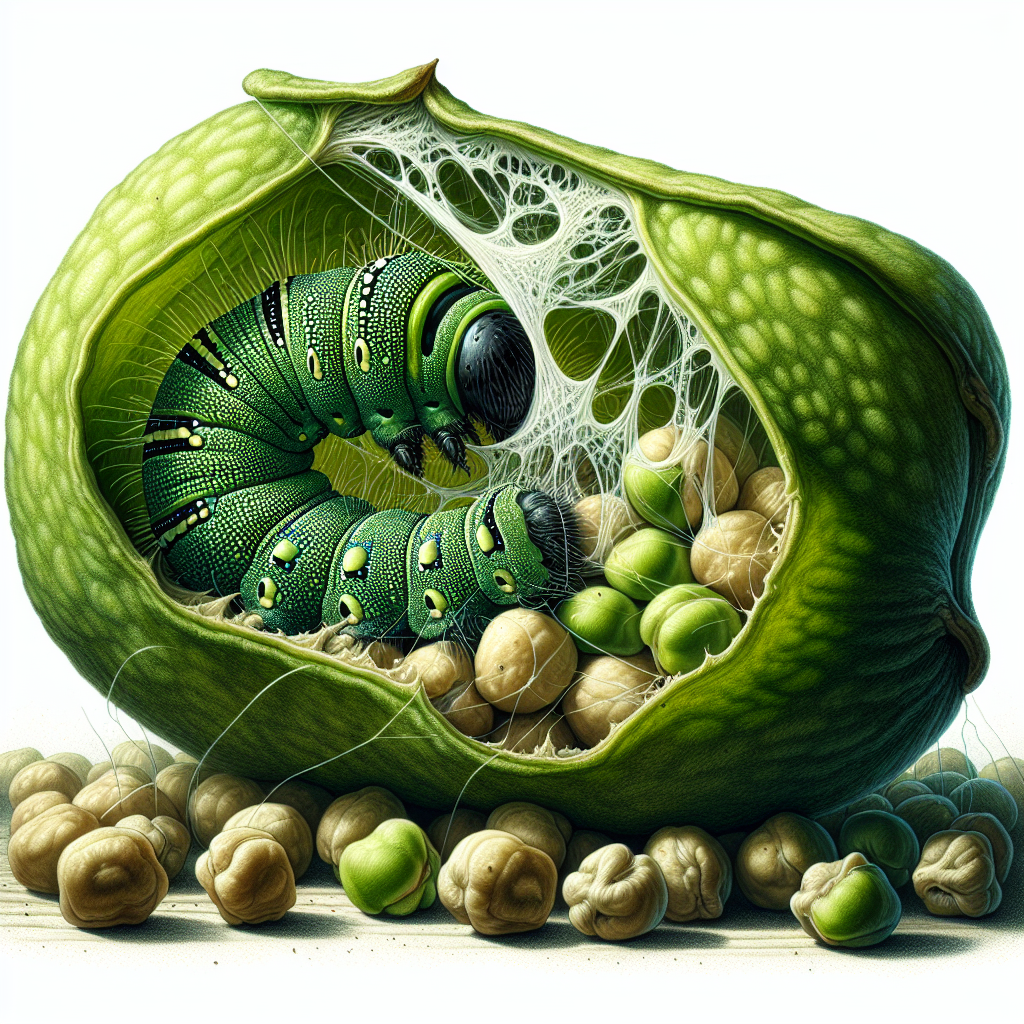
Introduction to pod-feeding caterpillars
Pod-feeding caterpillars represent a major threat to legume production worldwide, particularly in tropical and subtropical regions where crops like soybeans, chickpeas, and peas are staples. These pests, primarily larvae from families such as Noctuidae, Pyralidae, and Crambidae, bore into pods to feed on developing seeds, leading to direct yield reductions of up to 80% in severe infestations. Unlike leaf-feeding caterpillars, which damage foliage, pod-feeders specifically target reproductive structures, making early detection critical for minimizing economic losses.
Farmers often encounter species like the pod borer (Helicoverpa armigera), legume pod borer (Maruca vitrata), and pea pod borer (Etiella zinckenella). These caterpillars not only consume seeds but also introduce secondary infections from frass and open wounds, exacerbating damage through pathogens like Alternaria or Fusarium. Understanding their behavior is essential for integrated pest management (IPM), especially as climate change extends their activity periods. For small-scale and commercial growers, proactive scouting and organic controls are key to sustainable production. Check out this Spring Pest Patrol: Organic AI Strategies to Shield Your Crops from Common Invaders for tech-enhanced monitoring tips.
Identifying Symptoms & Damage
Diagnosing pod-feeding caterpillar damage starts with visible signs on pods. Look for entry holes about 1-3 mm in diameter, often surrounded by frass (caterpillar excrement) that appears as small, greenish-black pellets. Affected pods show hollowed-out seeds, with larvae tunneling inside, leaving silken webbing and a characteristic foul odor from decay.
Early symptoms include pinhole feeding on pod surfaces, where young larvae scrape the epidermis before boring in. Mature pods may split open, revealing partially eaten seeds covered in webbing. Unlike pod borers, which create clean tunnels, pod-feeders leave ragged edges and contaminate seeds with frass, rendering them unmarketable. Secondary damage manifests as discoloration, mold growth, or infestation by storage beetles in harvested pods.
Scout by shaking pods over a white sheet; dislodged larvae or frass confirm infestation. Use a 10x hand lens to identify larvae: pod-feeders are typically 10-30 mm long, green to brown with dark bands, and have a dark head capsule. Differentiate from cutworms, which attack stems at soil level, or armyworms, which prefer leaves. Damage thresholds vary: in chickpeas, 5-10% pod infestation warrants action; in soybeans, exceed 20% damaged pods.
Yield impacts are profound—larvae can destroy 2-5 seeds per pod, reducing harvests by 30-50%. In severe cases, entire racemes drop prematurely. Monitor during pod-filling stages (R4-R6 in soybeans) for timely intervention.
Lifecycle and Progression of pod-feeding caterpillars
Pod-feeding caterpillars undergo complete metamorphosis: egg, larva, pupa, and adult moth stages. Females lay 100-500 eggs singly or in clusters on pods, flowers, or leaves. Eggs are spherical, ridged, and cream-colored, hatching in 3-5 days at 25-30°C.
Larvae progress through 5-7 instars over 10-20 days. Early instars (1-3) feed externally, skeletonizing pod walls; later instars bore inside, growing from 1 mm to 30 mm. They may exit to pupate or drop to soil. Pupation occurs in soil or pod debris, lasting 7-14 days, forming a reddish-brown pupa 15-20 mm long.
Adults are nocturnal moths with 20-40 mm wingspans, often gray-brown with spotting. They live 7-10 days, mating soon after emergence. Multiple generations (3-6) occur annually, overlapping in warm climates. For instance, Helicoverpa armigera completes a cycle in 25-35 days, peaking during monsoon seasons.
Progression ties to crop phenology: eggs appear at flowering, larvae at pod set. Overwinter as pupae or diapausing larvae in soil. Understanding this allows timed interventions, like targeting neonate larvae. Related pests like Helicoverpa species share similar cycles but differ in host range.
Environmental Triggers & Risk Factors
Warm, humid conditions (25-32°C, 70-90% RH) trigger outbreaks, favoring egg hatch and larval survival. Monsoon rains enhance moth flight and oviposition. Drought stress weakens plants, making pods more susceptible—infested fields show 2x higher damage under water deficit.
Risk factors include monocropping legumes, late planting (extending exposure), and nearby alternate hosts like tomato or corn. Poor sanitation leaves pupae in crop residue, fueling next generations. Nitrogen-rich soils promote lush pod growth, attracting females. Weeds harboring caterpillars serve as reservoirs.
Climate shifts extend seasons: warmer winters reduce diapause mortality. High moth catches in pheromone traps signal risk. Fields near wild legumes or peanuts face spillover. Integrated with aphids or whiteflies, they vector viruses like mosaic viruses.
Organic Control & Treatment Plans
Organic management emphasizes IPM: prevention, monitoring, and targeted controls. Scout weekly from flowering, using sweep nets (5-10 per 10 rows) or delta traps with pheromones for adults. Action thresholds: 2-5 larvae per 10 sweeps or 10% pods damaged.
Biological Controls: Introduce Trichogramma wasps (egg parasitoids, 50,000/ha weekly) or NPV viruses (spray 250-500 LE/ha at young larvae). Bacillus thuringiensis (Bt) kurstaki (1-2 kg/ha) is highly effective on instars 1-3, applied evenings. Conserve predators like ladybugs and spiders by avoiding broad-spectrum sprays.
Cultural Practices: Hand-pick larvae from small plots; destroy infested pods. Intercrop with marigold or thyme to repel moths. Early planting evades peak generations. Deep plow post-harvest buries pupae.
Botanicals: Neem oil (5 ml/L) or spinosad (0.5 ml/L) disrupts feeding/oviposition. Apply at dusk with adjuvants for 80-90% control. Rotate with non-hosts like wheat to break cycles. For outbreaks, combine Bt + neem for synergy.
Monitor efficacy: reassess 3-5 days post-treatment. Avoid resistance by rotating modes (e.g., Bt, NPV, botanicals).
Preventing pod-feeding caterpillars in the Future
Long-term prevention builds resilient systems. Use resistant varieties like ICGV 87894 in peanuts or ICP 8863 in chickpeas. Crop rotation (2-3 years non-legumes) starves soil pupae.
Sanitation is paramount: destroy volunteer plants, remove debris, and solarize soil. Barrier crops (sorghum borders) trap moths. Mulching suppresses soil pupation. Pheromone traps (4-6/ha) for mass trapping/mating disruption.
Enhance biodiversity: plant nasturtium or yarrow as trap crops. Timing irrigation avoids peak humidity. Scout history informs decisions—map hotspots for focused efforts. Learn more on zoning strategies in Why Zoning Your Small Farm Chaos into Profit Zones Feels Impossible - And How AI Changes Everything. Certified organic farms report 50% lower incidence via IPM.
Crops Most Affected by pod-feeding caterpillars
Legumes dominate: soybeans (up to 40% loss), chickpeas (20-60%), peas, lentils, peanuts, and black-eyed peas. In Asia/Africa, pigeon pea suffers heavily. Minor hosts include okra, [cowpea](/wiki/cowpea—wait, use pigeon-pea), and mung bean. Green cardamom pods face similar borers. Global losses exceed $1B annually, hitting smallholders hardest.