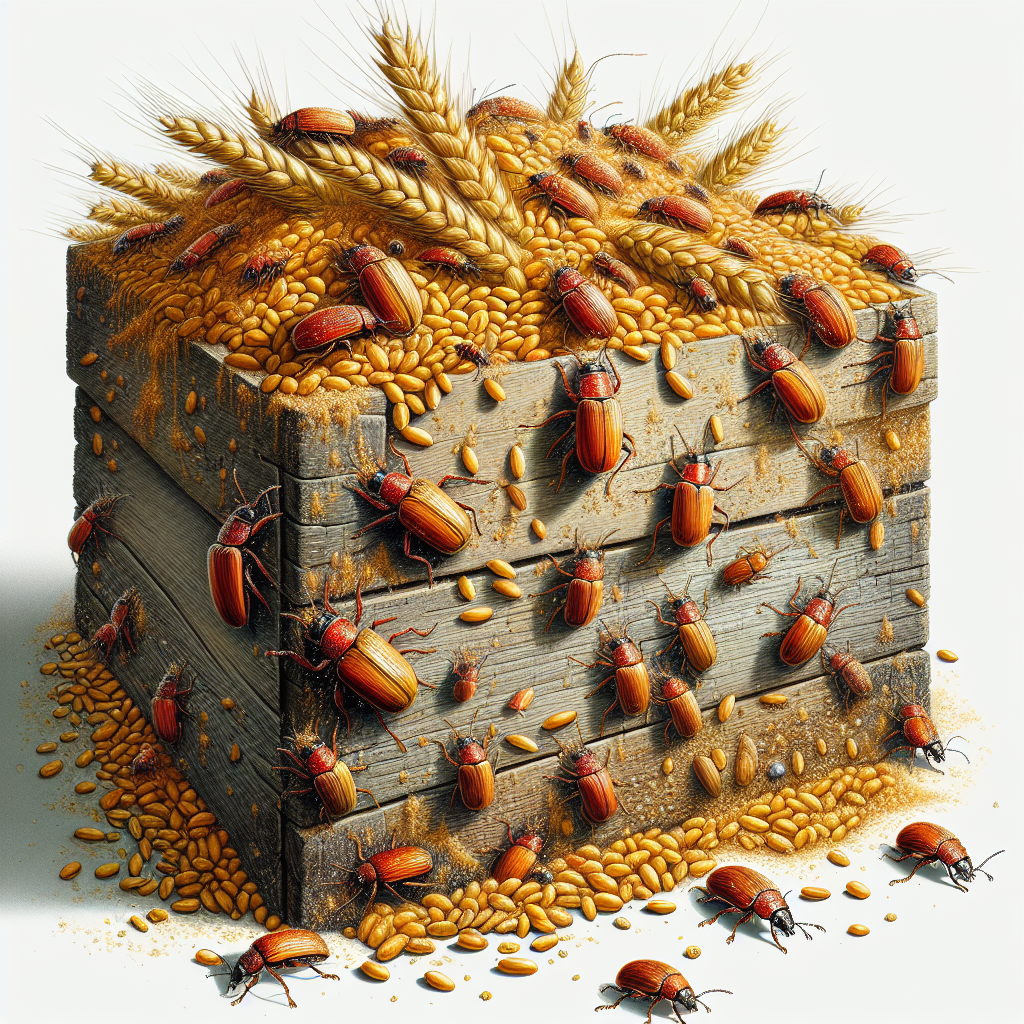
Introduction to Storage beetles
Storage beetles represent a critical threat to global agriculture, particularly in post-harvest scenarios where grains, seeds, nuts, and dried fruits are vulnerable to infestation. These pests, including notorious species like the red flour beetle (Tribolium castaneum), sawtoothed grain beetle (Oryzaephilus surinamensis), and cigarette beetle (Lasioderma serricorne), can cause up to 20-30% losses in stored products worldwide if unchecked. Unlike field pests, storage beetles exploit stored commodities, contaminating them with frass (insect waste), body parts, and fungi, which not only reduce weight and nutritional value but also pose health risks like mycotoxin production and allergic reactions.
Farmers, millers, and food processors must prioritize storage beetle management as part of integrated pest management (IPM) strategies. Early detection through visual inspections and pheromone traps prevents explosive population growth. This guide provides diagnostic tools, lifecycle insights, organic treatments, and prevention tactics tailored for small to medium-scale operations. By understanding these beetles' biology, you can safeguard wheat, rice, and corn harvests effectively. For more on grain storage challenges, check this insightful blog post on small farm optimization.
Identifying Symptoms & Damage
Recognizing storage beetle infestations early is paramount for minimizing losses. Adult beetles are typically 2-4 mm long, with species-specific traits: red flour beetles are reddish-brown and elongated, sawtoothed grain beetles have distinct saw-like projections on their thorax, and drugstore beetles appear rounded with a humpbacked profile. Larvae are creamy-white, C-shaped grubs with brown heads, often found burrowing in commodities.
Key symptoms include:
- Fine powdery residue: Flour-like dust from feeding, especially from flour beetles, accumulating at the bottom of storage bins.
- Webbing and clumping: Silken threads from larvae bind particles in grains like oats or barley.
- Hollowed kernels: Beetles bore into seeds, leaving empty husks riddled with exit holes (1-2 mm diameter).
- Musty odor: Characteristic smell from pheromones and metabolic byproducts, signaling advanced infestation.
- Live insects: Crawling adults or larvae on surfaces, walls, or spilling from containers.
Damage extends beyond direct feeding. Storage beetles vector molds like Aspergillus spp., producing aflatoxins hazardous to humans and livestock. In nuts such as almonds or peanuts, infestations lead to rancidity and off-flavors. Inspect stored goods monthly using sieves, Berlese funnels, or probe traps. Differentiate from similar pests like weevils by the lack of snouts and presence of wings in beetles.
Quantitative assessment: Probe 10-20 sites per ton; if 1-2 live insects per kg are found, initiate controls. Economic thresholds vary—zero tolerance for export grains, 4-5% damage for animal feed.
Lifecycle and Progression of Storage beetles
Storage beetles undergo complete metamorphosis: egg, larva, pupa, adult. Lifecycle duration varies by species and conditions—21-45 days for red flour beetles at 30°C, longer in cooler temps.
- Eggs: Tiny (0.5 mm), laid singly or in clusters (up to 500 per female) directly on commodities. Sticky coating aids adhesion.
- Larvae: Most damaging stage, feeding voraciously for 2-6 weeks. They wander if food is scarce, seeking new sources.
- Pupa: Non-feeding, occurs in food debris or cracks; vulnerable to physical removal.
- Adults: Long-lived (6-18 months), dispersive via flight (some species) or crawling. Females produce 50-1000 eggs over lifetime.
Progression accelerates in optimal conditions: 25-35°C, 60-80% RH. Populations double every 30 days, leading to exponential outbreaks. Multiple generations per year (10-20) in tropical storage. Monitor progression with degree-day models: red flour beetle requires 240-300 heat units per generation. Disrupt cycles by cooling to <15°C or drying to <12% moisture.
Environmental Triggers & Risk Factors
Storage beetles exploit specific conditions favoring survival and reproduction:
- Temperature: Thrive above 20°C; development halts below 15°C. Heat (>50°C) kills all stages.
- Humidity: >50% RH enables mold growth, secondary food source.
- Food availability: Grains >12% moisture, broken kernels, fines.
- Entry points: Cracks in silos, doors, vehicles transporting infested goods.
Risk factors include poor sanitation (spilled grains), inadequate sealing, and cross-contamination from infested soybeans or chickpeas. Tropical climates amplify issues; temperate zones see seasonal peaks post-harvest. High-risk sites: farm bins, warehouses, mills. Compounding pests like grain moths or storage insects exacerbate damage.
Organic Control & Treatment Plans
Organic management emphasizes non-chemical IPM:
- Sanitation: Remove residues weekly; vacuum cracks. Heat-treat empty bins to 60°C for 1 hour.
- Physical barriers: Fine mesh screens (0.5 mm), airtight seals.
- Temperature manipulation: Aerate to <15°C or solarize in black plastic (50-60°C).
- Diatomaceous earth (DE): 1-2 g/kg grain; abrades exoskeletons. Safe for organics.
- Biological controls: Release predatory beetles (Teretriosoma nigrescens) or nematodes (Heterorhabditis bacteriophora).
- Pheromone traps: Intercept adults; check weekly, replace lures monthly.
- Essential oils: Diatomaceous formulations with neem or peppermint (0.5-1% concentration) repel and kill.
Treatment plan:
- Infestation confirmed: Empty and clean; discard >10% damaged grain.
- Apply DE + traps; monitor 2 weeks.
- Reinfestation: Douse with 55°C water (kills 99%), dry thoroughly. Avoid synthetics for organic certification. Integrate with Spring Pest Patrol tactics.
Preventing Storage beetles in the Future
Prevention is cost-effective, reducing losses by 90%:
- Harvest hygiene: Dry to <12% moisture; clean combines.
- Storage design: Elevated, sealed metal bins; fumigate pre-use (CO2 or heat).
- Monitoring: Install 1 trap/10 m²; log data.
- Rotation: FIFO inventory; use oldest first.
- Buffer crops: Store separately to isolate risks.
- Quarantine: Inspect incoming loads.
Annual protocols: Pre-season cleaning, moisture checks. For small farms, stack pallets off floors, use oxygen absorbers. Long-term: Hermetic bags (PICS) prevent oxygen-dependent development.
Crops Most Affected by Storage beetles
Grains dominate: wheat (10-20% global losses), rice, corn, barley. Legumes like soybeans, chickpeas, lentils. Nuts: almonds, peanuts, walnuts. Dried fruits, spices, pasta. High-risk: High-moisture, broken kernels in oats, milled products. Lesser impact on low-oil crops like quinoa.