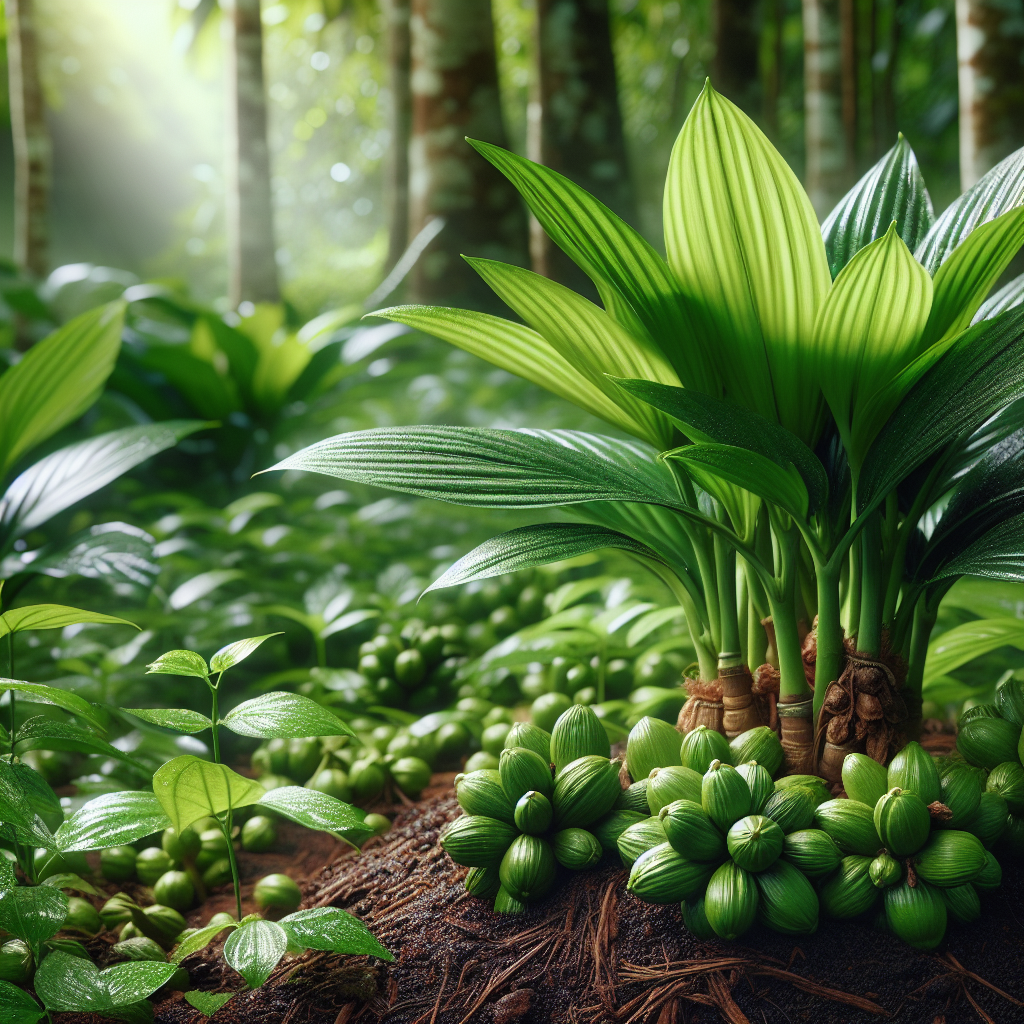
Introduction to Green Cardamom
Among the world’s most valuable spices by weight, green cardamom is often called the “queen of spices” for its penetrating, sweet-resinous aroma and exceptional culinary, medicinal, and export value. Native to the evergreen forests of the Western Ghats of southern India, it evolved as an understory perennial in warm, humid, partially shaded habitats with deep organic soils and constant moisture. Those ecological origins explain nearly every management rule that matters in the field: avoid waterlogging, avoid drought, avoid full scorching sun, and keep the root zone cool, aerated, and rich in decomposed organic matter.
Commercially, green cardamom is grown for its immature green capsules, which contain the essential oil-rich seeds used in tea, sweets, savory spice blends, perfumery, and traditional medicine. The crop is perennial and can remain productive for many years when clumps are managed well. For broader context on spice relatives and crop classification, see Cardamom. In practice, however, growers should distinguish true green cardamom from black cardamom and other unrelated aromatic pods, because their climate needs, plant form, and postharvest handling differ substantially.
Botanically and agronomically, green cardamom is closer in habit to Ginger than to seed spices such as coriander or cumin. It produces underground rhizomes, leafy pseudostems, and flower-bearing panicles that arise from the plant base. This makes it a crop that rewards long-term site preparation more than quick annual-bed methods. A poorly drained field may fail in one wet season, while a well-designed shaded planting with mulch, drainage, and sanitation can deliver profitable harvests for years.
Historically, cardamom has been traded for centuries across South Asia, the Middle East, and Europe. Premium lots command higher prices when capsules are bold, uniformly green, well-filled, and strongly aromatic. That market reality means the grower is not merely aiming for biomass, but for capsule color retention, oil quality, and freedom from mold or insect damage. Production techniques should therefore be chosen not just for yield, but for export-grade appearance and postharvest quality.
Botanical Profile of Green Cardamom
This species belongs to the family Zingiberaceae, the same family as ginger and turmeric. It is a clump-forming, evergreen, herbaceous perennial with a branching underground rhizome. From this rhizome arise erect leafy shoots called pseudostems, formed by tightly overlapping leaf sheaths. Mature plants commonly reach 2 to 4 meters in height under favorable shaded conditions, though height varies with cultivar, fertility, and shade level.
Leaves are lanceolate, dark green, and arranged in two ranks, giving the plant a graceful, arching look. The economically important capsules are borne on prostrate or semi-erect panicles emerging from the plant base near the soil line. Flowers are typically pale green to white with violet markings, and pollination is aided by insects. Because the flower panicles are near the ground, mulch cleanliness, weed control, and splash reduction are especially important for disease management and clean harvesting.
The fruit is a tri-locular capsule harvested before full ripening. If allowed to overmature, capsules may yellow, split, or lose the vivid green appearance preferred in trade. Each capsule contains numerous angular seeds enclosed in a thin mucilaginous aril. Most aroma resides in the seeds, but capsule appearance strongly affects market grade.
Several cultivated types are recognized in traditional growing regions, often grouped by plant stature, capsule size, adaptation to elevation, and yield habit. Farmers may encounter local landraces or improved selections with differences in tillering, panicle length, drought tolerance, and disease susceptibility. In broad terms, robust high-yielding lines are preferred for plantation systems, but local adaptation remains critical; a cultivar that performs well at one elevation or shade intensity may underperform elsewhere.
A healthy clump continuously produces new tillers from the rhizome. Old, senescent shoots gradually decline, so productivity depends on balanced renewal. Excessively crowded clumps often show reduced airflow, smaller capsules, and higher disease pressure. Good cardamom management is therefore partly the art of keeping the rhizome system vigorous without allowing the planting to become a tangled, humid thicket.
Soil, pH, and Climate Requirements for Green Cardamom
The ideal soil is a deep, friable, forest-like loam rich in humus, with excellent drainage and high moisture-holding capacity. Sandy soils dry too quickly unless heavily amended with organic matter. Heavy clays can work only if raised beds, contour drains, or excellent natural slope prevent standing water. The root zone should remain consistently moist but well aerated. If you squeeze a handful of soil from the active root zone, it should feel cool and cohesive, not dusty and not sticky enough to smear into an anaerobic paste.
Optimal soil pH is generally 5.5 to 6.5. The crop tolerates slightly more acidic conditions than many field crops, but strongly acidic soils below about pH 5.0 can reduce nutrient availability and root vigor, especially where aluminum toxicity is present. If pH is too low, apply finely ground agricultural lime or dolomite based on soil test results, preferably several weeks to months before planting. Over-liming should be avoided because cardamom does not thrive in alkaline conditions.
Organic matter is not optional; it is foundational. Well-decomposed leaf mold, compost, aged farmyard manure, and forest litter analogs improve cation exchange, microbial life, moisture buffering, and structure. In established plantations, an annual organic mulch layer of 5 to 10 cm helps maintain cool roots, suppress weeds, reduce splash-borne infection, and mimic the species’ native habitat.
Climatically, green cardamom performs best in humid tropical to subtropical high-rainfall zones with mild temperatures. The ideal temperature range is roughly 18 to 32°C, with best vegetative growth often between 20 and 28°C. Prolonged heat above 35°C, especially with low humidity and wind, causes leaf scorching, flower abortion, and reduced capsule set. Likewise, frost is highly damaging. Even brief near-freezing events can burn leaves and weaken rhizomes.
Annual rainfall of about 1500 to 4000 mm is suitable if drainage is excellent and distribution is reasonably even. In lower-rainfall areas, irrigation must compensate for dry periods. What the crop dislikes most is oscillation between saturation and drought. Drought stress commonly shows first as inward leaf rolling, dull foliage, reduced tiller emergence, and abortion of young panicles. Overwatering or poor drainage presents differently: yellowing lower leaves, stagnant growth, foul-smelling soil, rhizome discoloration, and increased fungal disease.
Filtered shade is essential in most production systems. Around 40 to 60% shade is often ideal, though this varies by location. Too little shade leads to sunburn, high evapotranspiration, and short-lived plants. Too much shade reduces flowering, encourages soft vegetative growth, and prolongs leaf wetness. Well-managed shade trees, often including Coffee in diversified systems, can create the stable microclimate cardamom prefers. For broader organic soil-building principles relevant to spice plantations, see soil health strategies.
Step-by-Step Planting & Propagation
Propagation is usually done by rhizome division because it preserves desirable cultivar traits and brings fields into bearing faster than seed propagation. Seed-grown plants are useful for breeding or where planting stock is scarce, but they show more variability in vigor, yield, and capsule quality.
Select the site carefully. Choose a gently sloping or well-drained plot with partial shade, wind protection, and access to irrigation. Avoid valley bottoms with stagnant humidity and heavy runoff accumulation.
Test and prepare the soil. Conduct a soil analysis for pH, organic matter, and nutrient status. Incorporate generous quantities of well-rotted compost or manure. Install contour drains or side channels in high-rainfall areas before planting, not after problems begin.
Prepare planting pits or trenches. In smallholdings, pits around 45 x 45 x 30 cm are common. Refill with topsoil mixed with compost, leaf mold, and, if needed, a modest quantity of rock phosphate or other locally appropriate amendments based on test results.
Source healthy planting material. Select rhizome divisions from vigorous, high-yielding, disease-free mother clumps. Each division should have at least one actively growing shoot and a healthy section of rhizome with live roots. Avoid soft, dark, shriveled, or foul-smelling pieces.
Treat planting material preventively. Dusting or dipping divisions in a biological fungicide such as Trichoderma-based formulations can help reduce early rhizome and root diseases. Let excess moisture drain before planting.
Plant at proper depth. Set rhizome divisions shallowly so buds are just below the soil surface and roots spread naturally downward. Planting too deep delays establishment and increases rot risk.
Space for airflow and future clump expansion. Depending on fertility, shade, and cultivar vigor, spacing often ranges from about 1.5 x 1.5 m to 2.5 x 2.5 m. Tighter spacing can raise early yield per area but often intensifies disease pressure later.
Mulch immediately. Apply leaf mulch around but not directly smothering the shoot base. Keep a small collar open around the stem to prevent constant wet contact.
Irrigate gently after planting. The aim is to settle soil around roots without saturating the pit. For the first 6 to 8 weeks, the root zone should stay evenly moist, roughly near field capacity, but never boggy.
Provide temporary extra shade if needed. In hotter zones or open sites, shade net or nurse vegetation may be necessary until permanent shade is balanced.
For seed propagation, use fully mature seeds from healthy capsules, sow fresh because viability declines in storage, and expect slow, uneven germination. Seedlings are usually raised in shaded nursery beds or polybags containing rich, well-drained medium. Transplant only after they are well rooted and hardened. Because seedling variation is high, this method suits selection work more than uniform commercial establishment.
Care & Maintenance regimes for Green Cardamom
Nutrition should be managed steadily rather than in harsh bursts. Cardamom responds well to split applications of nitrogen, phosphorus, and potassium, combined with ongoing organic matter inputs. In professional systems, annual fertilization is often divided into 2 to 4 applications timed around rainfall and active growth. Nitrogen supports tiller formation and leaf production, phosphorus supports root and panicle development, and potassium improves stress tolerance, capsule filling, and overall plant resilience. Excess nitrogen without sufficient potassium can produce lush, disease-prone foliage and weaker reproductive performance.
Moisture management is central to success. The target is a uniformly moist root zone extending roughly 15 to 30 cm deep around the clump. Under drip or basin irrigation, avoid allowing the topsoil to cycle between crust-dry and soaked. A practical field check is to probe the soil by hand beneath the mulch: if it feels only faintly damp at finger depth, irrigation is overdue; if it feels cold, saturated, and excludes air for more than a day or two, irrigation frequency is too high or drainage is poor. Leaf tip browning and mid-day folding indicate water stress; persistent yellowing with soft basal tissue suggests excess water.
Mulching should be renewed regularly with clean organic residues. This buffers soil temperature, suppresses weeds, and reduces erosion around shallow roots and flower panicles. Keep mulch loose, not matted, because compact wet mulch can harbor slugs, fungal growth, and basal rot.
Weed control should focus on low-disturbance methods. Deep hoeing damages feeder roots and emerging panicles. Hand weeding, shallow scraping, and mulch suppression are preferred. In mature plantations, periodic removal of dead shoots and weak suckers improves light penetration and air movement.
Shade regulation is an annual task, not a one-time decision. Thin overhead canopy enough to allow filtered light and quick drying after rain, while preserving the cool understory environment. If shade is too dense, flowering declines and fungal pressure rises. If too sparse, leaf scorch and reduced humidity stress the crop. Many growers integrate cardamom with Black Pepper and shade trees in multi-tier systems, but canopy competition must be watched closely.
Clump management matters after establishment. Remove old, unproductive pseudostems, especially those that have already contributed heavily and now obstruct airflow. Rejuvenate overcrowded stools when tillers become excessively dense and capsule size declines. In older plantings, strategic division and replanting into fresh ground may restore vigor better than trying to push aging clumps indefinitely.
Pests, Diseases & Organic Management
The most serious problems in green cardamom are often fungal and rot-related, especially where humidity is high and airflow is poor. Rhizome rot, Root decay, Capsule rot, Damping of young propagules, and Foliar blights can all become destructive under saturated soil or persistent leaf wetness. Prevention is more effective than rescue.
Start with sanitation: use disease-free planting stock, remove infected clumps promptly, disinfect tools between plants, and never move suspicious rhizomes into clean fields. Improve drainage wherever runoff collects. If you can smell sour or anaerobic soil near the base of the plant, the system is already too wet for healthy rhizomes.
Common insect pests include Thrips, Shoot and capsule borers, Aphids, Whiteflies, and sometimes Nematodes in the root zone. Thrips are especially important because they scar capsules, reducing market value even when yield volume seems adequate. Early symptoms include silvery streaking, rough capsule surface, and distorted tender tissues. Shoot or capsule borers may leave entry holes, frass, internal feeding damage, and drying of affected spikes.
Organic management should follow integrated principles:
- Maintain moderate shade and strong airflow.
- Avoid excess nitrogen that produces soft pest-prone growth.
- Use yellow or blue sticky traps for monitoring flying pests.
- Apply neem-based products preventively and rotate with other biocontrol-compatible measures to reduce resistance pressure.
- Encourage beneficial insects by preserving flowering border plants such as Yarrow and Clover in nearby non-competitive zones, not within the cardamom root crown.
- Use Beauveria, Metarhizium, or other approved microbial insecticides where locally effective.
- Apply Trichoderma or other beneficial antagonists to the root zone to suppress certain soil-borne pathogens.
For disease suppression, remove and destroy infected panicles, fallen diseased debris, and badly rotted stools. Do not compost heavily infected material unless your compost system reaches reliably sanitizing temperatures. Reduce splash by maintaining mulch cover and avoiding overhead irrigation late in the day. Morning irrigation is better than evening because plants dry faster.
Virus-like mosaic symptoms, severe stunting, or chronic decline should be treated seriously. Rogue infected plants early, especially if vectors such as Aphids are present. In perennial spice systems, allowing infected clumps to remain can turn them into long-term inoculum reservoirs.
Harvesting, Curing & Optimal Storage
Green cardamom is harvested when capsules are physiologically mature but still green and not fully dried on the plant. Timing is critical. Harvest too early and capsules are lightweight with poorly developed seeds and weaker aroma. Harvest too late and they may yellow, split, or lose the bright green appearance that brings premium prices.
In most production areas, harvesting is selective and repeated at short intervals, often every 15 to 30 days during the bearing season. Pick only well-developed capsules, usually by hand, to avoid injuring tender panicles and future flushes. Skilled labor matters here: rough handling reduces both current and subsequent yield.
Immediately after harvest, clean out stalk fragments, damaged pods, and diseased material. Drying or curing should begin promptly. The objective is to reduce moisture enough to prevent mold while preserving green color and volatile oils. Traditional sun drying often causes bleaching or uneven quality, so controlled drying is preferred. Drying temperatures are commonly kept relatively low, often around 45 to 50°C, though exact settings vary by equipment and lot size. Excess heat can cause capsule splitting, color loss, and reduced aroma.
Well-cured capsules should be dry, firm, and free-flowing, not leathery or brittle to the point of shattering. Final safe moisture is typically around 8 to 10%. If moisture remains too high, lots may heat in storage, develop mold, or lose quality rapidly. If too dry, capsules may crack and seeds may lose volatile compounds faster.
After curing, grade by size, color, uniformity, and freedom from defects. Premium markets prefer bold, bright green capsules with good weight and intact form. Store in moisture-proof, odor-free containers away from direct light, heat, and fluctuating humidity. Cardamom readily absorbs foreign odors, so never store it near fuels, onions, chemicals, or strongly scented produce.
For long storage, cool temperatures and low relative humidity are ideal. In humid tropical environments, sealed food-grade packaging with desiccant support may be needed to prevent reabsorption of moisture. Whole capsules store better than ground seed because essential oils are retained longer when the seeds remain enclosed.
Companion Planting for Green Cardamom
Because this crop is naturally adapted to layered forest systems, companion planting works best when it supports shade moderation, humidity stability, beneficial insect presence, and soil protection without causing root congestion. The best companions are not aggressive annual vegetables crowded into the rhizome zone, but carefully chosen perennial or low-competition associates in a stratified planting design.
Coffee is one of the most practical companions in many tropical highland systems. It thrives under similar filtered-light conditions and can fit into multi-story spice agroforestry when spacing and pruning are disciplined. Black Pepper can also complement the system if trained on separate standards or shade trees rather than allowed to overrun the cardamom canopy. Both crops share humid tropical preferences, but they must be managed to prevent excessive shade and nutrient competition.
At the herbaceous or border level, Clover can serve as a managed ground cover in suitable zones outside the immediate stool base, helping reduce erosion and support beneficial insects. Yarrow is useful along margins as an insectary plant that can attract predatory and parasitic insects. Keep all companions from smothering the basal panicles or trapping stagnant moisture around the clumps.
Avoid companions with dense, invasive root systems, high nutrient demand immediately around the stool, or full-sun cultural needs that conflict with cardamom’s shaded understory habit. Also avoid very low, succulent intercrops directly in the row if they raise humidity around the panicles and complicate harvest. In professional spice systems, companion planting succeeds when it improves microclimate and biodiversity without sacrificing sanitation, airflow, or picker access.