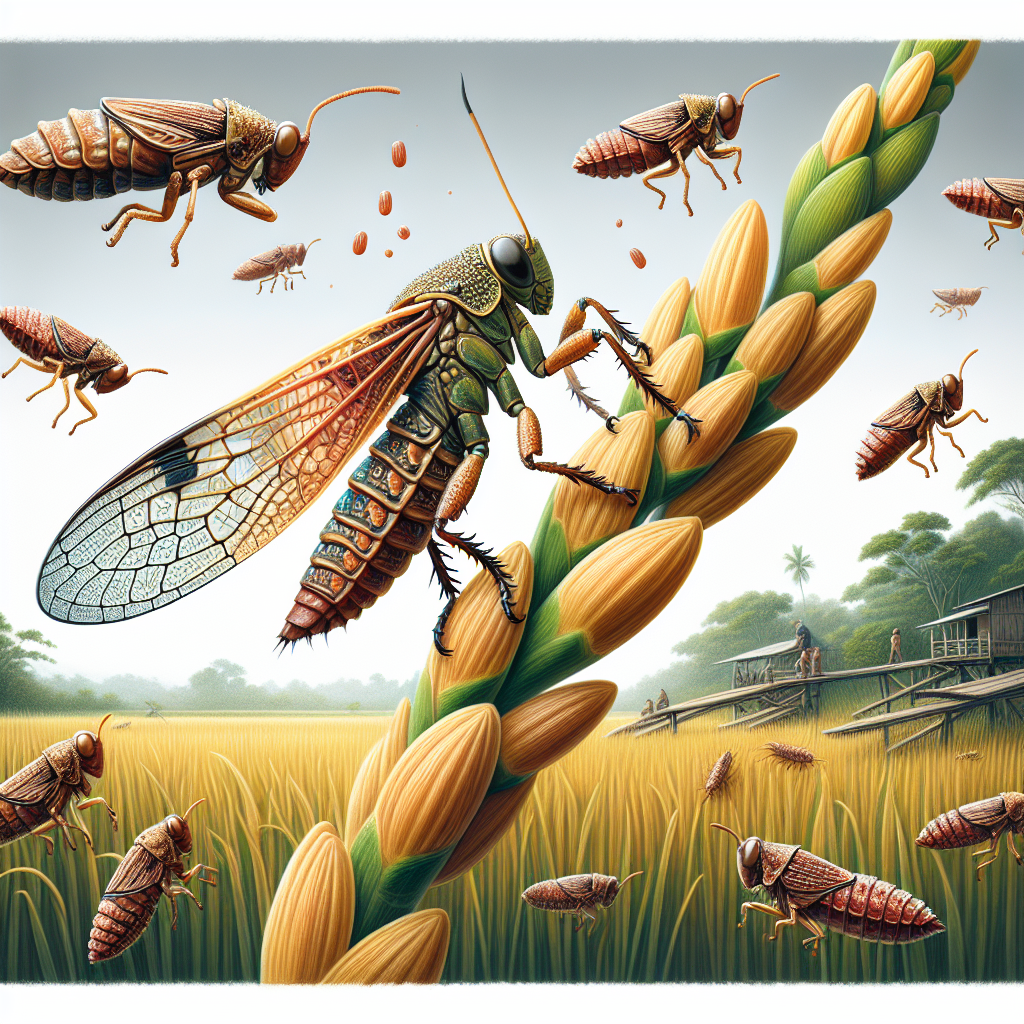
Introduction to Planthoppers
Planthoppers are notorious agricultural pests belonging to the superfamily Fulgoromorpha, with over 12,000 species worldwide. These hemipteran insects are particularly devastating in tropical and subtropical regions, where they target staple crops like rice, sugarcane, and corn. Unlike their close relatives, leafhoppers, planthoppers are distinguished by their wedge-shaped bodies, elongated antennae, and remarkable jumping ability, earning them the name from their plant-hopping behavior.
The brown planthopper (Nilaparvata lugens) and small brown planthopper (Laodelphax striatellus) are among the most economically significant species, causing billions in losses annually, especially in Asia's rice belts. They feed on plant sap, injecting toxic saliva that disrupts vascular tissues, and vector deadly viruses like rice grassy stunt and ragged stunt. Early detection is crucial, as populations explode rapidly under favorable conditions. This guide provides professional-grade diagnostics, lifecycle insights, and organic management strategies to protect your crops. For more on integrated pest management timing, check this insightful blog post.
Identifying Symptoms & Damage
Planthopper damage manifests in several diagnostic stages, making prompt identification essential for minimizing losses. Initial signs include hopperburn, a characteristic yellowing and browning of leaf tips and margins, progressing to complete plant wilting. Affected leaves curl upward, sheath tightly around stems, and plants exhibit stunted growth with reduced tillering—critical for grains like wheat and sorghum.
Examine plants closely: nymphs and adults cluster on the lower stems, often hidden in leaf sheaths. Look for honeydew secretions, a sticky residue that promotes sooty mold growth, further impairing photosynthesis. Severe infestations cause yellowing patches in fields, expanding to dead heart or whitehead symptoms in panicles. Differentiate from aphids by planthoppers' waxy filaments (in some species) and spittle-like froth from nymphs, similar to spittlebugs.
Use a 10x hand lens to spot translucent nymphs (1-5mm) with short antennae and adults (3-8mm) with robust hind legs. Damage thresholds vary: 20-30 nymphs per hill in rice signals action. Associated diseases include tungro virus, presenting mottled leaves and stunted panicles. Scout weekly, focusing on field edges and irrigation channels, to catch outbreaks early.
Lifecycle and Progression of Planthoppers
Understanding the planthopper lifecycle is key to targeted interventions. These insects undergo incomplete metamorphosis with three stages: egg, nymph (5 instars), and adult. Females lay 100-400 eggs in batches within plant tissues, hatching in 4-10 days at 25-30°C. Nymphs take 15-30 days to mature, molting five times while feeding voraciously on phloem sap.
Adults live 20-40 days, with females dispersing via long flights (up to 100km). There are 4-8 overlapping generations per year in tropics, peaking during wet seasons. Macropterous (long-winged) forms migrate, while brachypterous (short-winged) dominate sedentary populations. Overwintering occurs as eggs in temperate zones.
Progression accelerates with nitrogen-rich fertilizers and dense plantings, amplifying outbreaks. Monitor with sticky traps or sweep nets: rising nymph counts precede adult peaks. Lifecycle knowledge informs timing for controls, such as nymph-targeted sprays before adult dispersal. In cassava, zigzag patterns indicate migration waves.
Environmental Triggers & Risk Factors
Planthoppers flourish under specific conditions, making risk assessment vital. High humidity (70-90%) and temperatures (25-35°C) trigger rapid reproduction, especially post-rainy periods. Overuse of nitrogen fertilizers promotes succulent growth, ideal for sap-feeders. Continuous monocropping, like in rice paddy rotations, builds populations, exacerbated by nearby weed hosts harboring eggs.
Poor water management—flooded fields without alternation—creates humid microclimates. Migration from alternate hosts like barley or wild grasses introduces biotypes resistant to varieties. Climate change extends seasons, intensifying pressure on soybeans and potato. Risk factors include susceptible varieties, lack of natural enemies, and insecticide resistance from broad-spectrum overuse. For hyper-local weather insights to preempt outbreaks, see advanced forecasting strategies.
Organic Control & Treatment Plans
Organic management emphasizes integrated pest management (IPM) for sustainable control. Cultural practices first: alternate wetting-drying irrigation disrupts nymph habitats, reducing populations by 50-70%. Plant resistant varieties like rice cultivars IR36 or Tkml6, and intercropping with mustard repels via volatiles.
Biological controls shine: encourage predators like spiders (Lycosa pseudoannulata), mirid bugs, and parasitic wasps (Anagrus spp.). Release dragonflies or use yarrow borders to attract them. Apply neem oil (azadirachtin 0.03%) at nymph stages, 3-5 applications, safe for pollinators. Beauveria bassiana fungal sprays infect 80% under humidity.
Physical barriers: yellow sticky traps capture 100-200 adults/m²/week; light traps at night. Prune lower leaves to expose nymphs. Treatment plan: Scout twice weekly; act at 15-20 nymphs/hill. Combine with silica sprays for plant toughness. Avoid broad-spectrum chemicals to preserve whiteflies predators. Success rates exceed 85% in trials.
Preventing Planthoppers in the Future
Prevention hinges on proactive strategies. Crop rotation breaks lifecycle: follow rice with legumes like peas or chickpeas, reducing carryover by 90%. Destroy stubble promptly to eliminate eggs. Use certified seeds and rogue virus-infected plants.
Enhance biodiversity with hedgerows of thai-basil and trap crops. Time planting to avoid peak migration (e.g., post-monsoon). Fertilize balanced NPK to avoid lush growth. Monitor with pheromone traps for early warning. Build soil health via cover crops, boosting resilience. Long-term: breed stacks with Bt genes or RNA interference. Annual field sanitation and IPM audits prevent resurgence, safeguarding yields.
Crops Most Affected by Planthoppers
Planthoppers ravage over 100 hosts, prioritizing grasses. Rice suffers most, with brown planthoppers causing 10-100% losses in Asia. Sugarcane sees top shoot damage; maize hopperburn. Wheat and sorghum face outbreaks in tropics. Vegetables like cucumber and eggplant host minor species. Perennials such as mango and banana endure chronic feeding. Grains like oats and millet report sporadic issues. Global impact: $2B+ annual losses, underscoring vigilant management.