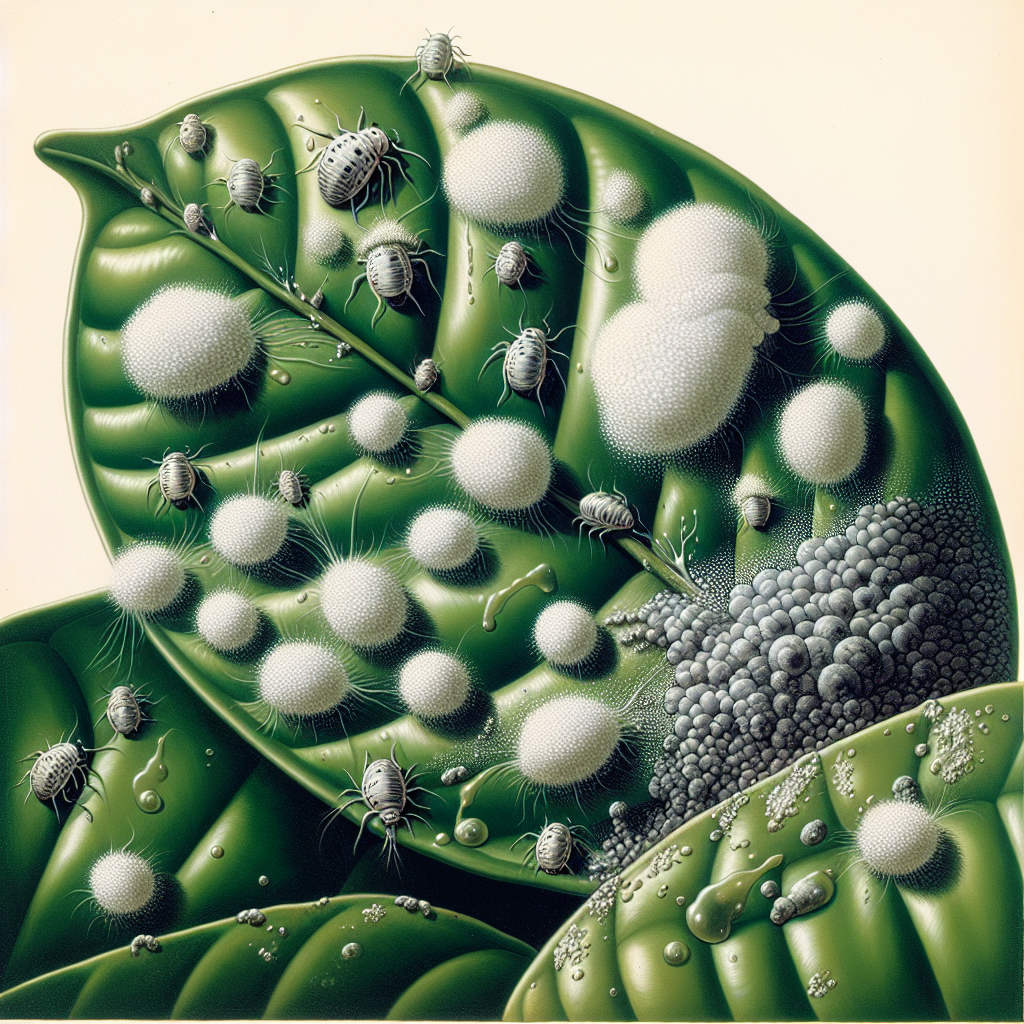
Introduction to mealybug
Mealybugs are among the most notorious pests in agriculture, belonging to the Pseudococcidae family within the order Hemiptera. These soft-bodied insects, often measuring 1-5 mm in length, are characterized by their distinctive white, cottony wax secretions that give them a mealy appearance—hence the name. Common species include the citrus mealybug (Planococcus citri), longtailed mealybug (Pseudococcus longispinus), and pink hibiscus mealybug (Maconellicoccus hirsutus), each with preferences for specific hosts but capable of infesting over 300 plant species worldwide.
As piercing-sucking pests, mealybugs insert their stylets into plant phloem to extract sap, depriving crops of vital nutrients and water. This feeding not only weakens plants but also injects toxic saliva that disrupts growth hormones, leading to distorted leaves, stunted shoots, and reduced yields. Worse, their sugary honeydew excretions foster sooty mold fungus (sooty-mold[/wiki/sooty-mold]), which blocks photosynthesis and lowers market value. In severe infestations, mealybugs transmit plant viruses, compounding damage. They thrive in greenhouses, orchards, and field crops, posing a significant threat to both commercial agriculture and home gardens. Economic losses from mealybugs exceed millions annually, particularly in subtropical regions where multiple generations per year amplify populations. Understanding their biology is crucial for timely intervention, as populations explode from a few crawlers to thousands within weeks. This guide equips growers with diagnostic tools, lifecycle insights, and proven organic management strategies to safeguard crops effectively.
Identifying Symptoms & Damage
Early identification of mealybug infestations is paramount for minimizing crop losses. Scout plants regularly, focusing on undersides of leaves, stem crotches, and growing tips where these pests congregate. Adult females appear as small, oval, white masses resembling tiny cotton balls, often with thread-like filaments. Nymphs, or 'crawlers,' are mobile, yellow-orange specks (0.3-0.5 mm) that settle after dispersal.
Primary symptoms include:
- Honeydew and Sooty Mold: Sticky, glistening droplets on leaves and stems, followed by black fungal growth (sooty-mold[/wiki/sooty-mold]). This is a hallmark sign, often appearing before pests are visible.
- Leaf and Shoot Distortion: New growth curls, twists, or fails to expand due to toxin injection. Leaves yellow, wilt, or drop prematurely.
- Stunted Growth and Defoliation: Plants appear chlorotic, with sparse foliage and reduced vigor. Fruit may be deformed, undersized, or aborted.
- Presence of Ants: Ants farm mealybugs for honeydew, indicating infestation.
Damage severity varies by crop and species. For instance, on citrus trees like navel oranges, heavy infestations cause fruit drop and branch dieback. In ornamentals and vegetables, entire plants collapse. Differentiate from similar pests like scale insects (harder shells) or whiteflies (winged adults). Use a hand lens (10x) for confirmation: mealybugs have segmented bodies and wax filaments. Severe cases lead to plant death, with yield losses up to 50% in untreated tomato crops. Regular monitoring using sticky traps or beat sheets enhances detection.
Lifecycle and Progression of mealybug
Mealybugs exhibit a hemimetabolous lifecycle with egg, nymph (crawler), and adult stages, lacking a distinct pupal phase. Females are wingless, neotenic (nymph-like), and viviparous or oviparous depending on species. A single female can produce 300-600 eggs in an ovisac, hatching in 5-10 days under optimal conditions (25-30°C, 70-80% RH).
Egg Stage: Laid in white, cottony ovisacs (1-6 mm), protected by maternal wax. Hatching crawlers emerge over 1-2 weeks.
Nymph Stage: Crawlers (1st instar) are active dispersers, settling within hours to feed and secrete wax. They molt 2-3 times over 4-8 weeks, becoming sessile. Males develop wings in later instars.
Adult Stage: Females live 2-3 months, males 1-2 days (as winged, non-feeding adults). One generation takes 20-40 days; 4-12 per year in tropics.
Progression accelerates in warm, humid environments. Overwinter as eggs or nymphs in temperate zones. Males mate with females, but parthenogenesis occurs in some species. High populations lead to webbing and migration to new hosts. Understanding this cycle informs timing: target crawlers with contact sprays for maximum efficacy.
Environmental Triggers & Risk Factors
Mealybugs flourish under specific conditions that growers must mitigate:
- Temperature: Optimal 24-30°C; populations crash below 10°C or above 35°C.
- Humidity: Prefer 60-80% RH; greenhouses and irrigated fields are hotspots.
- Plant Stress: Over-fertilization with nitrogen promotes tender growth; drought-stressed plants exude more sap.
- Ant Symbiosis: Ants protect mealybugs from predators, worsening outbreaks.
- Propagation: Infestations spread via infested cuttings, tools, or wind-dispersed crawlers.
Risk factors include dense canopies reducing airflow, poor sanitation, and nearby weeds harboring pests. Imported plant material often introduces exotic species like pink hibiscus mealybug. Climate change extends growing seasons, boosting generations. In Hass Avocado orchards, overhead irrigation creates ideal microclimates. Monitor high-risk periods: spring flush and post-harvest.
Organic Control & Treatment Plans
Integrated Pest Management (IPM) emphasizes organic methods for sustainable control. Begin with cultural practices, escalate to biological and mechanical options.
Cultural Controls:
- Prune infested parts and destroy.
- Improve airflow with spacing and staking.
- Water deeply but infrequently to avoid stress.
Mechanical:
- Blast with strong water jets to dislodge crawlers (repeat weekly).
- Wipe with 70% isopropyl alcohol on cotton swabs for small plants.
Biological:
- Release natural enemies: ladybugs (Hippodamia convergens), lacewings (Chrysoperla spp.), parasitic wasps (Anagyrus kamali). Encourage with flowering borders.
- Apply Beauveria bassiana or Lecanicillium lecanii fungi.
Organic Sprays:
- Insecticidal Soap: 1-2% solution (e.g., potassium salts of fatty acids); weekly on crawlers.
- Neem Oil: 0.5-1% with surfactant; disrupts feeding and reproduction.
- Horticultural Oil: Dormant or summer rates (1-2%) smother all stages.
Treatment Plan:
- Scout weekly; treat at crawler stage.
- Apply soap/oil at dusk to avoid phytotoxicity.
- Rotate modes to prevent resistance.
- Monitor ants; use boric acid baits.
For heavy infestations, combine with systemic organics like potassium phosphite. Efficacy: 80-95% reduction in 2-4 weeks. See Spring Pest Patrol for advanced tactics.
Preventing mealybug in the Future
Prevention is cheaper than cure. Implement these strategies:
- Quarantine New Plants: Inspect and isolate for 2 weeks.
- Sanitation: Clean tools, remove debris, control weeds.
- Resistant Varieties: Choose mealybug-tolerant cultivars where available.
- Monitoring: Use yellow sticky traps; threshold: 1-5 per 100 leaves.
- Companion Planting: Interplant with marigold or nasturtium to repel.
- Nutrient Balance: Avoid excess N; use slow-release fertilizers.
- Ant Management: Disrupt trails with Tanglefoot barriers.
Rotate crops and encourage biodiversity. In greenhouses, use screens and fans. Long-term: build soil health to boost plant resilience (Soil Health Mastery[/blog/soil-health-mastery-5-proven-strategies-for-small-farms-to-build-fertile-ground-without-breaking-the-bank]). Annual IPM audits prevent reinfestation.
Crops Most Affected by mealybug
Mealybugs are polyphagous, but certain crops suffer most:
- Citrus (orange, lemon, lime): Fruit deformation, twig dieback.
- Avocado (Hass Avocado, Fuerte Avocado): Root and trunk infestations.
- Ornamentals: Hibiscus, coleus.
- Vegetables: Tomato, eggplant, cucumber.
- Fruits: Grapes, mango, banana, fig.
- Tropicals: Pineapple, papaya.
Field crops like cotton and sugarcane also impacted. In greenhouses, strawberry and lettuce vulnerable. Global reports highlight coffee and cacao losses. Tailor monitoring to local hosts.