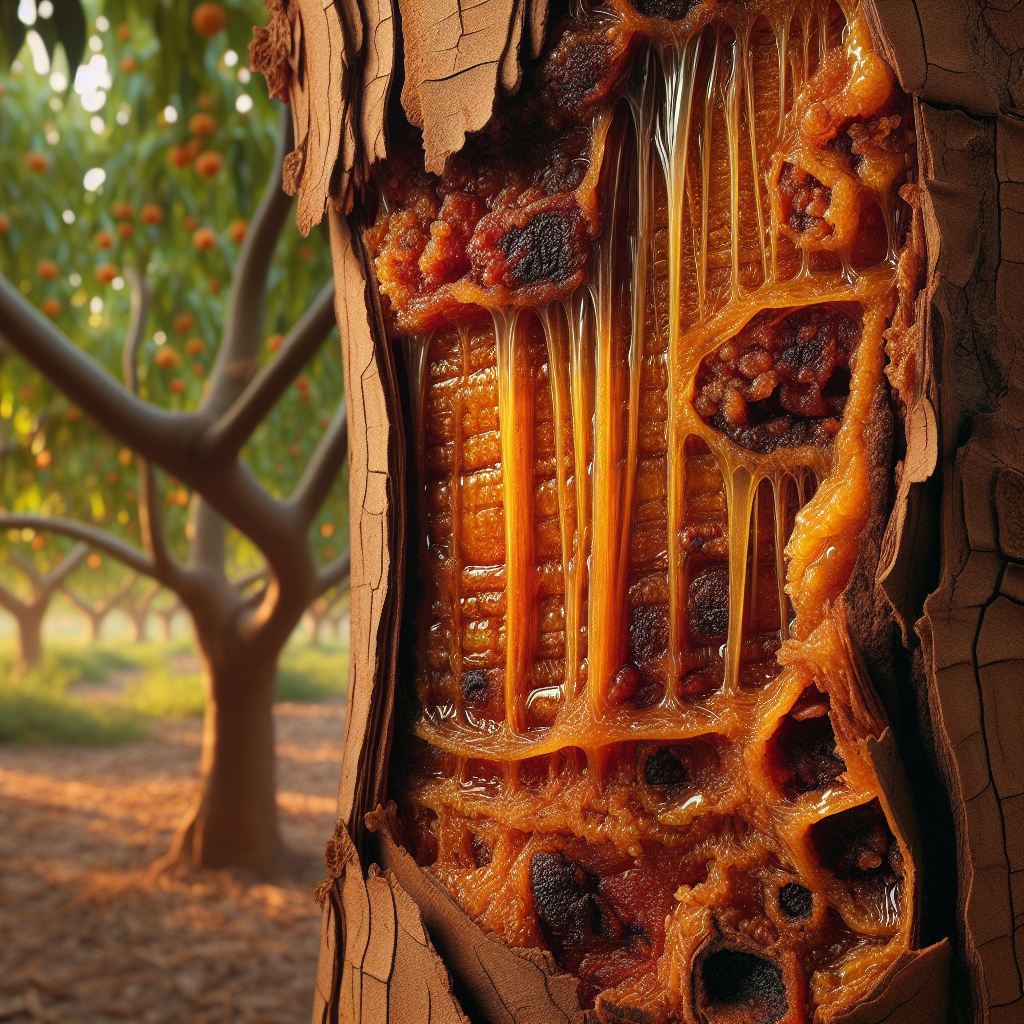
Definitive Diagnostic and Management Guide for Gumosis
Introduction to Gumosis
Gumosis represents one of the most destructive diseases in orchard management, particularly impacting stone fruit trees like peach, plum, cherry, and citrus varieties such as orange, lemon, and lime. This condition is not a single pathogen but a symptom complex often triggered by Phytophthora species, including P. citrophthora, P. syringae, and P. palmivora. The hallmark is the oozing of amber-colored gum from bark fissures, which hardens into a crust, signaling severe vascular damage beneath.
In agricultural settings, gumosis can devastate yields by 30-50% in severe outbreaks, compromising tree vigor and fruit quality. Early detection is crucial, as advanced stages lead to girdling, canopy dieback, and tree death. This guide provides professional-grade diagnostics, lifecycle insights, and organic management strategies tailored for small farms and commercial groves. For more on related citrus threats, explore Phytophthora root rot. Understanding gumosis empowers growers to implement proactive defenses, safeguarding investments in high-value crops like Hass Avocado and navel orange.
Identifying Symptoms & Damage
Recognizing gumosis begins with observing the diagnostic gum exudate. On trunks and lower branches, cracks appear filled with viscous, golden-to-brown gum that weeps continuously in wet weather. This gum originates from cambial tissues responding to infection, often accompanied by dark, water-soaked lesions that expand into cankers. Bark peels away in strips, revealing discolored, necrotic wood underneath.
Foliar symptoms include yellowing leaves with marginal scorch, premature defoliation, and sparse canopy growth. In fruit trees, affected branches wilt suddenly, showing 'flagging'—a classic sign where leaves hang limp while attached. Root systems exhibit blackening and rot, with sparse feeder roots. In citrus, gummosis often coincides with collar rot, where trunk lesions at soil level girdle the tree, halting nutrient flow.
Damage quantification is critical: minor infections show localized gum spots (under 5% trunk circumference), while severe cases exceed 50%, predicting tree loss within 2-3 years. Differentiate from mechanical injury or borers by scraping bark—healthy tissue is firm and white; infected is mushy and foul-smelling. Use a knife to test lesion depth; if it penetrates to the cambium, confirm via lab culture or PCR for Phytophthora. Secondary invaders like armyworms may colonize weakened bark, exacerbating damage.
Lifecycle and Progression of Gumosis
Phytophthora spp. are oomycete pathogens with a complex lifecycle favoring cool, moist environments. Spores (zoospores) swim in saturated soil, infecting roots through wounds or natural openings. Encysted spores germinate, producing mycelium that colonizes vascular tissues. Under stress, chlamydospores form durable resting structures, surviving years in soil.
Progression unfolds in phases: initial root infection (underground, 1-3 months), trunk invasion via splash-dispersed sporangia during rains, and symptom expression in 4-12 weeks. Peak activity occurs in fall/winter when soil temperatures drop to 10-20°C (50-68°F). Gum production is the plant's defense, releasing phenolic compounds that harden exudate, but pathogens persist internally.
In perennial crops, chronic infections lead to slow decline over 3-5 years, with episodic flares tied to irrigation. Airborne sporangia spread via wind-driven rain up to 100m, while contaminated tools and water amplify epidemics. Understanding this cycle informs timing interventions, such as pre-rain fungicide applications. See Spring Pest Patrol: Organic AI Strategies to Shield Your Crops from Common Invaders for integrated monitoring tips.
Environmental Triggers & Risk Factors
Gumosis epidemics hinge on environmental mismatches. Poor drainage tops the list—waterlogged soils (saturation >48 hours) enable zoospore motility, with clay-heavy or compacted fields at highest risk. Over-irrigation, especially flood methods, mimics natural flooding, boosting infection rates by 5x.
Susceptible rootstocks amplify vulnerability: peach on 'Lovell' or citrus on sour orange show 80% higher incidence than resistant types like trifoliate orange. Mechanical injuries from mowers, rodents like rabbits, or termites create entry points. Cool, foggy climates (e.g., coastal California, Florida) with high humidity (>80%) and temperatures 15-25°C favor sporulation.
Crop stress from nutrient imbalances (excess nitrogen, low phosphorus), drought cycles, or competing weeds heightens susceptibility. Flood-prone low spots or fields near creeks report 2-3x outbreaks. Soil pH extremes (below 5.5 or above 7.5) impair root health, indirectly promoting Phytophthora. Mapping risk via soil tests and elevation surveys prevents surprises.
Organic Control & Treatment Plans
Organic management prioritizes cultural sanitation over curative sprays. Excavate soil 15-30cm from trunks to expose lesions, allowing drying and pruning infected bark to healthy tissue with sterilized tools. Apply copper-based biofungicides (e.g., Bordeaux mixture) post-pruning, repeating every 14-21 days during wet seasons—effective at 70-85% lesion arrestment.
Biologicals shine: Trichoderma harzianum and Bacillus subtilis colonize roots, outcompeting Phytophthora (apply as drench, 10^9 CFU/L). Phosphonate boosters like potassium phosphite enhance tree defenses, translocating systemically for 3-6 months protection. Mulch with composted pine bark (5-10cm) suppresses soil pathogens while improving drainage.
Integrated plans: Scout weekly, remove >20% girdled trees, and solarize soil in off-seasons (clear plastic, 6 weeks summer). Companion planting with marigold repels nematodes that vector secondary issues. For severe cases, trunk injections of phosphites yield 90% recovery in young trees. Monitor with bait traps (almond hull floats) for early Phytophthora detection. Avoid overhead watering; drip irrigate to keep trunks dry.
Preventing Gumosis in the Future
Prevention builds resilient orchards from site selection. Plant on raised beds (30-60cm) or mounds in high-rain areas, ensuring slopes >2% for drainage. Select resistant rootstocks: 'Nemaguard' for peach, 'Carrizo' for citrus—reducing incidence by 60-80%. Pre-plant soil solarization or biofumigation with mustard amendments eradicates inoculum.
Maintain vigor with balanced fertility (N-P-K 10-20-10), avoiding excess N. Prune low branches for airflow, minimizing splash. Annual inspections target 1-3-year-old trees, most vulnerable. Quarantine new stock, hot-water treating bare-root at 48°C for 30min. Cover crops like clover improve soil structure without water retention.
Long-term: Rotate to non-hosts every 7-10 years, amend with gypsum in sodic soils. Weather stations track rain events, triggering phosphite apps preemptively. Certified disease-free nursery stock cuts introduction risk by 95%. These strategies sustain yields, with proactive farms reporting <5% annual loss.
Crops Most Affected by Gumosis
Stone fruits lead vulnerability: peach (80% orchards affected), plum, apricot, and cherry suffer rapid girdling. Citrus ranks high—orange, grapefruit, lemon, lime—with trunk gummosis preceding decline. Avocados, especially Hass and Fuerte, face root/crown phases yielding 40% crop loss.
Other victims include almond, walnut, apple, pear, mango, papaya, and persimmon. Tropicals like banana and pineapple show basal gum in wet zones. Ornamentals (e.g., rhododendron) mimic patterns but differ pathogenically. Focus vigilance on Prunus and Rutaceae families in humid, irrigated regions.