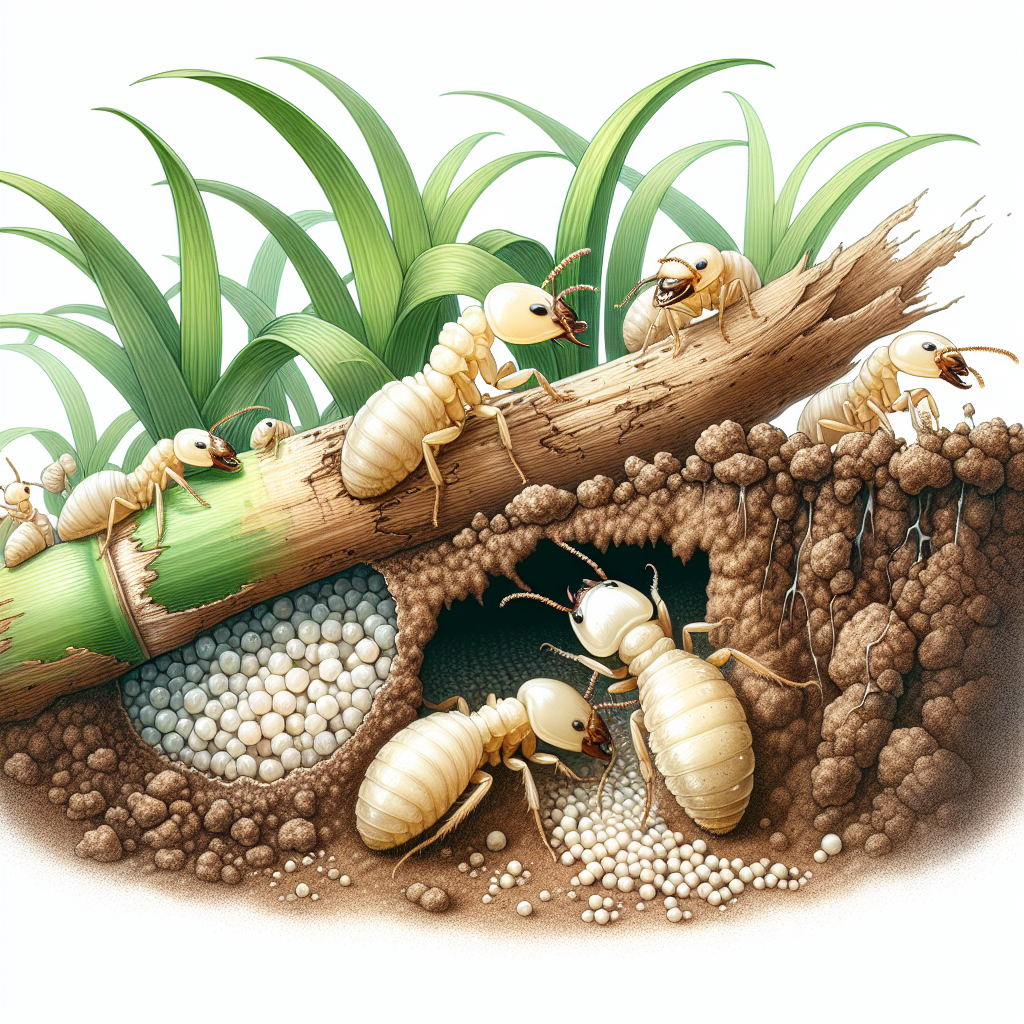
Introduction to Termites
Termites, often called 'white ants,' are among the most destructive pests in agriculture worldwide, responsible for billions in annual crop losses. Unlike true ants, these social insects belong to the order Isoptera and thrive in colonies numbering from thousands to millions. In farming, termites target cellulose-rich plant materials, burrowing into roots, stems, canes, and wooden structures used in fields or storage. Subterranean species like Reticulitermes flavipes (Eastern subterranean termite) dominate temperate regions, while drywood (Incisitermes) and Formosan (Coptotermes formosanus) termites wreak havoc in tropical and subtropical farms.
Agricultural termites differ from structural ones by focusing on living crops, especially in warm, humid climates. They weaken plants by consuming vascular tissues, leading to wilting, lodging, and total yield failure. In regions like sub-Saharan Africa, Southeast Asia, and parts of Latin America, termite infestations can destroy up to 30-50% of staple crops annually. Early detection is crucial, as colonies expand rapidly underground. This definitive guide equips farmers with professional diagnostics, organic treatments, and prevention strategies tailored for small to medium-scale operations. Understanding termite biology empowers proactive management, safeguarding harvests without synthetic chemicals.
Identifying Symptoms & Damage
Spotting termite damage early prevents catastrophic losses. Look for these hallmark signs in affected crops:
- Mud Tubes and Shelter Tubes: Termites construct protective tunnels from soil and plant debris along roots or stems. These brown, pencil-sized tubes indicate active subterranean colonies.
- Root and Stem Hollowing: Excavated galleries inside roots, rhizomes, or lower stems filled with frass (termite droppings resembling sawdust). Plants appear healthy above ground until sudden collapse.
- Wilting and Lodging: Infested plants yellow, wilt during dry spells, and lodge due to weakened bases. Check for snap-prone stems.
- Swarming Alates: Winged reproductives (swarmers) emerge during warm, humid evenings, leaving discarded wings near entry points.
- Soil Heaving: Mounds or popped soil around plant bases from tunneling.
Damage severity varies by crop. In young seedlings, termites girdle roots, mimicking damping-off. Mature plants show stunted growth, reduced tillering, and empty panicles. Probe suspect areas with a knife or screwdriver; soft, hollow wood confirms infestation. Differentiate from ants by termites' straight antennae, soft bodies, and equal-length wings. Use sticky traps baited with damp cardboard to confirm presence. Regular scouting in high-risk zones—near stumps or debris—catches infestations before 20-30% yield loss.
Lifecycle and Progression of Termites
Termites undergo incomplete metamorphosis: egg → nymph → worker/soldier/reproductive. Colonies center on a king and queen producing 10-30,000 eggs daily after 3-5 years maturity.
- Eggs: Tiny, white, rice-like; incubated by workers.
- Nymphs: Develop into workers (90% of colony; foraging, feeding, brood care), soldiers (defensive mandibles/jaws), or alates (winged reproductives).
- Swarming & Colony Founding: Alates swarm, shed wings, pair up, and burrow to start new colonies.
Lifecycle spans 2-5 years per generation, but colonies persist 10-20+ years. Progression accelerates in moist soils (optimal 25-35°C). Workers forage 50-100m from nests, attacking crops opportunistically. Peak activity: rainy seasons when soil softens. Soldiers emit pheromones alerting nestmates to threats. In agriculture, mound-building species (Macrotermes) farm symbiotic fungi on crop debris, amplifying damage. Disrupt lifecycle by targeting foraging workers with baits or flooding nests.
Environmental Triggers & Risk Factors
Termites flourish in warm (20-40°C), humid (>60% RH) conditions with ample cellulose. Key triggers:
- Soil Moisture: Prolonged rains or poor drainage create ideal tunnels.
- Organic Debris: Crop residues, stumps, mulch harbor colonies.
- Soil Type: Sandy-loam retains moisture; compacted clays limit oxygen.
- Monoculture & Tillage: Bare fields post-harvest expose roots.
- Climate: Tropical/subtropical zones see year-round activity; temperate regions peak spring/fall.
Risk spikes after drought-flood cycles stressing plants, or near native forests. Overuse of nitrogen fertilizers softens tissues, attracting foragers. Companion crops like marigold deter via allelochemicals. Assess farm risk: high if >20% cellulose waste, low drainage.
Organic Control & Treatment Plans
Organic management integrates cultural, biological, and mechanical tactics. Avoid soil drenches; focus on exclusion.
Cultural Controls:
- Deep tillage (20-30cm) exposes nests to predators/sun.
- Crop rotation with non-hosts like legumes.
- Remove debris/stumps; burn or compost off-site.
Biological Controls:
- Beneficial nematodes (Heterorhabditis bacteriophora) parasitize workers.
- Entomopathogenic fungi (Metarhizium anisopliae, Beauveria bassiana) sprays on mud tubes.
- Predators: ants, birds, frogs; encourage via habitats.
Mechanical/Baiting:
- Trench barriers with diatomaceous earth/sand.
- Cardboard traps: moisten, bury near plants, replace weekly.
- Neem oil (azadirachtin) foliar/soil drench disrupts molting.
Treatment Plan:
- Scout weekly; map hotspots.
- Excavate/destroy visible tubes/nests.
- Apply nematodes/fungi to moist soil evenings.
- Bait with boric acid-laced cellulose (worker-to-nest transfer).
- Monitor 4-6 weeks; reapply if needed.
For severe cases, solarize soil (clear plastic, 4-6 weeks summer). Combine with Spring Pest Patrol: Organic AI Strategies to Shield Your Crops from Common Invaders for timing. Success: 70-90% reduction without residues.
Preventing Termites in the Future
Prevention outperforms cure. Implement IPM:
- Site Prep: Clear wood debris pre-planting; solarize high-risk soils.
- Resistant Varieties: Choose termite-tolerant hybrids (e.g., in sugarcane).
- Barriers: Metal collars around seedlings; gravel mulches disrupt tunnels.
- Irrigation: Drip systems minimize wetting.
- Monitoring: Install bait stations; check monthly.
- Intercropping: Thyme or yarrow repels via volatiles.
Annual audits reduce incidence 80%. Educate laborers on signs. For small farms, check Soil Health Mastery: 5 Proven Strategies for Small Farms to Build Fertile Ground Without Breaking the Bank to boost resilience.
Crops Most Affected by Termites
Termites devastate cellulose-heavy crops:
- Staples: Sugarcane (root/stem boring, 20-50% loss); cassava (tuber/root damage); sweet potato (vines/roots).
- Grains: Maize (stalks/ears); sorghum; millet.
- Trees/Perennials: Mango; banana; coffee.
- Others: Cotton; groundnut; forestry seedlings.
In Africa, Microtermes hits cassava/yam; Asia sees Formosan on rice paddies. Prioritize protection for these.