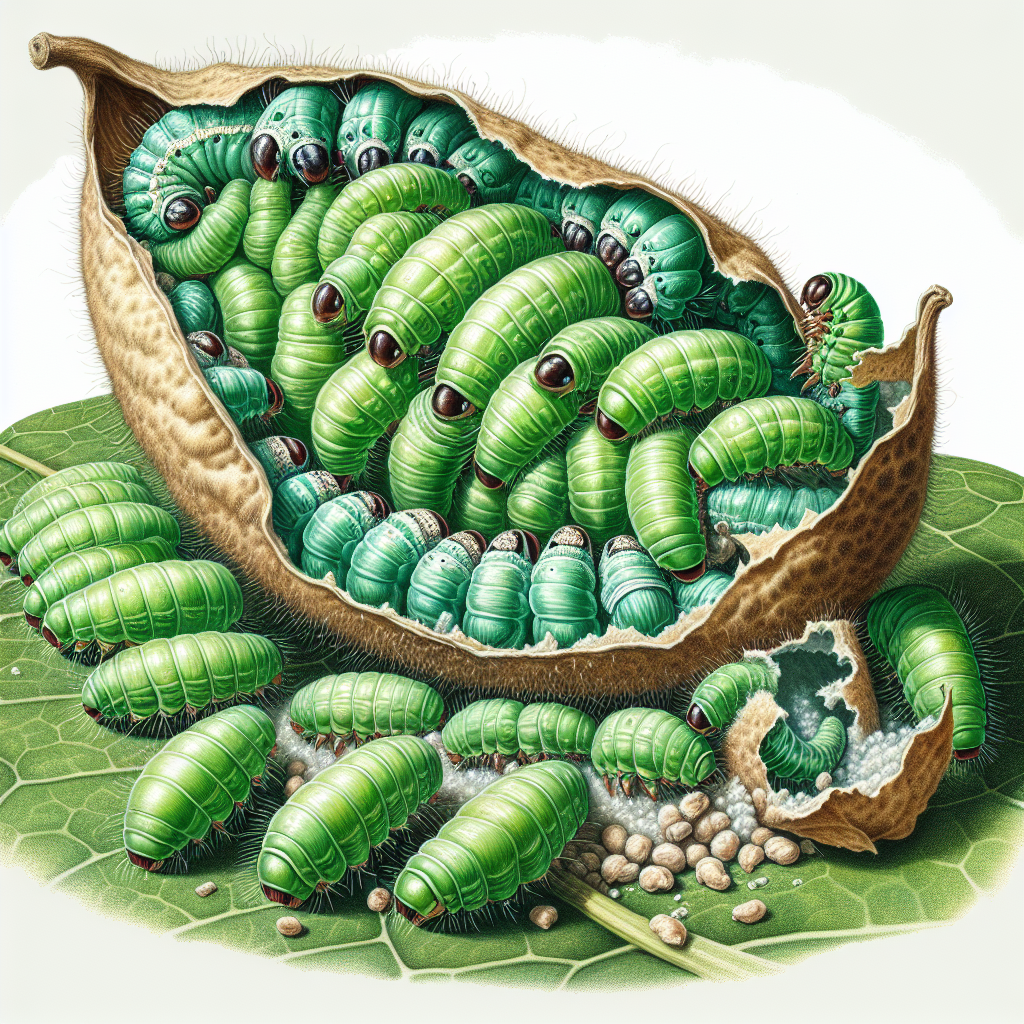
Introduction to Capsule feeders
Capsule feeders represent a critical group of agricultural pests, primarily consisting of lepidopteran larvae (caterpillars) that specialize in infesting the seed-containing structures—known as capsules, pods, or bolls—of economically vital crops. These pests, including species like the Helicoverpa species, American bollworm (Helicoverpa armigera), tobacco budworm (Heliothis virescens), and armyworms such as Spodoptera litura, bore into developing capsules, feeding on seeds and pulp while leaving behind frass and webbing. This internal feeding disrupts seed development, leads to premature capsule drop, and promotes secondary infections from fungi like Alternaria or bacteria, resulting in yield reductions of up to 50-80% in severe infestations.
In tropical and subtropical regions, capsule feeders complete multiple generations per season, synchronizing with crop phenology to maximize damage during pod-filling stages. Smallholder farmers and commercial growers alike face challenges due to the pests' cryptic feeding habits, rapid dispersal via adults, and growing resistance to synthetic insecticides. This guide provides a comprehensive diagnostic framework, lifecycle insights, and organic management strategies optimized for integrated pest management (IPM). Early detection through regular scouting is key, as these pests often evade visual surveys until damage is evident. For small farms struggling with pest identification, tools like AI-powered diagnostics can transform guesswork into precision—check out Why Misidentifying Plants Costs Small Farms Thousands - And How AI Camera Diagnosis Fixes It Fast for practical tech integration.
Understanding capsule feeders is essential for sustainable agriculture, as unchecked populations can cascade into economic losses exceeding thousands per hectare. This pest complex affects global food security, particularly in developing nations reliant on pulse crops. By adopting proactive measures, growers can minimize impacts while preserving beneficial insects and soil health.
Identifying Symptoms & Damage
Diagnosing capsule feeder damage requires keen observation of both direct and indirect signs. Primary symptoms include entry holes (1-3 mm diameter) on capsule surfaces, often plugged with frass resembling sawdust. Affected capsules appear shriveled, discolored (yellowing or browning), and may split open prematurely, revealing hollowed interiors with partially consumed seeds coated in silken webbing or fecal pellets.
Larvae, typically 10-40 mm long with green, brown, or striped bodies and dark heads, are often found inside, pupating within the capsule or dropping to soil for overwintering. Severe infestations cause mass pod drop, stunted plant growth, and secondary damage from scavenging insects like ants or pathogens such as Botrytis. Differentiate from similar pests: unlike pod borers that tunnel longitudinally, capsule feeders create multiple exit holes and leave more frass externally.
Scout weekly during flowering to pod-fill stages, using a tap test—shake plants over white sheets to dislodge larvae. Damage thresholds vary: 5-10% infested capsules warrant action in legumes. Yellow sticky traps capture adults (moths with 20-40 mm wingspans, often pale with dark spots), aiding early warning. Associated signs include honeydew from concurrent aphids, leading to sooty mold, or wilting from girdling. Photoperiod and temperature influence symptom progression; hot, dry spells exacerbate desiccation of damaged capsules.
Lifecycle and Progression of Capsule feeders
Capsule feeders exhibit complete metamorphosis with four stages: egg, larva, pupa, and adult. Females lay 200-1000 flattened, ribbed eggs (0.5-1 mm) singly or in clusters on flowers, young pods, or leaves, preferring nocturnal oviposition. Eggs hatch in 2-4 days at 25-30°C, releasing larvae that initially mine leaves before targeting capsules.
Larval stage (5-7 instars, 15-30 days) is most destructive; early instars skeletonize foliage, while later ones bore into capsules, feeding for 7-14 days before exiting to pupate. Pupae (10-15 mm, brown, spindle-shaped) form in soil or crop debris, lasting 7-14 days. Adults emerge at dusk, mate, and oviposit within 2-3 days, with lifespans of 7-10 days. Full cycle: 25-45 days, yielding 4-8 generations annually in tropics.
Progression aligns with crop stages: eggs on pre-flowering plants, peak larval damage at pod-set (30-50 days post-emergence). Overwinter as diapausing pupae or larvae in soil. Monitor with pheromone traps for adult flights, peaking at 20-25°C and >60% humidity. Lifecycle disruptions via host removal or predators like Trichogramma wasps break populations.
Environmental Triggers & Risk Factors
Capsule feeders flourish in warm (25-32°C), humid (>70% RH) conditions, with optimal outbreaks during monsoon seasons or irrigation-heavy fields. Risk escalates with dense planting (>50,000 plants/ha), excessive nitrogen fertilizers promoting lush foliage, and monocultures exceeding 1 ha. Weedy fields harboring alternate hosts like caterpillars on solanaceous weeds amplify infestations.
Climate change extends generations via milder winters; El Niño patterns boost migrations. Soil moisture >20% aids pupal survival, while drought-stressed crops suffer higher damage as larvae concentrate on capsules. Refugee crops from nearby tomato or okra fields seed infestations. Poor field sanitation—unburied residues—harbors 30-50% of pupae. Assess risks via degree-day models: >500 DD (base 10°C) from planting signals vulnerability.
Organic Control & Treatment Plans
Organic management emphasizes IPM: prevention, monitoring, and layered controls. Cultural: Rotate with non-hosts like onion or garlic (2-3 years); destroy volunteer plants and deep-plow residues post-harvest to expose pupae to predators. Intercrop with trap crops like marigold or thai-basil to divert oviposition.
Biological: Release Trichogramma chilonis (2-4/cc/ ha weekly) for egg parasitism (50-70% control); conserve predators like ladybugs and birds via flowering borders. Apply Bacillus thuringiensis (Bt) kurstaki (1-2 g/L, evenings, 3x at 7-day intervals) targeting young larvae—efficacy >80% if <3rd instar. Neem oil (5 ml/L + soap) or spinosad (0.5 ml/L) for later stages, rotating to prevent resistance.
Mechanical: Hand-pick larvae daily (<1 ha feasible); use light traps (4-6/ha) for adults. Threshold-based spraying: treat at 10% pod infestation. For spring outbreaks, see Spring Pest Patrol: Organic AI Strategies to Shield Your Crops from Common Invaders. Integrate with capsule borers controls for synergy. Monitor efficacy via pre/post scouting; expect 70-90% reduction with compliance.
Preventing Capsule feeders in the Future
Long-term prevention builds resilient systems. Select resistant varieties (e.g., pod-thickened legumes); time planting to evade peak moth flights (avoid late sowing). Maintain >30 cm row spacing for airflow, reducing humidity. Mulch with neem cake (250 kg/ha) suppresses soil pupae.
Enhance biodiversity: hedge rows with yarrow or nasturtium attract parasitoids. Solarize soil pre-season (6 weeks, 40-50°C) kills 90% pupae. Use reflective mulches deter adults. Annual audits: trap counts <5 moths/night indicate low risk. Educate laborers on hygiene; quarantine infested lots. Climate-adaptive IPM, paired with weather forecasting, sustains yields—future-proof via soil health practices from Soil Health Mastery: 5 Proven Strategies for Small Farms to Build Fertile Ground Without Breaking the Bank. Economic ROI: prevention halves control costs.
Crops Most Affected by Capsule feeders
Capsule feeders plague legumes and pods primarily. Top targets: pigeon pea, chickpea (chickpeas), mung bean, soybean (soybeans), cowpea, tomato (tomato), okra (okra), chili (chili-pepper), cotton (cotton), and sunflower (sunflower). Losses: 20-60% in pulses, 30-70% in boll crops without management.
Secondary: eggplant, bell-pepper, sorghum (sorghum), maize (corn). Tropical staples like cassava face minor issues. Regional hotspots: India (pulses), Africa (cowpea), Americas (cotton). Resistant cultivars mitigate; e.g., ICP 8863 pigeon pea yields 25% more under pressure.