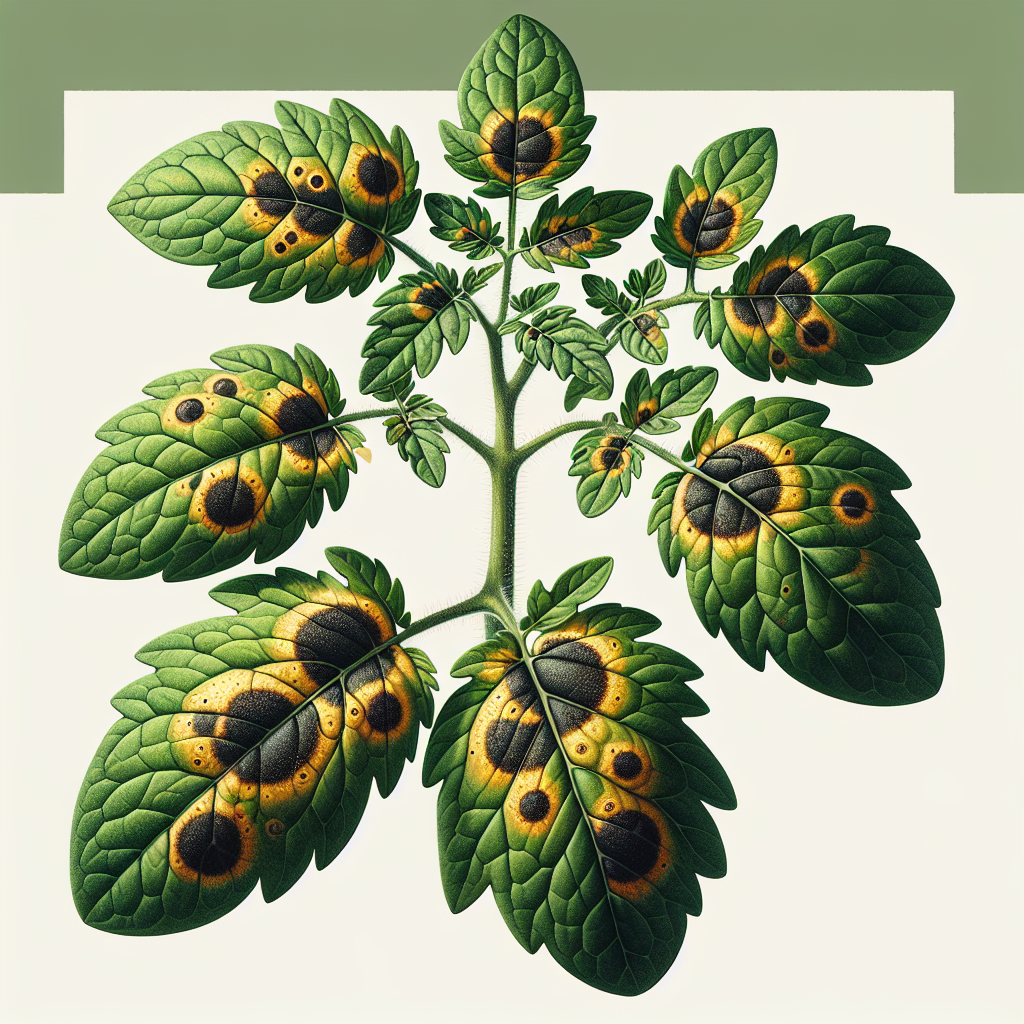
Introduction to Alternaria leaf disease
Alternaria leaf disease, often referred to as Alternaria leaf spot or early blight in certain contexts, is one of the most common and destructive foliar diseases impacting agricultural crops worldwide. Caused primarily by fungal pathogens in the genus Alternaria—such as Alternaria solani, Alternaria alternata, and Alternaria porri—this disease targets leaves, stems, and sometimes fruits, leading to significant yield losses if unmanaged. Farmers and growers encounter it frequently in warm, humid environments, where it spreads rapidly via spores carried by wind, rain splash, or contaminated tools.
The economic impact is substantial, with losses estimated at 20-50% in susceptible crops under favorable conditions. For instance, in tomato production, Alternaria can reduce fruit quality and quantity by promoting secondary infections. This guide provides a comprehensive diagnostic and management strategy, drawing from botanical, entomological, and agricultural expertise to help you identify, treat, and prevent outbreaks. Understanding its biology is key to implementing integrated pest management (IPM) approaches that minimize chemical use while maximizing crop health.
Identifying Symptoms & Damage
Early detection is critical for controlling Alternaria leaf disease. Symptoms typically begin as small, circular spots on lower, older leaves, measuring 1/4 to 1/2 inch in diameter. These spots are dark brown to black, often with concentric rings resembling a target—a hallmark feature distinguishing it from other leaf spot diseases.
As the disease progresses, spots enlarge, coalesce, and develop a yellow halo, leading to blighting where entire leaves turn yellow and die. In severe cases, lesions appear on stems and fruits, causing sunken, leathery rot. On crops like potato, look for "frog-eye" spots; on onions, elongated lesions with yellow margins. Differentiate from Septoria leaf spot by the target-like rings and velvety fungal growth under humid conditions.
Damage manifests as premature defoliation, reducing photosynthesis and stunting plant growth. Yields drop due to smaller fruits and increased susceptibility to other pathogens like Botrytis. Scout fields weekly, focusing on lower canopy, and use a 10x hand lens to confirm dark, olive-green spore masses in lesion centers during wet weather. Economic thresholds vary: remove plants if >10% foliage is affected in vegetables.
Lifecycle and Progression of Alternaria leaf disease
Alternaria fungi are polycyclic, completing multiple infection cycles per season. The lifecycle begins with overwintering as dormant mycelium or spores in infected plant debris, soil, or alternate hosts. In spring, as temperatures rise above 18°C (65°F), conidia (asexual spores) germinate in free water on leaf surfaces, penetrating through stomata or wounds within 6-12 hours.
Primary infections occur via rain-splashed spores from debris, while secondary spread happens through wind-dispersed conidia, favored by daytime temps of 24-29°C (75-85°F) and nights above 15°C (60°F). Each lesion produces thousands of spores daily for 2-4 weeks, amplifying epidemics. The pathogen thrives in 12+ hours of leaf wetness, common in dense canopies or overhead irrigation.
Progression is rapid in stressed plants with high nitrogen levels or wounds from aphids or mechanical injury. In wheat, it moves from lower to upper leaves; in brassicas, it causes rapid blight. Dormancy structures like chlamydospores ensure survival for years, making crop rotation essential. Monitoring spore traps or using disease models can predict outbreaks based on weather data.
Environmental Triggers & Risk Factors
Alternaria leaf disease epidemics are driven by specific environmental cues. Optimal conditions include warm temperatures (24-30°C), high humidity (>90% RH), and prolonged leaf wetness from dew, rain, or poor air circulation. Extended rainy periods or frequent irrigation cycles exacerbate spread, as spores require 6-24 hours of moisture to infect.
Risk factors include susceptible varieties, excessive nitrogen fertilization promoting lush foliage, and high plant density leading to humid microclimates. Soilborne inoculum from undecomposed residue multiplies risks, especially after Fusarium or drought-stressed crops. In tropical regions, it peaks during monsoons; in temperate zones, late summer heatwaves trigger outbreaks.
Other contributors: mechanical injury from cultivation or thrips feeding creates entry points. Poor drainage fosters soil splash, while overhead watering simulates rain. Climate change may intensify issues with warmer nights and erratic rains. Assess farm microclimate—south-facing slopes dry faster, reducing risk— and use weather stations for early warnings.
Organic Control & Treatment Plans
Organic management of Alternaria emphasizes prevention but includes curative options. Start with sanitation: remove and destroy infected debris post-harvest, tilling lightly to speed decomposition without splashing spores. Crop rotation (2-3 years) with non-hosts like corn or grains breaks the cycle.
Cultural practices: space plants for airflow (e.g., 45-60 cm for tomatoes), prune lower leaves, and stake to elevate foliage. Mulch with straw to suppress splash. Boost plant immunity with compost teas, seaweed extracts, or silicon supplements applied foliarly every 10-14 days.
Biological controls: apply Trichoderma or Bacillus subtilis biopesticides preventively; they colonize leaves, outcompeting Alternaria. Neem oil or potassium bicarbonate sprays (1-2% solution) disrupt spore germination—apply at first symptoms, repeating every 7-10 days in wet weather.
For active infections, copper-based organics like copper octanoate (OMRI-listed) provide contact protection; rotate with sulfur or hydrogen peroxide mixes. Check Soil Health Mastery: 5 Proven Strategies for Small Farms to Build Fertile Ground Without Breaking the Bank for resilient soils. Integrated plans reduce severity by 70-80%; monitor with sticky traps for spore counts.
Preventing Alternaria leaf disease in the Future
Long-term prevention hinges on resistant varieties—choose hybrids like 'Mountain Merit' tomatoes or 'Defiant' potatoes bred for Alternaria tolerance. Select certified, disease-free seeds and treat with hot water (50°C for 25 min) or biofungicides.
Optimize fertility: balanced NPK avoids lush growth; calcium strengthens cell walls. Implement drip irrigation to keep foliage dry, irrigating early morning. Enhance biodiversity with cover crops like clover to suppress inoculum.
Scout rigorously: use apps for disease forecasting based on temperature-humidity models. Prune for ventilation, avoiding midday to prevent stress. Post-harvest, flame-weed residues or solarize soil. Refer to Alternaria leaf spot for variety-specific advice. Annual planning, including fall clean-up, keeps inoculum low, potentially eliminating outbreaks.
Crops Most Affected by Alternaria leaf disease
Alternaria strikes a wide host range, but vegetables and solanaceous crops suffer most. Top targets include tomato, potato, eggplant, bell pepper, and onion, where it causes early blight or purple blotch. Brassicas like cabbage, broccoli, and cauliflower see black leaf spots.
Field crops: wheat, soybeans, sorghum, and cotton face tan spot or target spot. Fruits like mango, banana, and citrus develop post-harvest rots. Cucurbits (cucumber, squash) and leafy greens (lettuce, spinach) are vulnerable too. In rice, brown leaf spot mimics it. Susceptibility varies by species and region—tropical crops face chronic pressure.