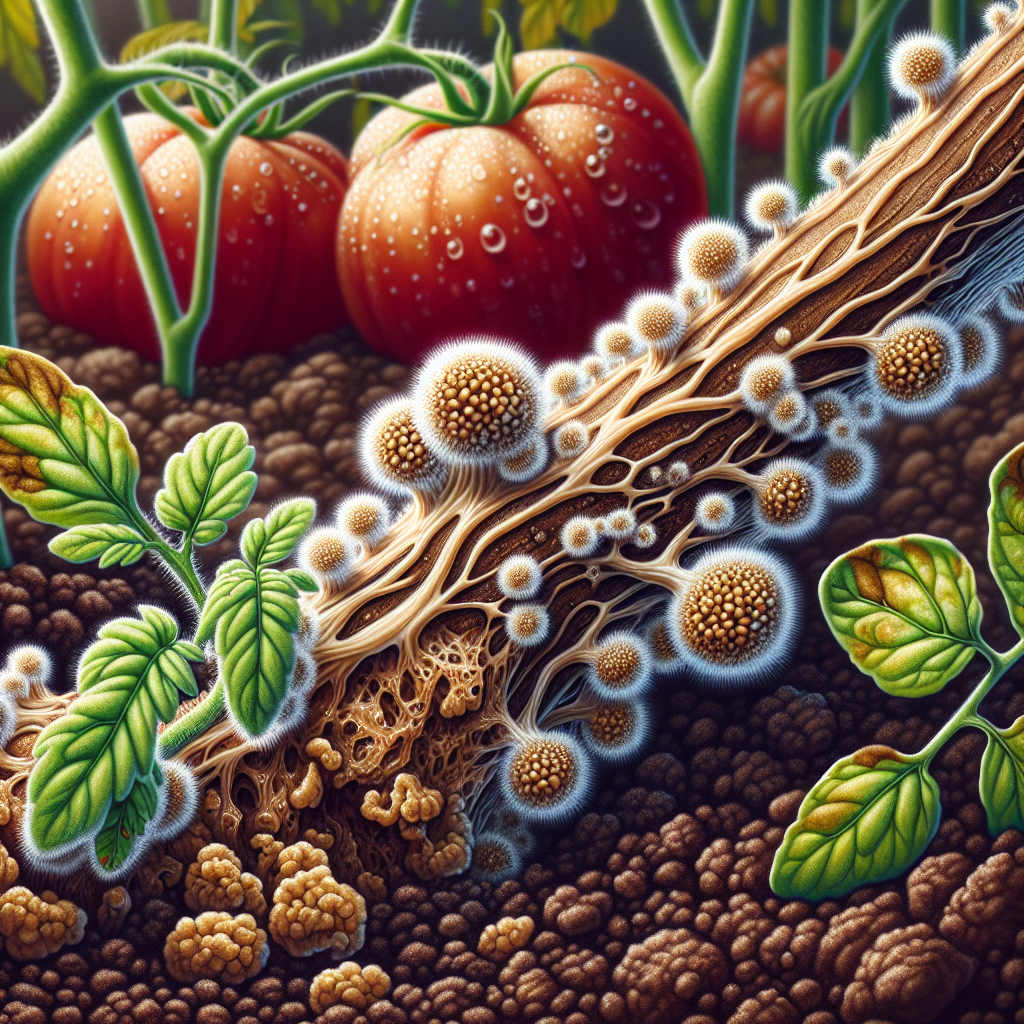
Introduction to Sclerotium rolfsii
Sclerotium rolfsii, commonly known as the southern blight fungus, is one of the most notorious soilborne pathogens in agriculture, affecting a vast array of crops across tropical and subtropical regions. First identified in the early 20th century, this fungus causes severe diseases like southern blight, stem rot, crown rot, and root rot, leading to rapid plant wilting and death. Its resilience comes from hardy sclerotia—small, tan to brown structures resembling mustard seeds—that persist in soil for years, germinating under favorable conditions to infect new hosts.
Farmers worldwide dread Sclerotium rolfsii due to its wide host range, which spans vegetables, legumes, ornamentals, and fruit trees. In severe outbreaks, it can devastate entire fields, causing yield losses up to 100% in susceptible crops like tomato, peanut, and potato. The pathogen spreads via infested soil, water splash, contaminated tools, and machinery, making it a persistent challenge in intensive farming systems. Understanding its biology is crucial for developing targeted diagnostic and management strategies. Early detection through symptom scouting and soil testing can prevent explosive epidemics, saving crops and reducing reliance on chemical interventions.
This guide provides professional-grade, SEO-optimized advice for identifying, managing, and preventing Sclerotium rolfsii, drawing from botanical, entomological, and agricultural expertise. Whether you're growing onion, garlic, or ginger, proactive measures can safeguard your yields.
Identifying Symptoms & Damage
Accurate diagnosis of Sclerotium rolfsii starts with recognizing its hallmark symptoms, which often mimic other soilborne diseases like Phytophthora or Rhizoctonia. Initial signs appear at the soil line: water-soaked lesions on stems or crowns that turn brown to reddish-brown as they expand. Infected tissues shred, exposing the vascular system, and copious white mycelial growth—cottony and radiating outward—emerges during humid conditions.
The diagnostic giveaway is sclerotia formation: clusters of small (0.5-1.5 mm), round, tan to reddish-brown sclerotia embedded in the mycelium or on decaying tissue. These resemble birdshot or mustard seeds and drop into the soil, perpetuating the cycle. Above-ground symptoms include sudden wilting of leaves and shoots, progressing to complete plant collapse, often with yellowing foliage. Roots show dark rot, reduced vigor, and sparse feeder roots.
Damage varies by crop stage. Seedlings suffer damping-off, with hypocotyls rotting at the soil surface. Mature plants exhibit basal rot, stunted growth, and premature defoliation. In legumes like soybeans, pods fail to fill; in solanaceous crops like eggplant, fruits abort. Yield losses are catastrophic in warm seasons—up to 50-80% in bell pepper fields. Differentiate from Fusarium wilt by the absence of internal vascular streaking and presence of sclerotia. Lab confirmation via culturing on potato dextrose agar reveals the characteristic barrel-shaped basidiospores under microscopy.
Scout fields weekly during peak risk periods, focusing on low-lying, poorly drained areas. Use a hand lens to inspect stem bases after rain. Early identification halts spread, allowing timely intervention.
Lifecycle and Progression of Sclerotium rolfsii
Sclerotium rolfsii's lifecycle is adapted for survival and rapid infection. Primary inoculum consists of sclerotia in soil, surviving 3-5 years under dry conditions but germinating prolifically when moisture exceeds 30% soil saturation and temperatures hit 28-35°C (82-95°F). Sclerotia produce mycelia and hyphae that penetrate host roots or lower stems directly through wounds or natural openings.
Infection progresses in phases: mycelial growth colonizes cortex tissues, producing enzymes that macerate cell walls. Pectinases and cellulases dissolve plant barriers, leading to rot within 48-72 hours. Under high humidity (>90% RH), mycelia erupt aboveground, forming sclerotial bodies in 5-7 days. Sexual reproduction is rare; asexual sclerotia dominate dispersal.
The disease advances radially from infection points, with mycelia growing 1-2 cm/day in optimal conditions. Crop debris serves as secondary inoculum, producing sclerotia that splash via rain or irrigation. Progression accelerates in monocultures, where host density favors unchecked spread. In peanuts, infection starts at pegging stage, rotting pods underground. Lifecycle completes in 7-14 days, with billions of sclerotia per square meter in heavy infestations.
Understanding this cycle underscores prevention: break it by deep plowing to bury sclerotia >20 cm, where oxygen limits germination.
Environmental Triggers & Risk Factors
Sclerotium rolfsii thrives in warm, humid tropics/subtropics, with optimal infection at 30-35°C soil temperature and pH 4.5-7.5. Excessive moisture from over-irrigation, heavy rains, or poor drainage triggers outbreaks—sclerotia germinate only above 25°C with free water. Acidic soils (pH <6.0) exacerbate issues, as liming suppresses the fungus.
Risk factors include continuous cropping of susceptibles like tomato, onion, and sweet potato, which build inoculum loads. Shallow tillage leaves sclerotia near surface; compacted soils retain moisture. High nitrogen fertilizers promote succulent growth, easing penetration. Weed hosts like pigweed harbor the pathogen, bridging to crops.
Climate change intensifies risks with prolonged warm spells. In ginger fields, monsoon flooding multiplies losses. For more on hyper-local forecasting, see Why 80% of Small Farms Battle Weather Disasters - And How Hyper-Local AI Forecasts Can Save Your Harvest.
Organic Control & Treatment Plans
Organic management integrates cultural, biological, and physical tactics—no single cure exists, but integrated plans reduce populations 70-90%.
Cultural Controls: Rotate with non-hosts like grasses for 2-3 years. Deep plow (30-40 cm) to bury sclerotia. Solarize soil with clear plastic for 4-6 weeks in summer, heating to 50°C kills 90%. Flood fields intermittently to drown mycelia.
Biological Controls: Apply Trichoderma harzianum or Pseudomonas fluorescens at 10^9 CFU/g soil pre-planting—antagonists parasitize sclerotia. Bacillus subtilis suppresses via antibiotics. Incorporate neem cake (Azadirachta indica) at 500 kg/ha for nematicidal effects.
Organic Amendments: Lime to pH 7.0+; mustard seed meal biofumigates, releasing isothiocyanates lethal to fungi. Chicken manure compost introduces competitive microbes.
Treatment Timeline: At first symptoms, remove infected plants, solarize patches. Drenches with Trichoderma (5 kg/ha) every 15 days. Mulch with mustard residues.
Monitor with bait tests: place carrot disks in soil; sclerotia presence indicates infestation. Combine with resistant varieties where available.
Preventing Sclerotium rolfsii in the Future
Prevention is paramount for long-term control. Start with clean seed and transplants—hot water treat at 50°C for 20 min. Use raised beds (30 cm high) for drainage. Avoid overhead irrigation; drip systems minimize splash.
Crop rotation: alternate with cabbage or wheat, non-hosts. Sanitize tools with 10% bleach. Weed rigorously to eliminate reservoirs. Soil testing for pH and nematodes (root-knot nematodes) guides amendments.
Build soil health with cover crops like clover to suppress via allelopathy. For soil strategies, explore Soil Health Mastery: 5 Proven Strategies for Small Farms to Build Fertile Ground Without Breaking the Bank. Long-term, fumigate infested fields with brassica biofumigants annually.
Crops Most Affected by Sclerotium rolfsii
Over 500 species succumb, but vegetables and legumes suffer most. Top victims:
- Solanaceae: Tomato, potato, eggplant, bell pepper—crown rot devastates.
- Legumes: Peanuts, soybeans, chickpeas—pod/ root rots.
- Alliums: Onion, garlic—basal rot.
- Rhizomes: Ginger, turmeric—rhizome rot.
- Others: Sweet potato, carrot, strawberry, avocado.
Tropical fruits like mango and ornamentals also vulnerable. Prioritize prevention in high-value peanut and tomato systems.