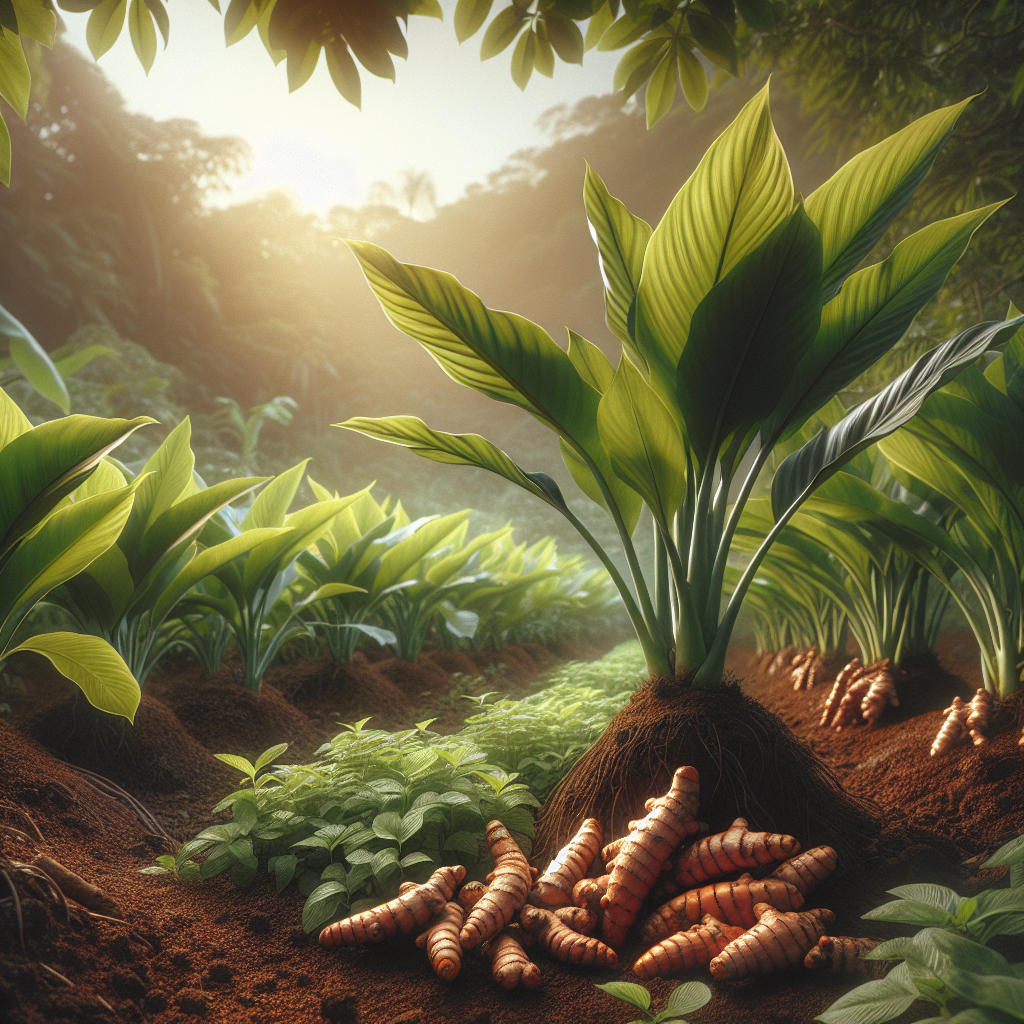
Introduction to Turmeric
A cornerstone spice of South and Southeast Asian agriculture, cuisine, and traditional medicine, turmeric is cultivated primarily for its fleshy rhizomes, which are boiled, cured, dried, and ground into the golden powder recognized worldwide. Beyond its culinary use, it has deep ethnobotanical importance as a coloring agent, ceremonial plant, preservative, and medicinal crop. For growers, turmeric is both a field and garden crop with excellent market potential because fresh rhizomes, seed rhizomes, dried fingers, powder, and even young leaves can all have value.
Turmeric is often compared with ginger because both belong to the Zingiberaceae family and share a similar underground growth habit; growers familiar with Ginger will recognize many cultural similarities. However, turmeric is generally slower to bulk, more sensitive to prolonged cold, and usually demands a longer warm season for best rhizome development. Successful production depends on managing moisture carefully, building highly organic soil, and understanding that the harvestable product is formed underground over several months, often out of sight until maturity.
In commercial systems, turmeric is planted at the onset of reliable warmth and moisture, then grown for 7 to 10 months depending on cultivar and climate. In home gardens, it can be surprisingly productive if given rich loose soil, filtered sun or partial shade in hot regions, and consistent moisture without waterlogging. The crop’s profitability and quality are strongly influenced by rhizome health, disease-free planting material, and proper post-harvest curing.
Botanical Profile of Turmeric
Turmeric is a perennial herb grown as an annual in cultivation. The plant emerges from branched underground rhizomes that function as both the storage organ and propagation material. What appears above ground as a “stem” is actually a pseudostem formed by tightly wrapped leaf sheaths. Plants typically reach 60 to 120 cm in height, though vigorous cultivars under humid tropical conditions can exceed this range.
Leaves are broad, lanceolate to oblong, and arranged in clumps. Healthy foliage should be a strong medium to deep green, with upright posture and smooth margins. Pale foliage may indicate nitrogen deficiency, root stress, or excessive shade. Marginal scorch often points to drought stress, salt buildup, or intense sun combined with inadequate soil moisture.
The true economic structure is underground. The mother rhizome produces primary and secondary branches commonly referred to as fingers. Market preference varies by region: some buyers prefer bold, thick mother rhizomes for fresh sale, while processors often value well-developed fingers with strong internal color and high dry matter. Internal flesh color ranges from yellow-orange to deep reddish orange depending on cultivar, soil fertility, harvest timing, and curcumin concentration.
Turmeric also produces an inflorescence, sometimes before full leaf expansion and sometimes with the foliage depending on genotype and environment. The flower spike has green bracts often tipped with white, pink, or pale purple in ornamental forms. Flowering is not essential to good rhizome production and, in many production systems, is simply a growth-stage marker rather than a management target.
Botanically, Curcuma longa is usually propagated vegetatively because seed set is uncommon or unreliable in cultivated types. This clonal propagation preserves cultivar traits but also means diseases can accumulate over generations unless clean seed rhizomes are selected carefully. Distinct turmeric cultivars differ in maturation period, curcumin percentage, essential oil content, yield, fiber level, rhizome shape, and resistance to Leaf blotch or Rhizome rot. For culinary powder production, growers usually prefer high-curcumin, deep-colored cultivars. For fresh markets, aroma, tenderness, and rhizome appearance can be equally important.
Soil, pH, and Climate Requirements for Turmeric
Turmeric performs best in deep, friable, organically rich loam to sandy loam soils with excellent drainage and high moisture-holding capacity. The ideal texture is one that stays evenly moist after irrigation yet crumbles easily when squeezed, rather than forming a sticky, airless mass. Heavy clay can produce acceptable yields only if raised beds, organic amendments, and drainage channels are used aggressively. In compacted soils, rhizomes become misshapen, rot risk increases, and plants remain stunted because oxygen diffusion around the rhizome zone is poor.
Target soil pH is 5.5 to 7.0, with an optimum around 6.0 to 6.5. Below pH 5.2, nutrient imbalances and aluminum toxicity can reduce vigor, while above pH 7.2 micronutrient availability, especially iron and zinc, may decline. If soil is too acidic, incorporate finely ground agricultural lime several weeks or months before planting. If it is alkaline, use compost, elemental sulfur where appropriate, and repeated additions of organic matter to improve nutrient buffering.
Turmeric is a warm-season tropical crop that prefers temperatures between 20 and 35°C. Rhizome sprouting is strongest when soil temperatures remain above 20°C. Growth slows markedly below 18°C, and chilling injury becomes a serious issue below about 10 to 12°C. Frost is lethal to foliage and can damage rhizomes in the ground. In subtropical or temperate regions, turmeric should be planted only after soils warm fully, or it can be pre-sprouted under protection.
Humidity and rainfall matter. The crop thrives under 1500 to 2500 mm annual rainfall when drainage is good, but it can also perform well under irrigation. What turmeric wants is not constant saturation, but stable root-zone moisture. A good moisture target is roughly 60 to 80% of field capacity during active vegetative growth and early rhizome bulking. If soil is squeezed by hand from the rhizome zone, it should feel cool and moist and form a weak ball that breaks apart easily. Warning signs of excess water include sour-smelling soil, yellowing lower leaves despite moisture, soft crowns, poor tillering, and blackening rhizomes. Signs of underwatering include rolling or drooping leaves by midday that do not recover by evening, reduced leaf size, premature yellowing, and low rhizome bulking.
Light requirements vary somewhat by climate. In humid tropics, turmeric can be grown in full sun if soil moisture is ample. In hotter, drier zones, 25 to 40% light shade often improves leaf quality and reduces heat stress. Agroforestry systems and orchard intercropping are common, especially where filtered light is available. However, excessive shade lowers rhizome yield because photosynthesis drops; if plants become elongated with thin pseudostems and very dark, floppy leaves, light is probably insufficient. For broader soil management principles, see soil health tips.
Step-by-Step Planting & Propagation
Start with healthy seed rhizomes from disease-free stock. Choose plump, well-matured rhizome pieces with at least one to three viable buds each. In commercial practice, seed pieces often weigh 20 to 35 g for fingers and 25 to 50 g for mother rhizome sections. Small pieces can establish, but they usually produce weaker early growth and reduced final yield because they contain fewer stored reserves.
Before planting, cure seed rhizomes in shade for a short period if freshly cut so the cut surface suberizes. Many growers also pre-sprout planting material in shallow trays, sand beds, cocopeat, or loose compost under warm humid conditions. Pre-sprouting reduces gaps in the field and gives a more uniform stand. Buds should be short, thick, and greenish to pink, not long and pale from excessive darkness.
Prepare beds deeply, ideally loosening soil to 25 to 30 cm. Incorporate abundant well-rotted compost or farmyard manure, commonly 20 to 40 tons per hectare in field systems or a generous 5 to 8 cm layer in garden beds. Avoid fresh manure immediately before planting because it can increase disease pressure and create excessive ammonium in the root zone.
Raised beds are strongly recommended, especially in high-rainfall areas. A practical bed height is 15 to 30 cm, with drainage furrows between beds. In mechanized or larger plantings, broad beds with paired rows work well. In small gardens, plant rhizomes 5 to 8 cm deep, bud facing upward or sideways. Deeper planting in heavy soils can delay emergence and promote rotting.
Spacing depends on fertility, cultivar vigor, and production goal. A common range is 30 to 45 cm between rows and 20 to 30 cm between plants within rows. Wider spacing improves airflow and rhizome size, while tighter spacing can increase total biomass but may raise disease pressure. For container production, use a pot at least 35 to 50 cm wide and deep for multiple rhizomes, filled with a loose organic medium.
After planting, mulch immediately with straw, leaf mold, chopped dry grass, or similar material. Mulch is not optional in serious turmeric production; it buffers soil temperature, reduces crusting, suppresses weeds, and protects developing rhizomes from exposure. Initial mulch should be thick enough to shade the soil but not so dense that it creates stagnant, soggy conditions around emerging shoots.
Emergence usually occurs in 2 to 6 weeks depending on temperature and the degree of pre-sprouting. During this stage, keep soil evenly moist but never saturated. If rain is frequent, check beneath the mulch to make sure the soil is not staying anaerobic.
Care & Maintenance regimes for Turmeric
Nutrition should be managed in phases. Early growth requires enough nitrogen to support canopy development, while mid-season growth needs balanced potassium and secondary nutrients for rhizome expansion and disease resilience. Excess nitrogen late in the season can produce luxuriant leaves at the expense of rhizome maturity and may dilute color quality.
A professional nutrient program begins with a soil test. In the absence of test data, build the soil first with compost, then supplement with moderate nitrogen and good potassium availability. Organic growers often use composted manure, vermicompost, oilseed meals, fish hydrolysate, and wood ash cautiously where pH allows. Potassium is especially important for starch movement, water regulation, and rhizome filling. Deficiency appears as leaf edge yellowing and scorching on older leaves, weak stems, and poor rhizome mass.
Top-dressing is commonly done 45 to 60 days after planting and again at 90 to 120 days, often combined with earthing up. Earthing up means pulling loose soil around the plant base to cover shallow developing rhizomes and stabilize the clump. This practice also improves drainage around the crown if done on raised beds. Do not bury the pseudostem too deeply; just cover exposed rhizome shoulders and support the base.
Irrigation should be frequent enough to prevent moisture swings. In sandy soils, this may mean light irrigation every 2 to 4 days in hot weather. In loams, every 5 to 7 days may suffice. Drip irrigation is ideal because it maintains even root-zone moisture without saturating the entire bed. As a rule, the top 3 to 5 cm of mulch may dry somewhat between irrigations, but the soil 8 to 15 cm deep, where rhizomes are actively growing, should remain consistently moist. If leaves wilt early in the morning, moisture stress is already significant. If the soil remains slick, sticky, and sour for days after watering, irrigation intervals are too short or drainage is poor.
Weed control is critical for the first 60 to 90 days, when canopy closure is incomplete. Because turmeric has shallow feeding roots near the rhizome zone, deep hoeing can reduce yield. Hand weeding, shallow cultivation, and heavy mulching are preferred. Once the crop canopy closes, weed pressure usually declines.
In regions with extreme heat above 38°C, temporary shade netting or interplanting with taller seasonal crops can reduce leaf scorching. In regions with wind exposure, shelter is helpful because broad leaves tear easily, reducing photosynthetic area.
Container-grown turmeric needs especially close monitoring. Potting media dry faster but can also become waterlogged if drainage holes are insufficient. Feed lightly but consistently, and refresh mulch throughout the season. Containers should never sit in saucers full of water.
Pests, Diseases & Organic Management
The most serious problems in turmeric are usually disease-related rather than insect-related, especially where drainage is poor or planting material is infected. Rhizome rot, often associated with Pythium, Fusarium, or other soilborne pathogens, is the most destructive issue. Early symptoms include yellowing and collapse of central shoots, foul-smelling soft rhizomes, and poor sprout emergence. Prevention is vastly more effective than treatment: use clean seed rhizomes, avoid waterlogging, rotate away from susceptible hosts, and plant in raised beds.
Leaf blotch and Leaf spot diseases can also reduce yield by damaging canopy area. Symptoms include brown, oval, or irregular lesions that enlarge during humid weather, sometimes with yellow halos. Good spacing, morning irrigation instead of evening wetting, sanitation, and removal of heavily infected debris help suppress spread. Organic foliar sprays based on copper, biological antagonists, or compost teas may play a supporting role, but cultural control is primary.
Common insect pests include Shoot borers, Scales, Mites, Aphids, Thrips, and occasionally Leaf rollers depending on region. Shoot borer attack may be noticed when the central leaf or pseudostem wilts and can be pulled out easily, with boring damage inside. Remove and destroy affected shoots promptly. Sticky honeydew, distorted young leaves, or silvery scarring can signal sap-feeding pests such as Aphids or Thrips. Strong plants in biologically active soils are less prone to severe attack.
Organic management works best as an integrated system:
- Start with pathogen-free planting stock.
- Rotate turmeric out of the same bed for at least 2 to 3 years where disease has occurred.
- Maintain thick mulch without burying crowns in wet decomposing matter.
- Encourage airflow and avoid overcrowding.
- Drench seed rhizomes before planting with approved biologicals such as Trichoderma-based inoculants where available.
- Use neem-based products judiciously for soft-bodied insects.
- Release or conserve beneficial insects by avoiding broad-spectrum insecticides.
- Remove severely diseased clumps immediately rather than hoping they recover.
Rodents can also damage planted rhizomes and mature harvests in the field. Where this is a problem, use physical barriers, trap lines, clean field edges, and prompt harvest once the crop reaches maturity.
Nematodes may reduce vigor in sandy soils, causing stunting and poor rhizome formation. Organic suppression relies on crop rotation, organic matter additions, biofumigant cover crops, and sanitation. Reusing infected seed rhizomes is one of the fastest ways to build chronic pest and disease problems in turmeric fields.
Harvesting, Curing & Optimal Storage
Turmeric reaches maturity in roughly 7 to 10 months after planting, depending on cultivar, climate, and market goal. For fresh “green turmeric,” harvest can begin earlier, often when rhizomes are well formed but foliage is still partly green. For dry spice production, wait until leaves and pseudostems begin yellowing and drying down naturally. This indicates that the plant is reallocating resources and rhizomes are nearing full maturity.
To harvest, loosen soil carefully with a fork, digging bar, or undercutter to avoid slicing the rhizomes. Lift the entire clump, shake off soil, and separate mother rhizomes and fingers. Handle gently; wounds increase rot during curing and storage. Rhizomes intended for seed should be selected from vigorous, disease-free plants and kept separate from processing material.
Freshly harvested turmeric should be washed thoroughly to remove all adhering soil. For dry turmeric production, boiling or steaming is a traditional and important curing step. This process gelatinizes starch, reduces raw odor, improves color uniformity, and shortens drying time. The exact duration depends on rhizome size, but overcooking leads to soft shattered material and quality loss, while undercooking gives a brittle, poorly cured product. Properly cured rhizomes become slightly soft internally but remain structurally intact.
After curing, dry the rhizomes in clean sun or in a dehydrator/hot-air dryer at controlled temperatures, generally around 50 to 60°C, until moisture content falls to about 8 to 10%. At this stage, pieces are hard and break cleanly rather than bending. Drying too slowly in humid weather can cause mold growth; drying too hot can dull color and reduce volatile oil quality.
Polishing is often done for market appearance, either by manual rubbing or mechanical polishing, to remove rough outer Scales. Some markets prefer unpolished organic rhizomes, while others prefer a smooth, bright finish.
For fresh storage, hold cleaned but unpeeled rhizomes at cool—not cold—temperatures, ideally around 12 to 15°C with high relative humidity of 85 to 90%. Lower temperatures can cause chilling injury, while warm storage accelerates shriveling and sprouting. For seed rhizomes, store in a cool, well-ventilated place in sand, sawdust, or similar medium, checking regularly for rot.
Dried turmeric should be stored in airtight containers away from light, heat, and moisture. Whole dried fingers retain quality longer than powder because grinding exposes more surface area to oxidation. If processing into powder, grind only fully dried material and package immediately in moisture-proof containers. Color, aroma, and curcumin stability decline quickly when powder is exposed to humidity and sunlight.
Companion Planting for Turmeric
Turmeric fits well into diversified tropical and subtropical systems because it tolerates partial shade and benefits from microclimates created by taller crops. Good companions are plants that do not aggressively compete in the same shallow root zone and that help maintain humidity, mulch supply, or moderate filtered light.
Useful companions include banana, papaya, pigeon pea, and carefully spaced young fruit trees in agroforestry settings. Banana is especially compatible in humid climates because it provides broken shade and contributes organic residue; however, spacing must be generous so turmeric still receives adequate light and air movement. Leguminous border or alley crops can help improve soil structure and organic matter, though they should not overcrowd the turmeric bed.
Low, fast crops that require repeated soil disturbance are poor companions because turmeric roots and rhizomes dislike constant hoeing nearby. Avoid pairing turmeric with aggressively spreading groundcovers, dense nutrient-hungry annuals, or crops that demand very dry soil conditions. Since turmeric is prone to soilborne disease, it is also wise not to repeatedly follow it with closely related rhizomatous crops in the same space.
Companion planning should support three goals: moderated light, improved soil organic matter, and reduced weed pressure. Thick living competition is not the goal; ecological buffering is. In small gardens, turmeric performs well along the east side of taller summer crops where it receives morning sun and afternoon protection. For broader mixed-planting concepts, review companion planting ideas.
When intercropping, monitor irrigation carefully. A companion that uses large amounts of water can leave turmeric unevenly supplied, resulting in fibrous, undersized rhizomes. Likewise, if companion canopies trap too much humidity without airflow, foliar disease pressure can increase. The best companion system is one that creates a stable, warm, moist but well-aerated root environment—exactly the conditions turmeric needs to produce dense, richly colored rhizomes.