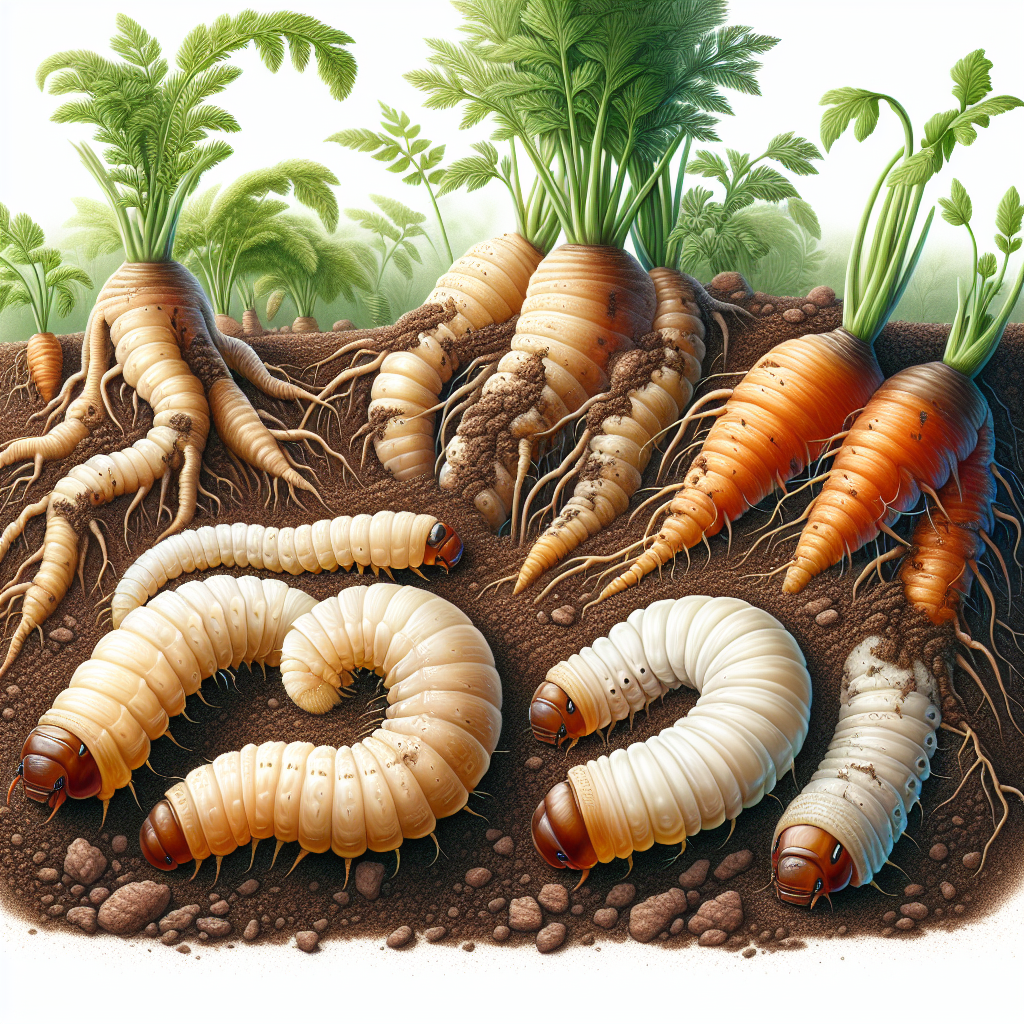
Introduction to Root-feeding larvae
Root-feeding larvae represent a diverse group of soil-dwelling pests that pose significant threats to agricultural production worldwide. These immature stages of various beetles, including click beetles (Elateridae family, such as wireworms) and rootworm beetles (Chrysomelidae, like corn rootworm), burrow into plant roots, feeding voraciously and disrupting nutrient and water uptake. Unlike foliar pests, their subterranean habits make them challenging to detect and control, often leading to sudden crop failures if unchecked.
Farmers encounter root-feeding larvae in fields, gardens, and greenhouses, where they can reduce yields by 20-100% depending on infestation levels and crop susceptibility. Common culprits include wireworms (Agriotes spp.), which are slender, wire-like larvae persisting in soil for years; white grubs (scarab beetle larvae); and root maggots from flies like the seedcorn maggot (seedcorn maggot). Understanding their biology is crucial for timely intervention, as these pests exploit newly tilled soils or over-fertilized fields. This guide provides professional-grade diagnostics, organic management strategies, and prevention tactics optimized for small farms and commercial operations alike.
Identifying Symptoms & Damage
Recognizing root-feeding larvae damage early is essential for minimizing losses. Above-ground symptoms often appear first: seedlings fail to emerge, or young plants exhibit stunted growth, yellowing leaves, and rapid wilting, even under adequate irrigation. Affected plants may lean or fall over due to severed roots, mimicking drought stress or root rot diseases like Pythium.
Inspect roots by gently digging around the base of suspect plants. Look for characteristic signs: tunnels or galleries in roots, ragged chewing, or complete girdling. Larvae themselves are creamy-white, legless or legged grubs, often 1-5 cm long, with distinct head capsules. Wireworms are tough-skinned and golden-brown; rootworm larvae are softer with a brown head. In potato crops, tubers show notches and holes; in corn, roots are pruned, leading to lodging. Differentiate from root-knot nematodes by the absence of galls and presence of frass or live grubs.
Severity scales help: light damage shows minor pruning; moderate causes 30-50% root loss with wilting; severe (>70% damage) results in plant death. Use bait stations—buried potato chunks or carrot slices—to confirm presence. In carrot fields, forked or scarred roots signal larval feeding, reducing marketability by up to 40%.
Lifecycle and Progression of Root-feeding larvae
Root-feeding larvae lifecycles vary by species but typically span 1-5 years, with soil stages dominating. Adults emerge in spring/summer to lay eggs in soil near host plants. Eggs hatch in 1-4 weeks into tiny larvae that feed on organic matter before targeting roots. Larvae grow through 6-10 instars, molting as they tunnel deeper (up to 30 cm).
Wireworms, for instance, overwinter as larvae, resuming feeding in spring; they pupate after 2-4 years, emerging as click beetles that flip when disturbed. Corn rootworm larvae peak in summer, pupating in soil before adult flight. Multiple generations occur in warmer climates, with peak damage during seedling establishment. Progression: eggs (0-2 weeks), young larvae (surface feeding), mature larvae (deep root damage), pupae (2-4 weeks), adults (egg-laying).
Monitoring lifecycle stages informs timing: scout post-planting for eggs/young larvae; mid-season for mature grubs. In sweet potato, larvae coincide with tuber initiation, amplifying losses.
Environmental Triggers & Risk Factors
Root-feeding larvae proliferate under specific conditions. Moist, cool soils (15-25°C) favor egg hatch and larval survival; prolonged wetness post-tillage boosts populations. Continuous monocropping, especially grasses before root crops, builds infestations—corn following wheat heightens corn rootworm risk.
Poor drainage, high organic matter, and neutral pH (6-7) create ideal habitats. Overuse of fresh manure introduces adults; reduced tillage preserves pupae. Climate shifts, like warmer springs, extend activity windows. Risk factors include new fields from pasture (wireworms surge), compacted soils trapping larvae near roots, and nearby weedy margins harboring beetles. In cassava, drought stress weakens plants, exacerbating feeding damage.
Organic Control & Treatment Plans
Organic management emphasizes integrated pest management (IPM). Cultural controls: Rotate crops—avoid hosts for 2-3 years; plant trap crops like clover or mustard to lure larvae. Tillage exposes larvae to predators and desiccation; solarization (clear plastic over moist soil, 4-6 weeks summer) kills 70-90%.
Biological agents: Apply beneficial nematodes (Heterorhabditis bacteriophora) at 10^9/m² in evenings; they parasitize grubs effectively in moist soils. Entomopathogenic fungi like Metarhizium anisopliae infect larvae—mix with water, drench soil. Predatory ground beetles and birds (birds) naturally suppress populations.
Physical barriers: Use row covers until plants establish; fine mesh screens on transplants. Organic-approved inputs: Drench with neem oil or spinosad (soil drench); Bacillus thuringiensis (Bt) targets some lepidopteran larvae but not all beetles. For potato, seed treatments with diatomaceous earth. Treatment plan: Scout weekly; apply nematodes at first detection; follow with crop rotation. In severe cases, rogue infested plants and burn residues. Combine with Spring Pest Patrol: Organic AI Strategies to Shield Your Crops from Common Invaders for timing precision.
Preventing Root-feeding larvae in the Future
Prevention is more cost-effective than cure. Start with soil testing—map high-risk zones via bait traps pre-planting. Select resistant varieties: russet burbank potato tolerates moderate damage; hybrid corn with Bt traits (organic hybrids available). Crop rotation is key: legumes (peas) or brassicas disrupt cycles.
Enhance soil health per Soil Health Mastery: 5 Proven Strategies for Small Farms to Build Fertile Ground Without Breaking the Bank—healthy microbiomes suppress larvae. Cover crops (hairy vetch) smother eggs; encourage predators with hedgerows (marigold, yarrow). Delay planting 2 weeks to miss peak egg hatch. Monitor with regional extension alerts; maintain field margins free of debris. Long-term: floodplain fields less prone due to occasional flooding drowning larvae. Annual audits reduce recurrence by 80%.
Crops Most Affected by Root-feeding larvae
Root crops and cereals suffer most. Potato (russet burbank potato, yukon gold potato) faces wireworms scarring tubers. Corn (sweet corn (honey select)) hit by rootworms causing lodging. Carrot (danvers carrot) shows forked roots; onion (yellow onion (walla walla)) wilts from girdling. [Sweet potato](/wiki/sweet potato) (beauregard sweet potato) and taro (elephant ear taro) lose storage roots. Grains like wheat, sorghum seedlings fail. Turf and strawberry also vulnerable. In tropics, cassava yields drop 50%. See wireworms for species-specific impacts.