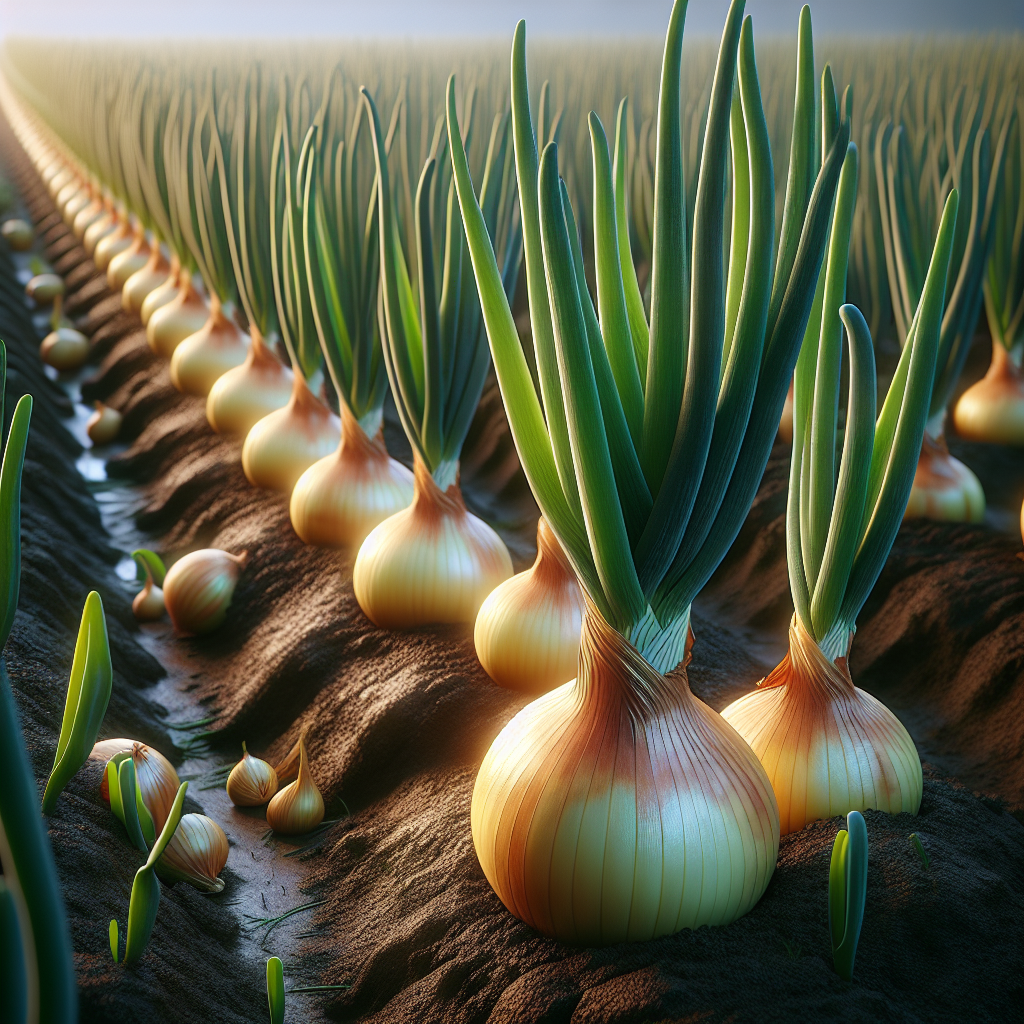
Introduction to Yellow Onion (Walla Walla)
Originating in the Walla Walla Valley of southeastern Washington, this onion has earned a near-legendary reputation among sweet onions for its delicate flavor, low sulfur bite, and large, succulent bulbs. Its history is often traced to sweet onion strains brought by settlers in the late 19th century, which gradually adapted to the region’s soils and climate. Over time, selection favored bulbs that were mild, juicy, and attractive rather than highly pungent or long-storing.
This is an onion grown primarily for sweetness and fresh use, not for extreme storage life. That distinction matters. Growers who approach Walla Walla the same way they would a hard, high-dry-matter storage onion are often disappointed. The variety’s tenderness, low sulfur intensity, and high water content are exactly what make it desirable at the table, but those traits also make it more perishable after harvest.
Like other bulb onions, it is a photoperiod-sensitive crop. Bulb formation depends heavily on day length, which is why regional adaptation is critical. Walla Walla is generally treated as a long-day onion, performing best where increasing spring and early summer day length triggers proper bulbing. In mild winter regions of the Pacific Northwest, it is often fall-sown or transplanted for overwintering. In colder continental climates, it is commonly started early and transplanted in spring.
For growers interested in broader onion culture, the general Onion guide helps explain shared growth habits, but Walla Walla deserves special attention because its sweetness, overwintering potential, and shorter storage behavior require more specialized management.
Botanical Profile of Yellow Onion (Walla Walla)
This crop belongs to the Amaryllidaceae family and is a biennial species usually grown as an annual for bulb production. In its first year, the plant builds a basal plate, fibrous roots, hollow leaves, and finally a swollen bulb made up of concentric leaf bases. If carried into a second season or exposed to prolonged cold at the wrong stage, it can produce a flower stalk, or scape, leading to seed production and reduced bulb quality.
Walla Walla onions are notable for several cultivar-level characteristics:
- Bulbs are typically large, rounded to somewhat flattened, and yellow-skinned with pale interior flesh.
- Flavor is mild, sweet, and less pungent than most standard yellow storage onions.
- Dry matter is lower than in classic storage cultivars, contributing to tenderness and juiciness.
- Skin retention is weaker than in storage onions, so bulbs bruise more easily.
- Storage life is short to moderate, often just a few weeks to a couple of months under excellent conditions.
The root system is relatively shallow and inefficient compared with many other vegetable crops. Most active roots occupy the top 20 to 30 cm (8 to 12 inches) of soil, which explains why onions are highly responsive to consistent moisture, weed competition, and surface fertility. Their leaves are upright and waxy, but they do not create a dense canopy, so the crop is poor at shading out weeds.
A key botanical nuance is the relationship between vegetative growth and bulb sizing. Every healthy leaf produced before bulbing contributes to a ring in the mature bulb. That means strong early growth directly influences final size. Stress before bulbing, whether from drought, nutrient deficiency, crowding, or weed pressure, permanently reduces yield potential because the plant cannot fully compensate later.
Bolting risk is an important physiological concern. Young plants exposed to prolonged chilling after reaching sufficient size may become vernalized. In practical terms, this means overwintered or very early transplanted onions can form seed stalks if they experience an unfavorable cold period. With Walla Walla, careful timing and cultivar-appropriate planting windows help reduce this risk.
Soil, pH, and Climate Requirements for Yellow Onion (Walla Walla)
This variety performs best in deep, friable, fertile, well-drained loam or sandy loam with excellent tilth. Heavy clay can produce misshapen bulbs, poor root aeration, and elevated disease pressure, especially from basal and root rots. Rocky or compacted soils can interfere with uniform bulb expansion and make harvest more difficult.
Ideal soil pH is 6.2 to 6.8, though onions can still grow reasonably well from about 6.0 to 7.0. Below pH 6.0, nutrient availability becomes less favorable and root growth may weaken. At high pH, certain micronutrient issues may appear, especially where soils are calcareous. A preplant soil test is strongly recommended because onions respond best when phosphorus, potassium, sulfur, calcium, and micronutrients are balanced rather than guessed.
Because Walla Walla is prized for sweetness, sulfur management deserves nuance. Onions need sulfur for normal growth, but very high sulfur availability can intensify pungency. On low-sulfur soils, deficiency can reduce vigor, yet excessive sulfur fertilization may work against the desired mild flavor profile. Moderate fertility with balanced nutrition is preferable to aggressive feeding.
Climate adaptation is centered on cool-season growth and long-day bulb initiation. Optimal vegetative growth generally occurs around 55 to 75°F (13 to 24°C). Bulb enlargement proceeds well under warm but not excessively hot conditions, especially when soil moisture remains steady. Prolonged heat above 90°F (32°C), especially with moisture stress, can reduce quality, accelerate maturity, and increase splitting or undersized bulbs.
In maritime and Pacific Northwest conditions, Walla Walla often excels because winters are cool but not brutally cold, springs are long, and summer day length is ample. In colder regions, plants may need protection or spring transplanting. In hot southern climates, this variety is usually less dependable because day-length adaptation and heat stress reduce performance.
Soil moisture should remain consistently moist but never saturated. As a practical target, the top 10 to 15 cm (4 to 6 inches) of soil should feel evenly damp, not sticky, and should hold together lightly when squeezed without releasing water. If the surface alternates between powder-dry and waterlogged, bulb quality suffers. Overwatering signs include yellowing lower leaves unrelated to maturity, stunted growth despite wet soil, sour-smelling beds, shallow root systems, and soft bulbs. Underwatering signs include bluish-green foliage, leaf tip burn, slowed leaf production, narrow necks early in the season, and bulbs that stop sizing before reaching market potential.
Raised beds are especially helpful in marginal soils because they improve drainage and warm more quickly in spring. Fine seedbeds are important for direct sowing, while transplant beds should be loosened deeply enough to allow straight root penetration and uniform bulb expansion.
For growers refining bed preparation and organic fertility, see soil health tips.
Step-by-Step Planting & Propagation
Walla Walla onions are usually propagated from seed, starts, or sets, though seed and transplants generally produce the best quality bulbs. Sets are convenient but may increase bolting risk and often produce less uniform sweet onions.
Choose the correct planting window. In mild winter climates, sow seed in late summer to early fall for overwintering, then transplant or thin for spring growth and early summer harvest. In cold winter climates, start seed indoors 10 to 12 weeks before the last frost and transplant out 4 to 6 weeks before the last frost once seedlings are pencil-thin or slightly smaller.
Prepare the bed thoroughly. Incorporate mature compost and any recommended amendments from a soil test. Avoid fresh manure, which can increase disease risk, excess nitrogen, and misshapen bulbs. Rake the bed to a fine, level surface free of large clods.
Start seed correctly. Sow seed about 0.6 to 1.3 cm (1/4 to 1/2 inch) deep in trays or nursery beds. Germination is best at 65 to 75°F (18 to 24°C). Keep media evenly moist, not soggy. Seedlings emerge best with strong light immediately after germination to avoid weak, floppy growth.
Harden transplants. Before field planting, gradually expose seedlings to cooler temperatures, sun, and wind over 7 to 10 days. Reduce water slightly, but do not wilt them repeatedly.
Transplant at proper spacing. For large bulbs, space plants 10 to 15 cm (4 to 6 inches) apart in rows 30 to 45 cm (12 to 18 inches) apart. Closer spacing produces smaller bulbs but can increase total count. Set transplants shallowly so the white shank and roots are covered, but do not bury too deeply; excessively deep planting can delay bulb swelling and encourage elongated necks.
Water immediately after planting. Settle soil around roots with a gentle but thorough irrigation. Maintain uninterrupted growth during establishment.
Thin direct-seeded stands early. If direct sowing, thin in stages until final spacing is reached. Delayed thinning results in permanently reduced bulb size because competition starts early.
Propagation from seed is preferred when uniformity matters. Select healthy seedlings with sturdy, bluish-green leaves and well-developed but not root-bound root systems. Avoid oversized transplants that have experienced check in growth, as they may bolt more readily.
Care & Maintenance regimes for Yellow Onion (Walla Walla)
Consistent growth is the core principle for this variety. Any interruption during the vegetative stage reduces the number and size of leaves, which directly limits final bulb diameter.
Water management: Aim for roughly 1 to 1.5 inches (25 to 38 mm) of total water per week from rain or irrigation during active growth, adjusted for soil type and temperature. Sandy soils may need lighter, more frequent irrigation; loams can be watered more deeply and less often. During bulb enlargement, erratic watering is particularly damaging. Letting the soil dry hard between irrigations can lead to split bulbs, strong flavor, and reduced size. However, continuously saturated beds increase the risk of Fusarium, Bacterial soft rots, and poor root function.
A practical method is to check moisture 2 to 3 inches below the surface. If it feels barely moist or dry at that depth, irrigate. If the soil is still cool, moist, and cohesive, wait. Drip irrigation is ideal because it keeps foliage drier and delivers even moisture to the shallow root zone.
Fertility: Onions are moderate to heavy feeders but require controlled nitrogen management. Apply a modest nitrogen base preplant, then side-dress during early vegetative growth when plants are producing leaves rapidly. Stop heavy nitrogen feeding once bulbing is clearly underway; excess late nitrogen delays maturity, thickens necks, weakens skins, and shortens storage life. A common professional approach is to provide steady nitrogen until plants reach strong leaf development, then taper.
Phosphorus supports early root establishment, while potassium contributes to water regulation and bulb quality. Calcium helps tissue integrity, especially in soils prone to imbalance. Because Walla Walla is intended for sweetness rather than maximal storage, avoid pushing fertility to the point of lush, watery overgrowth.
Weed control: This crop is a poor competitor. Keep beds nearly weed-free from emergence through bulb expansion. The first 6 to 8 weeks are especially critical. Shallow cultivation is preferable because roots are close to the surface. Organic mulches can help, but apply them carefully so they do not trap excessive moisture directly against bulb necks late in the season.
Temperature and bolting management: Protect overwintered crops from extreme freezes using row covers or low tunnels in regions with intermittent severe cold. Avoid setting out overly mature seedlings into prolonged cold weather, as this increases bolting. Remove any flowering stalks promptly, though bolted plants are best used fresh rather than stored.
Mulching and bed hygiene: Clean straw or leaf mold can buffer soil moisture and reduce crusting, but heavy mulch should be thinned as bulbs enlarge to allow the neck area to dry and cure near maturity. Good airflow reduces foliar disease pressure.
Pests, Diseases & Organic Management
The most common insect problems include Onion thrips, Maggots, and occasionally Cutworms or Wireworms depending on region.
Onion thrips rasp leaf tissue and suck sap, causing silvery streaking, reduced photosynthesis, and smaller bulbs. Severe infestations make foliage look gray, scarred, and desiccated. Thrips are worsened by hot, dry weather and dense weed pressure. Organic management includes reflective mulch in some systems, strong overhead rinses early in the day where disease pressure is low, insecticidal soaps targeted into leaf axils, and spinosad where permitted. Rotate chemistry carefully if using commercial organic products.
Onion Maggots attack roots and basal plates. Plants may wilt suddenly, yellow, or pull up easily, often with soft feeding tunnels at the base. Prevention is crucial: rotate away from alliums for at least 3 years, avoid planting into fresh organic matter, use row cover immediately after planting in high-risk areas, and remove cull onions promptly.
Fungal and bacterial diseases are often the main quality-limiting issues for sweet onions.
- Downy mildew appears as pale leaf lesions with grayish sporulation under cool, humid conditions.
- Purple blotch causes purple-brown lesions that weaken foliage.
- Botrytis leaf blight can kill leaf tips and reduce bulb fill.
- Fusarium basal rot leads to yellowing, root decline, and rot at the base.
- Bacterial soft rots create watery, foul-smelling breakdown, especially after bruising or harvesting wet bulbs.
Organic prevention depends more on system design than rescue treatment:
- Use long rotation intervals and avoid repeated allium planting in the same ground.
- Start with disease-free seed or transplants.
- Maintain excellent drainage.
- Avoid overhead irrigation late in the day.
- Space adequately for air movement.
- Control weeds that trap humidity.
- Stop irrigation as maturity approaches to help necks dry.
- Handle bulbs gently to avoid wounds.
If Pink root is common in your soil, avoid warm, infested fields and prioritize rotation. If Neck rot has been a recurring issue, reduce late nitrogen, avoid overly thick necks, and make sure bulbs are fully cured before storage.
Harvesting, Curing & Optimal Storage
Harvest timing strongly influences both flavor quality and shelf life. Walla Walla is usually harvested when bulbs have reached full size and roughly 50 to 80% of tops have fallen naturally. Waiting for complete top collapse can increase disease and weather risk, especially in wet conditions. Pull a few sample bulbs to assess size, skin development, and neck thickness.
Do not force maturity by bending tops early; this can invite disease and does not improve bulb quality. Instead, reduce irrigation as bulbs finish sizing. In the final 7 to 14 days before harvest, allow the field to dry down moderately if weather permits. This helps outer scales tighten and lowers bacterial rot risk.
Harvest on a dry day whenever possible. Loosen soil gently and lift bulbs with minimal bruising. Because Walla Walla onions have relatively tender skins, rough handling can sharply reduce storage life. Never leave freshly lifted bulbs in intense direct sun for too long in very hot weather, as sunscald can occur.
Cure bulbs in a warm, dry, shaded, well-ventilated area for about 10 to 21 days depending on humidity. Ideal curing conditions are around 75 to 85°F (24 to 29°C) with strong air movement. Bulbs are adequately cured when outer skins are dry, necks are tight, and roots are shriveled. Trim tops only after curing, leaving about 1 inch of neck if not braiding.
Storage is the weak point of this variety. Because of its sweetness and higher moisture content, expect shorter keeping quality than typical storage onions. Store only sound, fully cured bulbs with intact skins. Best conditions are near 32°F (0°C) with low relative humidity around 65 to 70% and good air circulation. In home conditions, a cool, dry, airy room is better than a damp cellar. Refrigeration can work for short periods if bulbs are kept dry and ventilated.
Use any thick-necked, bruised, split, or double bulbs first. For best eating quality, plan to consume most Walla Walla onions fresh within weeks rather than months.
Companion Planting for Yellow Onion (Walla Walla)
This onion pairs well with crops that either benefit from its scent-masking effect or occupy a different rooting and canopy niche. It is especially useful in diversified vegetable beds where insect confusion and efficient space use matter.
Carrot is one of the classic companions because onions can help confuse carrot rust fly, while carrots make efficient use of deeper soil layers than the shallow-rooted onion. Lettuce is another strong companion, maturing quickly and covering soil lightly without overwhelming onion foliage. Beet can coexist well in adjacent rows, especially where fertility is balanced and spacing is respected. Cabbage and other brassicas also often benefit from mixed plantings because alliums may help disrupt certain pest patterns.
Avoid pairing onions closely with heavy-feeding legumes such as peas or beans when space is limited, since their cultural preferences and root-zone interactions are not always ideal together. Also avoid dense companion arrangements that shade onion leaves; bulb size depends on strong, uninterrupted light interception.
In market gardens, the most successful companion strategy is usually not random interplanting but planned adjacency: onions in clean, well-spaced bands beside compatible vegetables, with irrigation and harvest timing designed so one crop does not disrupt the other.