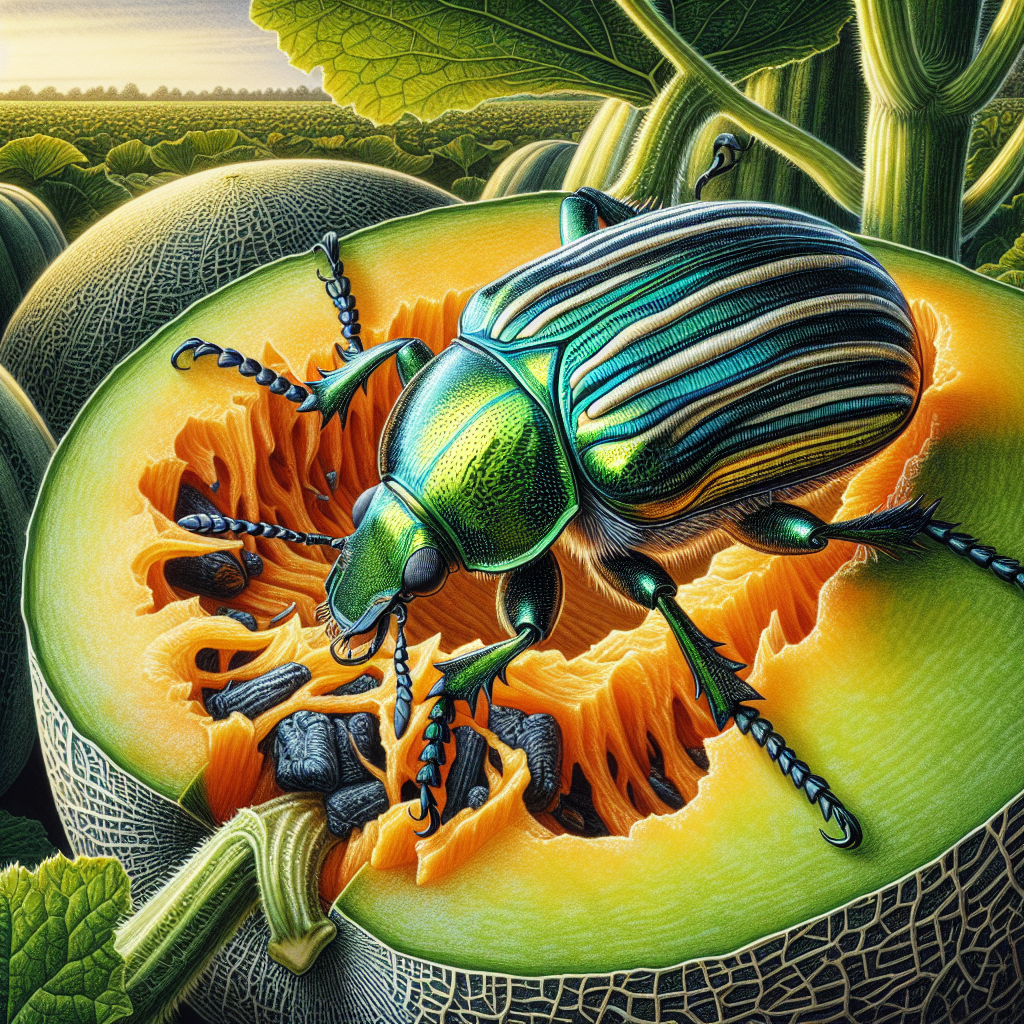
Introduction to Rind-feeding Beetles
Rind-feeding beetles represent a diverse group of beetle species that specialize in damaging the protective outer layers of fruits and vegetables. Belonging primarily to families like Chrysomelidae (leaf beetles) and Cucurbitaceae feeders such as the striped cucumber beetle, these pests chew irregular notches, gouges, and scars into rinds, creating wounds that invite secondary infections from pathogens like fruit rots. Unlike borers that tunnel inside, rind-feeders attack externally, making them highly visible but challenging to control due to their mobility and rapid reproduction.
Farmers encounter these beetles most frequently in humid, subtropical regions where crops like watermelon, cantaloupe, squash, and pumpkin are staples. Adult beetles, typically 5-10mm long with metallic or striped exoskeletons, emerge in spring and persist through fall, feeding voraciously on tender fruit skins. Larvae often develop in soil, feeding on roots and exacerbating damage. Economic losses can exceed 30-50% in untreated fields, underscoring the need for integrated pest management (IPM). This guide provides diagnostic tools, lifecycle insights, and proven organic strategies to safeguard your harvest. For more on early-season pest defense, check this Spring Pest Patrol blog post.
Identifying Symptoms & Damage
Spotting rind-feeding beetle damage early is crucial for minimizing losses. Look for characteristic signs on fruit surfaces: irregular chew marks, shallow grooves, and scalloped edges on rinds. Unlike uniform bacterial spots, beetle feeding creates jagged, fibrous tears with visible frass (beetle excrement) nearby—small, dark pellets resembling sawdust.
Affected fruits show discoloration around wounds, progressing to sunken lesions as secondary fungi enter. In severe cases, rinds split open, exposing flesh to dehydration or pathogens like anthracnose. Differentiate from similar pests: squash bugs suck sap without chewing, while cucumber beetles leave finer stripes and transmit bacterial wilt. Use a hand lens to confirm beetle presence—adults have hardened wing covers (elytra) and clubbed antennae.
Inspect undersides of leaves for egg clusters (yellowish, laid in rows) and monitor soil for C-shaped larvae. Damage peaks at fruit set, with mature fruits showing scarring that reduces marketability by up to 70%. Conduct weekly scouts using yellow sticky traps to quantify populations; thresholds are 1-2 beetles per plant. Photograph suspect damage for precise ID, distinguishing from Japanese beetles which skeletonize leaves more than rinds.
Lifecycle and Progression of Rind-feeding Beetles
Understanding the four-stage lifecycle—egg, larva, pupa, adult—enables timed interventions. Adults overwinter in soil or leaf litter, emerging in late spring (soil temps >15°C/59°F) to feed on foliage before targeting rinds. Females lay 500-1000 eggs in soil near host plants over 4-6 weeks, hatching in 7-10 days.
Larvae, resembling white grubs with brown heads, feed on roots for 3-4 weeks, stunting plants before pupating in soil. New adults emerge in midsummer, coinciding with fruit swell, and repeat the cycle 1-2 times annually. Total lifecycle: 45-60 days. Progression varies by species; e.g., western cucumber beetles peak in July-August on cucurbits.
Monitor with soil cores and pitfall traps. Peak damage occurs when adults aggregate on fruits 2-4 weeks post-bloom. In tropics, multiple generations (3-4/year) amplify pressure. Disrupting soil stages via tillage breaks the cycle. Refer to general beetles for comparative lifecycles.
Environmental Triggers & Risk Factors
Rind-feeding beetles flourish in warm, humid conditions (25-35°C/77-95°F, 60-80% RH), with outbreaks triggered by mild winters and early springs. Overly fertile soils high in nitrogen promote lush rinds attractive to feeders. Monocultures of susceptible crops like honeydew increase infestation risk.
Poor field sanitation—unburied crop residues—harbors pupae. Drought stress weakens plant defenses, making rinds softer. Nearby weedy borders with wild cucurbits serve as reservoirs. Climate change extends activity windows, with models predicting 20% more generations by 2050 in temperate zones.
Risk assessment: High for fields >1ha without rotation; scout adjacent areas for migrants. Wind currents disperse adults up to 2km. Companion crops like marigold reduce invasion by 40%.
Organic Control & Treatment Plans
Organic management emphasizes prevention and biologicals over reactives. Cultural: Rotate crops (2-3 years away from hosts), till post-harvest to expose pupae to predators. Use row covers (lightweight Agribon) until flowering ends—effective 95% barrier.
Physical: Kaolin clay sprays (Surround WP, 50-100g/L) create protective films repelling beetles; reapply post-rain. Hand-pick adults into soapy water at dusk. Yellow sticky traps (10/acre) capture 70% fliers; enhance with floral lures.
Biological: Release predatory ground beetles and parasitic wasps (e.g., Trichogramma). Neem oil (0.5-2%) disrupts feeding/oviposition; apply evenings to avoid bees. Bt kurstaki targets larvae if present. Companion plant nasturtium as trap crop.
Integrated Plan: Week 1: Scout/trap. Week 2: Clay/neem. Monitor <1 beetle/plant. Soil drench with beneficial nematodes (Heterorhabditis) for grubs. Yields recover 80% with IPM vs. untreated.
Preventing Rind-feeding Beetles in the Future
Long-term prevention builds resilient systems. Select resistant varieties like 'Athena' muskmelon. Maintain 4-year rotations with non-hosts (clover, grains). Border plantings of rye or sunflowers deter migrants.
Enhance biodiversity: Intercrop with repellents (thyme, garlic). Mulch heavily (straw 10cm) to suppress soil emergence. Fallow tillage + solarization kills 90% pupae. Monitor with apps for degree-day models predicting flights.
Sanitation: Destroy volunteers, deep-plow residues. Encourage birds (birds as predators) via perches. Annual soil tests guide balanced fertility, avoiding excess N. These steps reduce populations 60-80% over seasons.
Crops Most Affected by Rind-feeding Beetles
Cucurbits top the list: watermelon (Crimson Sweet), cantaloupe (Hales Best), honeydew, cucumber, squash, pumpkin, zucchini. Rinds scar heavily, slashing value. Extend to Hass avocado and citrus (orange), where adults girdle fruits. Lesser impacts on tomato, eggplant. Global losses: $500M/year in US alone. Protect high-value like dragon fruit via IPM.