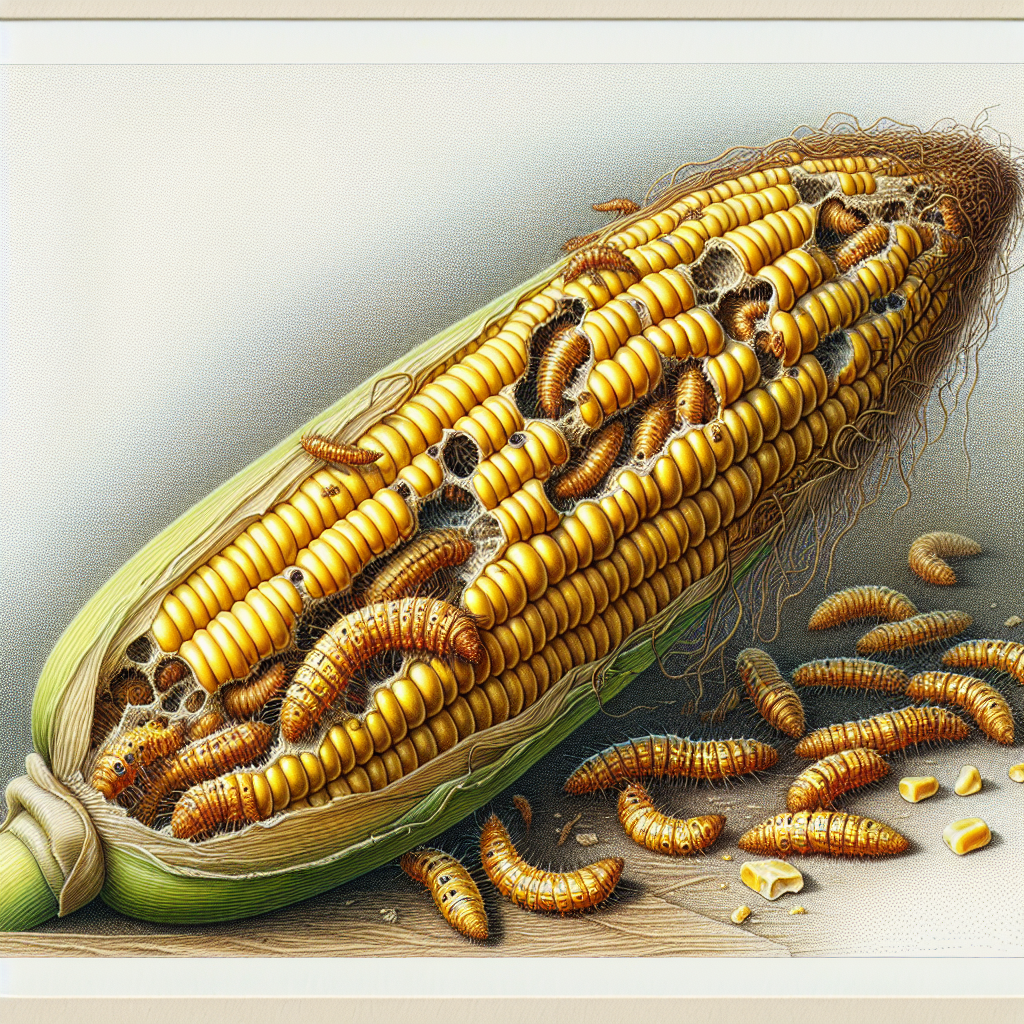
Definitive Diagnostic and Management Guide for Kernel-Feeding Insects
Introduction to kernel-feeding insects
Kernel-feeding insects represent a critical threat to grain production worldwide, targeting the most valuable part of cereal crops: the kernels themselves. These pests encompass a range of species from the orders Lepidoptera (moths and butterflies) and Coleoptera (beetles), including notorious invaders like the Corn Earworm (Helicoverpa zea), European Corn Borer (Ostrinia nubilalis), and various weevils such as the maize weevil (Sitophilus zeamais). Unlike foliar feeders that damage leaves, kernel-feeders bore into ears, cobs, or heads, consuming endosperm and germ, which directly reduces grain weight, quality, and market value.
In major grain belts from the U.S. Corn Belt to sub-Saharan Africa and Asia's rice paddies, these insects can cause 10-30% yield losses annually without intervention. Their impact extends beyond quantity; contaminated grains with frass (insect waste), mold from entry wounds, and mycotoxins like aflatoxins render harvests unsellable. For small-scale farmers and large operations alike, understanding kernel-feeders is essential for sustainable agriculture. Early detection prevents escalation, while integrated pest management (IPM) minimizes chemical use. This guide provides professional-grade diagnostics, lifecycle insights, and actionable organic strategies to safeguard your corn, wheat, and rice crops. Read our comprehensive Spring Pest Patrol blog post for seasonal prevention tips.
Economic stakes are high: in the U.S. alone, corn earworm and borers cost producers over $1 billion yearly. Climate change exacerbates outbreaks by extending growing seasons and warming nights, favoring pest proliferation. Grains are staple foods and feedstocks; protecting kernels ensures food security and profitability.
Identifying Symptoms & Damage
Spotting kernel-feeding insects early hinges on recognizing subtle signs before severe damage sets in. Initial indicators include small entry holes (1-3 mm) on husks, silks, or bracts, often with silken webbing or frass resembling sawdust. For Corn Earworm, look for clipped silks and larvae (green to pink, up to 2 inches) inside ears; damage starts at the tip, progressing inward.
European Corn Borer creates 'shot-hole' patterns from frass pellets pushed out of tunnels, with sawdust-like casts at bases. Kernels show gouges, shriveling, or hollowing; severe infestations cause ear rots via common rust or ear rots entry. In wheat and rice, kernel-feeders like rice hispa or wheat stem sawfly leave ragged heads, empty glumes, or clipped grains.
Diagnostic steps:
- Scout at tasseling/silking: Pull 20-25 ears/ heads per field; check 10% penetration threshold.
- Frass inspection: Fresh, moist sawdust signals active larvae.
- Kernel assessment: Probe for soft, tunneled grains; count damaged kernels (>5% signals action).
- Secondary signs: Moldy kernels, bird damage (birds), or rodent attraction (rodents) indicate prior feeding.
Damage quantification: Light (1-10% kernels affected) reduces yield 5-15%; heavy (>30%) slashes 50%+. Differentiate from fall armyworm (surface chewing) or sap beetles (fermenting damage). Use a 10x hand lens for eggs/larvae ID. Photos and field notes aid precision.
Lifecycle and Progression of kernel-feeding insects
Kernel-feeders exhibit 2-4 generations per season, synced to crop phenology. Take European Corn Borer: Eggs laid on silks (10-50/female), hatch in 3-7 days (80-85°F). Larvae feed 2-3 weeks, tunneling kernels, then pupate in stalks/cobs. Moths emerge 10-14 days later, repeating until overwintering as larvae.
Corn Earworm is more prolific (500-3000 eggs/moth), with larvae maturing in 14-25 days across 6 instars. Pupae in soil; adults migrate long distances. Weevils (Sitophilus spp.) are complete metamorphosis: Eggs in grains, larvae internal feeders, adults emerge to infest storage (storage beetles).
Progression timeline:
- Egg stage: 2-10 days; monitor silks pre-tassel.
- Larval: Peak damage; 2-4 weeks.
- Pupal: 7-14 days, soil/crop residue.
- Adult: Dispersal, oviposition.
Overwinter in debris; spring tillage disrupts. Heat units (DD) predict flights: 600-800 DD for first generation. Sticky traps track adults; thresholds guide action.
Environmental Triggers & Risk Factors
Warm temperatures (75-90°F), humidity >70%, and drought stress trigger outbreaks. Continuous corn monoculture builds populations; nearby sorghum or sweet corn serves reservoirs. Poor husk cover (hybrids) exposes silks; high N-fertility boosts larval survival.
Risk factors:
- Weather: >20" summer rain favors northern corn leaf blight synergism.
- Crop rotation: <2-year corn break doubles risk.
- Refuges: Bt corn mismanagement selects resistance.
- Weeds/volunteers: Alternate hosts harbor pests.
Climate shifts extend voltinism; scout high-risk zones (field edges, low-lying areas). Soil type (sandy) aids pupal survival.
Organic Control & Treatment Plans
IPM prioritizes organics:
Cultural:
Biological:
- Trichogramma wasps parasitize eggs (release 30k/acre weekly).
- Bt kurstaki (e.g., Dipel) at silking (0.5-1 lb/acre); targets larvae.
- Promote predators: ladybugs, lacewings (lace bugs? No, beneficials).
Mechanical:
- Pheromone traps (50/100 acres).
- Ear tags/wraps with oils.
- Suction harvesters for adults.
Organic sprays:
- Neem/azadirachtin (1-2 gal/acre) disrupts hormones.
- Spinosad (0.1-0.2 oz/gal) for larvae. Apply evenings; rotate modes.
Thresholds: 10% ears with eggs, 5% large larvae. Monitor weekly. For storage, diatomaceous earth + cooling <60°F.
Check Soil Health Mastery blog for resilient soils.
Preventing kernel-feeding insects in the Future
Long-term prevention builds resilience:
- Crop rotation: 2-3 years non-hosts (wheat after corn).
- Resistant varieties: Leptra, VT4PRO corn.
- Sanitation: Destroy volunteers, deep plow.
- Trap crops: Early perimeter corn.
- Refuges: 20% non-Bt for predators.
- Monitoring: Apps for DD, traps.
- Cover crops: Suppress soil pupae.
Annual plans: Pre-plant scouting, fall tillage. Certifications (organic) demand these. Economic injury levels guide ROI.
Crops Most Affected by kernel-feeding insects
Primary: Corn (dent, sweet, popcorn), wheat, rice, sorghum, barley. Secondary: oats, millet, quinoa. Grains with exposed kernels vulnerable; soybeans less so. Global hotspots: Midwest U.S., India rice belts, African maize.
(Word count: 1452)