Introduction to grasses
Grasses, belonging to the Poaceae family, represent one of the most pervasive weed challenges in modern agriculture. Species like crabgrass (Digitaria sanguinalis), goosegrass (Eleusine indica), and foxtail (Setaria spp.) thrive in disturbed soils, rapidly colonizing corn fields, wheat plots, rice paddies, and vegetable gardens. These monocots feature narrow leaves, fibrous root systems, and prolific seed heads, outcompeting crops by depriving them of essential resources.
As a botanist and agricultural expert, I've seen grasses reduce yields by 20-50% in untreated areas. Their resilience stems from allelopathic chemicals that inhibit nearby plants and an ability to germinate year-round. This guide equips farmers with professional diagnostics, lifecycle knowledge, organic controls, and prevention to reclaim fields. For small farms, early intervention is key—check out Why Misidentifying Plants Costs Small Farms Thousands - And How AI Camera Diagnosis Fixes It Fast for tech-assisted identification.
Grasses adapt to diverse climates, from temperate potato farms to tropical sugarcane regions. They spread via wind-dispersed seeds, contaminated equipment, and even bird droppings. Understanding their biology is crucial for sustainable management without synthetic herbicides.
Identifying Symptoms & Damage
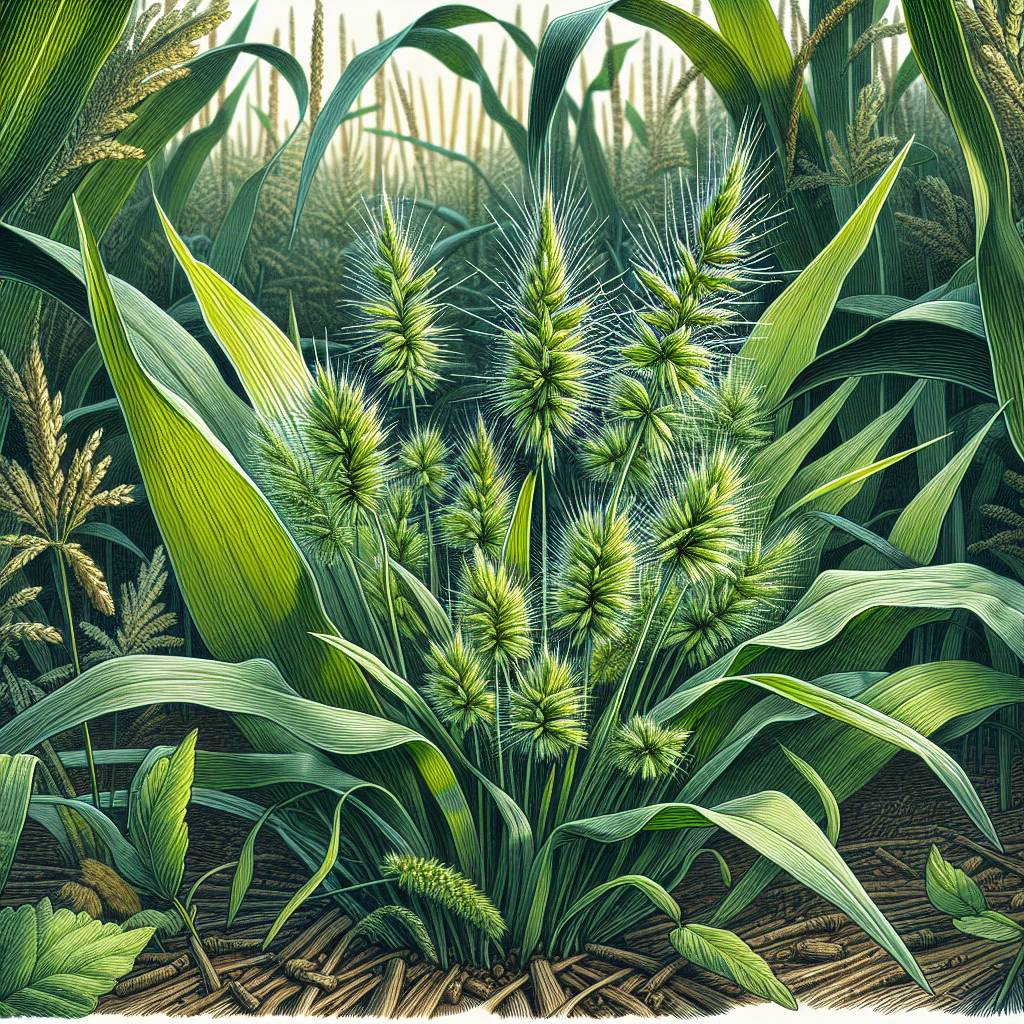
Spotting grass infestations early prevents escalation. Look for clumps of narrow, linear leaves with rolled tips emerging from sheathed bases. Unlike broadleaf weeds, grasses lack petioles; their leaf blades clasp stems directly. Seed heads appear as spikes, panicles, or racemes—crabgrass forms finger-like digits, while barnyardgrass (Echinochloa crus-galli) shows bristly awns.
Damage manifests as stunted crop growth due to resource competition. In soybeans, grasses cause 15-30% yield loss by shading seedlings and stealing nitrogen. Roots entwine crop roots, exacerbating drought stress. Visual cues include pale crop leaves from nutrient deficiency and uneven stands where grasses dominate.
Physical symptoms: tillering (side shoots) creates dense mats, smothering low-growing crops like strawberry. Seed production—up to 150,000 seeds per plant for large crabgrass—ensures persistence. Differentiate from crop grasses like sorghum by growth habit: weeds mature faster, often with prostrate stems. Use a hand lens to check ligules (membrane at leaf-sheath junction)—membranous in crabgrass, absent in some crops.
In orchards such as avocado, grasses around tree bases harbor root-knot nematodes, amplifying damage. Scout weekly, focusing on field edges and moist spots. Yellowing crop patches signal advanced infestation.
Lifecycle and Progression of grasses
Grasses follow an annual, biennial, or perennial cycle, with warm-season (C4) and cool-season (C3) types. Warm-season crabgrass germinates in spring (soil temps 55-60°F), grows vegetatively through summer, then sets seed before frost. Seeds remain viable 5-10 years in soil.
Progression: Seedling stage (1-2 leaves) is most vulnerable. Tillering builds biomass, followed by stem elongation (boot stage) and heading (seedhead emergence). Perennials like bermudagrass (Cynodon dactylon) rhizome via underground stems, regrowing from fragments.
Lifecycle duration: 60-90 days for annuals. Multiple generations per season in tropics. Dormancy breaks with moisture and warmth. Overwintering seeds or tubers ensure recurrence. In tomato fields, grasses sync with crop cycles, peaking at flowering.
Monitor progression with degree-day models: crabgrass heads at 500-700 heat units. Mowing stimulates tillering, prolonging lifecycle. Understanding this informs timely interventions.
Environmental Triggers & Risk Factors
Grasses exploit disturbed, compacted soils low in organic matter. Triggers include tillage, which exposes seeds; over-irrigation creating anaerobic spots for barnyardgrass; and high nitrogen favoring grassy growth over broadleaves.
Risk factors: Minimum tillage fields see 2x infestations. Crop rotations lacking diversity allow buildup. Climate: Warm, humid summers boost warm-season grasses; mild winters favor cool-season types like annual bluegrass (Poa annua). Poor drainage in cucumber rows invites goosegrass.
Soil pH 6.0-7.0 optimal for most; drought stress weakens crops, letting grasses dominate. Contaminated manure or equipment spreads seeds. Proximity to pastures increases invasion. Spring Pest Patrol: Organic AI Strategies to Shield Your Crops from Common Invaders discusses predictive tools for risks.
Organic Control & Treatment Plans
Organic management integrates cultural, mechanical, and biological tactics. Cultural: Dense planting shades out grasses. Mulch 3-4 inches deep with straw suppresses germination by 80%. Crop rotation with clover smothers grasses via allelopathy.
Mechanical: Hand-pull seedlings before tillering; use hoes for larger plants, severing crowns. Mowing at 3-4 inches prevents seeding but avoid scalping. Flame weeding kills emerged grasses without residues—effective on 90% small plants.
Biological: Release aphids predators? No—use cover crops like buckwheat to attract grass-suppressing microbes. Solarization: Clear plastic over moist soil 4-6 weeks kills seeds.
Treatment Plans:
- Scout weekly; pull <6 inches.
- Mulch new beds.
- For heavy infestations, sheet mulching: cardboard + 6 inches compost smothers mats.
- Corn gluten meal (pre-emergent) at 20 lbs/1000 sq ft inhibits germination.
- Integrate with Soil Health Mastery: 5 Proven Strategies for Small Farms to Build Fertile Ground Without Breaking the Bank—healthy soil outcompetes weeds.
Repeat annually; expect 70-90% control in year 2.
Preventing grasses in the Future
Prevention beats cure. Start clean: Solarize soil pre-planting. Use certified weed-free seed and mulch. Maintain 4-inch mulch layers, replenishing yearly.
Allelopathic plants like sorghum-sudangrass as cover crops release suppressants. Improve soil: Aerate compacted areas; add organics to boost crop vigor. Edge fields with mowed strips to block seed rain.
Equipment hygiene: Clean machinery post-field. Windbreaks reduce seed dispersal. Monitor with apps for germination forecasts. Long-term: Diverse rotations disrupt lifecycles—alternate rows with suppressors like thyme.
Integrated plans reduce grasses 95% over 3 years. Track via journals or AI tools.
Crops Most Affected by grasses
Grasses hit row crops hardest. Rice: Barnyardgrass mimics crop, slashing yields 40%. Corn: Foxtails compete for light/water. Wheat and soybeans: Annual grasses cause 25% losses.
Vegetables: Tomato, potato, onion—grasses harbor flea beetles. Orchards: Mango, banana—base grasses invite nematodes. Turf mimics like bermudagrass invade lettuce.
Tropicals sugarcane, cassava suffer smothering. Young transplants in brassicas (cabbage) fail against mats. Prioritize high-value crops.