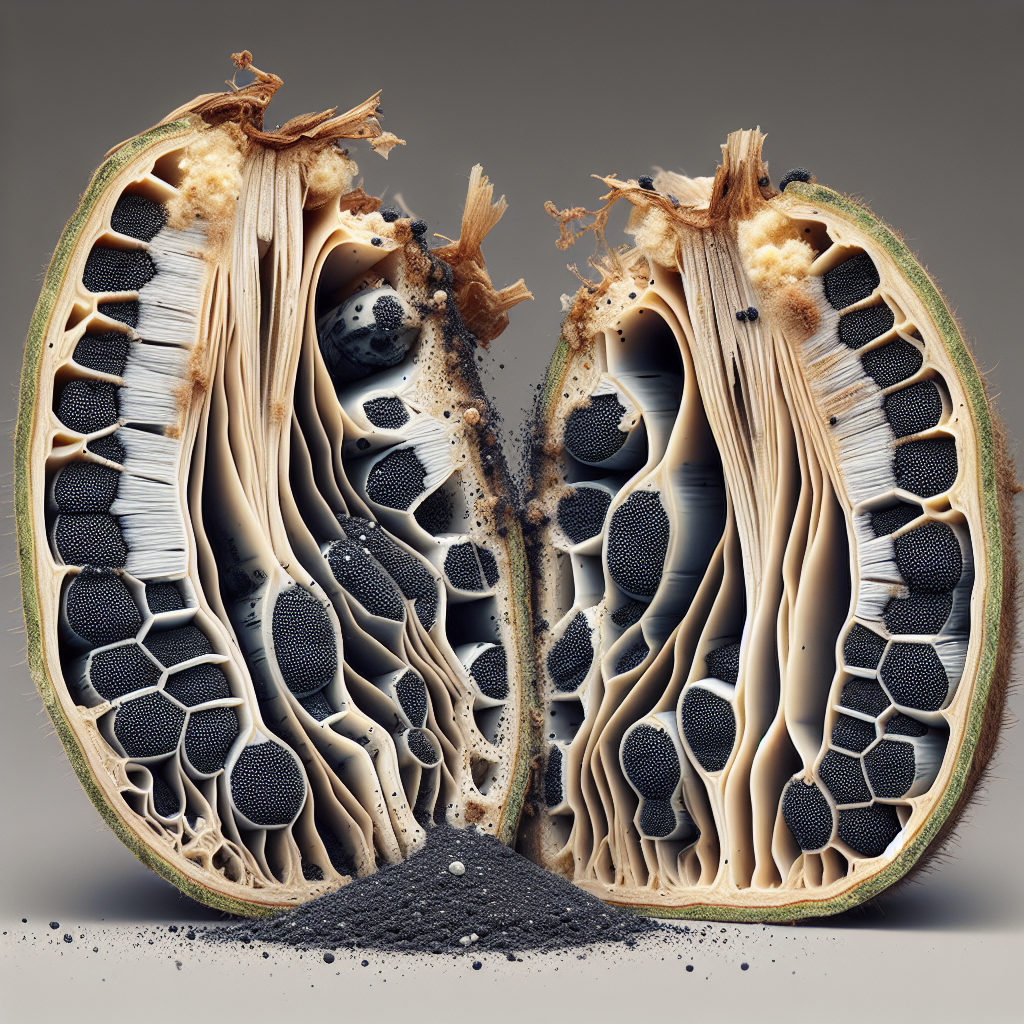
Introduction to charcoal rot
Charcoal rot, caused by the soilborne fungus Macrophomina phaseolina, represents one of the most challenging diseases in tropical and subtropical agriculture. This pathogen persists in soil for years as tiny black sclerotia, resilient structures that allow it to survive harsh conditions and infect new crops. Farmers worldwide lose billions in yields annually, particularly in soybeans, corn, and sorghum, where drought stress exacerbates its impact.
The disease derives its name from the powdery, charcoal-like appearance of infected tissues, where countless microsclerotia (fungal survival bodies) embed in the vascular system. Unlike many foliar diseases, charcoal rot strikes underground, often going unnoticed until wilting and lodging occur late in the season. Early detection is rare, making prevention critical. This guide provides professional-grade diagnostic tools, lifecycle insights, and organic management plans to safeguard your fields. Understanding M. phaseolina's biology empowers growers to implement targeted strategies, reducing incidence by up to 70% through integrated practices.
Identifying Symptoms & Damage
Recognizing charcoal rot requires vigilance, especially during reproductive stages when symptoms peak. Initial signs include premature yellowing and wilting of lower leaves, mimicking drought or Fusarium wilt. Unlike vascular wilts, affected plants do not recover with irrigation; instead, they exhibit rapid canopy dieback from the base upward.
Examine roots and lower stems for the hallmark: shredding of the cortex, exposing a black, powdery rot. Microsclerotia give stems a 'charcoal-dusted' look, easily rubbed off to reveal blackened vascular bundles. In severe cases, entire root systems disintegrate, leaving stubby, decayed remnants. Stems may show cankers with cracked, sunken lesions.
Yield losses vary by crop: in soybeans, pod fill drops 30-50%, with small, aborted seeds; corn stalks lodge, causing 20-40% harvest losses. Cut stems lengthwise to confirm—healthy white pith contrasts with charcoal rot's gray-black discoloration. Differentiate from root rot or southern blight by microsclerotia size (20-40 microns) under 10x magnification. Field edges and stressed plants show first, spreading inward under prolonged heat.
Lifecycle and Progression of charcoal rot
Macrophomina phaseolina thrives as a facultative parasite, infecting via hyphae or microsclerotia in soil. Sclerotia, numbering millions per gram of infected tissue, remain viable 3+ years, germinating in response to root exudates. Infection occurs at soil line or wounds, with optimal temps 28-35°C (82-95°F).
Progression spans crop cycles: dormant sclerotia activate in warm, dry soil (moisture <20%). Hyphae penetrate roots, colonizing xylem and producing toxins that block water flow. During grain fill, plants girdle, producing more sclerotia in dead tissue. Unlike Rhizoctonia, it favors low moisture, peaking post-flowering.
The polycyclic lifecycle amplifies via crop debris; one infected plant yields 10^6 sclerotia, building inoculum. No sexual stage known; asexual microsclerotia disseminate via windblown soil, machinery, or floods. In sorghum, stalk pith first turns tan, then blackens. Disease cycles intensify with monocropping, requiring rotation to disrupt.
Environmental Triggers & Risk Factors
Charcoal rot explodes under specific stressors: temperatures above 30°C combined with drought. Soil moisture below 15% triggers infection, as weakened plants can't resist. Poor drainage, compacted soils, and low fertility (especially nitrogen deficiency) heighten susceptibility.
High plant populations increase humidity microclimates, aiding spread. Flooding paradoxically worsens long-term by splashing sclerotia. Risk soars in sandy, low-organic-matter soils (pH 6.5-8.0). Monoculture of hosts like soybeans or cotton builds inoculum; continuous cropping doubles incidence.
Nematode co-infections (root-knot nematodes) predispose roots. Late planting delays maturity, exposing crops to peak heat. Learn more about Soil Health Mastery: 5 Proven Strategies for Small Farms to Build Fertile Ground Without Breaking the Bank to mitigate these triggers.
Organic Control & Treatment Plans
No cure exists for established charcoal rot; focus on suppression. Start with deep tillage (8-12 inches) post-harvest to bury sclerotia beyond germination zone. Crop rotation (3-4 years) with non-hosts like grasses or onion reduces inoculum 50-80%.
Organic amendments shine: solarization (clear plastic, 6-8 weeks summer) heats soil to 50°C, killing 90% sclerotia. Mustard biofumigation releases isothiocyanates suppressing M. phaseolina. Apply biocontrols like Trichoderma viride (10g/kg seed) or Pseudomonas fluorescens drenches (5kg/ha).
Boost resilience: balanced nutrition (adequate K, 100-150kg/ha) and early planting evade peak heat. Mulch conserves moisture, reducing stress. In-furrow compost teas with molasses feed antagonists. For soybeans, seed-treat with Trichoderma; foliar micronutrients (Mn, Zn) limit toxin effects. Monitor with baiting assays; rogue infected plants. Integrated plans cut losses 60%.
Preventing charcoal rot in the Future
Prevention trumps reaction. Select resistant varieties: 'Pioneer 93B01' soybean, 'DKC 67-15' corn. Scout weekly during pod set; use soil tests for inoculum levels (>50 sclerotia/g signals high risk).
Enhance soil biology: cover crops (clover) fix N, suppress via allelopathy. Avoid over-irrigation; deficit strategies (70% ETc) minimize microsclerotia. Eradicate volunteers harboring pathogen. Sanitize equipment to halt spread.
Long-term: diversify rotations, incorporating brassicas for biofumigation. Organic matter >3% binds sclerotia. Why Misidentifying Plants Costs Small Farms Thousands - And How AI Camera Diagnosis Fixes It Fast ([/blog/why-misidentifying-plants-costs-small-farms-thousands-and-how-ai-camera-diagnosis-fixes-it-fast]) aids early detection. Annual audits track progress; aim for <10% incidence.
Crops Most Affected by charcoal rot
Over 500 species host M. phaseolina, but legumes and grains suffer most. Top victims: soybeans (20-50% losses), corn, sorghum, cotton, peanuts. Warm-season crops like sweet potato, cassava, and sugarcane follow.
Vegetables include tomato, eggplant, okra. Tree crops: mango, avocado. In tropics, chickpeas and cowpea yield crashes. Regional hotspots: US Midwest soybeans, Indian cotton, African sorghum. Rotation with wheat or rice breaks cycles.