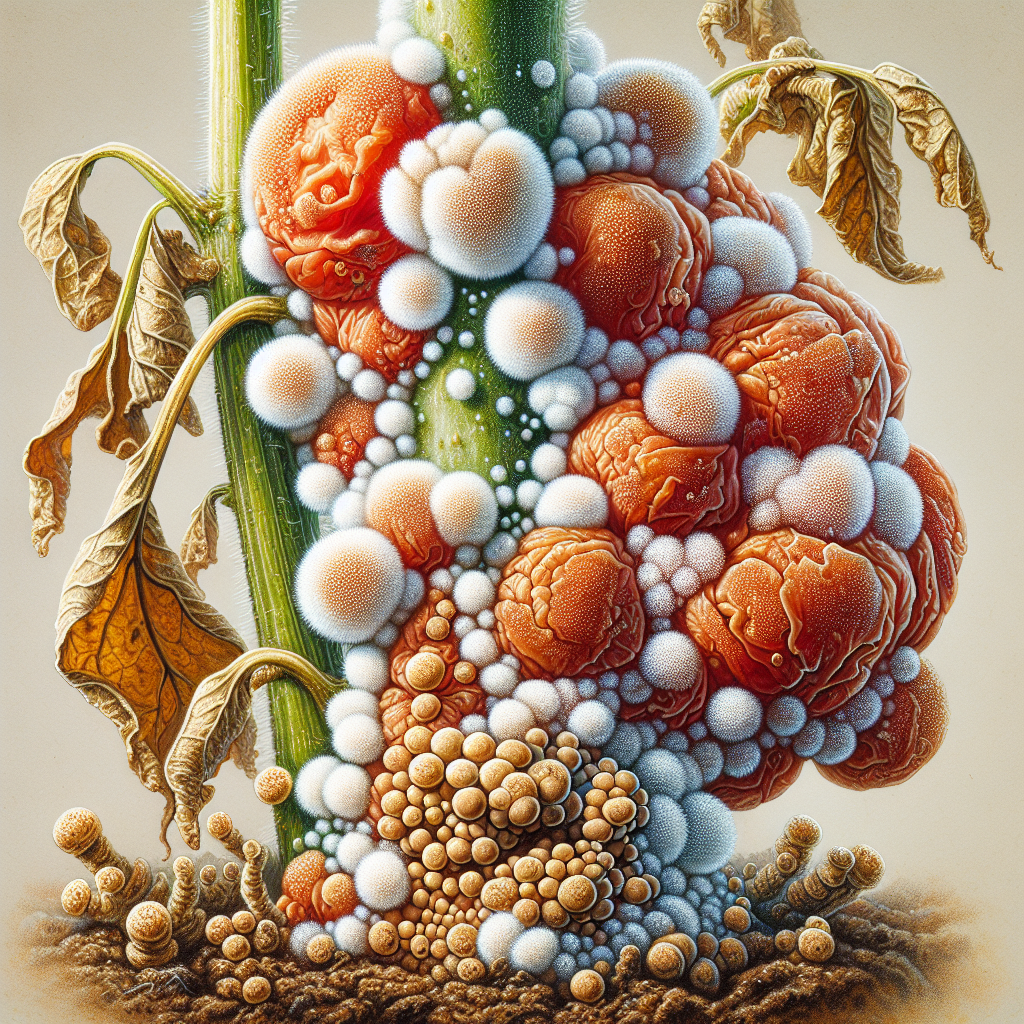
Introduction to southern blight
Southern blight, caused by the soilborne fungus Sclerotium rolfsii (teleomorph: Athelia rolfsii), is one of the most devastating diseases impacting vegetable, fruit, and ornamental crops worldwide, particularly in tropical and subtropical regions. First identified in the southern United States—hence its name—this pathogen attacks over 500 plant species, causing severe root rot, stem lesions, and plant collapse. Farmers often discover it too late, as symptoms mimic drought stress or root rot, leading to significant yield losses of up to 50-100% in susceptible crops like tomatoes and peanuts.
The fungus produces small, tan to reddish-brown sclerotia (survival structures) that persist in soil for years, making eradication challenging. Unlike many foliar diseases, southern blight targets the lower plant parts, entering through wounds or natural openings. In intensive agriculture, it spreads rapidly via contaminated soil, equipment, or irrigation water. Early diagnosis and integrated management are crucial for minimizing damage. This guide provides professional-grade diagnostic criteria, lifecycle insights, and organic strategies tailored for small farms and commercial operations. For real-world case studies on similar soil pathogens, check this comprehensive blog on soil health mastery.
Understanding southern blight's biology empowers growers to implement preventive measures, reducing reliance on chemical fungicides. With climate change increasing temperatures and humidity, this disease is expanding into new areas, demanding vigilant monitoring.
Identifying Symptoms & Damage
Accurate identification is the cornerstone of managing southern blight. Symptoms typically appear during warm weather (above 25°C/77°F), starting at the soil line and progressing upward. Key diagnostic signs include:
- Water-soaked lesions: Brown to reddish-brown lesions on lower stems or crowns, often with a shredded or cracked appearance as the fungus advances. Lesions girdle the stem, interrupting vascular flow.
- Wilting and yellowing: Sudden wilting of foliage despite adequate moisture, resembling drought but confined to individual plants or patches. Leaves turn yellow, then brown and necrotic.
- Sclerotia presence: Hallmark diagnostic feature—small (0.5-1.5 mm), round, mustard seed-like sclerotia form on infected tissues, roots, and surrounding soil. Initially white, they mature to tan or reddish-brown.
- White mycelium: In humid conditions, abundant white, cottony fungal mycelium radiates from lesions, sometimes 30-60 cm across, connecting multiple plants.
- Root decay: Extensive rotting of roots and fibrous tissues, rendering them brittle and non-functional.
Damage severity varies by crop stage: seedlings suffer damping-off, mature plants experience basal rot leading to collapse. In tomato fields, fruits near the ground may rot secondarily. Differentiate from Phytophthora (darker lesions, no sclerotia) or Rhizoctonia (web-like mycelium, brick-red sclerotia). Confirm via lab culture: sclerotia germinate on potato dextrose agar, producing characteristic hyphae.
Scout fields weekly during peak risk periods, focusing on low-lying areas. Yield losses can exceed 70% in peanuts or beans if unchecked. Document patterns for future prevention.
Lifecycle and Progression of southern blight
Sclerotium rolfsii has a complex lifecycle optimized for survival and rapid infection in warm, moist soils. The pathogen overwinters as sclerotia, which remain viable for 2-5 years (up to 10 in dry conditions). These hardy structures germinate under favorable conditions, producing mycelium and infection hyphae.
- Dormancy: Sclerotia in soil or crop debris.
- Germination: Triggered by moisture and temperatures 28-35°C (82-95°F). Mycelium grows rapidly, up to 10 cm/day.
- Infection: Hyphae penetrate roots/stems via wounds or directly. Enzymes degrade plant tissues.
- Colonization: White mycelium spreads, producing oxalic acid to kill host cells and sclerotia on lesions.
- Sporulation: Basidiospores form on aerial mycelium but are secondary; soil contact is primary spread.
Progression is explosive: from infection to plant death in 3-7 days. Multiple cycles per season amplify epidemics. Sclerotia form profusely (thousands per plant), contaminating soil for future crops.
Environmental Triggers & Risk Factors
Southern blight thrives in specific conditions, making risk prediction essential:
- Temperature: Optimal 30-35°C (86-95°F); inactive below 15°C (59°F).
- Moisture: High humidity (>80%) and wet soils promote germination; poor drainage exacerbates.
- Soil factors: Acidic soils (pH <6), high organic matter, compacted or waterlogged areas.
- Cultural practices: Close plant spacing, excessive nitrogen, overhead irrigation, no crop rotation.
- Weed hosts: Many weeds like nightshades harbor sclerotia.
Risk spikes after legumes or solanaceous crops. In peanuts, double-cropping increases incidence. Climate data shows rising outbreaks with warmer summers.
Organic Control & Treatment Plans
No cure exists post-infection; focus on suppression. Organic plans emphasize sanitation and bio-controls:
- Sanitation: Remove and destroy infected plants immediately. Deep plow (20-30 cm) to bury sclerotia.
- Soil solarization: Cover moist soil with clear plastic for 4-6 weeks in summer (kills 70-90% sclerotia).
- Biofumigation: Plant mustard or cabbage as green manures; biofumigants suppress fungi.
- Biologicals: Apply Trichoderma viride or Pseudomonas fluorescens (10^9 CFU/g) at planting; repeat every 21 days.
- Organic amendments: Incorporate lime (raise pH to 7+), mustard seed meal, or compost teas to antagonize pathogen.
- Mulching: Use solarized or pathogen-free mulch to block splash dispersal.
- Resistant varieties: Select tolerant cultivars where available (e.g., certain sweet potato lines).
Integrated plan: Pre-plant solarize, amend with Trichoderma, rotate with non-hosts like corn (3 years). Monitor with baiting assays. For small farms, these methods cut losses by 60-80% without synthetics.
Preventing southern blight in the Future
Prevention trumps control:
- Crop rotation: 3-4 years with grasses (e.g., wheat, sorghum).
- Site selection: Avoid low spots; improve drainage with beds.
- Resistant practices: Wide spacing, drip irrigation, balanced fertility.
- Weed control: Eliminate hosts.
- Clean inputs: Sterilize tools, use disease-free transplants/seed.
- Monitoring: Use soil tests for sclerotia counts.
Long-term: Build soil microbial diversity via cover crops like clover. Annual solarization + rotation yields >90% control.
Crops Most Affected by southern blight
Southern blight hits warm-season crops hardest:
- Legumes: Peanuts (up to 100% loss), soybeans, chickpeas.
- Solanaceae: Tomato, potato, eggplant, bell pepper.
- Others: Sweet potato, onion, strawberry, watermelon, cotton, turfgrasses.
In the U.S. South, peanuts and tomatoes suffer most; globally, it ravages vegetables in Asia/Africa. Avoid susceptible sequences in rotation.