Introduction to cowpea
Cowpea (Vigna unguiculata) is a drought-tolerant legume cultivated across tropical and subtropical regions for its protein-rich seeds, tender pods, and nutritious foliage. Despite its resilience, the crop faces persistent threats from insect pests and diseases that attack at every growth stage, from seedling emergence through post-harvest storage. Effective management requires accurate identification, understanding of pest lifecycles, and integration of cultural, biological, and chemical tactics.
Identifying Symptoms & Damage
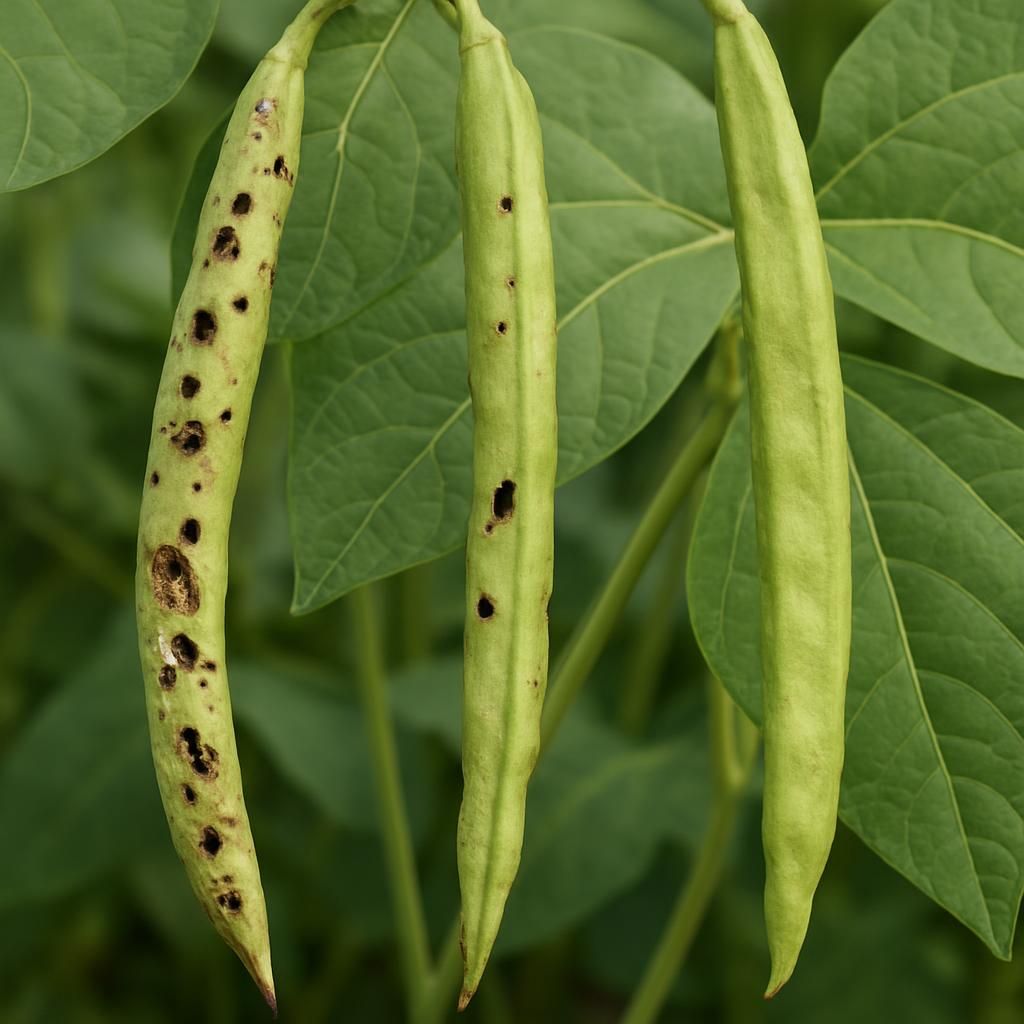
Foliar damage appears as irregular holes, skeletonized leaves, or stippling caused by chewing and sucking insects. Pod damage manifests as entry holes, frass, and malformed seeds, while root and stem symptoms include wilting, stunting, and lesions from soil-borne pathogens. Early scouting is essential because many pests, such as Pod borers and Bruchids, cause hidden internal damage that becomes obvious only at harvest.
Lifecycle and Progression of cowpea
The progression of cowpea from seed to storage is closely tied to seasonal temperatures and rainfall patterns. Key stages are summarized below.
| Stage | Duration | Key Characteristics | Common Pests/Diseases |
|---|---|---|---|
| Germination & Seedling | 5–10 days | Radicle emergence, first true leaves | Bean flies, damping-off fungi |
| Vegetative Growth | 20–40 days | Rapid leaf expansion, branching | Aphids, Thrips, Jassids |
| Flowering & Pod Set | 10–20 days | Bloom initiation, young pods | Helicoverpa species, Pod-sucking bugs |
| Pod Filling & Maturity | 15–25 days | Seed development, pod drying | Pod borers, Stink bugs |
| Harvest & Storage | Ongoing | Dry seed collection, storage | Bruchids, Storage Beetles |
Environmental Triggers & Risk Factors
Warm temperatures (25–35 °C) and moderate humidity accelerate insect reproduction and fungal sporulation. Sandy or low-organic-matter soils increase susceptibility to Root-knot nematodes and seedling diseases. Monoculture planting and poor sanitation allow pest populations to build across seasons. Late planting that coincides with peak pest flights further elevates risk.
Organic Control & Treatment Plans
An integrated approach combines cultural sanitation, biological agents, and approved organic inputs. The table below outlines recommended treatments and application frequencies.
| Treatment Option | Active Ingredient / Organism | Target Pests | Application Frequency | Notes |
|---|---|---|---|---|
| Neem oil spray | Azadirachtin | Aphids, thrips, pod borers | Every 7–10 days at first sign | Apply in evening; rotate with other products |
| Bacillus thuringiensis (Bt) | Bt kurstaki | Helicoverpa, pod borers | Every 5–7 days during flowering | Target small larvae; good coverage essential |
| Trichogramma wasps | Trichogramma spp. | Helicoverpa eggs | Release weekly during peak flight | 50,000–100,000 per hectare |
| Spinosad | Spinosad | Thrips, caterpillars | Every 7–14 days | OMRI-listed; avoid during bloom if possible |
| Kaolin clay | Surround WP | Sucking insects, leafhoppers | Every 7–10 days | Creates physical barrier; reapply after rain |
| Beneficial nematodes | Steinernema carpocapsae | Soil-dwelling larvae | At planting and mid-season | Apply to moist soil in late afternoon |
Preventing cowpea in the Future
Rotate cowpea with non-host crops such as Corn or Sorghum for at least two seasons. Use certified seed treated with approved protectants and destroy crop residue immediately after harvest. Implement timely planting to avoid peak pest activity and maintain field sanitation by removing volunteer plants. The Overlooked Art of Crop Rotation for Small Farm Resilience provides additional guidance on designing resilient rotation sequences.
Crops Most Affected by cowpea
While the primary host is cowpea itself, related legumes experience similar pest complexes. Chickpeas, Lentils, Peas, Peanuts, Soybeans, Mung Bean, and Black Eyed Peas frequently suffer overlapping infestations of pod borers, aphids, and bruchids when grown in proximity or rotation with cowpea.