Introduction to Casuarina
Casuarina, often referred to as Australian pine, beefwood, or she-oak (primarily Casuarina equisetifolia and related species), is a fast-growing evergreen tree native to Australia and Southeast Asia. While valued in some regions for windbreaks, erosion control, and timber, it has become a notorious invasive pest in agricultural landscapes worldwide, particularly in tropical and subtropical areas like Florida, Hawaii, the Caribbean, and parts of Africa. In farming contexts, Casuarina disrupts ecosystems by outcompeting native vegetation, altering soil chemistry through allelopathic chemicals, and serving as a host for pests such as the Casuarina psyllid (Heteralgalma casuarinae), which can spill over to nearby crops.
This definitive guide equips farmers, agronomists, and growers with professional-grade diagnostics and management strategies for Casuarina infestations. Understanding its role as a 'pest tree' is crucial, as unchecked growth can reduce crop yields by 30-50% in affected fields through shading, nutrient depletion, and increased pest pressure. Early identification and intervention are key to reclaiming productive land. For more on common invasive pests, see our detailed entry on aphids. Organic approaches emphasized here align with sustainable agriculture, minimizing chemical use while maximizing long-term soil health. Check out this insightful blog on Why 90% of Small Farms Fail at Pest Management - And 8 Organic Fixes That Actually Work for broader strategies.
Casuarina's needle-like branchlets mimic pine needles but belong to the Casuarinaceae family, lacking true leaves. It fixes nitrogen via symbiotic actinorhiza bacteria, giving it a competitive edge in poor soils, which exacerbates its invasiveness near farms growing mango, avocado, or citrus crops. Annual economic losses from Casuarina invasion in susceptible regions exceed millions, underscoring the need for vigilant management.
Identifying Symptoms & Damage
Diagnosing Casuarina impact requires distinguishing its direct invasion from secondary effects like psyllid infestations or soil degradation. Primary symptoms include dense thickets encroaching on field edges, casting heavy shade that stunts crop growth. Look for tall (up to 100 feet), slender trees with drooping, pine-like branchlets that rustle in wind, producing copious dry litter that smothers seedlings.
Visual Damage Indicators:
- Shading and Competition: Crops show elongated stems, pale leaves (etiolation), and reduced yields. Tomato plants nearby exhibit 20-40% smaller fruits due to light interception.
- Allelopathy: Soil under Casuarina turns barren; crops like corn or squash fail to germinate or develop yellowing leaves from phenolic compounds inhibiting root growth.
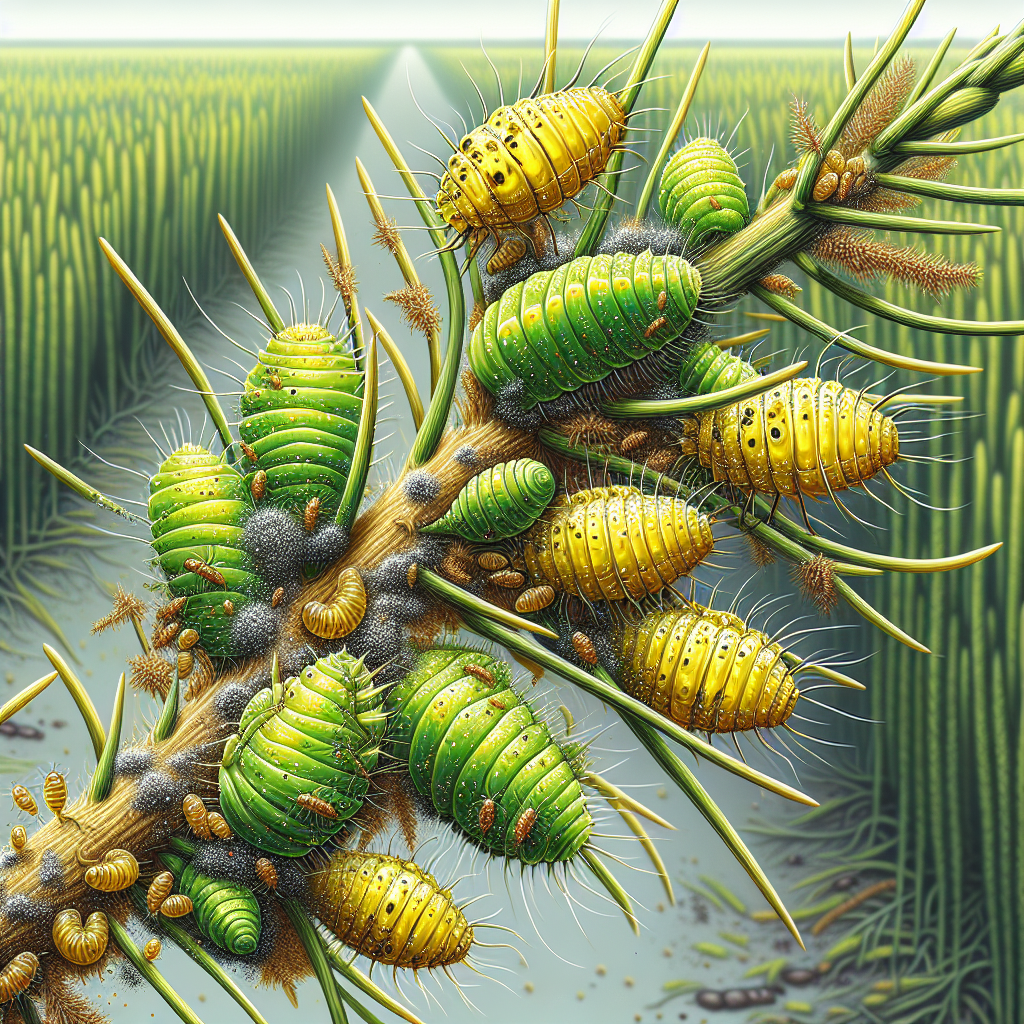
- Psyllid Infestations: Tiny (2-3mm) yellow-green jumping insects on branchlets cause gall-like swellings, honeydew, and sooty mold. Spillover affects citrus leafminer-similar damage on nearby lemon or orange trees.
Advanced Diagnostics:
- Scrape branchlets: Casuarina has green, photosynthetic cladodes without true needles.
- Soil test: High nitrogen but low pH and suppressed microbes.
- Psyllid ID: Nymphs produce white waxy filaments; adults hop when disturbed.
Damage quantification: In a 1-acre pineapple field, Casuarina invasion can reduce yields by 25% via shading alone, plus 10% from psyllid-vectored stress. Differentiate from drought: Casuarina-affected plants show uneven wilting toward invasion edges.
Lifecycle and Progression of Casuarina
Casuarina's lifecycle is adapted for rapid invasion, completing generations in 1-2 years while trees mature in 5-10 years. Seeds (samaras) are wind-dispersed up to 300 meters, germinating in disturbed soils within 7-14 days.
Key Stages:
- Seed Phase (0-3 months): High germination (80%) in sandy, nitrogen-poor soils; seedlings drought-tolerant.
- Juvenile (1-5 years): Explosive growth (6-10 ft/year), forming thickets.
- Mature Tree (5+ years): Cones produce 50,000+ seeds/tree/year; nitrogen fixation boosts competitiveness.
- Psyllid Cycle (associated pest): Eggs laid on branchlets → nymphs (4 instars, 2-3 weeks) → adults (overwinter). Peaks in spring/summer, 3-5 generations/year.
Progression in farms: Year 1 - edge colonization; Year 3 - 50% field shading; Year 5 - total crop failure without intervention. Psyllids amplify damage in humid tropics, moving to guava or papaya. Monitor via transect sampling: >5 psyllids/branch signals outbreak.
Environmental Triggers & Risk Factors
Casuarina thrives in USDA zones 9-11, triggered by:
- Soil Disturbance: Tillage, fire, or hurricanes create seedbeds.
- Climate: 70-90°F, 40+ inches rain; salt-tolerant for coastal farms.
- Proximity: Windbreaks near coconut groves seed fields.
- Poor Management: Overgrazing or monocultures like sugarcane invite invasion.
Risk factors include sandy soils (pH 5.5-7.5), low competition from natives, and psyllid-favorable humidity >70%. High-risk crops: dragon fruit, banana. Drought paradoxically aids seedlings via reduced competition.
Organic Control & Treatment Plans
Organic management prioritizes integrated approaches:
Immediate Actions:
- Mechanical Removal: Cut trees at base, apply organic herbicide (vinegar + citrus oil) to stumps. Mulch debris to prevent resprouting.
- Psyllid Control: Horticultural oils or neem (1-2% solution, weekly sprays). Introduce predatory mites or ladybugs.
Step-by-Step Plan:
- Scout weekly; mark invasion fronts.
- Girdle trunks (remove 2-inch bark ring) for mature trees.
- Solarize soil under cut trees (black plastic, 6 weeks).
- Replant with competitors like marigold or cover crops.
- Psyllid IPM: Reflective mulches, yellow sticky traps (10/acre).
Biologicals: Use Fusarium fungi for root inhibition; encourage birds eating psyllids. Efficacy: 85% control in 2 years with consistent effort. Avoid burning due to seed stimulation.
Preventing Casuarina in the Future
Prevention beats cure:
- Buffer Zones: Maintain 100m cleared strips around fields.
- Crop Rotation: Interplant with allelopathy-resistant clover.
- Monitoring: Drone surveys or ground traps for seeds/psyllids.
- Site Prep: Solarize pre-planting; use mycorrhizal inoculants.
- Community Efforts: Coordinate with neighbors for regional control.
Long-term: Restore biodiversity to outcompete seedlings. Annual costs drop 70% post-establishment.
Crops Most Affected by Casuarina
Casuarina devastates tropical/subtropical crops:
- Fruit Trees: Mango, avocado, citrus - shading/psyllids cause 40% yield loss.
- Field Crops: Sugarcane, pineapple, cassava - soil depletion.
- Vegetables: Tomato, eggplant, cucumber - etiolation/allelopathy.
- Others: Rice paddies near coasts; coffee understories.
Global impact: Hawaii loses $5M/year in papaya; Florida citrus groves invaded.