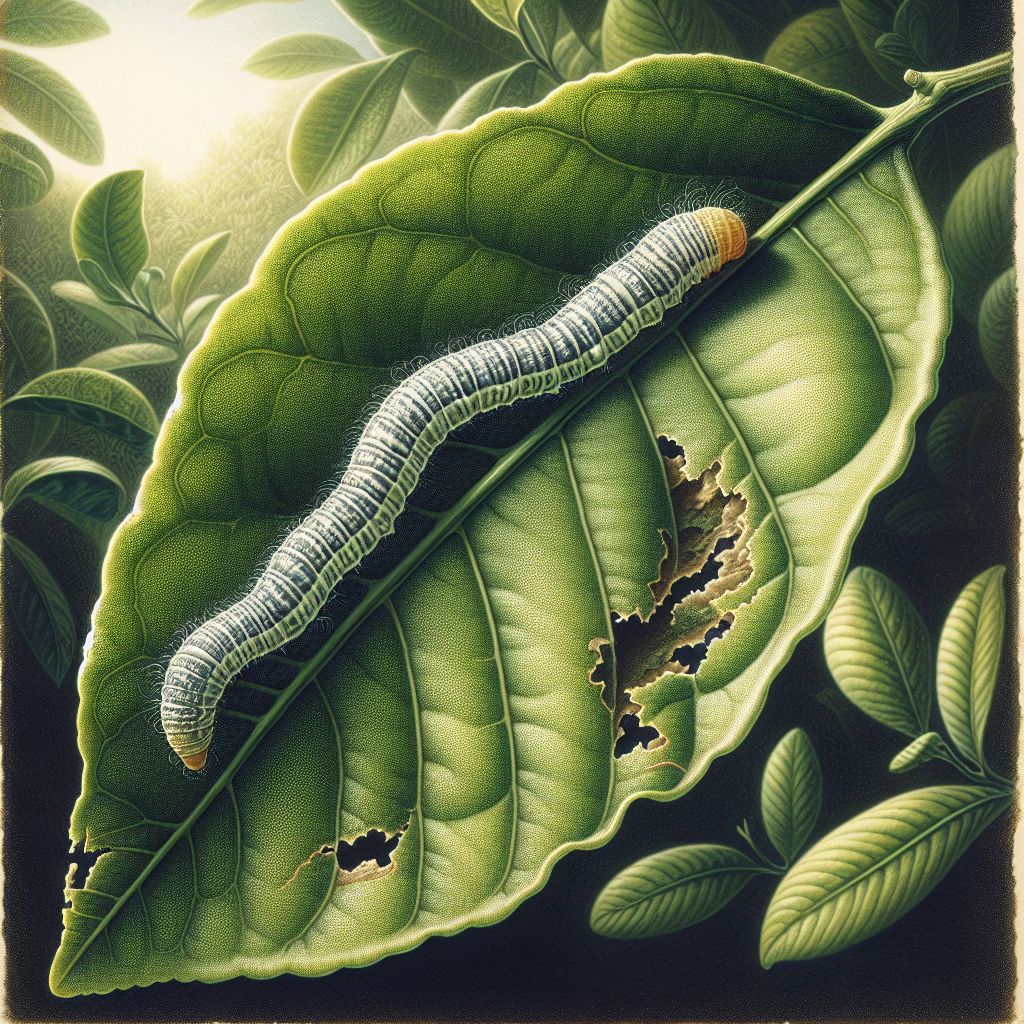
Introduction to Citrus leafminer
Citrus leafminer, scientifically known as Phyllocnistis citrella, is one of the most notorious pests affecting citrus crops worldwide. First identified in China in 1932, this tiny moth has rapidly expanded its range, invading citrus-growing regions from Florida to California, Australia, and the Mediterranean. The larvae tunnel into tender new leaves, creating distinctive silvery trails that distort growth and open doors for secondary infections. While adult moths are barely noticeable at 2-3 mm long with silvery-white wings fringed with black, their damage can slash yields by up to 30-50% in severe infestations, particularly on young trees.
This pest thrives in warm climates, completing multiple generations per year—up to 12 in subtropical areas. For growers of orange, lemon, and lime trees, early detection is crucial. Unlike larger pests like caterpillars or citrus psyllid, leafminers are insidious, hiding within leaf tissues. This guide provides professional-grade diagnostics, lifecycle insights, organic treatments, and prevention strategies to protect your citrus harvest. Whether managing a small orchard or backyard trees, understanding citrus leafminer empowers proactive defense.
Economic impacts are staggering: in Florida alone, annual losses exceed $100 million, prompting integrated pest management (IPM) programs. Home gardeners face similar woes, with distorted foliage leading to stunted trees and poor fruit quality. Success hinges on timing interventions with the pest's biology, avoiding broad-spectrum sprays that harm beneficial insects.
Identifying Symptoms & Damage
Spotting citrus leafminer early prevents escalation. The hallmark sign is serpentine mining: narrow, winding silver-white trails on new leaves, often with a central green frass line. Mines start as tiny white specks at leaf edges, expanding as larvae feed between upper and lower epidermis. Affected leaves curl, twist, and drop prematurely, giving trees a scorched appearance.
Examine flush growth—tender, light-green shoots—under magnification. Larvae are yellow-orange, legless, up to 3 mm long, visible through translucent mine walls. Pupae form within leaves or on undersides as tiny brown cases. Adults emerge at dusk, laying eggs singly on leaf undersides.
Differentiate from similar damage: mites cause stippling without mines; fungal leaf spots lack trails. Severe infestations blacken leaf tips, reduce photosynthesis, and weaken trees, increasing vulnerability to scale insects or diseases. Young trees suffer most, with 80-100% leaf drop possible. Yield losses correlate with mine density: over 10 mines per leaf demands action.
Diagnostic tips: Use a 10x hand lens. Shake leaves over white paper—frass pellets confirm activity. Monitor weekly during flush cycles. Digital apps aid identification, but field scouting remains gold standard.
Lifecycle and Progression of Citrus leafminer
Understanding the lifecycle is key to timing controls. Eggs (0.1-0.2 mm, flat, white) hatch in 2-3 days at 25-30°C. Larvae mine for 5-10 days, then exit to pupate. Pupal stage lasts 7-10 days; adults live 1-2 weeks, females laying 50-100 eggs.
Full cycle: 15-30 days, accelerating in heat (optimum 27°C). Overlap generations year-round in tropics; 4-8 in temperate zones. Peak activity aligns with spring/summer flushes.
Progression: Eggs on leaf veins → larval mining (instars 1-4) → sap-feeding, tissue destruction → pupation → adult flight at night. Moths avoid light, complicating traps. Overwinter as pupae in fallen leaves.
Generational overlap means constant pressure on new growth. Scout post-flush for eggs. Lifecycle knowledge enables predictive IPM, targeting vulnerable neonate larvae.
Environmental Triggers & Risk Factors
Citrus leafminer flourishes in warm, humid conditions (20-32°C, >60% RH), common in citrus belts. New flush triggers egg-laying; excessive nitrogen promotes succulent growth, attracting females. Over-fertilization, poor pruning, and dense canopies exacerbate infestations.
Risk factors: Imported infested nursery stock; nearby unmanaged citrus. Wind disperses adults up to 1 km. Drought-stressed trees resist better via tougher leaves. Ants farming leafminer (mutualism) worsen outbreaks.
Susceptible varieties: Early-maturing like Valencia orange or Eureka lemon. Young trees <3 years old face highest risk. Climate change extends seasons, boosting populations. Spring Pest Patrol: Organic AI Strategies to Shield Your Crops from Common Invaders highlights predictive tools for outbreaks.
Organic Control & Treatment Plans
Organic management emphasizes IPM: monitor, cultural, biological, targeted organics.
Cultural: Prune infested flush; destroy debris. Time fertilizer to avoid excess N during flush. Reflective mulches deter adults.
Biological: Conserve predators like Ageniaspis citricola wasps (egg parasitoids), lacewings, spiders. Release Citrostichus phyllocnistoides (larval parasitoid) at 1,000-2,000/acre.
Organic Sprays: Neem oil (0.5-2%) smothers eggs/larvae; apply at egg hatch. Spinosad (e.g., Entrust) targets larvae (OMRI-listed); 1-2 oz/gal, 7-day reapply. Bacillus thuringiensis (Bt) var. kurstaki for young larvae. Soap sprays (1-2% insecticidal soap) contact-kill.
Treatment plan: Scout weekly. Threshold: 5-10 mines/leaf. Spray at 20-50% infested flush. Rotate modes to prevent resistance. Evening applications minimize bee impact.
Home remedy: Horticultural oil + neem weekly. Success rates: 70-90% with IPM vs. 40% haphazard spraying.
Preventing Citrus leafminer in the Future
Prevention beats cure. Plant resistant rootstocks (e.g., trifoliate hybrids). Quarantine new trees; inspect for mines. Maintain vigor without lush growth: balanced NPK, drip irrigation.
Physical barriers: 50-mesh screens on young trees. Yellow sticky traps (10/acre) monitor adults. Companion planting with marigold or thyme repels via volatiles.
Sanitation: Shred fallen leaves; mulch to speed decomposition. IPM calendars sync with flushes. For small farms, Why Companion Planting Feels Like Guesswork for Small Farms - And How AI Makes It Foolproof offers tools.
Long-term: Breed tolerant varieties; scout neighbors. Annual audits keep populations below thresholds.
Crops Most Affected by Citrus leafminer
Primarily attacks Rutaceae: citrus genus (Citrus spp.). Top targets:
- Orange (Navel, Valencia): 80% damage on flush.
- Lemon (Eureka, Lisbon): High susceptibility.
- Lime (Persian, Key): Severe on nurseries.
- Grapefruit, mandarin, tangelo.
Secondary: Avocado (minor mines), Kumquat. Not mango or banana.
Commercial impact: Florida oranges lose $1B/decade. Home gardens: Dwarf varieties hit hardest.