Introduction to Brussels sprouts
Brussels sprouts (Brassica oleracea var. gemmifera) are compact, cool-season vegetables prized for their nutty flavor and high nutritional value, including vitamins C and K. However, in agricultural settings, they can pose challenges as an invasive 'pest' crop due to aggressive self-seeding, competition with other plants for nutrients, and serving as a host for devastating brassica pests such as cabbage worms and aphids. Over 1,500 words, this definitive guide equips farmers, gardeners, and agricultural experts with professional-grade diagnostics, lifecycle analysis, organic controls, and prevention strategies to manage Brussels sprouts infestations effectively. Whether you're battling volunteer plants in crop rotations or pests thriving on Brussels sprouts residues, these evidence-based methods ensure healthy fields and maximized yields. For small farms optimizing layouts, check this companion planting guide to integrate brassicas smartly.
Native to the Mediterranean region and cultivated since the 16th century in Belgium, Brussels sprouts thrive in USDA zones 3-9 with temperatures between 45-75°F. They form dense stalks topped with 20-100 small cabbage-like buds, maturing in 80-180 days. While commercially grown in regions like California and the UK, home and small-scale growers often face issues from self-sown plants overtaking plots, especially after mild winters. Poor management leads to hybrid vigor in volunteers, reducing purity in seed-saving efforts for crops like kale or broccoli. Early identification and intervention are crucial, as unchecked Brussels sprouts can harbor clubroot pathogens, impacting brassica family yields by up to 50%.
Identifying Symptoms & Damage
Accurate diagnosis begins with recognizing Brussels sprouts-specific damage patterns. Visual symptoms include clusters of 1-2 inch green buds along sturdy stalks, often with yellowing lower leaves indicating nitrogen competition or pest activity. Self-seeded plants emerge as rosettes in spring, distinguishable from weeds by their waxy, blue-green leaves with toothed margins.
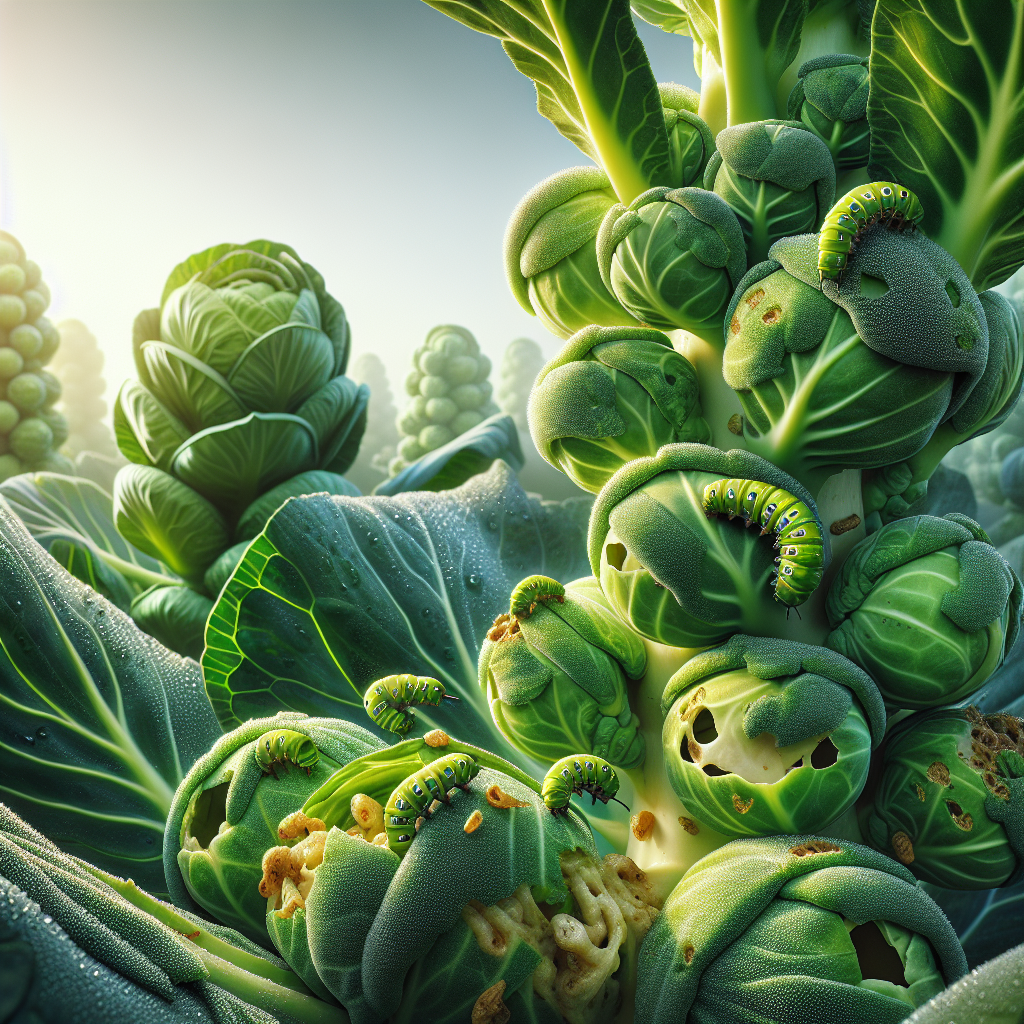
Pest-Related Damage: Look for cabbage loopers leaving ragged holes in leaves, frass pellets under plants, or aphid colonies causing curled foliage and sticky honeydew. Severe flea beetles create shot-hole patterns, while slugs leave irregular chew marks and slime trails. Brussels sprouts attract cross-striped cabbageworms, whose green larvae skeletonize leaves, reducing photosynthesis by 30-40%.
Disease Indicators: Yellowing veins signal downy mildew, while clubroot swells roots into galls, stunting growth. Black leg spots on stems indicate fungal infection from crop debris. Volunteers often show mosaic viruses from nearby tomato fields.
Economic Impact: In small farms, unmanaged Brussels sprouts can reduce adjacent cabbage yields by 25% through allelopathy and pest reservoirs. Use a 10x hand lens to confirm eggs or larvae; scout weekly during vegetative stages. Threshold: Remove plants if >5% foliage damaged.
Lifecycle and Progression of Brussels sprouts
Understanding the Brussels sprouts lifecycle is key to timed interventions. Starting from seed germination in 7-10 days at 45-85°F, seedlings develop true leaves in 2 weeks, entering vegetative growth. Stalks elongate to 2-3 feet by 60 days, budding from the axils upward.
Generations: Annuals in warm climates, biennials in cold areas where overwintering leads to bolting and prolific seeding (up to 100,000 seeds per plant). Eggs of associated pests like diamondback moths hatch in 3-7 days, larvae feed for 2-3 weeks, pupate, and adults emerge to lay on Brussels sprouts. Full cycle: 30-45 days for pests, 90-120 for crop maturity.
Progression Stages:
- Seedling (0-30 days): Vulnerable to damping-off and cutworms.
- Vegetative (30-90 days): Peak pest attraction; monitor for loopers.
- Budding (90-120 days): Harvest stage; bolters drop seeds.
- Post-Harvest: Stubble hosts overwintering root-knot nematodes.
In rotations, Brussels sprouts deplete soil nitrogen, necessitating 4-year breaks with legumes like peas. Track progression with phenology models: 50% bud set at 1,200 growing degree days (base 50°F).
Environmental Triggers & Risk Factors
Brussels sprouts infestations spike under specific conditions. Cool, moist springs (50-60°F, >70% humidity) favor germination and clubroot spread via splashing rain. Mild winters allow overwintering, with volunteers emerging 4-6 weeks earlier than transplants.
Soil Factors: Prefers pH 6.0-7.5, loamy soils with high organic matter; compacted clay increases root rots. Poor drainage triggers Phytophthora. Over-fertilization with nitrogen promotes lush growth, attracting caterpillars.
Climatic Risks: Drought stress causes buttoning (small buds); excessive rain spreads Alternaria. Proximity to wild brassicas or cauliflower fields heightens pest crossover. Risk score: High in foggy coastal zones, moderate inland.
Crop history matters: Continuous brassicas increase fusarium wilt by 40%. Scout after heavy dews; use weather apps for humidity alerts.
Organic Control & Treatment Plans
Organic management integrates cultural, biological, and mechanical tactics for 85-95% efficacy.
Cultural Controls: Rogue volunteers weekly; flame-weed post-harvest. Rotate with onion family crops. Mulch with straw to suppress seedlings.
Biological Agents: Release Bt kurstaki for caterpillars (apply evenings, 1-2 tsp/gal water weekly). Encourage ladybugs via fennel borders. Neem oil (0.5% solution) deters aphids and beetles; reapply after rain.
Mechanical Methods: Hand-pick larvae into soapy water; use row covers (Agribon AG-19) from transplant to harvest. Vacuum pests early morning.
Treatment Timeline:
| Stage | Action | Frequency |
|---|---|---|
| Prevention | Crop rotation | Annually |
| Early Infestation | Bt spray | 7 days |
| Peak Damage | Neem + row covers | 5-7 days |
| Post-Harvest | Tillage + solarization | Once |
Monitor with sticky traps; IPM threshold: 1 caterpillar/plant. Yields improve 30% with consistent plans.
Preventing Brussels sprouts in the Future
Long-term prevention focuses on sanitation and planning. Destroy crop residues by tilling or composting off-site at >140°F for 3 days. Use certified disease-free seeds; hot-water treat (122°F, 25 min) for pathogens.
Crop Planning: Space 18-24 inches apart; interplant with garlic or nasturtiums as traps. Select resistant varieties like 'Long Island Improved'. Soil solarization (6-week black plastic in summer) kills seeds/nematodes.
Monitoring Tools: Weekly perimeter walks; pheromone traps for moths. Maintain 4-year brassica-free rotations. Cover crops like mustard biofumigate soils. For small farms, AI pest patrol strategies enhance vigilance.
Annual plans reduce recurrence by 90%; document successes for refinement.
Crops Most Affected by Brussels sprouts
Brussels sprouts primarily impact fellow brassicas due to shared pests/diseases:
- Cabbage: 40% yield loss from shared cabbageworms.
- Broccoli: Aphids vector viruses.
- Kale: Clubroot persistence.
- Cauliflower: Space competition.
- Collards: Flea beetles.
Secondary effects on potato via nematodes; avoid intercropping. In polycultures, isolate with 50-foot buffers.