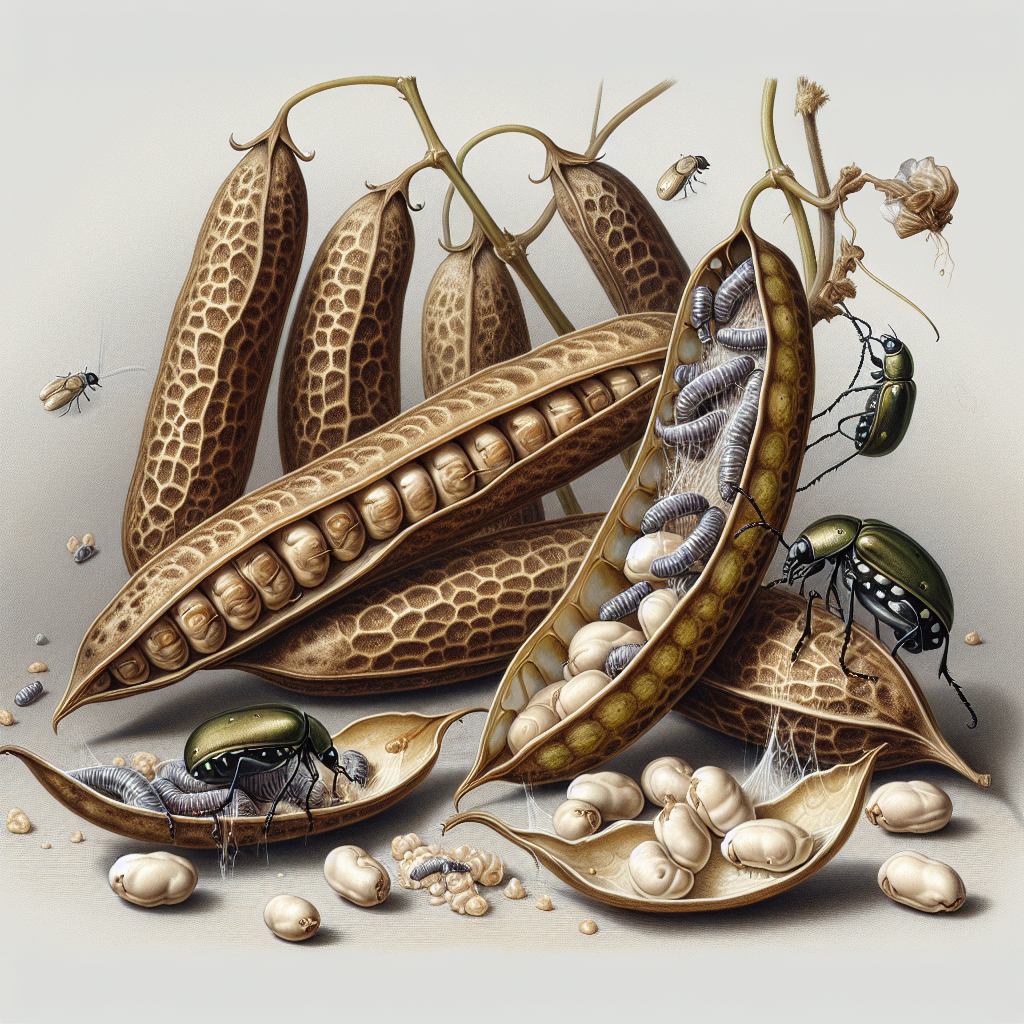
Introduction to seed-feeding pests
Seed-feeding pests represent a diverse group of insects that specifically target the seeds of agricultural crops, leading to devastating economic losses worldwide. These pests, primarily beetles like seed weevils (Seed Weevils), bruchids, and flies such as seedcorn maggots (Seedcorn Maggot), infest developing pods, ears, or stored grains, rendering seeds non-viable or reducing their quality. In major crops like soybeans, peas, and corn, infestations can cause 20-50% yield reductions if unmanaged, making early detection and integrated pest management (IPM) essential for farmers. This guide provides professional-grade diagnostics, lifecycle insights, and organic strategies to protect your harvest. Understanding these pests' biology is key to preventing outbreaks, especially in warm, humid climates where they thrive. For small farms, proactive scouting using tools like sticky traps can save thousands in potential losses. Learn more about Spring Pest Patrol: Organic AI Strategies to Shield Your Crops from Common Invaders for cutting-edge monitoring tips.
Identifying Symptoms & Damage
Diagnosing seed-feeding pests requires keen observation of specific damage patterns. Primary symptoms include tiny emergence holes (1-3mm) on seeds, frass (insect excrement) around pods or ears, and hollowed-out seeds with visible larvae or pupae inside. In peas and chickpeas, pods may appear shriveled or webbed, with seeds exhibiting brown discoloration or black fungal growth from secondary infections like Alternaria. Seedcorn maggots cause rotting seedlings with thin, ribbon-like stems and blackened roots, often confused with root rot. For stored grains like wheat or rice, look for powdery residue, musty odors, and clumped seeds riddled with holes from bruchids (Bruchids). Use a hand lens to spot adult beetles (1-5mm, often metallic or patterned) or white, C-shaped larvae. Differentiate from other pests like storage beetles by the targeted seed damage—surface chewers leave external scars, while seed-feeders bore internally. Early scouting at flowering or pod-set stages prevents escalation; shake plants over white paper to detect dislodged adults. Quantitative assessment: count infested seeds per 100-pod sample; >10% signals action threshold.
Lifecycle and Progression of seed-feeding pests
Seed-feeding pests typically follow a complete metamorphosis: egg, larva, pupa, adult. Take cowpea weevil (Callosobruchus maculatus), a common bruchid: females lay 50-100 eggs singly on dry seeds or pods. Eggs hatch in 4-7 days into larvae that burrow into seeds, feeding on the cotyledon for 2-4 weeks, then pupate inside, emerging as adults in 25-40 days at 25-30°C. Multiple generations (4-8/year) occur in tropics, with diapause in cooler conditions. Seedcorn maggot (Delia platura) overwinters as pupae in soil, adults emerge in spring, laying eggs near decaying matter; maggots feed on seeds/seedlings for 2-3 weeks before pupating. In corn, progression aligns with planting: eggs laid on soil/cracks, larvae attack germinating seeds within days. Adults live 1-2 weeks, repeating cycles. Monitoring lifecycle stages informs timing—target eggs/larvae with BT sprays, adults with traps. Temperature drives progression: optimal 25-35°C accelerates development, explaining outbreaks post-heatwaves. Understanding this allows predictive IPM, disrupting cycles at vulnerable points like oviposition.
Environmental Triggers & Risk Factors
Warm, humid conditions (25-35°C, >70% RH) trigger seed-feeding pest proliferation, favoring rapid reproduction. Poor sanitation, like unburied crop residues or infested stored seeds, serves as reservoirs. High-nitrogen soils promote lush growth, attracting ovipositing females. Monocropping soybeans or peas exceeds carrying capacity, amplifying infestations. Rainy planting seasons boost seedcorn maggots via moist soils; drought-stressed crops suffer more as seeds become vulnerable. Volunteer plants and weed hosts harbor pests, bridging generations. Global trade spreads bruchids in legume shipments. Risk factors include delayed planting (overlapping adult emergence), shallow sowing (exposing seeds), and no crop rotation—rotate with non-hosts like cabbage to break cycles. Climate change extends seasons, increasing generations. Assess farm risk: score residue levels (1-5), planting timing, and prior infestation history for targeted prevention.
Organic Control & Treatment Plans
Organic management emphasizes IPM: prevention, monitoring, biologicals, and targeted organics. Cultural: Deep plow residues to bury pupae; rotate with garlic or onion repellents; sow treated seeds (hot water 50°C/10min or neem). Biological: Release parasitic wasps (Trichogramma spp.) for eggs/larvae; encourage ground beetles preying on adults. Neem oil (2-5ml/L) disrupts feeding/oviposition—apply at pod-set, 7-day intervals. Bacillus thuringiensis (BT) var. kurstaki targets larvae in pods. Diatomaceous earth (DE) dusts seeds/stores, desiccating insects. Pheromone traps capture weevils, reducing populations 30-50%. Treatment Plan: Scout weekly; <5% infestation: monitor. 5-15%: neem + BT + traps. >15%: harvest early, rogue infested plants, solarize storage (black plastic, 50°C/48h). For storage, hermetic bags exclude air, killing larvae. Integrate with predators like birds (Birds) via perches. Success metrics: post-treatment infestation <2%. Avoid broad-spectrum, preserving beneficials like ladybugs (natural enemies).
Preventing seed-feeding pests in the Future
Long-term prevention builds resilient systems. Use certified, pest-free seeds; hot-water treat home-saved ones. Crop rotation (3-4 years) with non-legumes like corn or wheat starves pests. Intercrop with trap crops (sesame) or repellents (marigold). Time planting to miss peak adult flights—early for maggots, late for weevils. Maintain sanitation: destroy volunteers, clean equipment. Mulch with straw to deter soil egg-laying. Solarization pre-planting kills soil pupae. For storage, clean bins, use 1:20 diatomaceous earth, and monitor with probes. Resistant varieties: choose soybeans like 'Himalaya' with tough pods. Farm-wide IPM: yellow sticky traps + economic thresholds. Educate on thresholds: 1 weevil/10kg grain triggers action. Annual audits reduce recurrence 70%. Integrate cover crops like clover to enhance soil predators.
Crops Most Affected by seed-feeding pests
Seed-feeders devastate legumes and grains. Top targets: soybeans (bruchids, 30% loss), peas and chickpeas (pod borers), peanuts (weevils). Cereals like corn (Corn Earworm), wheat, rice suffer maggots/bruchids. Pulses (lentils) lose viability in storage. Vegetables: beans, okra. Tropicals: cowpeas, mung beans. Global impact: $1B+ annual losses. Protect high-value sunflower seeds too.