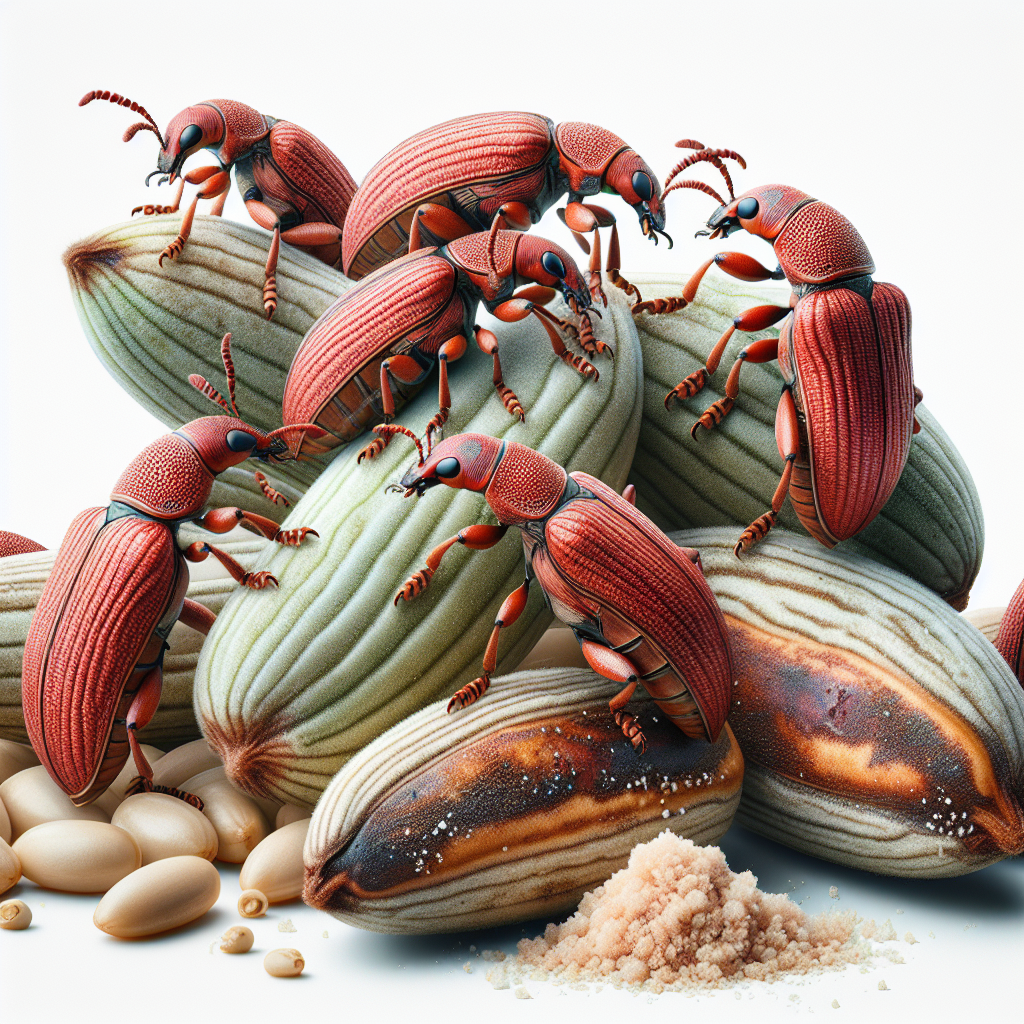
Introduction to Seed Weevils
Seed weevils, belonging primarily to the Bruchidae family (also known as bean weevils or cowpea weevils), represent a major threat to seed crops worldwide. These small beetles target the seeds of legumes and grains, boring into them to lay eggs and feed on the developing embryos. Common species include the pea weevil (Bruchus pisorum), cowpea weevil (Callosobruchus maculatus), and bean weevil (Acanthoscelides obtectus). Infestations can cause up to 100% seed loss in stored grains if unchecked, making early detection and management critical for farmers growing peas, chickpeas, or soybeans.
Unlike larger weevils, seed weevils are often overlooked until harvest or storage, where their larvae cause irreversible damage. They thrive in warm climates but can infest crops in temperate regions during storage. This definitive guide equips agricultural professionals with diagnostic tools, lifecycle knowledge, organic controls, and prevention strategies to safeguard yields. Understanding seed weevils' biology is key to integrated pest management (IPM), reducing reliance on synthetic pesticides while maintaining crop quality. For small farms battling storage losses, timely intervention can preserve market value and seed viability for future planting. Recent studies from the USDA highlight that proactive monitoring cuts losses by 70-90% in pulse crops.
Identifying Symptoms & Damage
Diagnosing seed weevils requires keen observation of both field and storage signs. Adult weevils are 2-4 mm long, reddish-brown to black with distinctive snouts and rounded bodies. Look for them on pods or seeds during late pod fill stages. The hallmark symptom is the emergence hole: a neat, 1-2 mm circular puncture on seeds, often with frass (insect waste) nearby. Infested seeds appear shriveled, discolored, or hollowed out internally.
In the field, pods may show egg clusters (tiny white pearls) or adult feeding scars. Larvae tunnel inside seeds, leaving them unfit for consumption or planting—yield losses average 20-50% in moderate infestations. Secondary signs include webbing or mold on stored seeds due to damage allowing fungal entry, like Alternaria. Shake infested pods over white paper; tiny adults or larvae dropping out confirm presence.
Differentiate from similar pests: Storage Beetles lack snouts, while Bruchids are close relatives but larger. Use a 10x hand lens to spot larval stages inside split seeds. In storage, a rattling sound from hollow seeds or powdery residue signals heavy infestation. Early symptoms mimic drought stress, but seed dissection reveals the truth. Monitor weekly from flowering; thresholds are 1-2 adults per 10 pods for action.
Lifecycle and Progression of Seed Weevils
Seed weevils complete 4-6 generations annually in tropical areas, fewer in temperate zones. Adults emerge in spring, seeking maturing pods. Females lay 50-100 eggs singly on pod surfaces or directly into cracks, using ovipositor precision. Eggs hatch in 5-10 days into legless larvae that chew into seeds, molting 3-4 times over 2-4 weeks.
Larval development consumes the seed cotyledon, pupating inside after hollowing it out. Adults emerge after 1-2 weeks, chewing exit holes. Diapause allows overwintering in unharvested pods or soil. Full cycle: 25-45 days at 25-30°C. Peak activity aligns with pod maturity; one generation per crop in fields, multiple in storage.
Progression: Eggs (1-2 weeks) → Larvae (2-4 weeks, most damage) → Pupae (1 week) → Adults (live 2-4 weeks, non-feeding but oviposit). Monitor with pheromone traps for adults. Lifecycle knowledge enables timed interventions, like pod stripping at peak egg-lay.
Environmental Triggers & Risk Factors
Warm temperatures (25-35°C) and humidity >60% accelerate development, explaining outbreaks in tropics or poorly ventilated storage. Risk spikes with late-maturing varieties, as adults track pod ripeness via volatiles. Overcrowded plantings or residue from prior crops harbor pupae.
Global trade spreads weevils via infested seeds; check imports. Drought-stressed crops produce thinner pods, easing egg penetration. Poor rotation—continuous legumes—builds populations. Storage risks: unclean bins, mixed lots, temperatures >20°C. Bean weevils thrive alongside soybean aphid outbreaks, compounding damage. Soil type matters minimally, but sandy soils aid pupal survival.
Organic Control & Treatment Plans
Organic management emphasizes IPM: prevention first, then cultural, biological, and targeted botanicals. Cultural: Harvest early at 80% pod maturity to disrupt lifecycle. Destroy crop residue by deep plowing or solarization. Rotate with non-hosts like corn or wheat for 2-3 years.
Biological: Release parasitic wasps (Anisopteromalus calandrae) at 1:10 weevil ratio in storage. Promote ground beetles via mulch. Physical: Sieve seeds post-harvest to remove infested ones; heat to 60°C for 30 min or cold to -18°C for 3 days. Diatomaceous earth (DE) at 1-2% in storage abrades exoskeletons.
Botanicals: Neem oil (azadirachtin 0.03%) sprays on pods at flowering; repeat 7-10 days. Pyrethrum or spinosad for heavy infestations, OMRI-listed. Trap crops like early cowpeas divert adults. For storage, herbal repellents (clove, bay leaves) at 5g/kg seed. Spring Pest Patrol: Organic AI Strategies to Shield Your Crops from Common Invaders offers tech-enhanced monitoring tips.
Treatment Plan: Scout weekly → Threshold (1 adult/10 pods) → Neem spray → Harvest → Clean/store <15°C. Efficacy: 80-95% reduction.
Preventing Seed Weevils in the Future
Prevention hinges on breaking the lifecycle chain. Use certified, weevil-free seeds; hot water treat at 50°C for 10 min. Plant resistant varieties like 'Jan' peas or 'Iron Clay' cowpeas. Time planting to avoid peak adult flight (scout neighbors).
Field sanitation: Remove volunteer plants, rogue infested pods. Barrier crops: Border with marigold or trap strips. Storage best practices: Dry to <12% moisture, hermetic bags, or metal silos. Pheromone traps (10/100m²) for monitoring. Annual rotation disrupts soil pupae. Integrate with weevils IPM for pulses. Long-term: Build beneficial insect habitats with yarrow hedges.
Crops Most Affected by Seed Weevils
Seed weevils devastate pulses and grains. Top targets: peas (50% global loss), chickpeas, lentils, soybeans, cowpeas, mung beans, faba beans. Field crops like rice and wheat face storage risks. Emerging threats in peanuts and sunflower seeds. Legumes suffer most; diversify to mitigate.