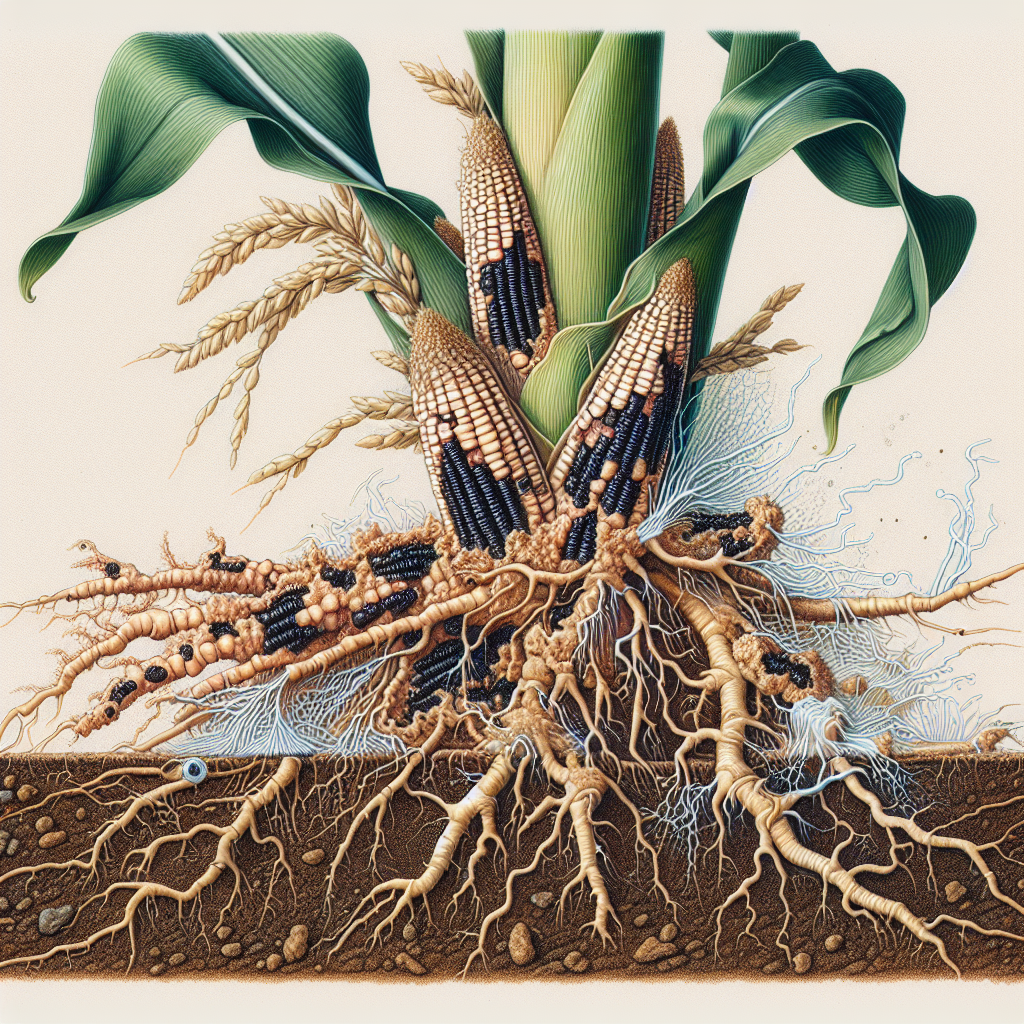
Introduction to root and stalk rots
Root and stalk rots represent one of the most destructive disease complexes in agriculture, caused primarily by soilborne pathogens such as Pythium, Fusarium, Rhizoctonia, and Phytophthora species. These diseases target the root systems and lower stalks of plants, compromising water and nutrient uptake, which leads to stunted growth, yellowing, wilting, and eventual plant death. Unlike foliar diseases, root and stalk rots are insidious because symptoms often appear only after significant internal damage has occurred, making early detection challenging.
Globally, these rots cause billions in losses annually, particularly in high-value crops like corn, soybeans, potato, and tomato. The pathogens persist in soil for years via dormant spores, sclerotia, or infected plant debris, creating long-term challenges for continuous cropping systems. Warm, wet soils accelerate infection, but poor aeration and compacted fields exacerbate the issue. This guide provides professional-grade diagnostics, organic management strategies, and prevention tactics tailored for small to medium-scale farms. Understanding the biology of these pathogens is key to implementing integrated disease management that sustains yields without synthetic fungicides. For small farms, proactive soil health practices can reduce incidence by up to 70%, as highlighted in Soil Health Mastery: 5 Proven Strategies for Small Farms to Build Fertile Ground Without Breaking the Bank.
Identifying Symptoms & Damage
Early symptoms of root and stalk rots are often subtle, mimicking nutrient deficiencies or drought stress. Above-ground signs include stunting, chlorosis (yellowing of lower leaves), and premature wilting during the day, even under adequate moisture. Plants may appear uneven in the field, with patches of affected individuals.
Root symptoms are diagnostic: roots become dark brown to black, mushy, and foul-smelling, with a shredded or rotted appearance. In advanced stages, the cortex sloughs off, leaving only wiry central stele. For stalk rots, look for reddish-brown to black lesions at the soil line, often with a water-soaked appearance progressing upward. Stalks become brittle, leading to lodging—plants falling over at maturity.
Specific pathogen indicators include:
- Pythium root rot: Rapid, watery rot of feeder roots; common in cool, wet springs.
- Fusarium stalk rot: Pinkish mycelium in vascular tissue; affects corn and sorghum.
- Rhizoctonia: Brown, sunken lesions with crusty sclerotia; resists drying.
- Phytophthora: Oozing lesions on crowns and upper roots; thrives in saturated soils.
Damage quantification: Yield losses range from 10-50% in mild cases to total stand loss in epidemics. In soybeans, stalk rots reduce pod set by 30-60%; in potato, tubers rot in storage. Scout fields at V6 growth stage (corn) or early pod fill (legumes) by digging up 20-30 plants per 10 acres. Lab confirmation via plating on selective media is ideal for precise identification.
Lifecycle and Progression of root and stalk rots
These pathogens are primarily soil inhabitants with complex lifecycles adapted to survive adverse conditions. Most produce durable resting structures:
- Oospores (Pythium, Phytophthora): Survive decades in soil.
- Chlamydospores (Fusarium): Thick-walled spores.
- Sclerotia (Rhizoctonia): Hard bodies resisting tillage.
Infection begins when zoospores or hyphae contact roots via splashing rain or irrigation. Optimal conditions trigger spore germination: soil moisture >60%, temperatures 20-30°C (68-86°F). Pathogens colonize root hairs and cortex via enzymes dissolving cell walls. Progression: feeder roots first (1-2 weeks), then taproots and crowns (3-6 weeks), finally stalks.
In corn, stalk rot often starts mid-season, peaking at grain fill when plants stress from drought or high N. Disease cycles amplify via infected residue; tillage buries but doesn't eliminate inoculum. Secondary spread is limited, but wounds from corn rootworm or cultivation invite entry. Understanding this polycyclic nature underscores prevention over cure.
Environmental Triggers & Risk Factors
Root and stalk rots flourish under specific abiotic stresses:
- Excess moisture: Compacted, poorly drained soils retain water, creating anaerobic zones.
- Temperature: Pythium at 15-20°C; Fusarium/Phytophthora at 25-30°C.
- Soil pH: Acidic soils (<6.0) favor most pathogens.
- Crop rotation deficits: Continuous host cropping builds inoculum.
- High residue: No-till without rotation leaves debris.
- Nutrient imbalance: Excess N promotes lush growth susceptible to rot; low K weakens cell walls.
Risk is highest post-flood, heavy rain, or over-irrigation. In potato, clay soils double infection rates. Compaction from machinery reduces pore space, trapping moisture. Climate change intensifies risks with erratic rains. Assess fields with penetrometer for compaction (>300 psi risky) and percolation tests (>1/2 inch/hour ideal).
Organic Control & Treatment Plans
Organic management integrates cultural, biological, and physical tactics:
Cultural: Improve drainage via tiling, raised beds, or ditching. Rotate with non-hosts like onion or cabbage for 3-4 years. Avoid overwatering; use drip irrigation.
Biological: Apply Trichoderma viride or Bacillus subtilis seed treatments (rates: 5-10g/kg seed). Mycorrhizal fungi enhance root vigor. Compost teas suppress pathogens via competition.
Resistant varieties: Select hybrids like DKC 62-08 for corn or resistant soybeans (e.g., Asgrow AG2933).
Sanitation: Remove infected plants promptly; solarize soil in off-season (clear plastic, 6-8 weeks summer).
Nutrient management: Balance with K (80-120 lb/acre) and Ca (gypsum 1-2 tons/acre). Foliar Si boosts resistance.
Step-by-step treatment plan:
- Scout weekly; rogue >5% incidence.
- Week 1: Apply biocontrol drench (Trichoderma 10^9 CFU/ml).
- Ongoing: Mulch to moderate soil moisture.
- Post-harvest: Till lightly, plant cover crops.
Success rates: 40-70% reduction in organic systems.
Preventing root and stalk rots in the Future
Prevention is 80% of control:
- Rotation: 3+ years; include brassicas or wheat to starve pathogens.
- Soil health: Cover crop clover or hairy vetch builds aggregates, improves drainage.
- Seed quality: Hot-water treat (50°C, 25 min) or bio-primed seed.
- Tillage: Strategic to bury residue without compaction.
- Monitoring: Use soil tests for inoculum (e.g., baiting assays).
- Variety selection: Stack resistance to multiple pathogens.
Long-term: Biofumigants like mustard green manures release isothiocyanates suppressing Fusarium. Integrate with IPM, tracking via tools like those in Why Misidentifying Plants Costs Small Farms Thousands - And How AI Camera Diagnosis Fixes It Fast. Aim for <10% incidence through resilient systems.
Crops Most Affected by root and stalk rots
- Cereals: Corn (Gibberella, Fusarium stalk rots: 20-40% loss), sorghum, wheat (take-all, Fusarium crown rot).
- Legumes: Soybeans (Phytophthora, Sclerotinia stem rot), peas, chickpeas.
- Roots/Tubers: Potato (black scurf, soft rot), sweet potato, cassava.
- Vegetables: Tomato, pepper, cucumber, squash.
- Others: Avocado, banana, sugarcane.
Regional hotspots: Midwest US (corn/soy), tropics (Phytophthora in cassava).