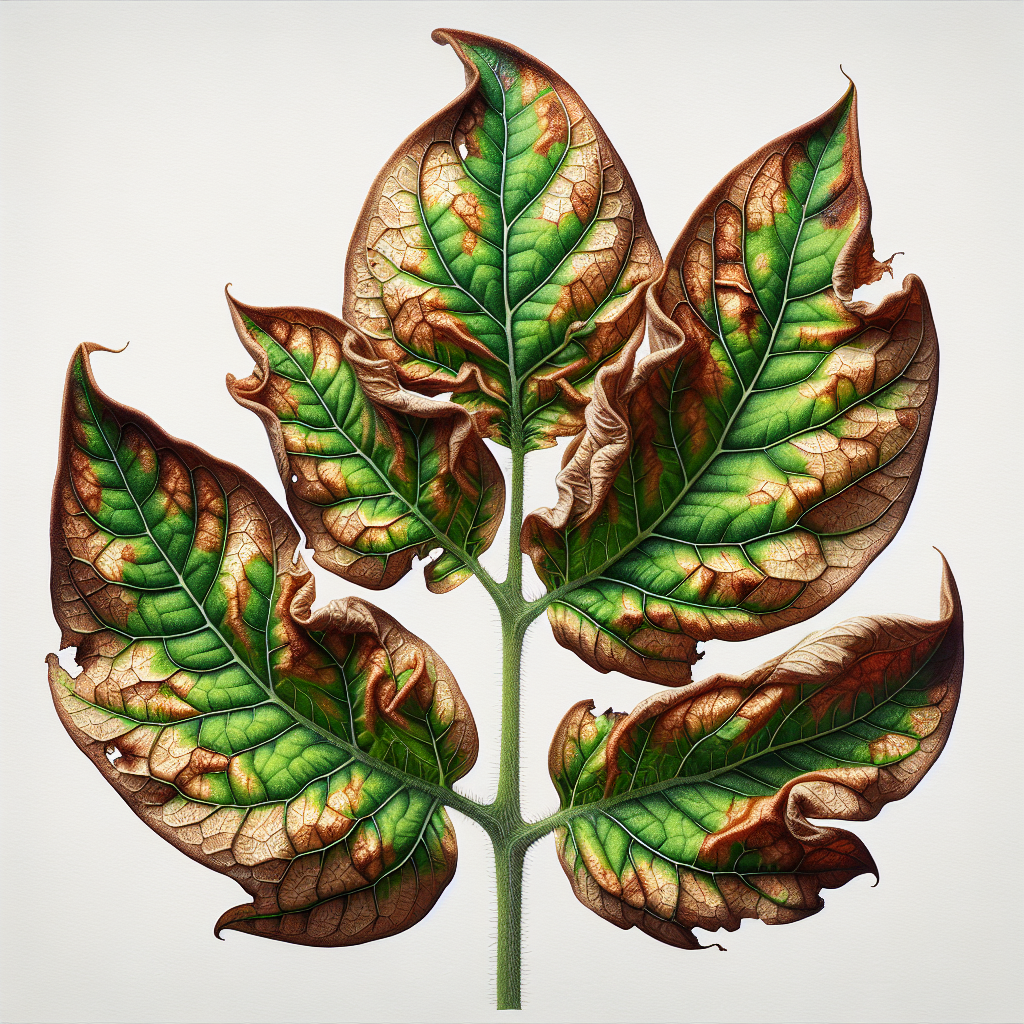
Introduction to leaf scorch
Leaf scorch, often simply called "leaf scorch," is one of the most prevalent non-infectious disorders affecting agricultural crops, ornamentals, and trees worldwide. Unlike fungal or bacterial diseases, leaf scorch results from abiotic stresses that disrupt the plant's vascular system, preventing adequate water and nutrient transport to the foliage. This leads to characteristic browning and necrosis starting at leaf margins and tips, mimicking fire damage hence the name "scorch."
In agriculture, leaf scorch poses significant economic threats, particularly in hot, dry climates or areas with poor irrigation practices. It impacts yield quality and quantity, with affected leaves dropping prematurely and weakening overall plant vigor. Common culprits include water deficits, high soil salinity, root damage from transplant shock, or vascular obstructions like Xylella fastidiosa in bacterial cases (though pure leaf scorch is physiological). Farmers often misdiagnose it as pest damage or powdery mildew, delaying effective intervention.
Understanding leaf scorch is crucial for sustainable farming. This guide provides definitive diagnostic criteria, lifecycle insights, and organic management strategies tailored for small to medium-scale operations. By addressing root causes—pun intended—growers can mitigate losses and maintain healthy crops. For small farms struggling with misdiagnosis, tools like AI-powered plant scanners can differentiate scorch from true pathogens quickly, as explored in Why Misidentifying Plants Costs Small Farms Thousands.
Identifying Symptoms & Damage
Accurate diagnosis begins with recognizing leaf scorch's hallmark symptoms, which progress predictably across plant tissues.
Primary Symptoms:
- Marginal necrosis: Leaves develop dry, brown edges starting from tips and margins, progressing inward. Affected tissue feels crisp and papery, unlike soft rot from pathogens.
- Interveinal browning: Yellowing between veins precedes scorching, especially in trees like Hass Avocado or Cherry Tomato.
- Symmetrical patterns: Damage appears uniform on both sides of the plant, unlike pest feeding which is irregular.
Secondary Signs:
- Premature leaf drop, twig dieback, and canopy thinning.
- No webbing, spots, or mycelium—key differentiators from spider mites or Alternaria leaf spot.
- In severe cases, branch tip death and reduced fruit set, as seen in Grapes during heatwaves.
Damage Assessment: Mild scorch affects <20% of foliage with recovery possible; moderate (20-50%) reduces photosynthesis by 30-40%; severe (>50%) can halve yields. In Tomato, scorched leaves curl upward, mimicking tomato spotted wilt virus, but lack viral mottling. Use a 10x hand lens to confirm no fungal structures. Soil probes reveal underlying drought or salt (>2 dS/m EC).
Differential Diagnosis:
| Symptom | Leaf Scorch | Fungal Leaf Spot | Nutrient Deficiency |
|---|---|---|---|
| Edge burn | Yes, crisp | No, spots | Variable |
| Veinal | Interveinal | Along veins | Chlorosis first |
| Pathogen signs | Absent | Present | Absent |
Early detection via weekly scouting prevents escalation. Photograph affected leaves against healthy ones for records.
Lifecycle and Progression of leaf scorch
Leaf scorch lacks a biological lifecycle like pathogens; it's a stress response cycle triggered by environmental insults.
Stage 1: Initiation (Acute Stress): Roots fail to uptake water due to drought, compaction, or girdling roots. Xylem cavitation blocks flow, starving leaf cells within hours during peak heat (>95°F/35°C).
Stage 2: Visible Symptoms (1-7 days): Marginal cells desiccate first, turning bronze then brown. Ethylene buildup accelerates abscission.
Stage 3: Chronic Progression (Weeks-Months): Repeated stress causes twig dieback. In perennials like Apple, "scorch rings" form annually, expanding inward.
Stage 4: Recovery or Decline: With stress relief, new growth emerges green; persistent issues lead to canopy sparsity and death. Annual crops like Corn show rapid progression to senescence.
Progression speed varies: herbaceous plants decline in days; woody ones over seasons. Monitor via NDVI apps for early xylem dysfunction. In Oak wilt-like scenarios, distinguish by lack of vascular streaking.
Environmental Triggers & Risk Factors
Leaf scorch thrives under specific abiotic pressures:
Primary Triggers:
- Water Stress: Inadequate irrigation or poor root zones. Sandy soils dry fastest; clay holds salts.
- High Temperatures & Low Humidity: VPD >2 kPa exceeds transpiration capacity.
- Soil Salinity: Fertilizer burn or brackish water (>1.5 dS/m).
- Root Injury: Transplant shock, root-knot nematodes, or mechanical damage.
- Wind & Site Exposure: Desiccating winds on hilltops amplify evaporation.
Risk Factors:
- Crop-Specific: Shallow-rooted Lettuce vs. deep Almond.
- Soil pH Extremes: >8.0 or <5.5 impairs uptake.
- Over-Fertilization: High N salts mimic deficiency.
Map high-risk zones using soil tests and weather data. Why 80% of Small Farms Battle Weather Disasters highlights predictive tools.
Organic Control & Treatment Plans
Management focuses on stress alleviation—no cures, only prevention and recovery.
Immediate Actions:
- Irrigation Optimization: Deep, infrequent watering (1-2x/week) to 18-24" depth. Drip systems reduce foliage wetting.
- Mulching: 3-4" organic mulch retains moisture, moderates soil temp.
- Anti-Transpirants: Kaolin clay sprays (e.g., Surround) reflect sunlight, cut ET by 30%.
Soil Amendments:
- Gypsum for sodic soils (2-5 tons/acre).
- Compost (5-10 tons/acre) improves structure.
Cultural Practices:
- Prune dead tips to redirect energy.
- Shade cloth (30-50%) during heat peaks.
- Mycorrhizal inoculants boost root efficiency.
Monitoring Plan: Weekly ET calculations; irrigate at 50% depletion. For Avocado, tensionometers at 12" guide precision.
Integrated Approach: Combine with companion Thyme for windbreaks. Recovery takes 2-6 weeks; remove severely affected plants to avoid decline.
Preventing leaf scorch in the Future
Proactive strategies build resilience:
- Site Selection: Avoid low spots; ensure good drainage.
- Variety Choice: Scorch-tolerant cultivars like 'Tifblue' Blueberry.
- Irrigation Scheduling: Soil moisture sensors; automate via AI.
- Fertility Balance: Soil tests annually; slow-release organics.
- Windbreaks: Plant Yarrow hedges.
- Cover Cropping: Clover off-season suppresses salts.
Long-term: Aerate compacted soils yearly. Track via farm journals. Soil Health Mastery offers budgeting tips.
Crops Most Affected by leaf scorch
Leaf scorch strikes broadly, but certain crops suffer most:
High-Risk Trees: [Maple], [Oak], Hass Avocado, Peach—vascular blockage amplifies damage.
Vegetables: Tomato, Pepper, Eggplant, Potato—shallow roots vulnerable.
Small Fruits: Grapes, Blueberry, Strawberry—high transpiration.
Field Crops: Corn, Wheat in arid zones.
Regional hotspots: California orchards, Midwest row crops. Tailor prevention to your staples.