Introduction to tomato spotted wilt virus
Tomato spotted wilt virus (TSWV), a member of the Tospoviridae family, ranks among the most destructive pathogens affecting solanaceous crops worldwide. First identified in 1915 in Australia, TSWV has since spread globally, causing billions in annual agricultural losses. This virus infects over 1,000 plant species across more than 80 families, but it poses the greatest threat to vegetable production, particularly tomato crops. TSWV is unique as the type member of the genus Orthotospovirus, transmitted in a persistent-propagative manner by several thrips species, notably the western flower thrips (Frankliniella occidentalis) and tomato thrips (Frankliniella schultzei).
The virus's single-stranded RNA genome enables rapid mutation, leading to diverse strains that overcome host resistance. In tomatoes, TSWV symptoms manifest as irregular bronze or dark spots on leaves, stems, and fruits, often accompanied by apical dominance loss and plant collapse. Economic impact is severe in warm climates; for instance, in California's tomato belt, outbreaks have reduced yields by up to 80%. Unlike fungal or bacterial diseases, TSWV offers no curative treatments—management hinges on prevention. Growers must integrate cultural, biological, and chemical strategies targeting the thrips vector. Recent advances in RNA interference (RNAi) technologies promise resistant varieties, but current control emphasizes integrated pest management (IPM). For detailed thrips biology, see our guide on Thrips (pest). Understanding TSWV's epidemiology is crucial for sustainable tomato production, especially as climate change expands thrips habitats.
Identifying Symptoms & Damage
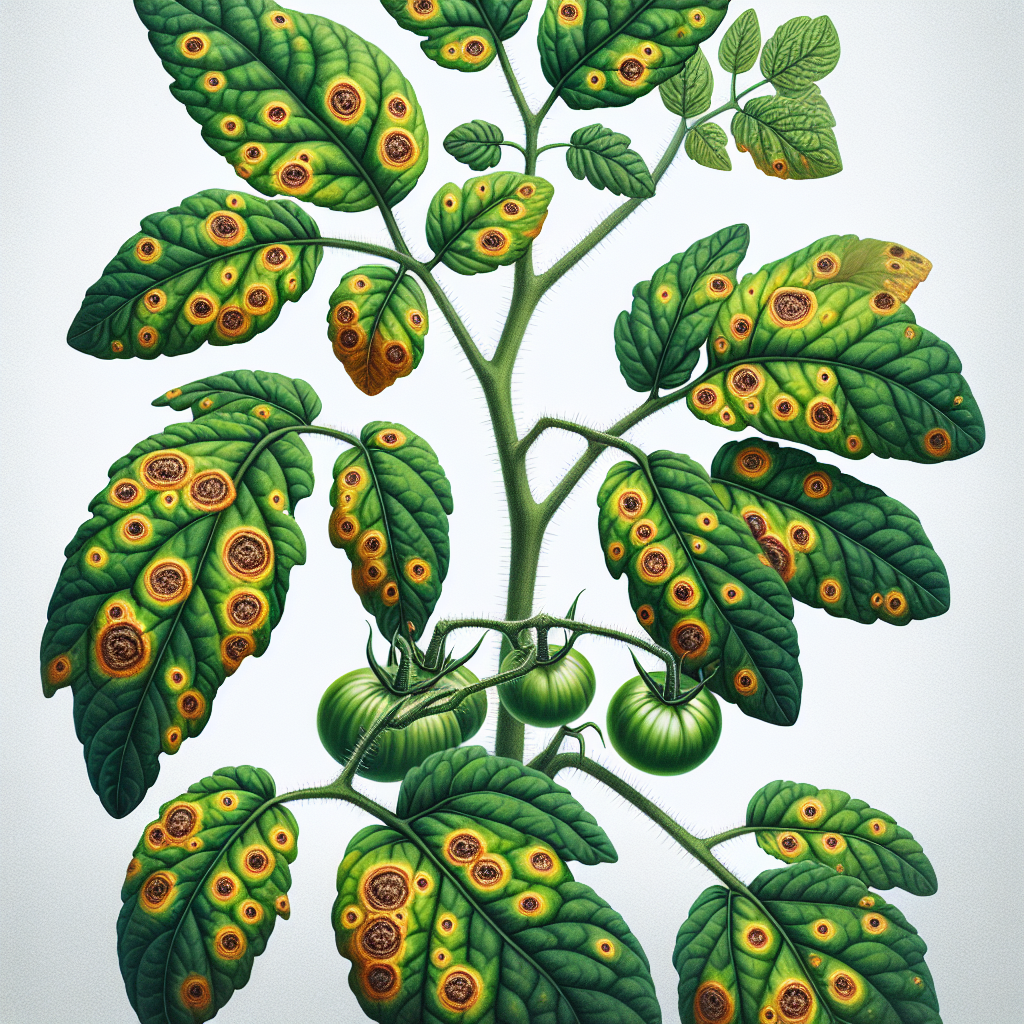
Accurate diagnosis of tomato spotted wilt virus begins with recognizing its hallmark symptoms, which vary by plant age, virus strain, and environmental conditions. Early infection in seedlings produces faint chlorotic spots on cotyledons, progressing to stunted growth and leaf cupping. On mature foliage, look for circular to irregular bronze or dark brown spots, 1-5 mm in diameter, often with a halo of yellow tissue. These lesions coalesce, leading to necrotic streaks along veins and leaf margins. Severely affected leaves exhibit 'J'-shaped tips and brittle texture.
Stem symptoms include elongated brown lesions and wilting from the top down, mimicking herbicide injury. Fruit damage is diagnostic: mature green tomatoes show concentric ring spots, raised tan blemishes, or reddish-brown discoloration, rendering them unmarketable. Advanced infection causes apical necrosis, where the growing tip dies, resulting in a bushy appearance from excessive axillary shoots. Yield losses range from 20-100%, with fruit quality plummeting due to internal necrosis.
Differential diagnosis is essential—symptoms overlap with Verticillium wilt, nutrient deficiencies, or herbicide drift. Confirm TSWV via enzyme-linked immunosorbent assay (ELISA), reverse transcription PCR (RT-PCR), or double antibody sandwich ELISA targeting the nucleocapsid protein. Mechanical inoculation tests on indicator hosts like Nicotiana benthamiana produce local lesions. In fields, scout 20-30 plants per acre weekly, focusing on field edges where thrips colonize first. Damage thresholds: 1-2% incidence warrants immediate action. For small farms, smartphone apps using AI image recognition now aid rapid field diagnosis, as discussed in Why Misidentifying Plants Costs Small Farms Thousands - And How AI Camera Diagnosis Fixes It Fast.
Lifecycle and Progression of tomato spotted wilt virus
TSWV lifecycle revolves around its thrips vectors, lacking seed, pollen, or true soil transmission. Thrips acquire the virus as first- or second-instar larvae feeding on infected plants, with virions multiplying in their bodies. Adults emerging from infected pupae retain lifelong transmissibility, inoculating healthy plants during brief 15-second probes. Latency period in vectors: 2-4 days at 75-85°F (24-29°C). Non-vector plants serve as reservoirs, with weeds like pigweed (Amaranthus spp.) and nightshade sustaining overwintering.
In tomatoes, progression spans 7-21 days post-inoculation. Systemic spread occurs via phloem, causing vein clearing first, then cell-to-cell movement via plasmodesmata. Symptoms escalate with temperature: optimal at 77-86°F (25-30°C), stalling below 68°F (20°C). Yield impact peaks when infection hits during flowering or early fruit set—plants inoculated pre-flowering may recover partially via apical dominance suppression. Multiple infections amplify damage, with TSWV synergizing with tomato mosaic virus for severe necrosis. Over seasons, virus persists in volunteer crops, perennial weeds, and ornamentals like chrysanthemums. Lifecycle disruption targets larval acquisition: reflective mulches deter adults, while systemic neonicotinoids prevent feeding.
Environmental Triggers & Risk Factors
TSWV thrives in warm, dry conditions favoring thrips proliferation: daytime highs of 80-95°F (27-35°C), low humidity (<60% RH), and minimal rainfall. High nitrogen fertilization boosts tender growth attractive to thrips. Poor air circulation in dense canopies or greenhouses accelerates spread. Geographical hotspots include the southeastern U.S., Mediterranean basin, and Australian subtropics, where overlapping crops create green bridges.
Key risk factors: proximity to ornamentals or weeds hosting alternate hosts; overhead irrigation splashing inoculum; transplanting infected seedlings; and delayed thrips scouting. Soil solarization reduces soil pupae, but aerial dispersal by wind limits efficacy. Climate models predict northward expansion with warming temperatures, threatening northern tomato production. Risk assessment: farms near peanuts or bell pepper fields face 3x higher incidence due to shared vectors.
Organic Control & Treatment Plans
No chemical cures exist for TSWV—focus on vector suppression and cultural controls. Thrips Management: Deploy blue sticky traps at 1 per 2,000 sq ft, placed 1-2 ft above canopy. Introduce predatory mites (Amblyseius cucumeris) and pirate bugs (Orius spp.) at 1-5 per sq ft weekly. Neem oil or spinosad sprays target larvae (3-5 applications, 7-day intervals). Cultural Practices: Use silver reflective mulches reducing thrips landing by 50-70%; rogue infected plants immediately, burying >20 ft from fields. Weed control eliminates reservoirs.
Biologicals: UV-reflective nets block 90% thrips ingress. Plant marigold borders as trap crops. Varietal Resistance: Select Sw5 gene tomatoes like 'Amistad' or 'SVR4227041', offering field tolerance. Crop rotation (2-3 years) with non-hosts like corn. Sanitation: disinfect tools with 10% bleach; hot-water treat transplants (122°F/50°C for 25 min). Integrated plans yield 70-90% control; monitor with 5% trap catch threshold. For organic IPM strategies, explore Spring Pest Patrol: Organic AI Strategies to Shield Your Crops from Common Invaders.
Preventing tomato spotted wilt virus in the Future
Prevention forms the cornerstone of TSWV-free production. Source certified virus-free transplants from reputable suppliers, inspecting for symptoms pre-planting. Site selection: avoid low-lying areas with poor drainage. Stagger plantings to disrupt thrips cycles. Barrier strategies: 50-mesh insect netting excludes vectors entirely in high-value crops. Eradicate weeds within 100 ft using flame weeding or cover crops.
Long-term: breed stacked resistance (Sw5 + Sw7 genes); use RNAi sprays silencing thrips genes. Farm hygiene: clean equipment between fields; destroy crop residues by disking/flaming. Scout rigorously: beat sheets quantify thrips (10/sheet = action). Regional cooperation via area-wide suppression minimizes reservoirs. Future tech: drone-applied biopesticides and AI forecasting model outbreaks. Zero-tolerance policies in seed production ensure clean starts.
Crops Most Affected by tomato spotted wilt virus
TSWV strikes broadly, but solanaceous and cucurbit crops suffer most. Primary hosts: tomato (up to 100% loss), bell pepper, eggplant, potato. Secondary: lettuce, cucumber, squash, peanuts, soybeans. Ornamentals like impatiens amplify spread. In tomatoes, heirlooms like Roma Tomato succumb faster than hybrids. Peppers show apical burn; lettuce develops ring spots. Weed hosts: nightshade, lambsquarters sustain epidemics. Prioritize monitoring in mixed rotations.