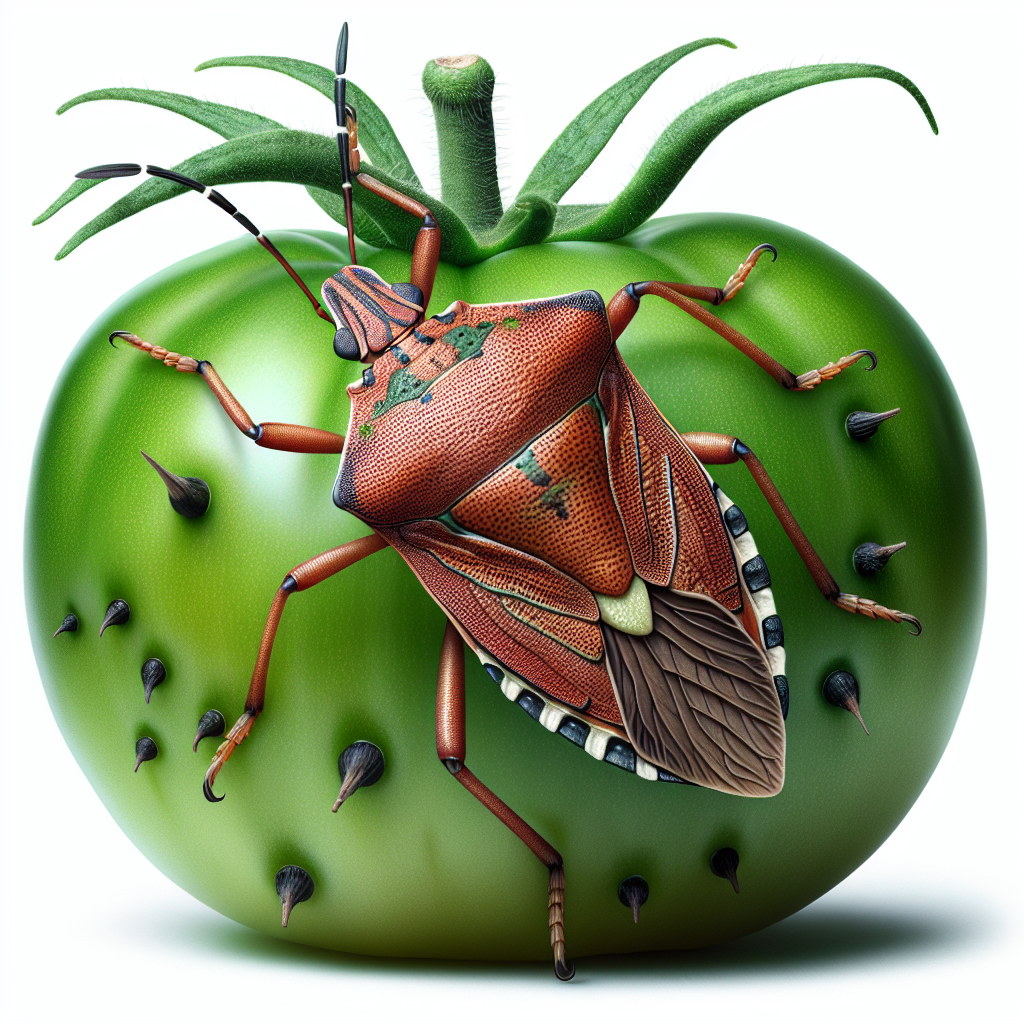
Introduction to Leaf-footed bugs
Leaf-footed bugs (Leptoglossus spp.), belonging to the Coreidae family, are significant agricultural pests known for their distinctive leaf-like expansions on their hind legs, which give them their common name. These true bugs are primarily found across the Americas, with species like the western leaf-footed bug (Leptoglossus zonatus) and the eastern leaf-footed bug (Leptoglossus phyllopus) causing widespread damage in warm-season crops. Adults measure 0.75 to 1 inch long, with brown or gray bodies marked by white zig-zag patterns and those flattened, leaf-shaped femurs on the hind legs that aid in camouflage among foliage.
These pests pierce plant tissues with needle-like mouthparts to suck sap, injecting salivary toxins that disrupt plant physiology. This leads to deformed fruits, premature drop, and reduced yields, making leaf-footed bugs a nightmare for growers of fruits, nuts, and vegetables. They are particularly problematic in home gardens and small farms where chemical controls are limited. Unlike stink bugs, which emit strong odors, leaf-footed bugs produce a milder scent but share similar piercing-sucking feeding habits. Populations explode in late summer, with adults overwintering to restart infestations annually.
Understanding their biology is crucial for timely intervention. These bugs are strong fliers, migrating to new host plants when preferred food sources dwindle. They prefer sunny, sheltered areas near crop fields, often aggregating on fruits during ripening stages. Economic losses from leaf-footed bugs can reach 20-50% in untreated tomato or citrus orchards, underscoring the need for vigilant scouting. This guide provides diagnostic tools, lifecycle insights, and proven organic strategies to protect your crops effectively.
Identifying Symptoms & Damage
Spotting leaf-footed bug damage early is key to minimizing losses. Adults and nymphs cluster on developing fruits, stems, and leaves, feeding in groups that can number dozens. Look for their characteristic hind legs first—wide, leaf-like, and often held outward. Nymphs are wingless, dark red to black with white bands, resembling small beetles.
Primary symptoms include small black spots (stylets punctures) on fruit skins, where feeding occurs. These spots expand into corky, sunken lesions as toxins cause cell death. Fruits become deformed, misshapen, or catfaced—especially noticeable on tomato and citrus. In nuts like almonds or pistachios, kernels shrivel or fail to fill, leading to blanks. Premature fruit drop is common, with yellowing leaves and wilting stems from heavy sap extraction.
Differentiate from other pests: Squash bugs lack leaf-like legs and prefer cucurbits, while damage from stink bugs shows cloudy, spongy fruit interiors rather than surface deformities. Shake plants over white paper; if bugs fall and scurry with hind legs splayed, confirm infestation. Eggs are barrel-shaped, reddish-brown clusters on leaf undersides or stems. Severe infestations cause sticky honeydew, attracting ants and sooty mold. Yield impacts: up to 30% fruit drop in peppers, 15-25% cull rates in processing tomatoes.
Lifecycle and Progression of Leaf-footed bugs
Leaf-footed bugs complete 1-3 generations per year, depending on climate. Overwintering adults emerge in spring (March-May in USDA zones 8-11), seeking tender growth. Females lay 50-200 eggs in linear clusters, hatching in 1-2 weeks into nymphs. Nymphs pass through five instars over 4-6 weeks, feeding gregariously before maturing into adults in summer.
Peak activity occurs July-September, aligning with fruit ripening. Adults live 3-6 months, migrating to sheltered sites (under bark, leaf litter) for diapause. In tropics, continuous breeding occurs. Monitor with yellow sticky traps or sweep nets; nymph clusters signal vulnerable stages. Lifecycle duration: 6-8 weeks per generation at 80°F. High humidity and temperatures above 75°F accelerate development, explaining surges in irrigated fields.
Environmental Triggers & Risk Factors
Warm, dry conditions favor leaf-footed bugs, with populations booming above 75°F and low rainfall. Proximity to wild hosts like sunflower, pomegranate, or fig increases invasion risk. Overripe or stressed crops attract aggregations. Poor sanitation—weeds, dropped fruit—provides breeding sites. Drought-stressed plants are more susceptible due to weakened defenses.
Southern U.S., California, and Mexico see chronic issues. Wind currents aid dispersal from uncultivated areas. Monocultures of Hass avocado or bell pepper heighten vulnerability without diversity. Learn more about Spring Pest Patrol: Organic AI Strategies to Shield Your Crops from Common Invaders for predictive tools.
Organic Control & Treatment Plans
Integrated Pest Management (IPM) emphasizes organics. Cultural: Remove weeds, trap crop with sunflower borders, till soil post-harvest to expose overwinterers. Physical: Hand-pick clusters into soapy water; use burlap wraps on trunks for shaking into buckets. Knockdown with strong water blasts.
Biological: Encourage predators like wheel bugs, spiders, birds. Release parasitic wasps (e.g., Hexacladia spp.) or big-eyed bugs. Neem oil (0.5-2% azadirachtin) disrupts nymph molting—apply evenings, 7-10 day intervals, 3x max. Insecticidal soaps smother on contact; pyrethrins for quick knockdown. Kaolin clay barriers deter feeding.
Monitoring Plan: Scout weekly from bloom; threshold: 1 bug/10 plants. For tomato, treat at first fruit set. Rotate tactics to prevent resistance. Success rates: 70-90% reduction with combined methods.
Preventing Leaf-footed bugs in the Future
Prevention starts with resistant varieties (e.g., thick-skinned tomatoes) and diverse plantings. Mulch heavily to suppress weeds; use row covers until fruit set. Perimeter traps with pheromones lure and drown. Clean harvest debris promptly. Reflective mulches confuse fliers. Companion plant with marigold or nasturtium as repellents. Monitor weather for migration cues—dry spells trigger influxes. Long-term: habitat manipulation reduces overwintering sites.
Crops Most Affected by Leaf-footed bugs
Leaf-footed bugs target ripening fruits and seeds. Top victims: tomatoes (Roma tomato, cherry tomato), peppers (chili pepper), citrus (orange, lemon), nuts (almond, pistachio), pomegranate (wonderful pomegranate), eggplant, squash, pumpkin, beans, peas, sunflower, cotton. They thrive on stressed, sun-exposed fruits, causing up to 40% losses in backyard mango groves.