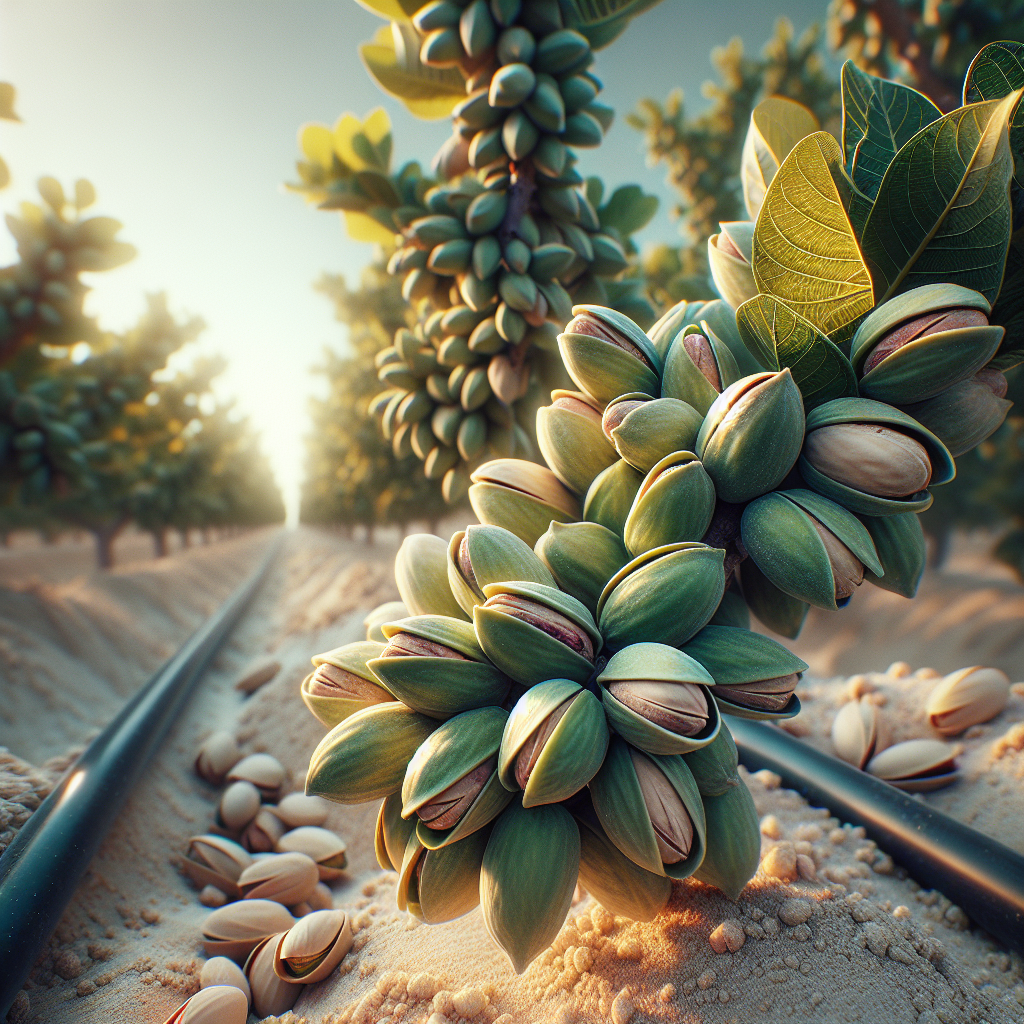
Introduction to Pistachio
Native to Central and Western Asia and cultivated for thousands of years from Persia through the Mediterranean, pistachio is one of the most climate-specific commercial nut crops in the world. It rewards patience rather than speed: orchards often take 5 to 7 years to enter meaningful production and may not reach mature yield until 12 years or more, but well-managed trees can remain productive for decades. The crop is especially valued in arid and semi-arid regions because it tolerates alkaline soils, moderate salinity, and summer heat better than many temperate tree nuts.
What makes pistachio unique agronomically is that it combines desert hardiness with a strict need for winter chill and dry flowering conditions. In unsuitable regions, trees may survive yet perform poorly, producing blank nuts, weak flower set, or erratic yields. In suitable regions, however, pistachio can outperform many orchard crops on marginal soils where species such as Almond would struggle with salinity or high pH.
Commercial growers focus heavily on site selection because no amount of later management can fully compensate for poor climatic fit. Home and small-scale growers should take the same lesson seriously: pistachios are not general-purpose backyard trees for humid climates. They are highly specialized orchard trees best suited to places with long, hot, low-humidity summers; cool winters; and well-drained soils.
Botanical Profile of Pistachio
Pistachio belongs to the family Anacardiaceae, the same botanical family as mango, cashew, and sumac. The species cultivated for edible nuts is Pistacia vera. It is a deciduous tree with a broad canopy, thick limbs, gray-brown bark, and pinnate leaves composed of several leathery leaflets. Mature trees commonly reach 20 to 30 feet tall in managed orchards, though canopy size depends strongly on rootstock, soil vigor, pruning, and irrigation regime.
A crucial biological trait is that pistachio is dioecious, meaning male and female flowers are borne on separate trees. Only female trees produce nuts, while male trees provide pollen. Pollination is by wind, not insects, so orchard design must account for prevailing spring wind direction and adequate distribution of compatible male cultivars. Typical planting ratios range from 1 male tree for every 8 to 24 female trees, depending on orchard design, cultivar bloom overlap, and wind reliability.
Flowers are borne in panicles on one-year-old wood. Female inflorescences develop into clusters of drupes commonly referred to as nuts. The edible kernel is enclosed by a shell that ideally splits naturally at maturity. Shell splitting is influenced by cultivar genetics, crop load, irrigation, and nutrition. Poorly filled nuts, closed-shell nuts, and blanks can result from inadequate pollination, nutrient imbalance, heat stress at sensitive periods, or excessive alternate bearing.
Most commercial orchards use grafted trees rather than seedlings because seedlings vary widely in productivity, shell split quality, and bearing age. Named female cultivars include 'Kerman', historically dominant in California; 'Sirora', important in Australia; and regionally adapted cultivars in Iran, Turkey, and the Mediterranean basin. Male cultivars are chosen to match bloom timing of female trees. Rootstocks may include Pistacia integerrima, P. atlantica, P. terebinthus, UCB1 hybrids, or regional selections chosen for vigor, soil adaptation, disease tolerance, and nematode resistance.
Pistachios also have a strong tendency toward alternate bearing. In an "on" year, trees set a heavy crop that can suppress flower bud initiation for the following year, leading to an "off" year with lower production. Good irrigation, balanced fertility, canopy light management, and occasionally crop load moderation help reduce the severity of this cycle, but it is intrinsic to the species.
Soil, pH, and Climate Requirements for Pistachio
Pistachio performs best in deep, well-drained soils with moderate water-holding capacity and minimal risk of prolonged saturation. Ideal textures include sandy loam, loam, and some well-structured clay loams. Although the species is more tolerant of difficult soils than many fruit and nut trees, drainage is non-negotiable. Even temporary waterlogging during active growth can damage roots, reduce oxygen in the root zone, and predispose trees to Phytophthora and other root diseases.
A minimum effective soil depth of 4 to 6 feet is preferred for commercial longevity, allowing the root system to explore deeply for water and mineral reserves. Hardpans, compacted layers, perched water tables, and caliche can all limit establishment. Before planting, perform a full soil profile assessment rather than relying only on topsoil samples. Dig test pits or use an auger to identify restrictive layers, salinity accumulation zones, and drainage problems.
The preferred pH range is about 7.0 to 8.0, though pistachio can tolerate slightly more alkaline soils than most orchard crops. It is notably more tolerant of lime and calcareous conditions than many deciduous fruit trees. However, tolerance does not mean immunity. At high pH, iron, zinc, and manganese can become less available, producing chlorosis, weak shoot growth, and poor nut fill. On alkaline sites, nutrient programs should rely on tissue testing and corrective foliar feeding or chelated micronutrients when needed.
Salinity tolerance is one reason pistachio has expanded in arid agriculture. Trees can withstand moderately saline irrigation water better than crops such as peach or many vegetable species. Still, excessive salinity reduces vigor, leaf area, nut size, and long-term orchard productivity. Sodium hazards are especially problematic where infiltration declines over time. Periodic leaching, gypsum where indicated by soil chemistry, and drip or micro-irrigation designed to control salt placement are essential management tools.
Climatically, pistachio needs a true Mediterranean-type or continental semi-arid pattern: winter cold for dormancy and spring floral development, then hot, dry summers for nut maturation and disease suppression. Chilling requirements vary by cultivar, but a practical target is roughly 700 to 1,000 chill hours below about 45°F (7°C), though response depends on the temperature model used. Insufficient winter chill can cause delayed leaf-out, uneven bloom, poor overlap between male and female flowering, and reduced yield.
Summer heat is equally important. Daytime temperatures above 95°F (35°C) are common in productive regions, and heat accumulation supports shell splitting and kernel development. High humidity during bloom increases disease risk and interferes with pollination because pistachio relies on dry air movement. Frequent spring rain can wash pollen from the air and damage flowers.
Late spring frost is a major site risk because flowers emerge on exposed panicles. Even if the tree itself is cold hardy, reproductive tissues are vulnerable. Avoid frost pockets, low-lying ground, and sheltered hollows where cold air settles. Good air drainage is often more important than the absolute minimum winter temperature.
Step-by-Step Planting & Propagation
Start with grafted nursery trees from a reputable source, not seedling trees, unless you are breeding or producing rootstocks. Seed-propagated pistachios are genetically variable and may take longer to bear, with unknown sex and nut quality. Commercial and serious small-scale growers usually purchase grafted females and grafted males on site-appropriate rootstocks.
Begin site preparation 6 to 12 months before planting. Remove perennial weeds, test soil at multiple depths, correct major drainage defects, and rip compacted subsoil if a hardpan is present and the soil is dry enough to shatter cleanly. If salinity or sodicity is an issue, amend before orchard establishment rather than after trees are planted, when correction becomes slower and less uniform.
Lay out the orchard according to equipment width, intended canopy size, rootstock vigor, and pollination plan. Common commercial spacing ranges from about 16 x 19 feet to 20 x 20 feet, though wider spacing may be justified in vigorous soils or low-pruning systems. Male trees should be positioned so prevailing bloom-season winds carry pollen across female rows. Some orchards place one male in every third row and every fifth to eighth tree, but the exact plan depends on orchard geometry and bloom synchrony.
Plant during dormancy, usually late winter to early spring, after the most severe freeze risk has passed but before active growth begins. Dig planting holes only as deep as the root system and wide enough to spread roots naturally. Do not bury the graft union. The final soil line should match the nursery soil mark, or slightly higher on heavier soils to reduce collar rot risk.
Backfill with native soil unless soil tests justify specific broad amendments. Avoid placing concentrated fertilizer in the planting hole, as salts can burn new roots. Water immediately after planting to settle soil and eliminate air pockets. Young trees benefit from staking in windy sites, but ties should be loose enough to prevent trunk abrasion.
For the first 1 to 3 years, train the tree to a strong scaffold structure. Many growers use a modified central leader or open-vase system depending on climate and mechanization. Select well-spaced primary limbs with wide crotch angles to support future crop load. Remove low, weak, crossing, or excessively upright shoots early while cuts are small.
Propagation by budding or grafting is standard for nursery production. T-budding and chip budding onto rootstocks during active bark slip are common, as is bench grafting in some systems. If propagating your own trees, ensure male and female cultivar identity is documented precisely; mistakes are costly and may not become obvious until flowering years later.
Young pistachio trees often appear slow above ground because they are investing in root establishment. Do not force excessive top growth with heavy nitrogen. Soft, overly lush shoots are more susceptible to sunburn, breakage, and winter injury.
Care & Maintenance regimes for Pistachio
Irrigation should be managed deeply and strategically, not frequently and shallowly. Mature pistachio trees are drought tolerant but not drought independent; high yields require carefully timed water supply. The goal is to maintain adequate moisture through root-active depths while preserving aeration. In most orchard soils, the main extraction zone is roughly 1 to 4 feet deep once trees are established.
A practical target is to irrigate when 40% to 60% of available water in the active root zone has been depleted, then refill without prolonged saturation. In loam soils this often means allowing moderate drying between irrigations, while in sandy soils more frequent but still substantial irrigations may be needed. Drip and microsprinkler systems are commonly used. Avoid keeping the top few inches constantly wet, which encourages surface rooting and trunk disease.
Signs of underwatering include reduced shoot extension, smaller leaves, midday leaf folding, nut drop, poor shell splitting, and shriveled kernels late in the season. Signs of overwatering include persistently wet soil below emitters, yellowing leaves without recovery, reduced shoot vigor despite ample fertility, sour-smelling soil, gummosis near the crown, and eventual dieback from root dysfunction. Waterlogged pistachio roots lose function quickly because the species is adapted to aerated soils.
Regulated deficit irrigation is sometimes used late in the season to conserve water and influence hull split timing, but it must be done with precision. Severe stress during kernel fill can increase blanking, reduce nut size, and intensify alternate bearing the following year. New growers should master full-season irrigation scheduling before attempting deficit strategies. For broader orchard soil management concepts, see soil health strategies.
Nutrient demand rises sharply as orchards enter bearing age. Nitrogen is the main driver of canopy growth and yield, but overapplication can produce rank vegetative growth, delayed hardening, and increased disease susceptibility. Many commercial orchards split nitrogen applications from spring through early summer, often through fertigation. Tissue analysis, especially midseason leaf sampling, is more reliable than guessing from appearance.
Phosphorus is important mainly at establishment or where soil tests show deficiency. Potassium is critical in cropping orchards because nut production removes substantial amounts and deficiency can limit kernel fill and tree resilience. Zinc and boron are particularly important for flowering, fruit set, and shoot health. In alkaline soils, foliar zinc sprays and carefully managed boron programs are often part of standard production.
Pruning should balance light distribution, renewal of fruiting wood, and scaffold strength. During the juvenile years, structure is the priority. In mature orchards, remove dead wood, overly dense interior shoots, low interfering limbs, and weak one-year shoots shaded beyond usefulness. Pistachio flowers on one-year-old wood arising from older branches, so indiscriminate heading can reduce future crop potential.
Weed control matters most during establishment. Young trees compete poorly with grasses and aggressive perennial weeds for water and nutrients. Keep a vegetation-free strip around the trunk, but avoid piling mulch directly against bark. In mature orchards, alley cover crops can reduce erosion and improve infiltration if managed so they do not steal water during critical crop periods.
Sunburn is a real issue in hot interior climates, especially on young trunks and scaffolds suddenly exposed by pruning. White trunk paint diluted with water is often used on young trees to reflect intense sunlight. Mechanical trunk guards can help, but they should not trap moisture against the bark.
Pests, Diseases & Organic Management
Pistachio pest pressure varies by region, but several groups recur across major production zones. Navel orangeworm is a serious problem in some areas, especially where nuts remain in the orchard too long or mummy nuts are left after harvest. Stink bugs and Leaffooted bugs can feed on developing nuts, causing epicarp lesions, kernel necrosis, and fungal infection entry points. Scale insects, Mites, and Mealybugs may also build up under dusty or biologically imbalanced conditions.
The first rule of organic and low-input pest management is sanitation. Remove and destroy mummified nuts, prune out dead infested wood, and maintain orchard floor cleanliness. Many insect pests overwinter in residual crop material. Timely harvest also reduces exposure to late-season infestations.
Biological control is strengthened by maintaining habitat for beneficial predators and parasitoids, but this must be balanced against water competition from excessive understory growth. Selective cover crops, flowering insectary strips outside the tree row, and reduced broad-spectrum sprays can help. Dust suppression on orchard roads is especially useful for limiting mite outbreaks because dusty foliage favors mite buildup and disrupts natural enemies.
Common diseases include Botryosphaeria panicle and shoot blight, Alternaria late blight in humid or dense canopies, Verticillium wilt in susceptible rootstock-scion combinations, and crown/root rots caused by Phytophthora under poor drainage. Disease pressure is usually far lower in dry-summer climates than in humid ones, which is one reason pistachio succeeds best in arid regions.
Botryosphaeria risk increases with overhead irrigation, retained infected wood, and prolonged moisture around clusters. Alternaria often becomes problematic where canopies remain dense and humid late in the season. Good airflow, moderate nitrogen, disciplined pruning, and irrigation practices that avoid excess canopy humidity are core defenses.
Organic disease management begins with prevention: plant on well-drained sites, use adapted rootstocks, avoid overwatering, sterilize pruning tools when moving through suspect blocks, and remove infected wood during dry weather. Copper-based materials and biological fungicides may have a role in some systems, but they work best as part of an integrated program rather than as rescue treatments after disease is advanced.
If Verticillium is known in the soil, avoid planting pistachios after highly susceptible hosts where possible. Rotations with crops such as Cotton can be relevant in some landscapes because historic field use affects inoculum pressure. Rootstock choice is one of the strongest long-term tools against soilborne constraints.
Watch for nutrient disorders that mimic disease. Iron chlorosis on calcareous soils, boron toxicity under saline irrigation, or zinc deficiency can all produce leaf symptoms that are easily misread. Always confirm with lab testing before making major management changes.
Harvesting, Curing & Optimal Storage
Harvest timing is determined by hull maturity, shell split percentage, kernel development, and the need to minimize pest and stain damage. Mature nuts typically show hull loosening from the shell, a change in hull color from bright green to a duller yellowish or pinkish cast depending on cultivar, and increased shell splitting. Kernels should be fully developed, firm, and characteristic in flavor.
In commercial orchards, harvest is usually mechanized with trunk shakers onto catching frames or tarps. Small growers may hand-harvest by shaking branches over clean collection surfaces. Avoid allowing nuts to contact wet soil, where staining and microbial contamination increase quickly.
Rapid postharvest handling is critical. The fleshy outer hull should be removed as soon as possible, ideally within hours of harvest. Delayed hulling promotes shell staining, mold growth, and quality loss. After hulling, nuts should be washed if needed and dried promptly to safe storage moisture. For in-shell pistachios, target final kernel moisture is generally around 4% to 6%, with the shell and kernel dry enough to prevent mold but not so overdried that flavor degrades.
Drying can be done with forced ambient or warmed air under controlled conditions. Spread nuts in thin layers if sun-drying, but protect from dew, insects, birds, and rewetting. Uneven drying leads to pockets of spoilage. Properly dried nuts have crisp shells, non-rubbery kernels, and no musty odor.
Sort out closed-shell, blank, insect-damaged, stained, and mold-suspect nuts. Quality grading after drying strongly improves marketability and storage stability. Aflatoxin management is especially important in warm climates, making sanitation, rapid drying, and pest control essential components of food safety.
Store dried pistachios in cool, dry, dark conditions. In-shell nuts keep longer than shelled kernels because the shell provides partial protection from oxygen and physical damage. For medium-term storage, temperatures below 50°F (10°C) with low relative humidity are desirable. For long-term storage, refrigeration or freezing preserves color and flavor far better than warm pantry conditions. Use moisture-proof, odor-resistant packaging because kernels readily absorb off-flavors.
Rancidity in pistachios is driven by oxygen, light, heat, and time. If kernels smell paint-like, stale, or waxy, lipid oxidation has begun. Vacuum sealing or nitrogen-flushed packaging is ideal for premium storage.
Companion Planting for Pistachio
In commercial terms, companion planting in pistachio orchards is less about close mixed cropping beneath the canopy and more about intentional orchard-floor ecology. Because pistachio is a deep-rooted, sun-loving tree that requires dry air and efficient harvest access, companions must never compromise ventilation, irrigation efficiency, or shaker movement.
The best companions are usually low-growing, non-competitive cover crops established in row middles rather than directly around trunks. Legumes such as subclover, medics, or carefully managed vetch can contribute nitrogen biologically, improve soil aggregation, and support beneficial insects when terminated before peak summer water demand. In lighter soils, cool-season grasses blended with legumes can reduce erosion and increase trafficability during wet periods.
Avoid aggressive perennial companions within the tree row, especially those with dense fibrous roots that compete strongly for irrigation water. Also avoid tall flowering species that interfere with wind movement during bloom or create excess humidity in dense plantings. The trunk zone itself should remain clear to reduce rodent shelter, weed competition, and crown disease risk.
In young orchards, temporary intercropping is sometimes possible if the companion crop has modest water demand, does not host key pathogens, and can be removed before shading or root competition becomes significant. However, long-term profitability usually favors giving pistachio trees priority access to moisture and nutrients.
Beneficial insect habitat is most useful when placed at orchard margins, road edges, or designated strips rather than tightly under canopies. Species selection should emphasize bloom periods that support predators and parasitoids without becoming weed reservoirs. Good companion planning in pistachio is therefore ecological but disciplined: support soil life and beneficial insects, yet preserve the open, dry, airy orchard microclimate the crop needs.
For home growers, the same principle applies. Keep the immediate root zone clean, use shallow-rooted seasonal covers at a respectful distance, and prioritize irrigation control over ornamental diversity. Pistachio thrives when competition is limited and the orchard floor is managed as part of the production system, not as an unmanaged mixed garden.