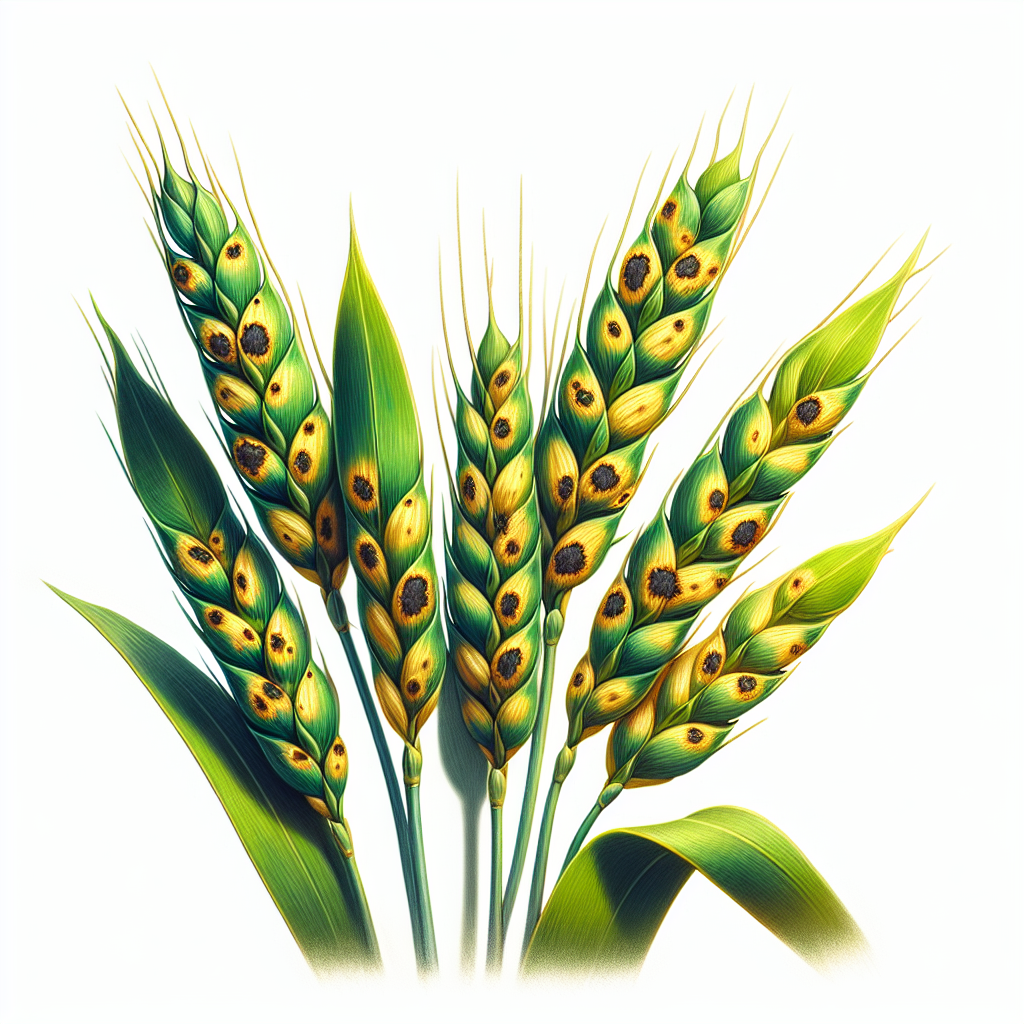
Introduction to Helminthosporium-type diseases
Helminthosporium-type diseases represent a complex of devastating foliar and seedling diseases primarily affecting cereal crops such as rice, wheat, corn, sorghum, and numerous grasses. Historically classified under the genus Helminthosporium, modern taxonomy recognizes these pathogens as species within Bipolaris, Exserohilum, Curvularia, and related genera. These fungi produce dark, olive-brown lesions on leaves, sheaths, and heads, often resulting in premature senescence, reduced photosynthesis, and yield losses up to 50-100% in severe epidemics.
First identified in the early 20th century, these diseases gained prominence during the Green Revolution when high-yielding, susceptible varieties were widely adopted under intensified irrigation. Today, they pose ongoing threats in tropical and subtropical regions, exacerbated by climate change-induced humidity spikes. This guide provides professional-grade diagnostics, lifecycle insights, organic management protocols, and prevention strategies tailored for small farms and commercial operations. Early intervention is critical, as spores disseminate rapidly via wind and rain splash, turning isolated spots into field-wide blights. For deeper insights into Soil Health Mastery: 5 Proven Strategies for Small Farms to Build Fertile Ground Without Breaking the Bank, which complements disease prevention through robust soil microbiomes.
Key species include Bipolaris sorokiniana (spot blotch on wheat and barley), Exserohilum turcicum (northern corn leaf blight), Cochliobolus miyabeanus (brown spot on rice), and Bipolaris oryzae (brown leaf spot). These pathogens exhibit overlapping symptoms, necessitating precise identification for targeted management. Understanding their biology empowers growers to implement integrated organic controls, reducing reliance on synthetic fungicides while sustaining yields.
Identifying Symptoms & Damage
Accurate diagnosis hinges on recognizing hallmark symptoms across infection stages. Initial signs appear 5-10 days post-inoculation as small, water-soaked spots on lower leaves, evolving into oval or elliptical lesions 0.5-2 cm long. Mature lesions display grayish-white centers with dark brown to black margins, often surrounded by yellow halos indicative of toxin production. Concentric rings within lesions, resembling a 'target spot,' are diagnostic for Bipolaris spp.
On corn, Exserohilum turcicum produces large, spindle-shaped lesions up to 15 cm, cigar-like in appearance, shredding leaves under prolonged wetness. Wheat spot blotch (B. sorokiniana) starts as dark brown flecks on lower leaves, coalescing into blotches that girdle sheaths, causing lodging. Rice brown spot (B. oryzae) features oval, 0.3-1.0 cm lesions with gray centers and salmon seed-like sporulation under high humidity.
Seedling infections manifest as 'damping-off' with water-soaked basal lesions progressing to root rot, killing 20-80% of stands. Head infections produce brown discolorations, shriveled grains, and mycotoxin contamination risks. Differentiate from Alternaria (smaller, darker spots), Cercospora (circular, shot-hole lesions), or Septoria leaf spot (yellowish blotches with pycnidia) via microscopy: Helminthosporium conidia are fusiform, 3-5 septate, olive-brown.
Yield impacts correlate with lesion coverage: 10% leaf area affected reduces yields 5-10%; over 30% causes 20-40% losses via defoliation and tiller sterility. Secondary invaders like armyworms exploit lesions, compounding damage. Scout weekly from tillering, using 10x hand lens for sporulation confirmation.
Lifecycle and Progression of Helminthosporium-type diseases
These necrotrophic fungi follow a polycyclic lifecycle, with 3-6 cycles per season. Primary inoculum survives as stromata or mycelium in crop residue, soil, or seeds for 1-2 years. Conidia germinate in free water (8-24 hours at 25-30°C), penetrating via stomata or wounds. Incubation averages 4-7 days, sporulation follows 2-3 days later under 90-100% RH.
Optimal temperatures: 25-30°C daytime, >20°C night; E. turcicum prefers 27°C. Sporulation peaks at dusk with dew formation, dispersing via wind (up to 100m) or splash (1-2m). Seedborne transmission perpetuates via contaminated lots. Progression accelerates post-anthesis: seedling stage losses from blights; vegetative from leaf spots; reproductive from head blights, with 70% damage in susceptible barley.
Epidemics follow the triangle: susceptible host + virulent pathogen + favorable environment. Lesion expansion rate doubles with leaf wetness >12 hours. Mycotoxins like sorokinian inhibit chlorophyll, amplifying senescence. Residue decomposition releases inoculum over 18 months, underscoring rotation importance.
Environmental Triggers & Risk Factors
Warm (24-32°C), humid (>85% RH) conditions drive epidemics, with prolonged leaf wetness (>10 hours) essential for infection. High nitrogen (>150 kg/ha) promotes lush foliage, diluting resistance. Poor air circulation in dense canopies traps moisture, elevating risk 3x. Acidic soils (pH<6) favor B. sorokiniana persistence.
Monocropping cereals for >2 years builds inoculum; no-till without residue management increases survival 40%. Overhead irrigation mimics rain splash, boosting spread. Climate variability—erratic monsoons, El Niño warmth—amplifies outbreaks, as seen in 2023 South Asia wheat losses. Susceptible varieties like Durum Wheat heighten vulnerability; hybrid corn shows partial tolerance.
Secondary stressors: root-knot nematodes weaken plants, enhancing entry; drought stress pre-wet periods spikes susceptibility. Monitor via weather stations for 'disease favorable days' (T>25°C, RH>90%).
Organic Control & Treatment Plans
Integrated organic management emphasizes cultural, biological, and resistant varieties. 1. Sanitation: Shred and bury residue immediately post-harvest; deep plow reduces inoculum 70%. Hot water seed treatment (52°C/10min) eliminates 90% seedborne fungi. 2. Rotation: 2-3 years with legumes (chickpeas) or brassicas breaks cycles.
3. Varieties: Deploy moderates like 'Sonalika' wheat or 'Pioneer hybrids' for corn; screen via artificial inoculation. 4. Nutrition: Balance NPK; silicon (20-50 kg/ha via rice hull ash) induces resistance, boosting yields 15-20%. 5. Biocontrol: Trichoderma viride (5 kg/ha) colonizes residue, parasitizing mycelia; Pseudomonas fluorescens seed treatment suppresses 50-60%.
6. Extracts: Neem oil (5 ml/L) + garlic (20g/L) sprays every 10 days reduce sporulation 40%. Baking soda (5g/L + 10ml/L oil) raises leaf pH, inhibiting germination. Treatment Protocol: At 5% incidence, apply biocontrol + extract; repeat at 10-day intervals 3x. Prune lower leaves to enhance airflow. For Spring Pest Patrol: Organic AI Strategies to Shield Your Crops from Common Invaders, adapt for fungal synergies.
Monitor efficacy via lesion counts; expect 60-80% suppression. Avoid night sprays to prevent dew extension.
Preventing Helminthosporium-type diseases in the Future
Long-term prevention builds resilient systems. Crop Rotation: Alternate cereals with soybeans, potato, or fallow; 3-year breaks cut inoculum 85%. Residue Management: Incorporate biofumigants like mustard (cabbage) residues for natural suppression.
Site Selection: Opt for well-drained, sloped fields; avoid low-lying humidity traps. Planting: Sow early-maturing varieties to escape peak humidity; space 20-25 cm for ventilation. Fertility: Soil test annually; maintain pH 6.5-7.5 with lime/dolomite.
Scouting: Weekly transects from VE stage; threshold: 10% lower leaves affected. Forecasting: Use temperature-humidity models for spray timing. Seed Quality: Certify pathogen-free; solarize soil pre-planting (6 weeks summer) kills 70% soil inoculum.
Cover Crops: Clover or hairy vetch suppress via competition, enhance soil suppressiveness. Multiyear trials show 40% incidence reduction. Integrate with IPM: monitor aphids, whiteflies as vectors.
Crops Most Affected by Helminthosporium-type diseases
Cereals: Wheat (spot blotch, 20-40% losses Asia); rice (brown spot, 10-30%); corn (northern/southern blight, 15-50%); sorghum (rough leaf spot); barley (scald/net blotch); oats, rye.
Grasses/Forages: Pearl millet, teff, sudangrass; turfgrasses. Others: Sugarcane (brown rust-like spots); occasional on soybeans, peanuts. Regions: Indo-Gangetic plains, US Corn Belt, African Sahel. Global losses exceed $1B annually.