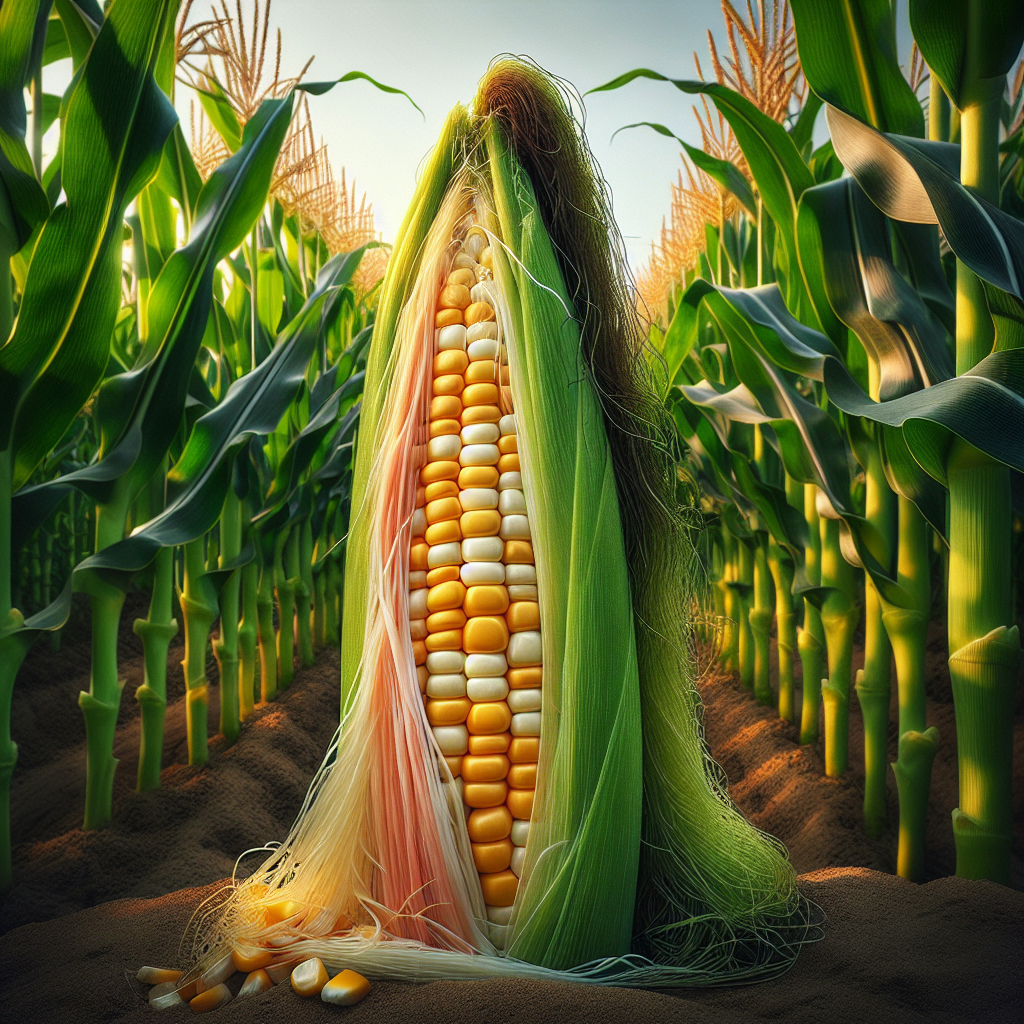
Introduction to Peaches and Cream Sweet Corn
A classic bicolor sweet corn, this cultivar became widely favored because it combines visual appeal with a flavor profile that is richer and less one-dimensional than many older yellow sweet corns. The ears typically carry a mix of white and yellow kernels, and the eating quality is at its peak when harvested in the narrow window between full milk stage and early sugar decline. In market gardens and home plots alike, it is valued for fresh eating, grilling, steaming, freezing, and roadside sales.
Peaches and Cream is generally treated as a main-season sweet corn rather than an ultra-early type. It is known for good ear fill under proper pollination, strong sweetness, and tender kernels, but like most sweet corn it is unforgiving of stress during germination, tasseling, silking, and kernel fill. Compared with field corn, sweet corn is harvested immature, when kernel sugars are high and starch conversion has not yet advanced. That means cultural management must be oriented not only toward yield, but toward tenderness, sweetness retention, and uniform maturity.
For general species-level background, see our Corn guide. For broader fertility strategies that support heavy-feeding crops, the principles in soil health tips are especially useful.
Botanical Profile of Peaches and Cream Sweet Corn
This crop belongs to the grass family, Poaceae, and is a domesticated annual cereal derived from ancient maize selections in Mesoamerica. Sweet corn differs genetically from dent, flint, and flour corn because it carries mutations affecting sugar-to-starch conversion in the endosperm. In practical terms, that means the kernels remain sweeter and more tender at the edible stage, but the seed is often less vigorous in cold soil than standard field corn.
Peaches and Cream is a bicolor sweet corn, usually producing medium to large ears with 12 to 16 kernel rows, depending on growing conditions and seed strain. Plants often reach roughly 5 to 7 feet tall, though fertility, moisture, planting density, and seasonal heat can shift height. Stalks are upright, fibrous, and anchored by nodal roots and brace roots near the base. Leaves are long, straplike, and arranged alternately, with a waxy cuticle that helps reduce water loss but does not make the crop drought tolerant.
Its reproductive biology is critical to understand. Corn is monoecious: the male flowers form the tassel at the top of the plant, while female flowers form the ears in leaf axils lower on the stalk. Each visible silk is attached to an individual ovule that must receive pollen for a kernel to develop. Poor pollination causes blank spaces on ears, especially at the tip. Because wind is the main pollination agent, block planting is more effective than long single rows.
As a sweet corn cultivar, Peaches and Cream is usually grouped with older sugary or sugar-enhanced eating types, depending on seed source. That matters because isolation from other corn types can affect eating quality and kernel character. If pollen from field corn, popcorn, or some supersweet types reaches the silks, the resulting ears may show reduced sweetness or tougher texture. Isolation in space or planting time is therefore not merely a seed-saving issue; it can affect the marketable crop in the same season.
Soil, pH, and Climate Requirements for Peaches and Cream Sweet Corn
This cultivar performs best in deep, fertile, well-drained loam or sandy loam with strong organic matter and good moisture-holding capacity. Ideal pH is generally 6.0 to 6.8, though it can still produce reasonably at 5.8 to 7.2 if nutrient balance is good. Below pH 5.8, phosphorus availability tends to drop and root development may suffer. Above about 7.2, micronutrients such as zinc can become less available, leading to pale striping or stunted growth.
The soil should be loose enough for rapid root expansion but not fluffy and droughty. A target of 3 to 5% organic matter is excellent for small-scale production, provided drainage remains free. Corn roots need oxygen as much as water. If the top 6 to 8 inches remain saturated for more than 48 hours, seedlings may yellow, growth slows, and root pathogens become more likely. In poorly drained sites, raised beds or ridged rows can improve survival, though corn generally performs best in broad in-ground blocks rather than narrow raised beds that dry too quickly.
Temperature is one of the biggest success factors. Seed germinates most reliably when soil temperature at planting depth is at least 60°F (16°C), with faster and more uniform emergence closer to 65 to 86°F (18 to 30°C). Cold, wet soil encourages uneven stands and seed rot. Air temperatures of 70 to 86°F (21 to 30°C) support strong vegetative growth. Prolonged heat above 95°F (35°C), especially during tasseling and silking, can shorten pollen viability and desiccate silks, reducing kernel set if irrigation is inadequate.
Peaches and Cream needs full sun, ideally 8 or more hours daily. Even light shade reduces photosynthesis, ear size, and sugar accumulation. Wind exposure is acceptable and even beneficial for pollination, but highly exposed sites can dry soil rapidly and lodge tall plants during storms if nitrogen is excessive.
Moisture demand is steady and increases sharply from knee-high stage through silking and ear fill. A practical target is about 1 to 1.5 inches of water per week, rising toward 1.5 to 2 inches during hot weather or light soils. The most critical objective is to keep the top 8 to 12 inches of soil evenly moist, not alternately baked and flooded. Soil should feel cool and slightly damp when squeezed from 3 to 4 inches deep, forming a weak ball that breaks apart with a light touch. If it feels dusty at that depth, the crop is already under stress. If it forms a sticky mass and smells sour, drainage is too poor or irrigation is excessive.
Step-by-Step Planting & Propagation
This crop is propagated by seed and is almost always direct sown. Transplanting is possible but rarely ideal because corn roots dislike disturbance, and transplants often show a growth check that defeats the purpose.
Prepare the ground 2 to 3 weeks before sowing. Remove perennial weeds, incorporate finished compost, and work the soil only when it is moist but not sticky. If a soil test is available, correct pH and base fertility in advance.
Choose a block layout rather than a single row. Plant at least 4 short rows side by side for effective wind pollination. A block 4 feet by 8 feet will usually pollinate better than a 1 foot by 32 foot strip.
Wait until frost danger passes and soil is warm. Planting into cold soil is one of the most common causes of patchy stands in sweet corn.
Sow seeds 1 to 1.5 inches deep in heavier soil, or up to 2 inches in lighter sandy soil. Depth should place seed into consistent moisture without burying it so deeply that emergence weakens.
Space seeds 8 to 12 inches apart within rows, with rows 30 to 36 inches apart. For smaller garden blocks, 10 inches in-row is a good compromise between ear size and yield. Overcrowding reduces air flow, increases competition, and often gives smaller ears.
Thin only if necessary. If germination is excellent, thin to the desired final spacing once seedlings are 3 to 4 inches tall. Avoid pulling extras if roots are entangled; snip them at soil level.
Succession sow every 10 to 14 days for an extended harvest. This is especially helpful because sweet corn matures all at once within each planting window.
Isolate from other corn types. To preserve kernel quality, separate from field corn, popcorn, and other sweet corn classes by at least 250 feet when possible, or stagger planting so tasseling periods differ by at least 2 weeks.
Protect seed in problem areas. In cool springs or where seedcorn maggot is common, use row covers after sowing, removing them before tasseling if they interfere with wind pollination.
Germination usually occurs in 5 to 10 days in warm soil. Emergence should be even; if plants appear in waves over two weeks, expect uneven tasseling and more variable ear maturity.
Care & Maintenance regimes for Peaches and Cream Sweet Corn
This is a heavy feeder and responds strongly to balanced fertility. Before planting, many growers aim for moderate pre-plant nitrogen with adequate phosphorus and potassium based on soil test results. Excess nitrogen too early can push lush top growth at the expense of root steadiness and may increase lodging, while too little nitrogen causes pale leaves, slow growth, and undersized ears.
A practical fertility program for garden-scale production is to incorporate compost before planting, then side-dress with nitrogen when plants are 12 to 18 inches tall and again just before tasseling if leaves are losing rich green color. Nitrogen deficiency usually appears first on older leaves as a V-shaped yellowing beginning at the tip along the midrib. Potassium deficiency can show as marginal scorching on older leaves, and zinc deficiency often appears as pale bands on younger foliage in high-pH soils.
Water management should be disciplined rather than casual. During early growth, keep soil moist enough to support continuous root expansion, but do not maintain constant saturation. Once stalk elongation begins, roots should be drawing from a broad soil zone. Deep irrigation is preferable to frequent shallow sprinkling. Ideally, apply water so the soil profile is moistened 8 to 12 inches deep, then allow the top inch to begin drying before watering again. During silking, never let the crop wilt in midday and remain wilted into evening. Brief midday leaf rolling can occur under heat, but persistent rolling by morning is a serious sign of water deficit.
Signs of underwatering include bluish-green leaves, rolled blades, delayed silk emergence, short ears, and poor tip fill. Signs of overwatering include general yellowing, slowed growth, sour-smelling soil, weak brace root formation, and heightened disease pressure. Sweet corn under erratic watering often produces acceptable stalks but disappointing ears.
Weed control is most important during the first 4 to 6 weeks after emergence. Young corn does not compete well with aggressive weeds for nitrogen, moisture, and light. Use shallow hoeing when weeds are tiny; deep cultivation can prune surface roots. A light organic mulch can help after plants are established, but avoid very thick mulch at seeding time because it can cool the soil and encourage pests.
Hilling soil lightly around the base when plants reach 12 to 18 inches can improve anchorage, especially in windy areas. Brace roots emerging above the surface are normal and beneficial.
Pollination support is often overlooked. In still weather, gently shaking tassels over the block during peak pollen shed can improve kernel set in small plantings. Peak pollen release generally occurs in the morning after dew dries. Silks should be fresh, green, and turgid; dried brown silks that emerge late often indicate stress or missed pollination timing.
Pests, Diseases & Organic Management
The most common early threat is poor stand establishment from seed decay, wireworms, seedcorn maggot, birds, or cold injury. Warm soil, clean seedbeds, crop rotation, and prompt emergence are the best preventives. birds may pull seedlings at emergence; lightweight netting or row cover can help until plants are well rooted.
corn earworm is one of the most familiar sweet corn pests. Adult moths lay eggs on fresh silks, and larvae feed on the ear tips. Organic management includes timely planting, encouraging beneficial insects, applying mineral oil mixed with Bacillus thuringiensis (Bt) to silk channels at the right stage in severe pressure areas, and harvesting promptly. Because damage is usually concentrated near the tip, some home growers tolerate low levels, but market growers typically need proactive measures.
European corn borer and fall armyworm can tunnel into whorls and stalks or damage ears. Look for shot-hole feeding in young leaves, frass in whorls, and broken stalks later. Bt sprays are most effective against small larvae before they bore deeply into tissue.
Sap-feeding pests such as aphids can accumulate on tassels and silks, producing sticky honeydew and encouraging sooty mold. Usually they are controlled by natural predators if broad-spectrum sprays are avoided. Strong water sprays or insecticidal soap can reduce severe infestations.
raccoons, deer, and squirrels are major non-insect pests and can ruin a planting just before harvest. Electric fencing is often the only consistently reliable defense in rural settings.
Among diseases, common rust appears as cinnamon-brown pustules on leaves, while northern corn leaf blight causes elongated gray-green lesions that reduce photosynthetic area. Good spacing, full sun, crop rotation, residue management, and avoiding overhead irrigation late in the day help reduce disease pressure. Because sweet corn is harvested young, moderate foliar disease is sometimes tolerable, but severe infection before ear fill directly reduces sweetness and size.
Stewart's wilt, smut, and seedling blights may occur depending on region. Corn smut produces swollen galls that rupture into black spores; remove and discard galls before they burst if you want to reduce spread. root and stalk rots are strongly associated with waterlogging, compaction, and plant stress.
Organic disease management centers on prevention: rotate away from corn and related grasses for at least 2 to 3 years when disease has been significant, avoid excess nitrogen, irrigate early in the day, and maintain balanced mineral nutrition. Healthy, steadily growing plants tolerate pest pressure far better than plants subjected to feast-or-famine watering.
Harvesting, Curing & Optimal Storage
Sweet corn is harvested for immediate eating quality, not for dry grain, so the target stage is critical. Most Peaches and Cream plantings reach harvest roughly 78 to 90 days from sowing, depending on season and local strain. The best indicators are ear feel and silk condition rather than calendar days alone.
Harvest when silks have turned brown and dry, husks remain green, and ears feel full to the tip. Peel back the husk slightly and puncture a kernel with a fingernail. At ideal harvest, the juice should be milky, not clear and watery, and not thick and doughy. Clear juice means immature ears; pasty contents mean sugars are already converting to starch.
Pick in the cool of morning for highest sugar retention. Hold the stalk with one hand and snap the ear downward with a quick twist. Handle gently; bruised kernels lose quality quickly. Unlike storage corn, there is no curing step in the classic sense. Instead, postharvest management is about rapid cooling.
Sweetness drops rapidly after harvest because respiration and sugar-to-starch conversion continue. Refrigerate immediately at 32 to 36°F (0 to 2°C) with high humidity, ideally 95% or above. Do not leave harvested ears in the sun or in a warm vehicle even for a short period if top flavor matters. Under ideal refrigeration, quality is best within 1 to 3 days, though ears may remain usable for up to 5 to 7 days.
For freezing, husk, blanch ears or kernels briefly, cool rapidly in ice water, drain, and pack airtight. If storing on the cob for fresh use, keep husks on until just before cooking to reduce moisture loss.
Companion Planting for Peaches and Cream Sweet Corn
The classic companion system is corn grown with climbing beans and squash, often called a Three Sisters-style planting. In this arrangement, Squash shades the soil and suppresses weeds, while Soybeans or other legumes can contribute biological nitrogen to the system over time and help diversify the planting. Nasturtium can be planted nearby to attract pollinators and beneficial insects, and Clover works well as a living mulch in wider paths or after corn is established.
Companion planting with sweet corn should be done thoughtfully rather than romantically. Corn is a tall, light-demanding, shallow-to-moderately deep rooted grass with heavy nutrient demand. Any companion that climbs too aggressively too early can pull stalks over, and any sprawling crop planted too densely can compete for water during the critical silking stage. If using beans, wait until the corn is 8 to 12 inches tall before sowing them so the stalks are strong enough to act as support. If using squash, plant at the edges of the block or give hills enough room that leaves do not smother young corn.
Low-growing companions are often best in modern production systems. Clover in alleys can reduce erosion and support beneficial insects, but it must be managed so it does not compete with young corn. Nasturtium is useful around bed edges where it can function as a trap and nectar plant without crowding the root zone. Avoid pairing corn closely with crops that demand the same root-zone resources at the same peak time unless irrigation and fertility are abundant.
When companion planting is done well, the result is better soil shading, improved biodiversity, reduced splash-borne disease, and more efficient use of garden space. When done poorly, the result is underfed corn with patchy pollination and small ears. In professional practice, the corn's needs should always govern spacing, irrigation, and fertility decisions.