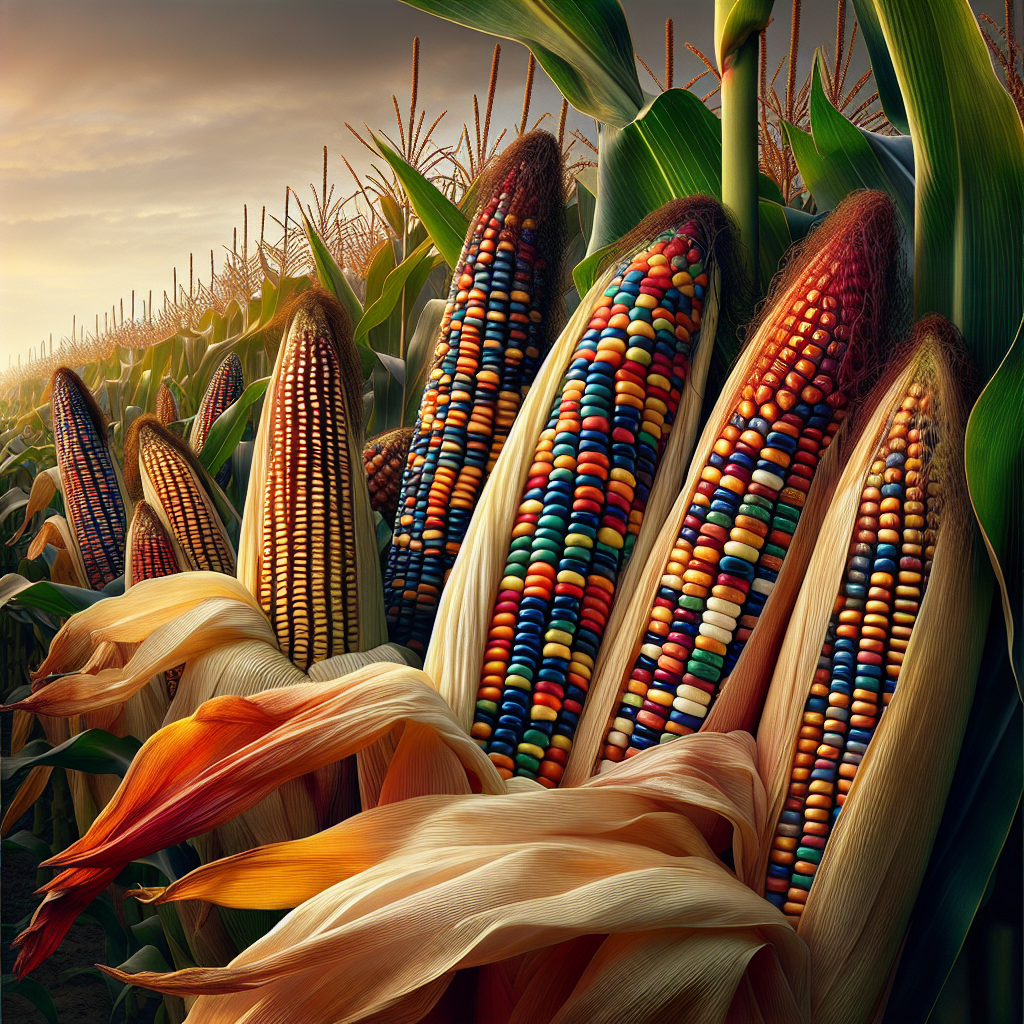
Introduction to Flint Corn (Indian Corn)
Among the major maize groups, flint corn is distinguished by its very hard outer kernel layer and remarkable diversity of kernel colors, including red, blue, white, gold, purple, orange, and mottled combinations. The term “Indian corn” is often used in North America for traditional multicolored ears displayed in autumn, but many of these ornamental ears are fully edible flint types when grown, dried, and processed correctly. Historically, flint corn was central to Indigenous agriculture across the Americas, especially in northern regions where its relatively quick maturity, storage quality, and tolerance of cool nights made it dependable.
Unlike sweet corn, which is harvested immature for fresh eating, flint corn is usually allowed to mature fully and dry on the stalk. The kernels become vitreous and dense, making them excellent for grinding into coarse meal, polenta-like dishes, grits, roasted corn preparations, parched corn, and masa or hominy after nixtamalization. Many heirloom strains also serve as ornamental crops, but decorative use should not overshadow their agronomic value. For growers wanting a resilient grain corn with beauty, culinary history, and excellent keeping ability, it is one of the most rewarding choices. For broader maize background, see our Corn guide.
Botanical Profile of Flint Corn (Indian Corn)
This crop belongs to the grass family, Poaceae, and is a monoecious annual, meaning male and female flowers occur separately on the same plant. The tassel at the top of the stalk produces pollen, while ears emerge from leaf axils along the stem. Each silk is attached to a potential kernel; successful pollination of every silk is necessary for complete ear fill. Because pollination is wind-driven rather than insect-dependent, planting layout matters more than it does for many vegetable crops.
Flint corn plants typically range from 5 to 10 feet tall depending on cultivar, day length adaptation, fertility, and moisture. Stalks are usually sturdy, with broad linear leaves that can contribute significant biomass after harvest. Ears are often shorter and harder-kernelled than dent corn, though this varies widely among heirlooms. The defining anatomical trait is the hard, glassy outer endosperm surrounding a smaller soft starch core. This structure gives the kernels their characteristic hardness, reduced shrinkage, and glossy appearance.
Kernel color is controlled by a complex interaction of genetic traits governing pericarp, aleurone, and endosperm pigments. That is why a single ear may display striking multicolor patterns. Growers preserving seed should know that maize cross-pollinates freely with nearby corn types, including sweet, dent, flour, and popcorn. Isolation by distance or time is essential if you want to maintain true-to-type seed color, texture, and culinary qualities.
Days to maturity commonly range from 90 to 120 days, though some northern flints finish earlier. Root systems are fibrous and moderately deep when soils are loose and well-aerated. Most nutrient uptake is concentrated in the top 12 to 18 inches of soil, but roots can explore deeper profiles when moisture is available. Plants are heavy feeders, especially for nitrogen, yet excessive late nitrogen can delay dry-down and increase lodging risk.
Soil, pH, and Climate Requirements for Flint Corn (Indian Corn)
Flint corn performs best in deep, fertile, well-drained loam or sandy loam with good water-holding capacity and strong biological activity. A crumbly structure is ideal because seedlings need warm, aerated soil for rapid emergence, while mature plants need stable anchorage against wind. Compacted soils restrict root penetration, reduce nutrient uptake, and increase vulnerability to drought stress during tasseling and grain fill.
The ideal soil pH is 6.0 to 6.8, though acceptable production can occur from about 5.8 to 7.2 if nutrient balance is good. At pH below roughly 5.8, phosphorus availability declines and aluminum or manganese issues may emerge in some soils. At higher pH, micronutrients such as zinc may become less available, leading to striping or stunted growth in young corn. If soil tests show low organic matter, incorporate mature compost or well-finished manure before planting, but avoid fresh manure because it can encourage excessive vegetative growth and uneven nutrient release.
Nutrient demand is highest for nitrogen, followed by potassium, then phosphorus. As a practical field target, many growers aim for a medium-to-high fertility soil capable of supplying steady nutrition through rapid vegetative growth and ear development. Pre-plant fertility should emphasize phosphorus and potassium where soil tests indicate need, while nitrogen is often split between pre-plant and side-dress applications when plants are knee-high. Sulfur and zinc can be beneficial in low-testing soils.
Temperature is critical. Soil should be at least 50 to 55°F (10 to 13°C) for germination, but emergence is faster and more uniform at 60°F (16°C) or above. Optimal growth occurs in daytime temperatures around 75 to 86°F (24 to 30°C). Prolonged cold slows root activity; extreme heat above 95°F (35°C), especially with dry winds during pollination, can reduce pollen viability and silk receptivity. Flint types are often chosen for shorter seasons and cool-night tolerance, but they are not frost-tolerant at any stage.
This corn prefers full sun and needs at least 8 hours of direct light daily; 10 or more is better. It is best suited to temperate climates with a warm growing season, moderate summer rainfall or irrigation, and a dry finish for harvest. Rainfall or irrigation totaling roughly 20 to 30 inches over the season is usually adequate, but the timing matters more than the total. Water stress just before tasseling through early grain fill causes the greatest yield loss.
Consistent soil moisture should feel like a wrung-out sponge in the root zone: moist but never waterlogged. Saturated ground deprives roots of oxygen, causing yellowing, stunting, purpling from impaired phosphorus uptake, and increased root disease risk. If leaves look pale and lower foliage dies back early despite wet soil, overwatering or poor drainage may be the hidden problem.
Step-by-Step Planting & Propagation
Flint corn is propagated by seed and is almost always direct-sown. Transplanting is possible in biodegradable pots, but it is generally inferior because maize resents root disturbance and direct-seeded plants usually outgrow transplants quickly.
Start with site preparation 2 to 4 weeks before sowing. Remove perennial weeds, loosen the top 8 to 12 inches of soil, and incorporate compost if needed. Use soil testing to guide amendments rather than guessing.
Wait until all frost danger has passed and the soil has warmed adequately. In short-season areas, choosing an early-maturing heirloom is often more important than sowing very early into cold soil.
Plant in blocks, not a single long row. A minimum of 4 short rows improves wind pollination dramatically. Poor block planting is one of the most common causes of patchy ear fill in home and small-scale production.
Sow seeds 1 to 1.5 inches deep in heavier or cool soils, and up to 2 inches deep in lighter, warmer soils with drying surface conditions. Good seed-to-soil contact is essential.
Space plants 8 to 12 inches apart within rows, with rows 30 to 36 inches apart for conventional hand-tended systems. Tight spacing increases competition and smaller ears; overly wide spacing reduces pollination efficiency and total yield.
Thin weak doubles after emergence if seeds were over-sown. Keep the most vigorous seedlings with upright, dark-green early growth.
Irrigate lightly after sowing if rainfall is not expected. Avoid drenching cold soil; seeds need moisture plus oxygen.
For succession or seed-saving, note isolation requirements. Different maize types can cross readily over significant distances. For reasonably pure seed, isolate by 250 feet at minimum for casual saving, and much farther for serious preservation, or stagger planting dates so tasseling does not overlap. This is especially important if Soybeans and other rotation crops are not your only nearby field neighbors and other corn types are present in the landscape.
If using the traditional Three Sisters approach, sow corn first and allow plants to reach roughly 6 to 12 inches before adding climbing beans and sprawling squash. This prevents the beans from overwhelming young corn and ensures the corn stalks are strong enough to serve as living supports.
Care & Maintenance regimes for Flint Corn (Indian Corn)
Once established, the crop needs disciplined management rather than constant fussing. The goal is uninterrupted growth from emergence to grain fill. Any check in growth during the first 6 to 8 weeks can reduce stalk strength and ear size later.
Water deeply and consistently, especially from the 8-leaf stage through tasseling and kernel set. A common target is about 1 to 1.5 inches of water per week from rainfall plus irrigation, rising toward the upper end in sandy soils, hot weather, or dense plantings. During tasseling and silking, uneven watering can cause barren ear tips or missing kernels. Signs of underwatering include rolled leaves by mid-morning, dull gray-green foliage, slow silk emergence, and shortened plants. If leaves roll only in intense late afternoon heat but recover by evening, stress is mild; if they remain rolled into morning, moisture deficit is more serious.
Mulching with clean straw or leaf mold can help conserve moisture and suppress weeds once seedlings are established and soil is warm. Keep mulch a few inches away from stalk bases to reduce rodent shelter and stem rot risk.
Weed control is most important during the first month after emergence. Corn is a poor competitor when young. Shallow hoeing or wheel cultivation works well, but avoid damaging surface roots once plants gain size. After plants are 12 to 18 inches tall, a light hilling-up of soil around the base can improve anchorage and reduce lodging.
Nitrogen side-dressing is often beneficial when plants are about knee-high or just before rapid stem elongation. Organic growers commonly use blood meal, feather meal, fish-based fertilizers, or well-managed composted poultry manure. The objective is to keep foliage richly green without pushing rank, weak growth late in the season. Yellowing of lower older leaves early in the season often indicates nitrogen shortage; purpling of young plants in cold soil may be temporary phosphorus stress rather than a true deficiency.
Wind stability matters. Exposed fields can cause leaning or root lodging, especially where fertility is excessive and stalks grow lush. Balanced potassium, moderate nitrogen timing, and hilling can reduce this. Dense shelterbelts should not cast shade, but well-planned wind moderation improves stand quality.
If growing for ornamental ears, resist harvesting too early. Full color intensity and true hardness develop only at physiological maturity and proper field drying. If growing for meal, allow maximum dry-down consistent with bird pressure, weather, and frost risk. For growers refining fertility and organic matter over time, this article on soil health is useful background.
Pests, Diseases & Organic Management
Birds are among the most visible pests, especially Crows pulling seedlings and Blackbirds feeding on maturing ears. Good emergence conditions reduce the vulnerable period when birds uproot sprouts. For ripening ears, netting, reflective tape, or timely harvest may be necessary.
Corn earworm can infest ear tips, especially in warmer regions. Because flint corn is harvested dry, damage is often tolerated more than in fresh-market sweet corn, but earworm feeding opens the door to fungal contamination. Encouraging beneficial insects, using mineral oil in silks on small plantings, and removing heavily infested ears can help.
European corn borer and similar Stalk-boring caterpillars weaken stems and ears. Crop rotation, residue destruction after harvest, and avoiding continuous corn are important organic tools. Healthy, well-mineralized plants also resist lodging better after minor borer damage.
Cutworms may clip young seedlings at the soil surface. Preventive measures include controlling weeds before planting, using collars in small gardens, and lightly cultivating before sowing to disrupt larvae.
Sap-feeders such as Aphids sometimes colonize tassels or leaves, particularly under drought stress. Usually, vigorous plants and natural predators keep them below damaging levels.
Common diseases include Smut, Rust, Leaf blights, Anthracnose, Stalk rots, and various Ear rots caused by Fusarium or other fungi. Smut causes swollen gray galls on ears, tassels, or stalk tissue. Remove galls before they rupture if you want to reduce spore spread, though complete elimination is unrealistic once the disease is present. Leaf blights show as elongated lesions that reduce photosynthetic area; good airflow, rotation, residue management, and varietal resilience are key.
Ear rots are especially important because some fungi produce mycotoxins. Minimize risk by preventing insect injury, avoiding severe drought stress during pollination, rotating out of corn, and harvesting promptly once ears are mature. Discard moldy ears rather than feeding them casually to livestock or storing them with healthy grain.
Organic management is most effective when built around prevention:
- Rotate with legumes or unrelated crops for at least 2 years where space allows.
- Avoid planting into cold, compacted, or waterlogged soil.
- Maintain balanced fertility rather than excessive nitrogen.
- Use resistant or locally adapted heirloom strains.
- Keep weeds controlled, especially grasses that can host pests.
- Remove and compost or destroy badly diseased residues if disease pressure was high.
Harvesting, Curing & Optimal Storage
Harvest timing depends on intended use. For decorative ears, wait until husks begin drying and kernels reach their mature, glassy color. For grain or meal use, harvest when kernels are hard and cannot be dented with a thumbnail, usually after full physiological maturity. Husks may be tan to brown, stalks drying, and kernels glossy and firm. A black layer at kernel attachment indicates physiological maturity, though this is not always checked in small-scale production.
If weather is dry and birds are manageable, ears can field-dry on the stalk. This improves curing efficiency and reduces post-harvest drying costs. However, in humid climates, before heavy autumn rains, or where Ear rots threaten, harvest earlier and finish drying under cover.
Pick ears by twisting downward from the stalk. Leave husks on for hanging braids if desired, but for food storage, partial husk removal often improves airflow. Cure in a warm, dry, shaded, well-ventilated place until kernel moisture drops to about 13 to 15% for safe storage, or around 12 to 13% for long-term grain storage. Without a moisture meter, rely on several indicators: kernels are extremely hard, cobs feel dry and light, husks are papery, and shelled kernels shatter rather than mash under a hammer.
Never store incompletely dried ears in sealed containers. Residual moisture leads to hidden mold, heating, musty odors, and insect outbreaks. For small quantities, mesh bags, slatted crates, or braided hanging bundles work well during curing. Once fully dry, ears can be stored whole in rodent-proof bins or shelled and stored in airtight containers in a cool, dark, dry environment.
Ideal storage temperatures are below 60°F (16°C), with low humidity. In warm, humid climates, freezing shelled grain for several days before final storage can kill insect eggs. Let grain return to room temperature while sealed to avoid condensation. Check monthly for odor, condensation, frass, or off-colors.
For culinary quality, many traditional cooks prefer to shell only what they need and grind fresh, because aroma declines over time after milling. Seed corn should be selected from healthy, true-to-type ears on vigorous plants and dried carefully without overheating.
Companion Planting for Flint Corn (Indian Corn)
The classic companions are Squash and climbing beans, with corn forming the structural center of the system. Corn provides a living trellis, beans fix nitrogen and occupy vertical space, and squash shades the soil to suppress weeds and conserve moisture. This polyculture is agronomically sound when timed well and given adequate spacing.
Beans should be introduced only after corn is sturdy enough, otherwise they can pull plants down or outcompete young seedlings. Pole or semi-pole beans are more suitable than extremely aggressive vines. Squash should be placed far enough from the corn base that it does not smother young stalks, but close enough to create a living mulch as summer heat builds.
Other useful companions include Sunflower, which can support pollinators and beneficial insects nearby, though it should not be so dense that it shades the corn, and Clover as a low understory or off-season companion to improve soil cover and organic matter. In larger systems, clover is often more practical as a rotational cover or alley understory rather than a direct in-row companion during early corn growth.
Avoid close association with crops that strongly compete for the same surface nutrients and moisture during establishment, or tall crops that interfere with wind pollination. The best companion strategy for this corn is not random diversity but structured compatibility: nitrogen contribution from beans, soil shading from squash, and minimal interference with light and airflow.