Introduction to Dent Corn (Yellow Dent)
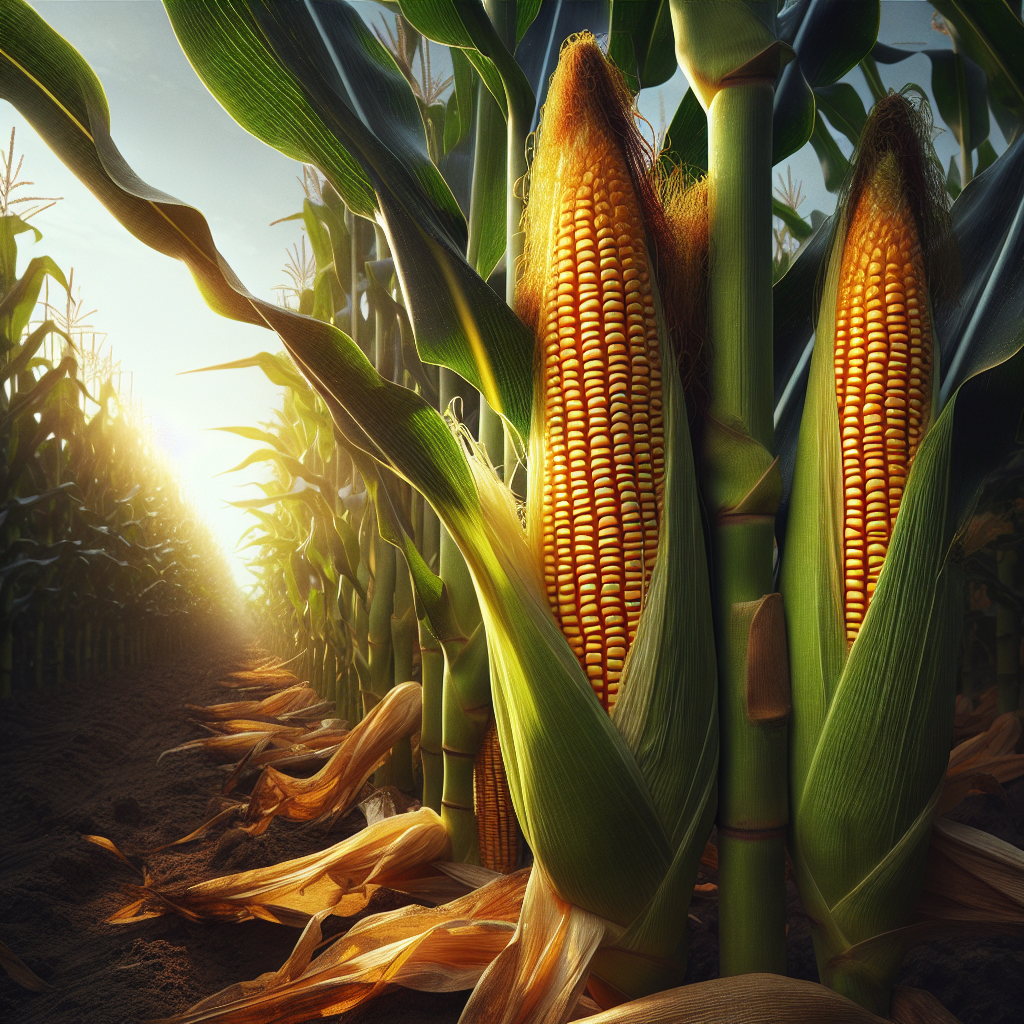
A cornerstone of North American agriculture, yellow dent corn is the archetypal field corn used for feed, cornmeal, masa blends, grits, ethanol, starch, and countless industrial products. Unlike sweet corn, which is harvested immature for fresh eating, dent corn is allowed to mature fully until the kernels harden and develop the defining indentation at the crown. That dent forms because the soft starch in the center of the kernel shrinks more than the hard starch at the sides during drying.
Historically, dent corn emerged from crosses between flint and flour corns, combining the productivity and adaptability that made it the dominant grain corn type across the U.S. Corn Belt. Modern yellow dent selections are bred for strong stalks, high grain yield, efficient dry-down, and uniform ears, but the core physiology remains the same: this is a heavy-feeding C4 grass that excels in heat, light, and fertile ground. For broad context on maize types and crop biology, see the Corn guide.
Yellow dent is especially valued by growers because it is versatile. Smallholders may grow it for cracked feed, whole-kernel storage, hominy, roasting ears at a late milk stage, or decorative autumn use if ears are well-formed. Larger producers rely on it for grain or silage. In all systems, success depends on matching soil fertility, planting density, and irrigation timing to the crop’s rapid vegetative growth and highly sensitive pollination window.
Botanical Profile of Dent Corn (Yellow Dent)
This crop belongs to the Poaceae family and is a monoecious annual grass, meaning separate male and female flowers occur on the same plant. The male inflorescence, the tassel, emerges at the top of the plant and releases pollen. The female inflorescence develops in leaf axils as ears, each with hundreds of ovules connected to individual silks. Every silk must receive pollen for a kernel to form, so weather stress during tasseling and silking directly affects yield.
Plants typically range from 1.8 to 3 meters tall, though height varies by genetics, fertility, moisture, and population density. Leaves are long, arching, and parallel-veined, with a waxy surface that reduces water loss. The root system is fibrous and extensive, with crown roots and brace roots providing anchorage and improving uptake from upper soil layers. In compacted ground, however, rooting becomes shallow and stalk stability suffers.
Dent corn kernels are rich in starch, especially soft starch in the central endosperm and harder starch along the sides. As kernels mature and dehydrate, the center contracts, creating the dent. Ear size, row number, and kernel depth differ among cultivars, but yellow dent types are generally selected for mechanical shelling, uniform dry grain, and good test weight.
From emergence to physiological maturity, the crop passes through vegetative stages designated V1, V2, and so on, followed by reproductive stages R1 through R6. The R1 stage, silking, is the most critical period for moisture supply. Drought, heat, or nutrient stress at this stage can sharply reduce kernel set. By R6, black layer forms at the kernel base, indicating physiological maturity even if grain still needs field drying.
Soil, pH, and Climate Requirements for Dent Corn (Yellow Dent)
This is a deep-rooted, nutrient-demanding crop that performs best in fertile loam or silt loam with excellent drainage and good water-holding capacity. Ideal soil texture balances aeration with moisture retention. Sandy soils can produce acceptable stands if fertility and irrigation are carefully managed, but they dry too quickly during tasseling unless watered frequently. Heavy clay can also work, but only if drainage is adequate and compaction is minimized.
The preferred soil pH is 5.8 to 7.0, with 6.2 to 6.8 being especially productive for nutrient availability. Below pH 5.5, phosphorus becomes less available and aluminum toxicity may inhibit roots. Above pH 7.5, micronutrient imbalances, especially zinc deficiency, are more likely. If a soil test indicates acidity, lime should be incorporated well before planting. For alkaline soils, organic matter additions and targeted micronutrient management often help.
Yellow dent corn needs full sun and warm conditions from planting through maturity. Seed germinates best when soil temperatures at 5 cm depth are consistently at or above 10 to 12°C, though emergence is faster and more uniform at 16 to 18°C. Cool, wet soils delay emergence and invite seed rot. Optimal daytime growth occurs roughly between 24 and 32°C. Temperatures above 35°C during pollen shed and silking can reduce fertilization, especially when paired with low humidity and dry soil.
Season length matters. Depending on cultivar, dent corn usually requires about 90 to 120 or more frost-free days to reach grain maturity. In shorter-season climates, choose an earlier-maturing selection to ensure black layer forms before autumn frost. In hot climates, a crop can mature quickly, but heat stress and erratic moisture can reduce kernel depth and final yield.
Consistent moisture is essential, but saturated soil is harmful. The crop generally needs about 450 to 650 mm of water over the season, with peak demand from rapid vegetative growth through grain fill. The most sensitive window spans roughly two weeks before tasseling to three weeks after silking. During that period, soil should remain evenly moist in the root zone, not cycling from drought to saturation. A practical target is to maintain moisture near field capacity in the top 30 to 60 cm, especially on lighter soils.
Signs of underwatering include leaf rolling by late morning, dull gray-green foliage, shortened internodes, delayed silking, and poor kernel set at ear tips. Signs of overwatering include persistently wet soil, yellow lower leaves despite adequate fertility, purple stress tones from impaired root uptake, shallow rooting, and a sour smell in poorly aerated ground. Standing water for more than 24 to 48 hours, especially in warm weather, can significantly reduce root function.
Step-by-Step Planting & Propagation
Dent corn is propagated by seed and should be direct-sown rather than transplanted. Transplanting disturbs root establishment and usually offers no benefit except in highly controlled experimental systems.
Start with a recent soil test. Because dent corn is a heavy feeder, planting blind often leads to hidden deficiencies, especially nitrogen, phosphorus, potassium, sulfur, and zinc. Correct pH first, then apply base fertility according to expected yield and soil reserves.
Prepare a firm, weed-free seedbed. Good seed-to-soil contact is crucial. The top few centimeters should be fine enough for uniform placement, but avoid powdery over-tillage, which can crust after rain. Conservation tillage also works well if residue is evenly distributed and soil has warmed sufficiently.
Wait until danger of hard frost has passed and soil is warm. Planting into cold ground often results in erratic emergence, especially if a cold rain follows sowing.
Sow seeds 2.5 to 5 cm deep. Use the shallower end in heavier, moist soils and the deeper end in sandy or drying seedbeds. Uniform depth matters more than absolute depth; uneven placement causes uneven emergence and weakens pollination synchrony later.
Space rows about 60 to 90 cm apart. Within rows, home and market growers often plant 15 to 25 cm apart, depending on soil fertility and rainfall. For grain production, population is typically adjusted to local yield potential. Lower populations are safer under drought or low fertility, while higher populations work only where nutrients and moisture are reliable.
Plant in blocks, not a single long row. Corn is wind-pollinated, so four or more short rows pollinate better than one or two long rows. Poor block planting often causes partially filled ears due to uneven pollen distribution.
Thin if necessary once seedlings are established. Remove weak or doubled plants to improve uniformity. Uniform stand establishment is a major determinant of final yield because late-emerging plants behave like weeds within the row.
Protect early growth from weeds. The first 4 to 6 weeks after emergence are critical. Early weed competition reduces ear size long before the crop visibly shows stress.
If you are building a broader field fertility plan, the principles in soil health strategies are especially useful for sustaining grain crops over multiple seasons.
Care & Maintenance regimes for Dent Corn (Yellow Dent)
Nitrogen management is central to successful dent corn. The crop has high demand, but timing matters as much as total amount. A moderate starter application at or before planting supports early vigor, while the largest share is often best applied as a side-dress when plants are knee-high to waist-high, before rapid uptake peaks. Excess early nitrogen in wet soils can leach or volatilize before the crop uses it. Deficiency usually appears as a V-shaped yellowing along the midrib of older leaves, starting at the tip and moving down the leaf.
Phosphorus is critical for early root development, especially in cool soils, while potassium improves stalk strength, drought tolerance, and grain fill. Sulfur deficiency can resemble nitrogen deficiency but often shows first on younger leaves. Zinc deficiency may cause pale bands on younger foliage, shortened internodes, and stunted growth, especially in high-pH soils.
Irrigation should be adjusted by stage. During establishment, keep the seed zone evenly moist but not saturated. Once roots deepen, irrigate less frequently but more thoroughly, encouraging roots to explore deeper layers. As tassels begin to emerge, never allow the crop to undergo severe moisture stress. During silking and early grain fill, water deficits can reduce kernel numbers and size even if leaves recover visually after irrigation.
A practical rule is to supply enough water to moisten the upper 30 to 45 cm of soil during vegetative growth and 45 to 60 cm during reproductive stages, then allow slight drying near the surface before irrigating again. Drip, furrow, or sprinkler systems can all work, but avoid frequent shallow watering that encourages weak surface rooting. Overhead irrigation during pollination is acceptable if timed to avoid creating prolonged humidity that favors foliar disease in dense canopies.
Weed control should begin before weeds exceed the seedling stage. Mechanical cultivation is effective until brace roots spread and the canopy closes, but cultivate shallowly to avoid pruning roots. Organic mulches are less practical in broadacre plantings but can help in garden blocks if applied after soil has warmed and plants are established. Living mulches should be used carefully because corn competes poorly with aggressive understory plants during establishment.
Hilling soil lightly around the base can improve anchorage in windy sites, especially if plants are tall and brace roots are visible. Lodging risk increases with excessive nitrogen, dense planting, and late storms.
For small-scale grain production, rogue out off-type or diseased plants early. Because corn cross-pollinates readily, isolation from sweet corn, popcorn, or ornamental corn may be necessary if seed purity or kernel type matters.
Pests, Diseases & Organic Management
Young plants are vulnerable to birds, cutworms, seed corn maggots, and wireworms. Good field sanitation, warm-soil planting, and prompt emergence reduce early damage. cutworms typically sever seedlings at the soil surface; collars, evening scouting, and encouraging ground beetles can help in garden settings.
Later in the season, corn earworm, European corn borer, fall armyworm, and sap-feeding pests such as aphids may appear depending on region. armyworms skeletonize leaves or feed deep in the whorl, leaving ragged holes after leaves unfurl. Corn borers tunnel in stalks and ears, weakening plants and opening pathways for rot. Earworms feed on developing kernels and attract secondary molds.
Organic management depends on integrated timing rather than one product. Rotate fields, destroy infested residue where appropriate, maintain habitat for beneficial insects, and scout weekly from emergence onward. Bacillus thuringiensis products are most effective against small caterpillars and should be applied before larvae move into protected plant tissues. Mineral oils or biological treatments directed at silks may reduce earworm entry in small plantings, though labor is high.
Major diseases include common rust, southern rust, gray leaf spot, northern corn leaf blight, anthracnose, stalk rots, and ear rots caused by Fusarium or Aspergillus species. Disease pressure rises in dense stands, high humidity, repeated corn-after-corn production, and where residue remains infected on the soil surface. Rotation is one of the strongest organic tools. Avoid planting corn repeatedly in the same spot, particularly if foliar blights or ear rots were severe.
Good airflow, balanced fertility, and irrigation that avoids prolonged leaf wetness all help. Excess nitrogen without corresponding potassium often produces lush but weaker tissue more susceptible to lodging and rot. ear rots deserve special attention because contaminated grain may contain mycotoxins unsafe for livestock or food use. Remove and discard visibly moldy ears, and never mix questionable grain into dry stored grain.
Wildlife pressure can also be substantial. Raccoons, deer, and birds may target developing ears. Physical barriers, fencing, and harvest timing are often more effective than repellents.
Harvesting, Curing & Optimal Storage
For dry grain, wait until ears reach physiological maturity and husks begin to dry. Kernels should be hard, glossy to matte depending on cultivar, and no longer dent under a fingernail. The black layer at the kernel base indicates maturity, but grain moisture may still be too high for safe storage.
In small plantings, ears are typically harvested when husks are brown and papery and kernels have developed a firm dent. Ideally, field drying continues until grain moisture falls to about 20% or below before picking, weather permitting. For long-term safe storage, shelled grain should usually be dried to around 13 to 14% moisture, and for extended storage in warm climates, even closer to 12 to 13% is safer.
If ears are harvested with higher moisture, cure them in a warm, airy, rodent-proof place with excellent ventilation. Spread ears in a single layer or hang them so air can move freely around each cob. Never heap freshly harvested ears in deep bins without airflow; this traps heat and encourages mold.
To test readiness without a moisture meter, shells should feel hard and slippery, not rubbery, and kernels should crack cleanly rather than mash when struck. Cobs should be dry and light, and husks should rustle. For professional accuracy, however, a moisture meter is strongly recommended.
Shell only fully dry ears. Clean grain to remove chaff, broken kernels, and dust, which harbor insects and moisture. Store in cool, dry, dark conditions in sealed but breathable-appropriate containers depending on humidity control strategy. In humid climates, airtight containers are safest only when grain is definitely dry. If moisture is uncertain, use ventilated bins until dryness is confirmed.
Inspect stored grain monthly for condensation, musty odor, heating, insect activity, or clumping. Grain weevils and moths can quickly multiply in poorly cleaned or marginally dry grain. Freezing small batches for several days before storage can reduce insect carryover. For feed or milling use, label harvest date and field lot so any storage issue can be traced back.
Silage harvest follows a different schedule and is typically done when whole-plant moisture is appropriate, often around the half-milk line stage, but that management system differs from dry grain production.
Companion Planting for Dent Corn (Yellow Dent)
The most practical companions are those that support soil function, suppress weeds, or share space without strongly competing during early establishment. Traditional intercropping with Soybeans works well in some systems because legumes can help diversify the field ecology and make efficient use of vertical space, though timing and population must be managed so the corn is not crowded. Another classic partner is Squash, whose broad leaves shade the soil, reduce weed germination, and conserve moisture once corn is established.
Clover is valuable as an understory or post-harvest companion rather than an aggressive same-time competitor. Sown carefully after corn is established or used as an off-season cover, it helps protect soil, reduce erosion, and contribute biologically active residue. In garden-scale plantings, Peas can play a role in a Three Sisters-style arrangement, but they are usually less heat-compatible than warm-season beans and may finish early in hot climates.
When companion planting, the main rule is to protect corn during its first month. Avoid vigorous companions that outcompete young plants for nitrogen, water, or light. Delay sowing sprawling companions until corn is 20 to 30 cm tall if weed pressure or cool soil is a concern. Maintain row access for cultivation, scouting, and harvest. In commercial grain settings, companion plants are often better used as relay crops, strip intercrops, or off-season covers rather than fully mixed plantings.
Poor companions include tall, shading crops planted too close, or dense feeders that compete during tasseling and grain fill. Heavy-feeding brassicas or sprawling vines introduced too early can reduce air movement and complicate field operations. The best companion system is one that complements corn’s growth curve rather than challenging it during establishment and pollination.