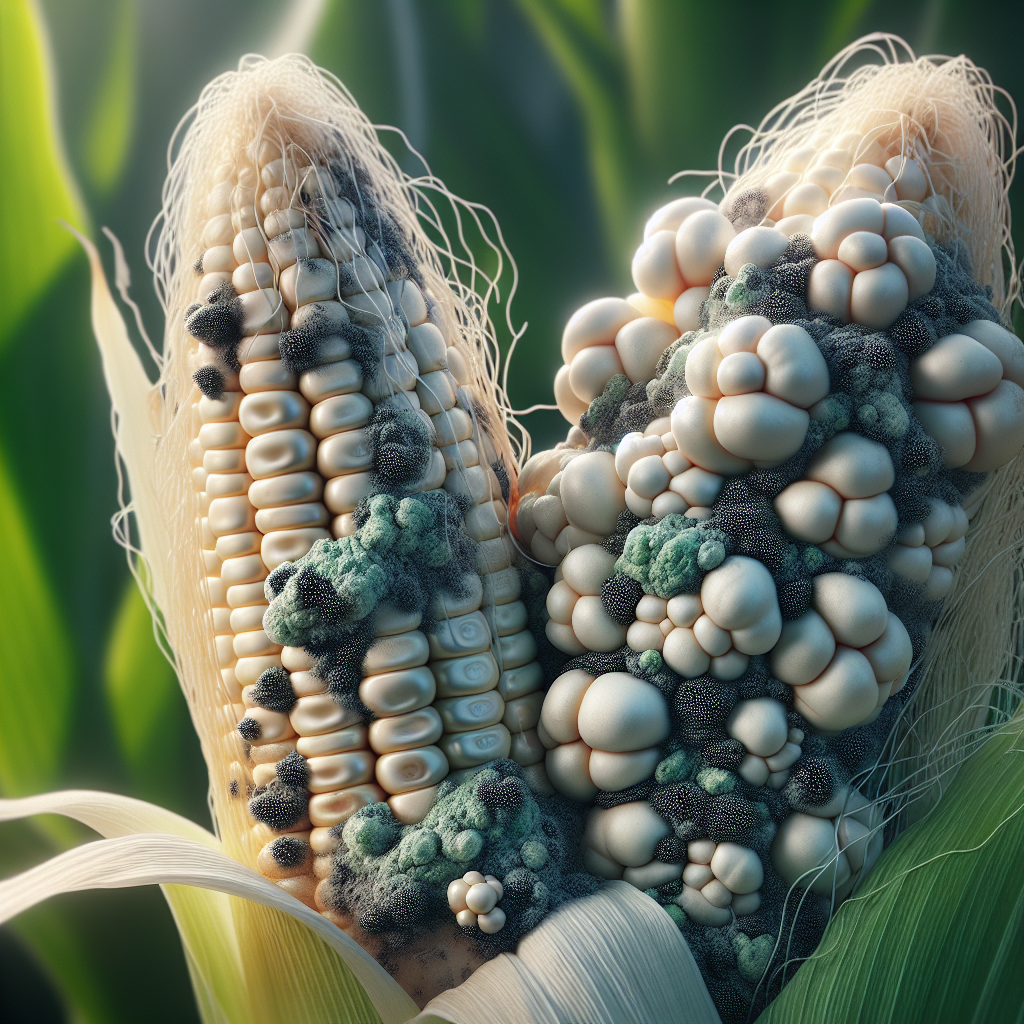
Introduction to corn smut
Corn smut, scientifically known as Ustilago maydis, is one of the most notorious fungal diseases affecting corn crops worldwide. Also called 'huitlacoche' or 'cuitlacoche' in Mexico, where it's considered a culinary delicacy, this pathogen causes significant economic losses for most growers by deforming ears, tassels, and stalks. The disease manifests as massive, silvery-white galls that rupture to release millions of infectious black teliospores, capable of surviving in soil for years.
First identified in the Americas, corn smut has spread globally, thriving in temperate and subtropical regions. It infects all above-ground parts of the corn plant, with ears being the most economically damaging site. Yield losses can exceed 80% in severe epidemics, making proactive management essential. This comprehensive guide covers symptoms, lifecycle, risk factors, organic treatments, prevention, and affected crops, empowering farmers with professional-grade strategies to protect their harvests.
Understanding corn smut's biology is crucial for effective control. Unlike bacterial diseases, this smut fungus requires specific environmental windows for infection, offering opportunities for cultural intervention. Recent research highlights resistant hybrids and biological controls as promising tools, but integrated approaches remain the gold standard.
Identifying Symptoms & Damage
Early detection of corn smut is vital for limiting spread. Initial symptoms appear 7-14 days after infection as small, silvery-white tumors on leaves, stalks, tassels, or ears. These galls start chlorotic (yellowish) and rapidly expand to 2-4 inches in diameter, becoming covered in a thin, fragile membrane.
Key diagnostic features:
- Galls feel firm initially, then soft and filled with oily, black teliospores upon rupture.
- Affected ears may produce 1-20 galls per ear, replacing normal kernels entirely.
- Stalk infections cause swelling and lodging; tassel galls prevent pollen production.
- Unlike common rust or northern corn leaf blight, smut galls are tumor-like, not necrotic lesions.
Damage assessment: Each infected ear can lose 50-100% of marketable grain. In field trials, infection rates above 5% trigger yield reductions of 10-30%. Secondary issues include mycotoxin contamination and pest attraction to ruptured galls. Scout fields weekly from V6 to R3 growth stages, focusing on field edges and low-lying areas. Confirm diagnosis by microscopic examination of spores (dark, thick-walled, 8-12 μm).
Differential diagnosis: Distinguish from ear rots by gall texture and spore mass color. Mechanical injury from hail or insects like corn earworm can mimic early symptoms but lacks spore production.
Lifecycle and Progression of corn smut
Ustilago maydis follows a complex lifecycle with five spore stages, making it resilient. Teliospores overwinter in soil, crop residue, or contaminated seed, germinating in wet conditions (>90% humidity) to produce basidiospores (sporting stage). These airborne sporidia require opposite mating types to form dikaryotic hyphae, the infectious agent.
Infection occurs through plant wounds or natural openings during rapid growth phases (V4-VT, R1-R2). Hyphae colonize vascular tissue systemically, inducing galls 10-20 days later. Mature galls rupture, releasing teliospores that splash or blow to new hosts. A single gall produces 10^8-10^9 spores, ensuring prolific spread.
Progression timeline:
- Dormancy (fall-winter): Teliospores viable 2-5 years.
- Germination (spring): Wet soils trigger basidiospore release.
- Infection (summer): 12-24 hours wetness needed at 68-86°F.
- Gall formation (2-3 weeks): Visible symptoms.
- Spore dispersal (maturity): Cycle repeats.
Volatility arises from meiosis during germination, generating genetic diversity and fungicide resistance. Unlike loose smut, corn smut is externally visible and non-systemic from seed.
Environmental Triggers & Risk Factors
Corn smut epidemics correlate strongly with environmental cues. Optimal infection requires 12+ hours leaf wetness at 20-30°C (68-86°F), common during silking. High nitrogen fertility (>150 lb/acre) and mechanical injury from cultivation, hail, or European corn borer tunneling increase susceptibility.
Key risk factors:
- Soil persistence: Spores survive 3+ years; continuous corn monoculture amplifies risk.
- Plant stress: Drought, nutrient imbalance, or corn rootworm damage wounds plants.
- Field history: 1-5% infection doubles next-year risk without rotation.
- Regional hotspots: Midwest U.S., Mexico highlands, Andean valleys.
Climate change extends wet periods, boosting incidence. Susceptible hybrids like older dent corn show 20x higher infection than resistant lines. Volunteer corn and sweet corn (Honey Select) serve as reservoirs. For deeper insights on corn diseases, see our Smut (disease) wiki page.
Organic Control & Treatment Plans
Organic management emphasizes cultural, biological, and resistant varieties over fungicides. No curative treatments exist post-infection; focus on suppression.
Immediate response (active infection):
- Rogue infected plants promptly, burying >2 ft deep to bury spores.
- Apply potassium bicarbonate or Bacillus subtilis (e.g., Serenade) at 7-day intervals from VT-R1.
- Improve airflow: Thin stands to 28,000-32,000 plants/acre.
Biological controls:
- Pseudomonas fluorescens and Trichoderma viride antagonize sporidia (apply as seed treatment or foliar, 5-10 g/kg seed).
- Compost teas with high microbial diversity suppress germination.
Resistant varieties: Plant hybrids rated MR (moderately resistant) like DKC 62-08 or Pioneer P1197. Rotate with non-hosts like soybeans or wheat for 2-3 years.
Integrated plan: Scout + rogue + biology + resistance reduces incidence 70-90%. Check Spring Pest Patrol: Organic AI Strategies to Shield Your Crops from Common Invaders for complementary tactics. Avoid overhead irrigation; use drip for 40% wetness reduction.
Preventing corn smut in the Future
Prevention hinges on breaking the spore cycle through cultural practices. Implement a 3-year rotation: corn → sorghum → legume cover crop. Deep plow residue post-harvest to bury 95% of teliospores.
Proven strategies:
- Seed quality: Hot water treat (52°C, 12 min) or certified smut-free seed.
- Fertility balance: Moderate N (120 lb/acre); add silicon via slag for resistance.
- Sanitation: Destroy volunteers; till silage fields aggressively.
- Timing: Plant early to avoid peak sporidia (June-July).
- Monitoring: Use weather stations for wetness hours; intervene at 10+ hours.
Long-term: Breed for polygenic resistance; integrate mycorrhizal fungi at planting. Fields with <1% history stay clean with rotation alone. Economic threshold: Treat at 2% incidence pre-silking.
Crops Most Affected by corn smut
Primarily a corn specialist, U. maydis infects dent, flint, sweet, popcorn, and pod corn varieties. Dent Corn (Yellow Dent), Flint Corn (Indian Corn), and Sweet Corn (Honey Select) suffer highest losses. Teosinte (wild corn relative) is highly susceptible, acting as a bridge host.
Minor hosts include sorghum (rare), pearl millet, and sugarcane under high inoculum. No reports on potato or squash. Global impact: 5-10% annual U.S. corn acreage affected; Mexico reports 20-50% in heirlooms. Hybrids reduce risk, but organic fields average 3x higher incidence.