Introduction to Corn borers
Corn borers represent one of the most notorious pests in global agriculture, particularly devastating to corn production. Primarily encompassing the European Corn Borer (ECB, Ostrinia nubilalis) in temperate regions and various stem borers like the American Corn Borer complex (Diatraea spp.) in tropical areas, these insects bore into plant tissues, disrupting nutrient flow and inviting secondary infections. First identified in Europe in the late 1800s and introduced to North America around 1917, ECB alone causes annual losses exceeding $1 billion in the U.S., according to USDA estimates. Their larvae feed voraciously on stalks, tassels, silks, and kernels, weakening plants and reducing yields by 10-30% in moderate infestations, up to 100% in severe cases.
Farmers face unique challenges with corn borers due to their cryptic feeding habits—larvae hide inside plant parts, evading surface sprays. Multiple generations per season amplify damage, with eggs laid on undersides of leaves and neonate larvae quickly tunneling inward. Beyond direct feeding, borers create entry points for pathogens like corn smut, northern corn leaf blight, and stalk rots, compounding losses. This definitive guide equips growers with diagnostic tools, lifecycle knowledge, organic controls, and prevention strategies to safeguard fields. Whether managing sweet corn varieties like Sweet Corn (Honey Select) or field corn like Dent Corn (Yellow Dent), proactive measures are essential for sustainable production.
Identifying Symptoms & Damage
Early detection is critical for corn borer management, as symptoms evolve with larval development. Initial signs appear 7-10 days after egg hatch: small 'pinhead' holes or 'shot-hole' damage on leaves, where neonate larvae scrape the leaf surface before entering. Look for translucent windows—scraped epidermis leaving the lower leaf cuticle intact—or frass (insect excrement) pellets resembling sawdust at entry points.
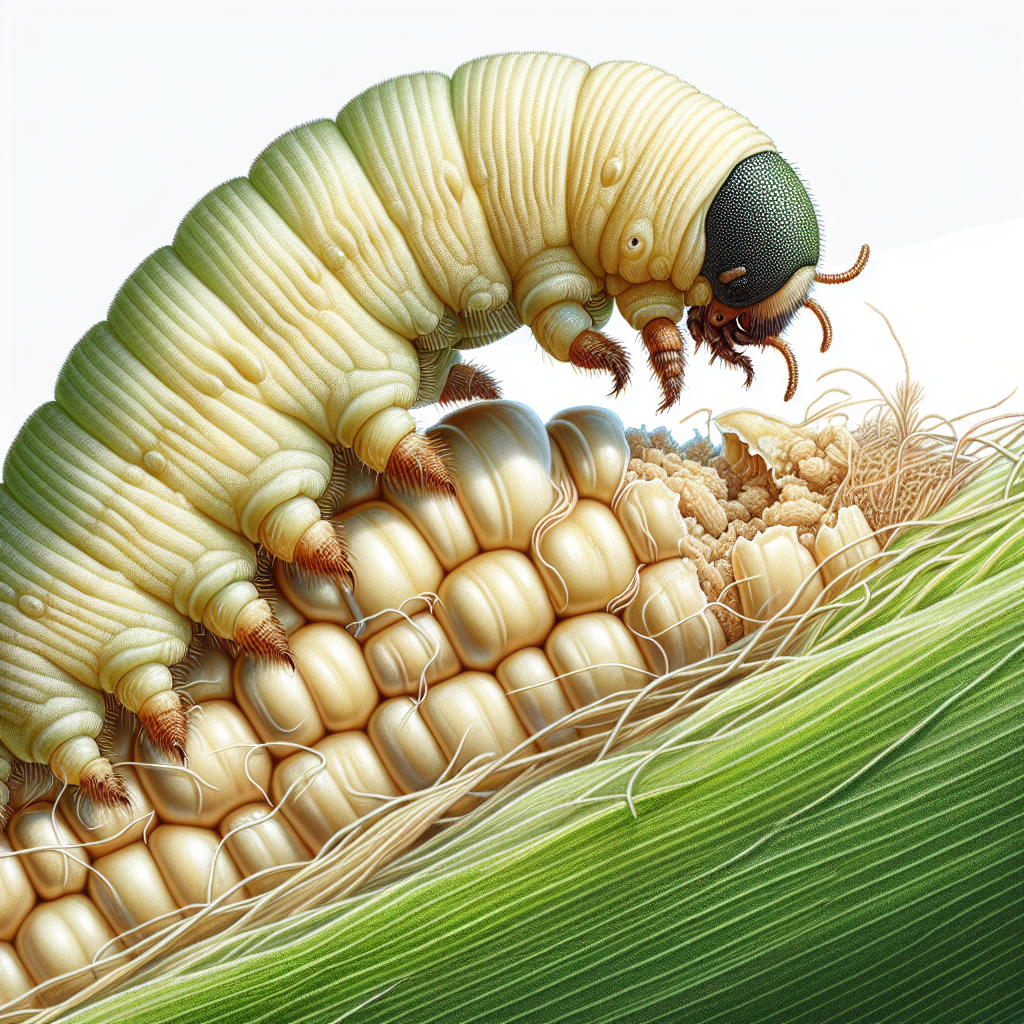
As larvae mature (1/4 to 1.5 inches long, cream-colored with dark head), damage intensifies. In whorl-stage corn, expect ragged 'sawdust whorls' with webbing and frass masses. Tassel infestation causes dropped anthers and sterile pollen, leading to poor ear fill. Stalk boring manifests as nodes with girdling scars, purpling, or longitudinal cracks; pinch stalks at suspect nodes to reveal pinkish borers and tunnels.
Ear damage is hallmark: silks clipped 1/2 inch from the husk, frass 'sawdust piles' at the tip, and larvae feeding on kernels from the tip inward. Severely infested ears show moldy, hollowed cobs. Late-season stalks break at nodes ('goose-necking'), lodging fields. Differentiate from similar pests like corn earworm (surface feeders with green bodies) or fall armyworm (gregarious, leaf-notching). Use a knife to split 20-30 stalks per 10 acres; >10% with live larvae signals economic thresholds. Scout weekly from V4 to R2 growth stages, focusing on field edges near overwintering sites.
Lifecycle and Progression of Corn borers
Understanding the corn borer lifecycle enables precise timing of interventions. ECB completes 1-3 generations annually, varying by latitude and temperature. Adults are beige moths (females with zigzag wing bands) emerging from overwintering pupae in leaf sheaths or stalks in late spring (late May-June). Peak flight coincides with >50% blackheaded egg masses on undersides of mid-canopy leaves.
Females lay 20-30 eggs per mass, hatching in 3-6 days into tiny brown-headed larvae that disperse via silks or wind. Larvae pass through 5-7 instars over 3-6 weeks, feeding externally then boring in. Full-grown (1 inch) larvae pupate in stalks or debris, with second/third generations overlapping summer. Tropical Diatraea spp. have 4-8 generations, with similar moth-larva-pupa stages but faster cycles in heat.
Overwinter as 5th-instar larvae in tunnels plugged with frass. Degree-day models (base 47°F/8.3°C) predict flights: 325 DD for first, 1175 for second. Monitor with pheromone traps (9-12 traps/100 acres); >5 moths/trap/week warrants action. Lifecycle progression ties to corn phenology: first generation targets whorl (V4-V8), second silks/R1, third ears/early grain fill.
Environmental Triggers & Risk Factors
Corn borers thrive under specific conditions amplifying outbreaks. Mild winters (>32°F average) boost overwinter survival to 20-50%, versus <10% in harsh freezes. Continuous corn monocultures exceed thresholds 3x faster than rotations with soybeans or wheat. High nitrogen (>150 lb/acre) increases stalk succulence, attracting 2-4x more egg masses.
Humidity >70% RH favors egg hatch and larval survival; drought-stressed corn shows 30% less boring but higher lodging from weakened stalks. Proximity to woodlots or grassy borders harbors pupae, with edge infestations spilling 100-200 ft inward. Late-planted fields (>mid-June) align with peak moth flights, suffering 50% higher damage. Bt corn non-compliance or refuge failures select resistant populations, now at 5-10% in some areas.
Climate change extends generations northward, with models predicting 20% yield risk increase by 2050. For comprehensive pest monitoring, check out this Spring Pest Patrol blog post. Scout history, weather data, and hybrid susceptibility (tight-husked varieties resist ear entry) inform IPM.
Organic Control & Treatment Plans
Organic management integrates cultural, biological, and mechanical tactics, avoiding synthetics. Cultural: Rotate with non-hosts like potato or legumes (2-3 years breaks populations 70%). Plant early (V4 before first flight), use susceptible hybrids sparingly. Shred stalks post-harvest and fall till to expose 80% of overwintering larvae to predators/parasites.
Biological: Conserve natural enemies—Trichogramma wasps parasitize 50% eggs; release 100k/acre at peak flights. Bacillus thuringiensis (Bt kurstaki) targets larvae <1/2 inch; apply at 1-2 lb/acre with volumes 20-40 GPA, timing for 90% whorl coverage (dusk for UV protection). Neem oil or spinosad (OMRI-listed) for ears: 3-5 apps at 5-7 day intervals from silking.
Mechanical: Pheromone traps disrupt mating (>20 traps/acre). Aspirate egg masses pre-hatch. For small farms, hand-remove tassels/ears in edges. Thresholds: 50 egg masses/100 plants or 15% whorl damage. Combine with releases for 60-80% control. Monitor European Corn Borer specifics for refined plans.
Preventing Corn borers in the Future
Long-term prevention builds resilient systems. Adopt Bt hybrids (YGPS events) with 20% structured refuge, rotating traits yearly to delay resistance. Tissue-paper husks and tight silks deter entry. Intercrop with repellents like thyme or trap crops (sorghum). Barrier row sprays or mineral oil on silks at R1 reduce entry 50%.
Soil health via cover crops (clover) suppresses via nematodes/parasites. Scout grids (1/acre) with blackheaded egg scouting. Destroy volunteer corn, grassy weeds. Post-harvest, ensile stalks or burn piles (>90% kill). IPM pyramids: rotation + early planting + Bt + bioagents yield 95% control. Track via apps for flights.
Crops Most Affected by Corn borers
Corn dominates as primary host, all types: sweet (Peaches and Cream Sweet Corn), field (Flint Corn (Indian Corn)), popcorn (Popcorn (Orville Redenbacher)). Secondary: peppers (bell pepper), eggplant, sorghum, millet. Rare: snap beans. Yield hits hardest in processing sweet corn (cosmetics) and seed corn.