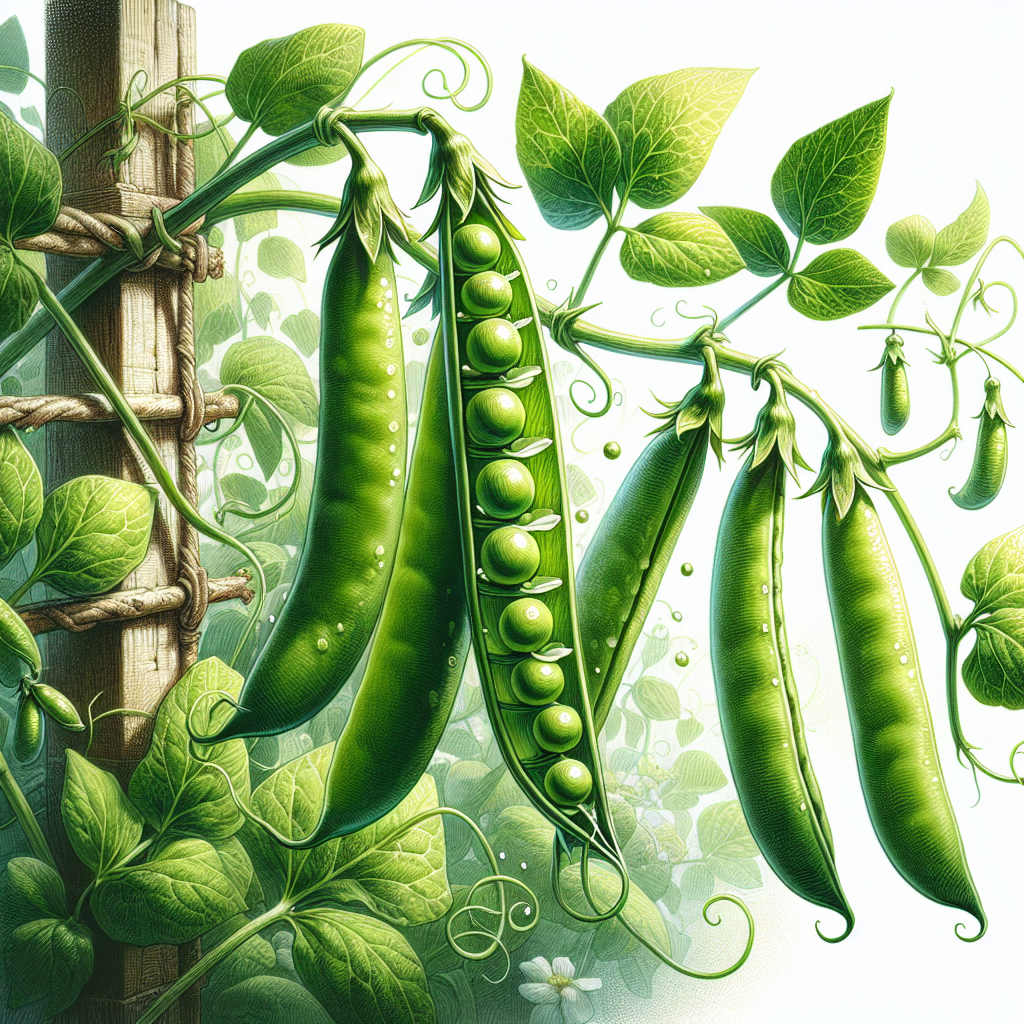
Introduction to Sugar Snap Peas
Sugar snap peas, a delightful hybrid of snow peas and garden peas, burst onto the culinary scene in the 1970s thanks to breeder Calvin Lamborn. These crisp, sweet pods are entirely edible, offering a perfect balance of tender texture and natural sugars that make them a favorite in salads, stir-fries, and fresh snacking. Botanically classified as Pisum sativum var. macrocarpon, sugar snap peas are cool-season annual legumes that fix nitrogen in the soil, enhancing fertility for subsequent crops.
What sets sugar snap peas apart from their relatives like snow peas is their plump, rounded pods filled with full-sized peas, yet remaining stringless and tender when harvested young. They typically reach 4-6 feet in height, producing abundant yields of 2-3 pounds per plant under optimal conditions. Nutritionally, they pack vitamin C, vitamin K, fiber, and protein, supporting immune health and digestion. For small farms and home gardeners, their quick 50-70 day maturity, vertical growth habit, and low input requirements make them a profitable, space-efficient choice. Success hinges on timing—planting in cool weather prevents legginess and bolting, ensuring sweet, productive vines. This guide equips you with professional techniques to maximize harvests while minimizing issues.
Botanical Profile of Sugar Snap Peas
Sugar snap peas belong to the Fabaceae family, sharing lineage with beans, lentils, and peas. As an annual herbaceous climber, they feature square stems, compound pinnate leaves with 2-3 pairs of leaflets, and tendrils for climbing. Flowers are self-pollinating, pea-like in white or pale pink, emerging from leaf axils in clusters of 1-3.
Pods are flat to plump, 2-4 inches long, containing 4-10 round green seeds. Popular cultivars include 'Super Sugar Snap' (disease-resistant, high yields), 'Sugar Ann' (dwarf, bush-type for containers), and 'Cascadia' (stringless, heat-tolerant). Roots form symbiotic nodules with Rhizobium bacteria, converting atmospheric nitrogen into usable forms—up to 100-200 lbs/acre fixed annually. Vines grow 4-6 feet tall (bush types 2 feet), preferring full sun and temperatures of 55-75°F. Photoperiod neutral, they mature based on accumulated heat units (around 1,200 GDD base 41°F). Pollen is sticky and bee-pollinated in nature, but self-fertile indoors. Seed viability lasts 2-3 years under cool, dry storage.
Soil, pH, and Climate Requirements for Sugar Snap Peas
Sugar snap peas excel in well-drained, fertile loams with pH 6.0-7.5; test soil annually and amend with lime if below 6.0 or sulfur if above 7.5. Organic matter at 3-5% improves moisture retention and microbial activity—incorporate 2-4 inches compost pre-planting. Avoid heavy clays prone to waterlogging, which invites root rot. Phosphorus is key for nodulation (target 40-60 ppm); use rock phosphate for slow-release. Nitrogen needs are low post-inoculation—excess promotes foliage over pods.
Cool-season champs, they thrive in USDA zones 3-9 with daytime 60-70°F and nights above 40°F. Sow when soil hits 45°F (late winter/early spring); fall planting suits mild winters. Heat above 80°F triggers flowering abortion; mulch to moderate soil temps. Full sun (6-8 hours) essential; partial shade reduces yields 20-30%. Rainfall of 1-1.5 inches/week ideal—drip irrigation prevents foliar wetting. Rotate with non-legumes every 3 years to curb soil pathogens. For more on optimizing soil, check Soil Health Mastery: 5 Proven Strategies for Small Farms to Build Fertile Ground Without Breaking the Bank.
Step-by-Step Planting & Propagation
Seed Selection & Inoculation: Choose certified, disease-free seeds (germination >85%). Inoculate with pea-specific Rhizobium (e.g., peat-based) for nitrogen fixation—mix per package rates.
Timing: Direct sow 4-6 weeks before last frost (spring) or 8-10 weeks before first frost (fall). Soil 45-75°F optimal.
Site Prep: Till 8-12 inches deep, remove debris. Rows 18-24 inches apart; plant 1-2 inches deep, 1-2 inches apart (thin to 4 inches). Use trellis (netting, twine, or A-frame) for vining types.
Sowing: Plant in double rows 6 inches apart, 24 inches between pairs. Bush varieties need no support. Water gently post-sowing.
Propagation Alternatives: Scarify hard seeds; pre-sprout in moist paper towels at 65°F for 3-5 days. Transplants viable if root-pruned, but direct sow preferred to avoid disturbance.
Density: 20-30 plants/10 ft row yields 5-10 lbs. Succession plant every 2 weeks for continuous harvest.
Care & Maintenance regimes for Sugar Snap Peas
Watering: Consistent moisture (1 inch/week); deep soak base, avoid overhead. Mulch with straw (2-3 inches) to retain 60% moisture, suppress weeds.
Fertilization: Inoculated soil needs none initially. Side-dress with potassium-rich fertilizer (e.g., 5-10-10) at flowering. Foliar kelp boosts resilience.
Trellising: Install at planting; train vines weekly. Secure to withstand wind.
Weeding: Shallow hoe early; mulch after emergence.
Pruning: Pinch tips on bush types for bushiness; remove yellowing lower leaves.
Monitor for heat stress—shade cloth if >80°F. Harden off transplants gradually.
Pests, Diseases & Organic Management
Pests: Aphids cluster on tips—blast with water, introduce ladybugs. Cutworms sever seedlings—collar with foil. Flea beetles pock leaves—row covers, neem oil. Pea weevils rare; rotate crops.
Diseases: Powdery mildew—space for airflow, milk spray (1:9). Fusarium wilt—resistant varieties, solarize soil. Root rots—drainage key. Ascochyta blight—avoid overhead water.
Organic IPM: Scout weekly, use Bt for caterpillars, companion with garlic. Destroy debris. For proactive strategies, see Spring Pest Patrol: Organic AI Strategies to Shield Your Crops from Common Invaders. Early detection prevents 80% losses.
Harvesting, Curing & Optimal Storage
Harvest 50-70 days post-sowing when pods plump, seeds visible but tender—snap easily, bright green. Pick every 2-3 days to encourage production; yield peaks 3-4 weeks. Use scissors to avoid vine damage; morning harvest best.
No curing needed—fresh eating ideal. Refrigerate unwashed in perforated bags (32-40°F, 90-95% RH) up to 2 weeks; blanch/freeze for 8-12 months. Dry seeds for replanting (air-dry, store cool/dark). Market fresh for premium prices.
Companion Planting for Sugar Snap Peas
Sugar snaps enrich soil, deterring pests. Pair with carrots (loosen soil), radishes (quick ground cover), cucumbers (trellis shade), and lettuce (interplant). Herbs like thyme or marigold repel aphids. Avoid onions, potatoes, or garlic—inhibit growth. Nitrogen benefits followers like corn. Learn more in Why Companion Planting Feels Like Guesswork for Small Farms - And How AI Makes It Foolproof.