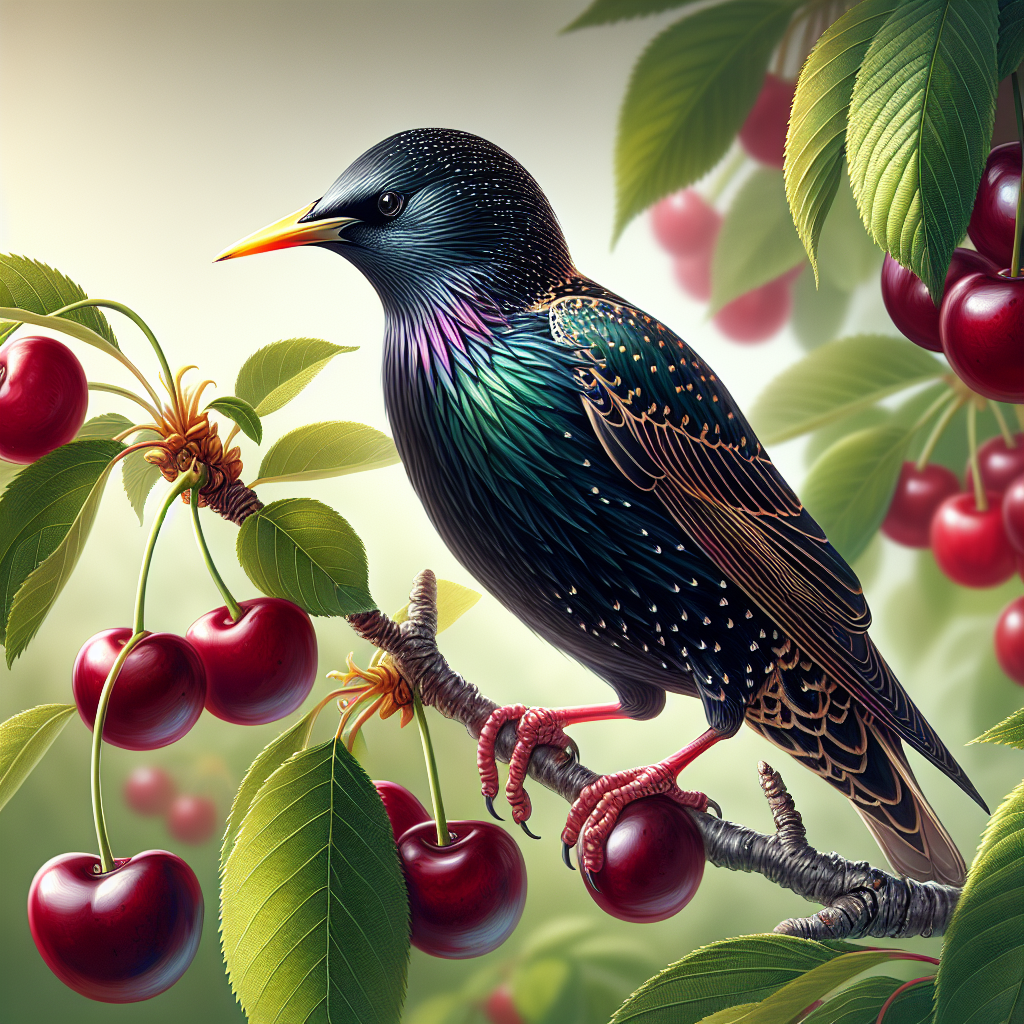
Introduction to Starlings
Starlings, scientifically known as Sturnus vulgaris, are small to medium-sized birds notorious in agriculture as invasive pests. Native to Europe, Asia, and Africa, they were introduced to North America in the 1890s and have since proliferated across continents, forming massive flocks that can number in the thousands. These glossy black birds with iridescent feathers and yellow bills pose a severe threat to crops, devouring fruits, grains, and seeds at an alarming rate. A single flock can strip a field of corn or cherry orchard in hours, leading to economic losses exceeding millions annually for farmers.
As opportunistic feeders, starlings target ripening produce, making them particularly problematic during harvest seasons. Their adaptability allows them to thrive in urban, suburban, and rural environments, exacerbating control efforts. In agricultural settings, they compete with native birds for resources and spread diseases through droppings, contaminating feed and water sources. Understanding their behavior is crucial for developing targeted management strategies. This guide provides professional-grade diagnostic and management advice to protect your yields from these persistent invaders. For more on bird pests in general, see our comprehensive entry on Birds (pest).
Starlings' intelligence and social nature make them challenging to deter, but integrated pest management (IPM) approaches yield the best results. Early detection and proactive prevention are key to minimizing damage. Farmers report up to 30-50% yield reductions in untreated fields, underscoring the urgency of effective control. By combining cultural, physical, and organic methods, you can safeguard your operations sustainably.
Identifying Symptoms & Damage
Starling damage is unmistakable once flocks establish in your fields. Look for widespread pecking and tearing on fruits, leaving characteristic half-eaten berries or punctured skins. In orchards, apple and grape clusters show ragged, missing portions, with birds targeting the ripest, sweetest fruits. Grain fields exhibit stripped ears or heads, especially in wheat and rice, where seeds are systematically consumed.
Visual signs include large groups of starlings roosting in trees or on structures at dawn and dusk, followed by morning raids. Droppings—white, watery splatters—cover foliage, machinery, and produce, promoting mold growth and posing health risks. Seedlings may vanish entirely, with bare patches indicating ground-foraging. Listen for their chattering calls and wheezing whistles, which signal incoming flocks.
Differentiate starling damage from other pests: unlike Japanese beetles that skeletonize leaves, starlings focus on fruits and seeds. Compared to deer, their damage is finer and more scattered. Inspect at first light for fresh peck marks; use binoculars to confirm glossy plumage and pointed bills. Early identification prevents escalation—scout fields weekly during fruit set. Document damage with photos for IPM records and insurance claims.
Secondary issues include disease transmission; starlings carry salmonella and histoplasmosis via feces, contaminating strawberry fields. Yield impacts are severe: studies show 20-40% losses in soft fruits. Check perimeters for roosting sites like power lines or silos, common entry points.
Lifecycle and Progression of Starlings
Starlings complete 1-3 clutches per year, each with 4-6 pale blue eggs. Females incubate for 11-15 days; fledglings fledge in 21 days but remain dependent for weeks. Breeding peaks spring-summer in temperate zones, with juveniles joining flocks by fall. Lifespan averages 2-5 years, but high reproduction fuels population booms.
Progression ties to crop cycles: post-breeding flocks swell in late summer, targeting ripening grains and fruits. Winter roosts concentrate in sheltered areas near food sources. Migration patterns vary; North American populations are often resident, worsening year-round pressure. Eggs hatch into gray, spotted nestlings that mature rapidly, capable of breeding the next season.
Monitor nests in cavities, buildings, or corn cribs—remove where legal. Population peaks coincide with harvest vulnerability, amplifying damage. Understanding this cycle informs timing: deter pre-breeding to disrupt numbers. For insights on timing farm tasks, check Why Timing Kills Small Farm Profits - And How AI Task Scheduling Saves Your Harvests.
Environmental Triggers & Risk Factors
Starlings thrive in open farmlands with nearby roosts like woodlands or urban edges. Abundant water, insects, and fruits trigger influxes. Droughts concentrate them on irrigated crops; mild winters boost survival. Proximity to cities provides alternate food, spilling into farms.
Risk factors include monocultures of cherry or grapes, lacking diversity. Overripe produce left in fields acts as bait. Poor sanitation—unharvested grains or spilled feed—attracts flocks. Climate shifts extend breeding seasons, increasing pressure.
High-risk zones: orchards near highways or roosts. Monitor weather; winds drive flocks to leeward fields. Soil types matter less, but fertile, fruit-heavy areas suffer most. Mitigate by diversifying crops and removing attractants.
Organic Control & Treatment Plans
Organic management emphasizes non-lethal deterrence. Physical Barriers: Netting over grapes and berries—install pre-fruit set, securing edges. Row covers for small grains. Bird-proof wires on perches.
Visual & Auditory Deterrents: Reflective tapes, Mylar balloons, and scarecrows; rotate weekly to prevent habituation. Propane cannons or electronic bird calls mimic predators. Falcons or dogs patrol effectively.
Cultural Practices: Plant resistant varieties; interplant with thorny blackberry. Harvest promptly; destroy fallen fruit. Mulch to hide seeds.
Biological Controls: Encourage native raptors with perches. Avian contraceptives like OvoControl (where approved) reduce breeding.
Integrated Plan: Scout daily; deploy multi-method combos. Week 1: Barriers + visuals. Week 2: Add audio. Monitor efficacy; adjust. For pest ID tips, see Spring Pest Patrol: Organic AI Strategies to Shield Your Crops from Common Invaders. Avoid poisons to protect pollinators.
Step-by-step Treatment:
- Assess damage/infestation level.
- Install barriers immediately.
- Deploy rotating deterrents.
- Enhance habitat for predators.
- Evaluate weekly; scale up.
Success rates: 70-90% reduction with IPM.
Preventing Starlings in the Future
Long-term prevention builds resilient systems. Habitat Modification: Eliminate roosts—trim trees, cap chimneys. Clear brush piles.
Crop Rotation & Diversity: Alternate corn with less attractive crops like garlic. Border plantings of marigold deter.
Early Warning: Install trail cams; monitor flocks. Community coordination amplifies efforts.
Tech Integration: Drones for scouting; automated deterrents. Maintain sanitation year-round.
Annual Protocol:
- Pre-season: Modify habitat.
- Growing: Barriers + deterrents.
- Post-harvest: Cleanup.
Sustainable farms report near-zero losses.
Crops Most Affected by Starlings
Starlings devastate soft fruits and grains:
- Fruits: Cherry, grape, strawberry, blueberry—up to 50% losses.
- Grains: Corn, wheat, rice—seed and ear consumption.
- Others: Apple, pear, sunflower seeds.
Orchards and vineyards suffer most; diversify to reduce risk.