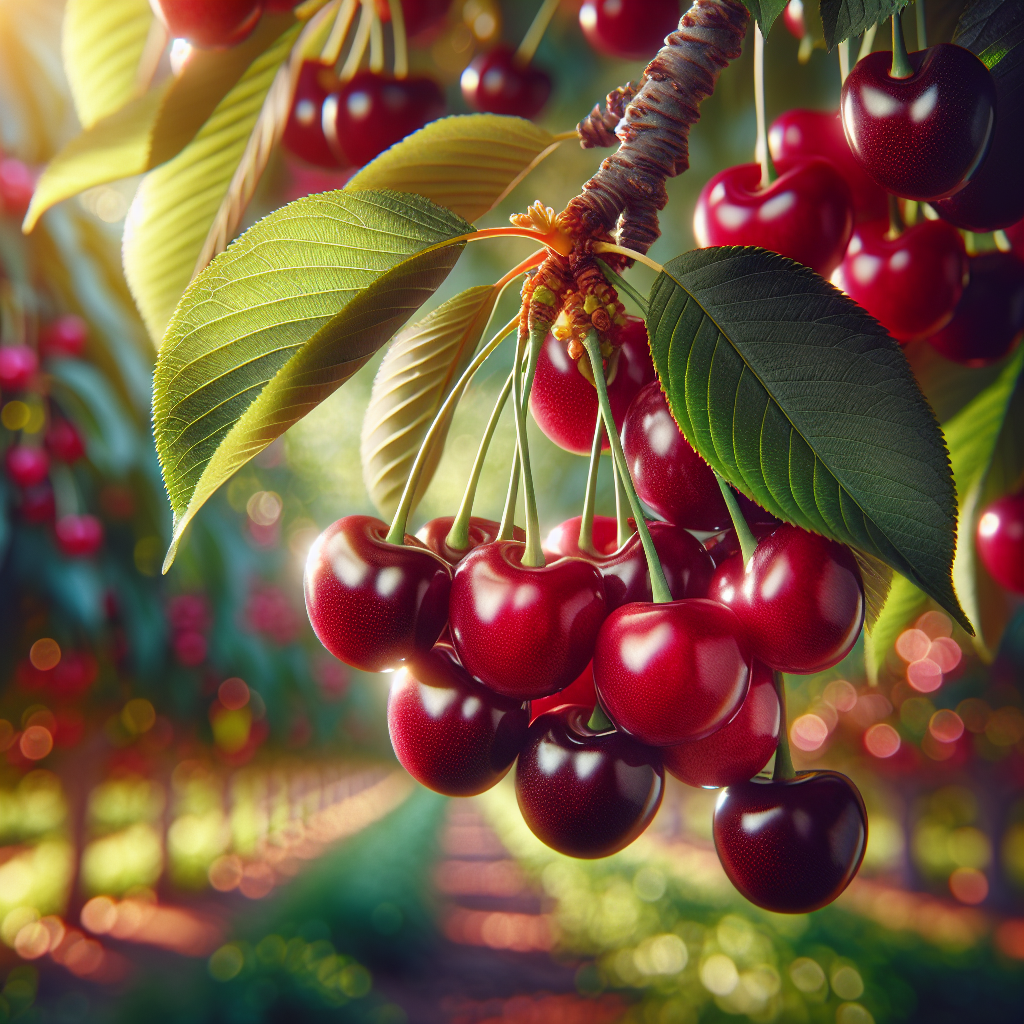
Introduction to Bing Cherry
Developed in Oregon in the late 19th century, this cultivar became one of the most commercially important sweet cherries in North America because of its exceptional fruit size, dark color, firm texture, and strong consumer appeal. It is widely considered a benchmark dessert cherry: the fruit is typically large, glossy, and juicy, with a sweet flavor that develops best when trees receive full sun, balanced moisture, and warm days during ripening.
Unlike more forgiving backyard fruit trees, this cultivar rewards precision. It performs best in temperate regions with enough winter chill to break dormancy properly, low spring frost pressure, and relatively dry weather near harvest. Poorly chosen sites often lead to blossom loss, cracking, canker, or inconsistent cropping. For serious growers, the key to success is understanding that sweet cherries are not just planted and forgotten; they are managed through canopy architecture, rootstock choice, irrigation timing, pollination planning, and disciplined sanitation.
This variety is also notable for its market timing. In many districts it ripens mid- to late season among sweet cherries, often after early cultivars but before some very late selections. That makes it especially valuable where growers want a premium fresh-market cherry with classic appearance and recognizable name value. For general sweet cherry background, see our Cherry guide.
Botanical Profile of Bing Cherry
This tree is a cultivar of Prunus avium, the sweet cherry species, within the Rosaceae family. It is deciduous, long-lived under good management, and naturally vigorous when grafted on standard or semi-vigorous rootstocks. Growth habit is upright to spreading, with fruit borne primarily on spurs formed on two-year and older wood, as well as on some one-year shoots under certain training systems.
Key cultivar traits include large fruit, dark red to nearly black skin at full maturity, red flesh, and a firm texture suitable for handling better than many softer dessert cherries. The fruit is typically cordate, or heart-shaped, with a medium stem and relatively high soluble solids when allowed to ripen fully. The pit is freestone to semi-clinging depending on maturity stage.
Flowers are white, borne in clusters, and usually open in spring before full leaf expansion. Like most sweet cherries, it is generally self-sterile and requires cross-pollination from a compatible sweet cherry cultivar blooming at the same time. That pollination biology is central to production success. A tree may flower heavily and still set very poorly if no compatible pollinizer is present within bee flight range.
Rootstock has major influence on tree size, precocity, anchorage, adaptability, and water management. On vigorous rootstocks such as Mazzard, trees can become large and resilient but slower to bear. On semi-dwarfing or dwarfing rootstocks, trees often come into production earlier and are easier to net, prune, and harvest, but can demand more careful irrigation, support, and fertility control. Fruiting wood management is especially important because sweet cherries can become overly vegetative if nitrogen is excessive or pruning is too severe in winter.
Soil, pH, and Climate Requirements for Bing Cherry
This cultivar has exacting drainage needs. The ideal soil is a deep, well-drained loam or sandy loam with good internal structure, moderate water-holding capacity, and no prolonged perched water table. Sweet cherry roots are highly sensitive to oxygen deprivation. If water stands in the root zone for even 24 to 48 hours during active growth, feeder roots can decline rapidly, predisposing the tree to crown rot, gummosis, and reduced vigor.
The preferred soil pH is about 6.2 to 7.0, with an acceptable range from roughly 6.0 to 7.5 if nutrient balance is maintained. Below pH 5.8, calcium availability may decline and aluminum or manganese issues can increase in some soils. Above pH 7.5, iron chlorosis becomes more likely, especially in calcareous soils. In alkaline ground, trees may show interveinal yellowing on new leaves while veins remain green, indicating reduced iron uptake rather than lack of iron in the soil itself.
Before planting, perform a complete soil test for pH, organic matter, phosphorus, potassium, calcium, magnesium, salinity, and micronutrients. Also assess texture and drainage by digging a test hole 18 to 24 inches deep, filling it with water, and observing percolation. If water remains after a day in non-saturated conditions, drainage is likely inadequate without berming, drainage tile, or site change.
Climate is equally critical. This variety is best suited to temperate climates with significant winter chill, generally around 700 to 1,000 chill hours depending on region and rootstock interactions. Insufficient chill can lead to delayed, erratic leafing and weak bloom. Excessively warm winters are therefore a problem, but so are severe spring freezes. Open blossoms and young fruit are frost sensitive, and temperatures around 28°F (-2.2°C) can damage bloom, while colder events can devastate a crop.
Summer conditions should be warm but not relentlessly humid. Dry air during ripening reduces disease pressure and fruit cracking risk. Persistent rain close to harvest often causes skin splitting because the fruit takes up water through both roots and skin. High humidity also favors Brown rot and bacterial disease. Locations with good air drainage, gentle slope, and exposure to morning sun are ideal because they reduce frost pockets and help dry foliage quickly.
Full sun is non-negotiable for premium fruit quality. Trees should receive at least 8 hours of direct light daily, and commercial-quality color development is best under unobstructed exposure. Shaded canopies produce softer fruit, lower sugar, weaker spur renewal, and more disease-prone microclimates.
Step-by-Step Planting & Propagation
Most growers establish this cultivar as grafted nursery stock rather than propagating from seed, because seedlings are genetically variable and will not come true to type. Purchase one-year whip trees or well-feathered nursery trees grafted onto a rootstock appropriate to your soil and management system.
Plant during dormancy, usually late winter to early spring where soils are workable and not waterlogged. In milder climates, fall planting can succeed if roots have time to establish before hard freezes, but spring planting is generally safer in cold regions.
- Choose the site carefully. Select elevated ground or a gentle slope with strong air movement and no standing water. Avoid low pockets where cold air settles.
- Test and prepare the soil. Correct pH months in advance if needed. Avoid over-amending the planting hole with rich compost because roots may circle in the amended zone instead of moving into native soil. Broad site improvement is better than localized amendment.
- Lay out pollination partners. Because this cultivar needs cross-pollination, plant a compatible sweet cherry cultivar nearby, or ensure one is already established within approximately 100 feet for reliable bee transfer. Multiple pollinizer trees or grafted pollinizer limbs improve consistency.
- Space appropriately. Standard trees may require 18 to 25 feet between trees, while dwarfing systems may be planted as close as 8 to 14 feet depending on rootstock, training method, and equipment access.
- Dig a broad, shallow hole. Make it two to three times the width of the root spread but no deeper than the root system. The graft union should remain 2 to 4 inches above the final soil line to prevent scion rooting.
- Spread roots naturally and backfill with native soil. Eliminate large air pockets by watering during backfill, but do not heavily compact the soil.
- Water in thoroughly. Apply enough water to settle soil around roots and moisten the profile to 12 to 18 inches deep.
- Mulch, but do not mound mulch against the trunk. Keep 3 to 4 inches of organic mulch over the root zone while maintaining a mulch-free ring several inches from the bark to prevent rot and vole damage.
- Head the tree at planting if needed. Whips are often cut back to encourage scaffold formation. Feathered trees may be trained immediately according to system.
Propagation is usually done by budding or grafting onto rootstocks. T-budding in summer and whip-and-tongue or bench grafting in dormant season are standard nursery methods. For growers maintaining their own orchard genetics, scion wood should be collected from healthy, true-to-type, disease-free trees during dormancy and stored cool and moist until grafting.
Training systems include open vase, central leader, steep leader, and upright fruiting offshoot systems. In home orchards, a modified central leader or open center can work, but many modern orchards prefer architectures that maximize light penetration and simplify picking, pruning, spraying, and rain cover installation.
Care & Maintenance regimes for Bing Cherry
Irrigation must be consistent but restrained. Sweet cherries do not tolerate chronic saturation, yet they also perform poorly under severe moisture stress during shoot growth, fruit sizing, and postharvest bud initiation. The goal is even soil moisture in the active root zone, not repeated cycles of flooding and drought.
In practical terms, maintain soil moisture at a level where the top 2 inches may dry slightly between irrigations, but the zone from 4 to 12 inches remains lightly moist and friable rather than sticky or powder-dry. Tensiometers or capacitance probes can help, but even hand assessment is useful: squeeze a sample from 6 inches depth. It should hold together weakly and break apart easily, not ooze or remain as dust. Overwatered trees often show pale leaves, sluggish shoot growth, gumming near the crown, and sometimes sudden wilting despite wet soil due to root decline. Underwatered trees tend to show dull foliage, leaf edge scorch in hot weather, reduced fruit size, and poor spur development for the following year.
Young trees usually need deep watering once or twice weekly in the absence of rain, adjusted for soil type. Sandy soils may need smaller, more frequent applications; heavier loams need fewer but deeper irrigations. Mature trees often require irrigation tuned to crop stage. During fruit expansion, severe deficits reduce size and firmness. Near harvest, excessive irrigation raises cracking risk and can dilute flavor. After harvest, moderate irrigation remains important because this is when the tree builds carbohydrate reserves and next season's flower buds.
Fertilization should be driven by leaf analysis and growth response, not guesswork. Excess nitrogen is one of the most common mistakes. It can produce lush, shade-heavy canopies, softer fruit, delayed hardening, and more Bacterial canker susceptibility. Young non-bearing trees may benefit from modest nitrogen to establish framework, but once trees begin cropping, aim for balanced vigor rather than maximum shoot extension. As a rough visual guide, annual extension growth of about 8 to 18 inches on bearing wood is often more desirable than rampant growth.
Apply compost or well-processed organic matter as a surface dressing rather than burying large amounts against roots. If using organic nutrient sources, synchronize release with spring growth but avoid late-summer nitrogen flushes that delay acclimation to winter. Potassium is important for fruit quality, while calcium supports firmness and reduces some physiological weakness, though foliar calcium alone will not fix poor soil structure or erratic watering.
Pruning is essential. Because fruit is borne on spurs and older wood, the objective is to maintain a renewal balance: enough new growth to replace aging fruiting sites, enough light to keep spurs productive, and enough structural strength to carry heavy crops without breakage. Remove dead, diseased, crossing, and strongly vertical shoots that shade the interior. Summer pruning can be especially helpful in vigorous orchards because it reduces vegetative response compared with heavy dormant cuts and improves light penetration.
Crop load matters. Overloaded trees may produce smaller cherries, weaker return bloom, and increased limb stress. Some seasons naturally thin themselves through weather, but where set is excessive, strategic pruning and spur management help balance the tree. Netting is often necessary to protect ripening fruit from birds, which can strip a crop within days once sugar rises.
Weed control should focus on reducing competition in the root zone, especially in the first three to five years. Maintain a weed-free strip beneath the canopy or use mulch carefully. Grass growing up to the trunk can significantly reduce young-tree growth by competing for water and nitrogen.
For broader orchard floor fertility and beneficial insect support, low-growing species such as Clover can be established in alleyways rather than directly against trunks. For more ideas on improving orchard soils, see soil health strategies.
Pests, Diseases & Organic Management
This cultivar is vulnerable to several major problems, especially in wet climates. Bacterial canker is among the most serious. Symptoms include sunken bark lesions, gumming, bud death, blossom blight, and branch dieback. Trees are most susceptible when stressed by poor drainage, excess nitrogen, winter injury, or pruning at the wrong time. The best organic approach is prevention: choose tolerant rootstocks where available, avoid waterlogged soils, prevent trunk injury, delay major pruning until dry periods, and remove infected wood well below visible symptoms.
Brown rot affects blossoms, shoots, and fruit, especially under humid or rainy conditions near bloom and harvest. Infected fruit may develop tan rot spots with grayish spore masses and can mummify on the tree. Sanitation is vital: remove mummies, prune for airflow, avoid overhead irrigation, and harvest promptly when fruit is ripe.
Cherry leaf spot causes small purple to brown lesions that can lead to early defoliation, weakening the tree and reducing return bloom. Good leaf litter management, open canopies, and orchard airflow are foundational. Copper or approved biological sprays may be used in organic systems according to local regulations and timing guidance, but coverage and disease forecasting matter.
Powdery mildew can appear on shoots and leaves in some regions, especially where vigor is high and canopies are dense. Balanced nitrogen and light-penetrated architecture reduce incidence.
Insect pests commonly include Aphids, Cherry fruit fly, Spotted wing drosophila in some areas, Scale insects, Borers, and Mites. Aphids curl leaves and excrete honeydew, which encourages sooty mold. Strong vegetative flushes often worsen aphid pressure. Encourage predators, avoid overfertilizing, and wash or treat infestations early with approved soaps or oils if necessary.
Cherry fruit fly and Spotted wing drosophila are especially important for market fruit because larvae render cherries unmarketable. Monitoring with traps before color break is essential. Sanitation is critical: remove dropped fruit, pick cleanly and frequently, and do not leave overripe fruit hanging. Fine-mesh exclusion netting can help in small plantings.
Birds are often the single greatest "pest" issue for ripening sweet cherries. Visual deterrents alone rarely provide reliable control once fruit colors. Physical exclusion with orchard netting remains the most dependable method.
Organic management works best as a system rather than a spray list: resistant site, airflow, sanitation, balanced nutrition, timely harvest, exclusion, and consistent monitoring. Trees growing under stress almost always suffer more from disease and insect attack than well-sited, well-pruned trees.
Harvesting, Curing & Optimal Storage
Fruit should be harvested fully mature because sweet cherries do not continue to improve in sugar after picking. Color is a useful guide, but flavor, firmness, and soluble solids are better indicators. This cultivar develops its characteristic deep mahogany skin when ripe, and fruit should taste richly sweet with balanced acidity. Harvesting too early results in attractive but disappointing cherries.
Pick with stems attached whenever possible for best shelf life and visual quality. Handle gently; even firm sweet cherries bruise under rough picking or deep containers. Harvest in the cool part of the day, ideally morning after surface moisture has dried. Never pick wet fruit for storage if you can avoid it, as free moisture encourages decay.
Unlike curing crops such as onions or garlic, cherries are not cured in the traditional sense. Their postharvest requirement is rapid removal of field heat. Cool fruit immediately to near 32°F (0°C) with very high relative humidity, around 90 to 95%, to minimize shrivel and preserve stem freshness. At room temperature, quality declines quickly. In a cold chain, premium cherries may hold for about 1 to 2 weeks depending on handling, maturity, and disease pressure, though best eating quality is usually within the first several days.
Avoid washing until just before use if fruit is going into short-term storage. For commercial packing, hydrocooling and sanitized packing lines are standard, but fruit must be dried appropriately afterward. Any cracked, bird-pecked, or diseased cherries should be sorted out immediately because decaying fruit accelerates deterioration in the lot.
Watch for rain-induced cracking before harvest. If rain is forecast when fruit is near maturity, picking slightly ahead of a major storm can preserve marketable yield, though flavor may be marginally lower. Protective covers are increasingly used in professional orchards for this reason.
Companion Planting for Bing Cherry
Companion planting around orchard trees should prioritize pollinator activity, beneficial insect support, weed suppression, and reduced competition rather than crowding the trunk zone. Keep the area immediately around the trunk clear to reduce rodent damage, crown moisture, and nutrient competition. The best companions are usually low-growing, shallow-rooted, and easy to manage.
Thyme is especially useful near but not against the tree because it attracts pollinators when in bloom, suppresses some weeds as a living groundcover in dry spots, and does not usually create excessive shade or biomass. Yarrow is valuable on orchard margins for attracting parasitoid wasps, hoverflies, and other beneficial insects that help suppress Aphids and small pest populations. Garlic can be planted in outer dripline zones or nearby beds where its upright growth does not compete heavily with the tree, and it fits well into diversified orchard systems focused on ground-level space use.
Companion species should never be allowed to form dense, moisture-holding tangles around the trunk. In humid climates, excessive understory growth can worsen disease by reducing airflow and creating rodent habitat. Mow or trim support plants before they become rank, and irrigate the tree based on tree needs, not the water demands of nearby annual vegetables.
In mixed orchards, flowering companions are most beneficial when their bloom overlaps periods of low pollinator activity in the broader landscape, helping keep bees and beneficial insects resident in the planting. The goal is ecological support, not crowding. With sweet cherries, especially a premium cultivar like this one, clean orchard structure and light management always take priority over aggressive understory diversity.